How to Clean a Fake Chain Necklace Without Ruining Plating
Learn how to safely clean a fake chain necklace without stripping the plating. Expert tips on tarnish removal, storage, and care.

The Truth About Fashion Jewelry Chains
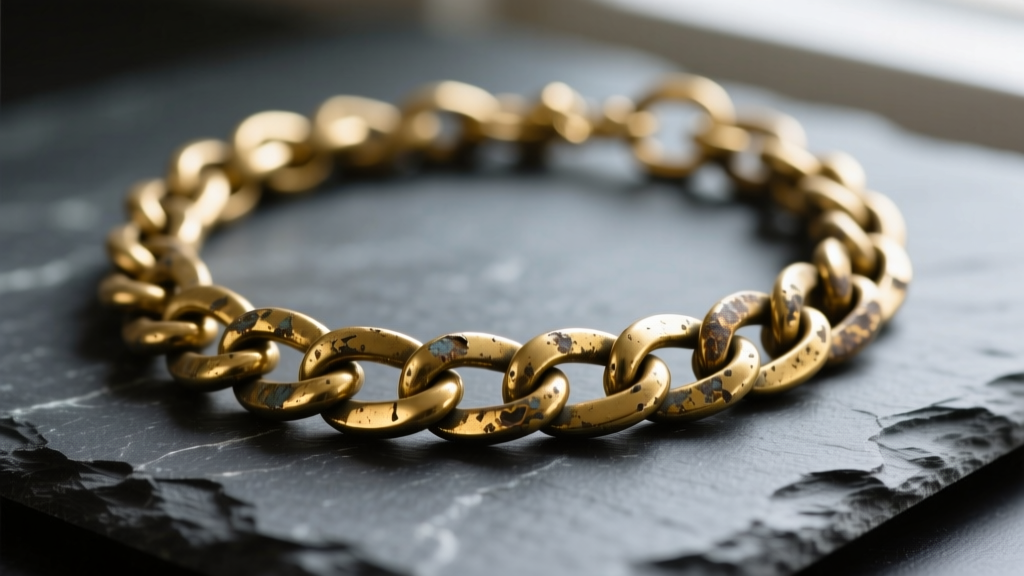
The term 'fake chain necklace' is often used colloquially to describe fashion or costume jewelry—pieces crafted from base metals like brass, copper, or zinc alloy, and finished with a thin layer of gold, silver, or rhodium plating. While these necklaces offer incredible style versatility at a fraction of the cost of solid precious metals, they require a fundamentally different approach to care and maintenance. The primary enemy of a plated chain is not just dirt, but the chemical degradation of the plating itself.
Unlike solid 14k or 18k gold, which can withstand aggressive polishing and ultrasonic cleaning, a plated necklace operates on a microscopic margin of error. The plating thickness on most commercial fashion jewelry ranges from 0.01 to 0.1 microns (often referred to as 'flash plating'). Heavy gold electroplated (HGE) pieces might reach 2.5 microns, but even this is vulnerable to abrasion and chemical stripping. Understanding the metallurgy of your necklace is the first step in extending its lifespan from a few months to several years.
The Anatomy of Plated Base Metals
To clean a fake chain necklace effectively, you must understand what lies beneath the surface. Most affordable chains use brass (an alloy of copper and zinc) or zinc alloy as the core. When the outer plating wears thin or develops micro-fractures, the base metal is exposed to the elements.
- Brass/Copper Cores: When exposed to the lactic acid and salts in human sweat, copper oxidizes and creates copper chloride. This is the exact compound responsible for the dreaded 'green skin' effect around your neck.
- Zinc Alloy Cores: More resistant to the green tint, but highly susceptible to 'white rust' (zinc oxide) and pitting when exposed to prolonged moisture.
- Stainless Steel Cores: The gold standard for fashion jewelry bases. Even if the plating wears off, 316L stainless steel will not tarnish, rust, or turn your skin green.
According to the Federal Trade Commission's Jewelry Guides, manufacturers must accurately disclose plating thickness and base metals, yet many fast-fashion brands bypass these guidelines. Therefore, treating all non-solid jewelry as highly delicate is the safest protocol.
The Safe Cleaning Protocol for Plated Chains
Forget the harsh commercial silver dips and abrasive polishing pastes. Cleaning a fake chain necklace requires a gentle, pH-balanced approach that lifts sebum, dead skin cells, and environmental dust without scratching the microscopic plating layer.
Step-by-Step Wet Cleaning Method
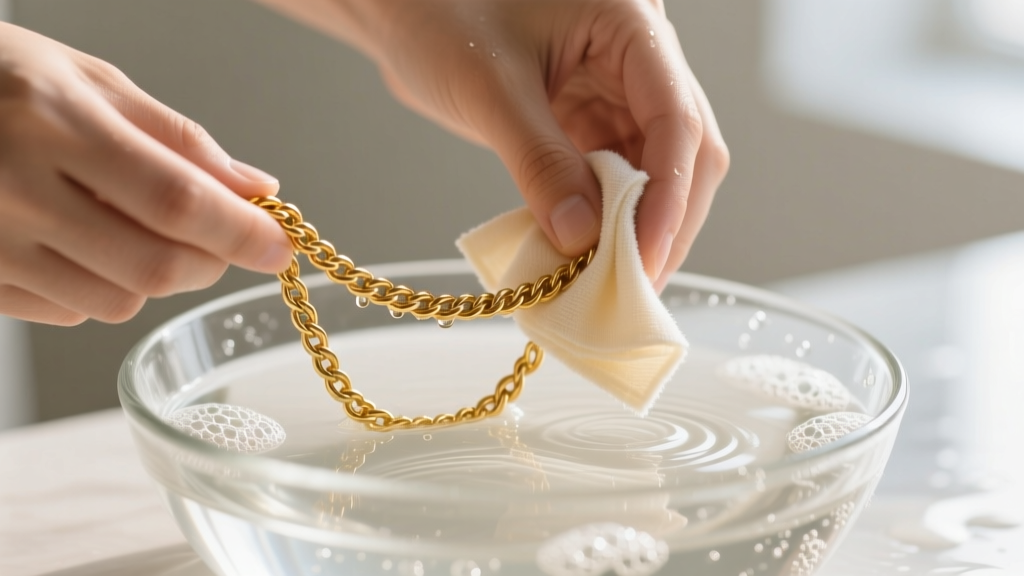
- Prepare the Solution: Mix two cups of distilled water (never tap water, as hard water minerals leave micro-scratches and calcium deposits) with three drops of pH-neutral dish soap, such as original blue Dawn.
- The 3-Minute Soak: Submerge the chain necklace in the solution for exactly three minutes. This loosens trapped oils in the chain links without giving the water time to seep into microscopic plating fractures.
- Gentle Agitation: Using an ultra-soft baby toothbrush (adult toothbrush bristles are too stiff and will cause micro-abrasions), gently sweep along the direction of the chain links. Do not scrub in circles.
- The Distilled Rinse: Rinse the chain under a gentle stream of distilled water to remove all soap residue.
- Immediate Drying: Pat the chain completely dry with a clean, lint-free microfiber cloth. Never allow a plated chain to air dry, as water evaporation will leave spotting and accelerate oxidation.
What to Avoid at All Costs
The internet is full of DIY jewelry cleaning hacks that will instantly destroy a fake chain necklace. Avoid these common mistakes:
- Baking Soda Paste: Baking soda has a Mohs hardness of 2.5. Gold plating is incredibly soft. Scrubbing with baking soda will strip flash plating down to the base metal in seconds.
- Toothpaste: Contains hydrated silica, an abrasive designed to scrub enamel off teeth. It will permanently cloud and scratch rhodium and gold finishes.
- Ultrasonic Cleaners: The high-frequency cavitation bubbles generated by ultrasonic machines can literally shatter and peel thin electroplated layers from the base metal.
Daily Maintenance: Preventing Tarnish and Green Skin
Prevention is vastly superior to restoration. The Gemological Institute of America (GIA) emphasizes that cosmetics and environmental pollutants are the leading causes of jewelry degradation. Implement the '30-Minute Rule': always apply perfumes, hairsprays, and body lotions at least 30 minutes before putting on your chain necklace. The alcohol and emulsifiers in these products break down the protective clear-coats often applied over fashion jewelry plating.
If you live in a high-humidity environment or sweat heavily, wipe your chain down with a dry microfiber cloth immediately after taking it off. This removes the acidic sweat before it has time to eat through the plating and reach the copper or brass core.
Troubleshooting Common Chain Necklace Issues
Even with meticulous care, fashion jewelry will eventually show signs of wear. Here is a diagnostic guide to troubleshooting the most common issues associated with fake chain necklaces.
| Issue | Root Cause | Actionable Solution |
|---|---|---|
| Green Skin Tint | Copper/brass core reacting with skin acidity and moisture. | Paint the inside clasp and links with a thin layer of clear, hypoallergenic nail polish to create a physical barrier. Reapply monthly. |
| Dark/Black Tarnish | Silver plating reacting with sulfur compounds in the air or cosmetics. | Use a dedicated, untreated silver polishing cloth. Do not use liquid dips. Gently buff the surface to remove silver sulfide. |
| Flaking or Peeling | Moisture trapped beneath the plating layer during manufacturing, or severe chemical exposure. | This is irreversible. The chain cannot be cleaned. It must be sent to a jeweler for professional re-plating or retired. |
| Dull, Cloudy Finish | Buildup of lotions, sebum, and hard water minerals. | Perform the distilled water and pH-neutral soap soak outlined above, followed by a gentle buff with a dry microfiber cloth. |
Long-Term Storage Solutions for Fashion Chains
How you store your fake chain necklace when you aren't wearing it dictates how long the plating will survive. Leaving jewelry out on a bathroom counter exposes it to extreme humidity fluctuations and aerosolized cosmetics, guaranteeing rapid tarnishing.
The optimal storage environment requires three elements: isolation, moisture control, and chemical neutralization.
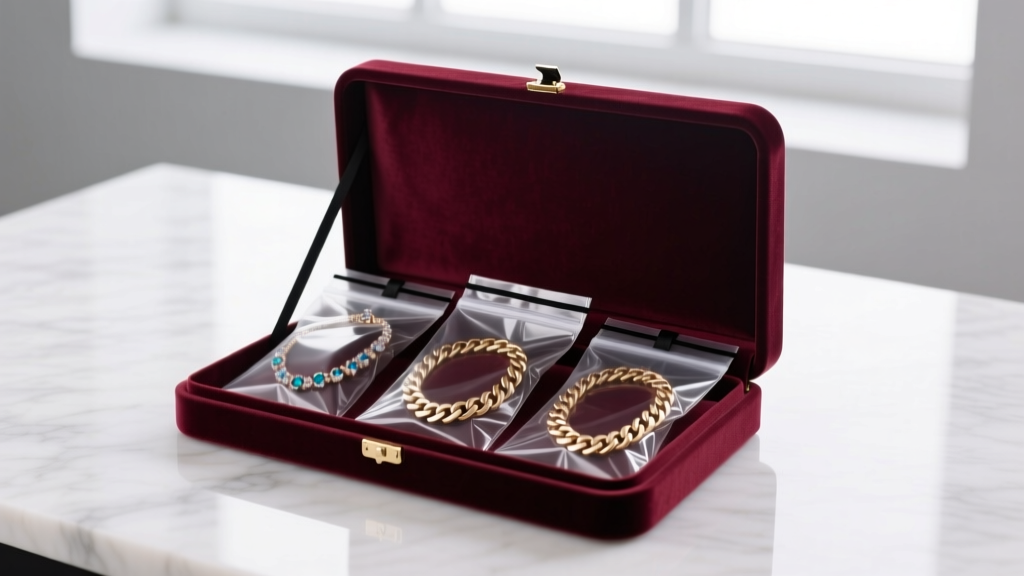
- Isolation: Store each chain individually in a small, airtight polyethylene ziplock bag. This prevents the chains from tangling and stops them from scratching each other's plating.
- Moisture Control: Drop a small, rechargeable silica gel desiccant packet into each bag to maintain a near-zero humidity microclimate.
- Chemical Neutralization: Include a 3M Anti-Tarnish Strip inside the bag. These strips absorb airborne sulfur and other corrosive gases before they can reach the metal surface. Replace the strips every six months for maximum effectiveness.
Final Thoughts on Fashion Jewelry Care
Owning a fake chain necklace doesn't mean you have to settle for rapid deterioration. By understanding the delicate nature of electroplated base metals and adopting a gentle, chemistry-conscious cleaning routine, you can keep your fashion chains looking brilliant and expensive for years. Treat the plating with the same respect you would give to a layer of gold leaf, and your jewelry will reward you with lasting shine and zero green skin.


