How to Clean a Fake Pearls Necklace Safely: Expert Care Guide
Learn how to safely clean a fake pearls necklace. Discover expert tips on washing, storing, and maintaining simulated glass and plastic pearl coatings.

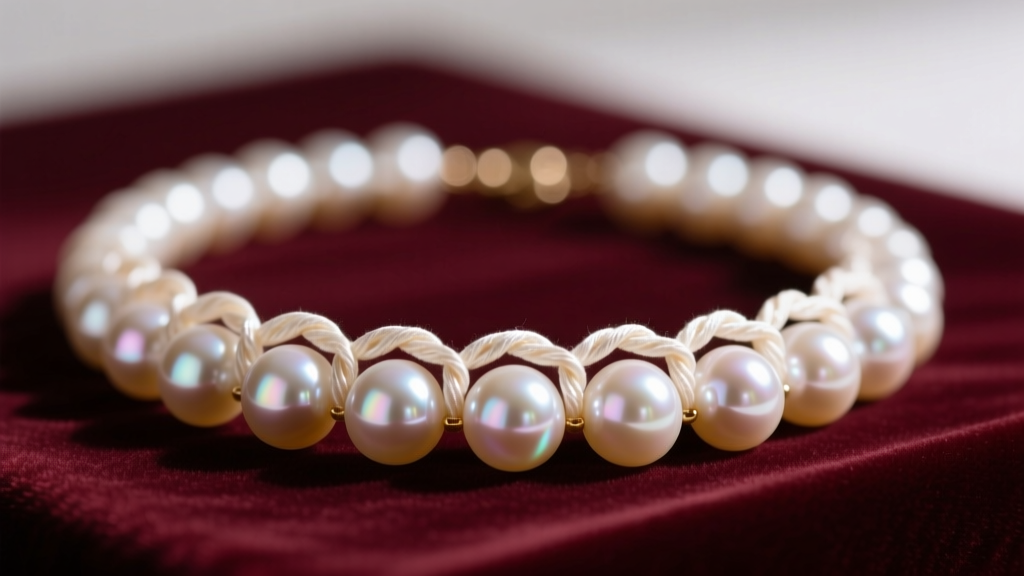
Simulated pearls have come a long way from the obvious plastic beads of the mid-20th century. Today, high-quality faux pearls can mimic the deep luster, orient, and weight of cultured saltwater pearls with astonishing accuracy. However, maintaining a fake pearls necklace requires a fundamentally different approach than caring for organic, nacre-based pearls. While genuine pearls are porous and require moisture, faux pearls are defined by their synthetic or semi-synthetic surface coatings, which are highly vulnerable to common jewelry cleaning agents.
If you have ever wondered why a beloved strand of simulated pearls suddenly began to peel, yellow, or lose its luster, the culprit is almost always improper cleaning or storage. This comprehensive guide breaks down the exact material science behind faux pearl coatings and provides a meticulous, step-by-step protocol for cleaning, storing, and preserving your simulated pearl jewelry for decades.
Understanding the Anatomy of a Simulated Pearl
To clean a fake pearls necklace properly, you must first understand what you are actually cleaning. According to the Federal Trade Commission's Jewelry Guides, simulated pearls must be clearly disclosed as such, but the manufacturing methods vary wildly. The care protocol depends entirely on the core material and the coating binder.
The Core Materials
- Glass Cores: The most common base for high-end faux pearls (such as vintage Majorica pearls). Glass provides a realistic weight and a cool-to-the-touch feel, but it is heavy and can shatter if dropped on a hard surface.
- Plastic/Resin Cores: Lightweight and inexpensive, often used in fashion jewelry. These are highly susceptible to warping if exposed to heat.
- Shell Cores: Made from ground mother-of-pearl or solid shell beads. These offer the best structural integrity and mimic the organic origin of real pearls.
The Pearlescent Coating
The 'magic' of a faux pearl lies in its coating. Historically, this was essence d'orient, a mixture of guanine (crystalline material derived from fish scales) suspended in a lacquer or epoxy binder. Modern manufacturing often replaces guanine with synthetic mica, titanium dioxide, or bismuth oxychloride to achieve the iridescent effect. This coating is typically only 0.1 to 0.5 millimeters thick and is bonded to the core using chemical adhesives. The Gemological Institute of America (GIA) notes that while these coatings can be durable, they sit at roughly 2.5 to 3.5 on the Mohs hardness scale, making them incredibly soft and prone to chemical degradation.
The Destructive Agents: What to Avoid
The most common way people ruin a fake pearls necklace is by treating it like fine metal jewelry or genuine organic gems. The following substances will instantly compromise the adhesive binder, causing the pearlescent coating to flake, cloud, or peel away entirely.
- Acetone and Nail Polish Remover: These are aggressive solvents that will dissolve the lacquer or epoxy binder holding the pearlescent flakes to the core. Even brief exposure will leave you with a bare, dull glass or plastic bead.
- Ammonia and Glass Cleaners: Ammonia reacts with the metallic oxides (like bismuth oxychloride) used to create the faux pearl's iridescence, resulting in permanent clouding and a chalky white residue.
- Ultrasonic Cleaners: Never place simulated pearls in an ultrasonic bath. The process of cavitation—where microscopic bubbles implode against the surface—will physically chip and blast the soft pearlescent coating right off the core.
- Steam Cleaners: The intense heat from steam can melt plastic cores, warp the shape of the bead, and cause the adhesive binder to bubble and separate from the core.
- Chlorine and Bleach: Whether from swimming pools or household cleaners, chlorine breaks down the chemical bonds in synthetic resins and lacquers, leading to irreversible yellowing.
The Step-by-Step Cleaning Protocol
When your fake pearls necklace accumulates body oils, cosmetics, or environmental dust, it requires a gentle, non-invasive cleaning method. Follow this exact protocol to restore the luster without risking the coating.
Step 1: The Dry Microfiber Wipe
After every wear, gently wipe the strand with a clean, dry, lint-free microfiber cloth. This removes acidic sweat (which typically has a pH between 4.5 and 6.0) and cosmetic residues like foundation or perfume before they can etch into the lacquer over time. Do not use paper towels or tissues, as the wood pulp fibers can cause micro-scratches on the soft 2.5 Mohs coating.
Step 2: The Damp Spot-Clean
For localized smudges or makeup transfer, slightly dampen a corner of your microfiber cloth with distilled water. Gently roll the damp fabric over the affected bead. Avoid rubbing aggressively. Immediately dry the bead with the dry side of the cloth to prevent water from seeping into the drill holes.
Step 3: The Mild Bath (For Heavy Soil Only)
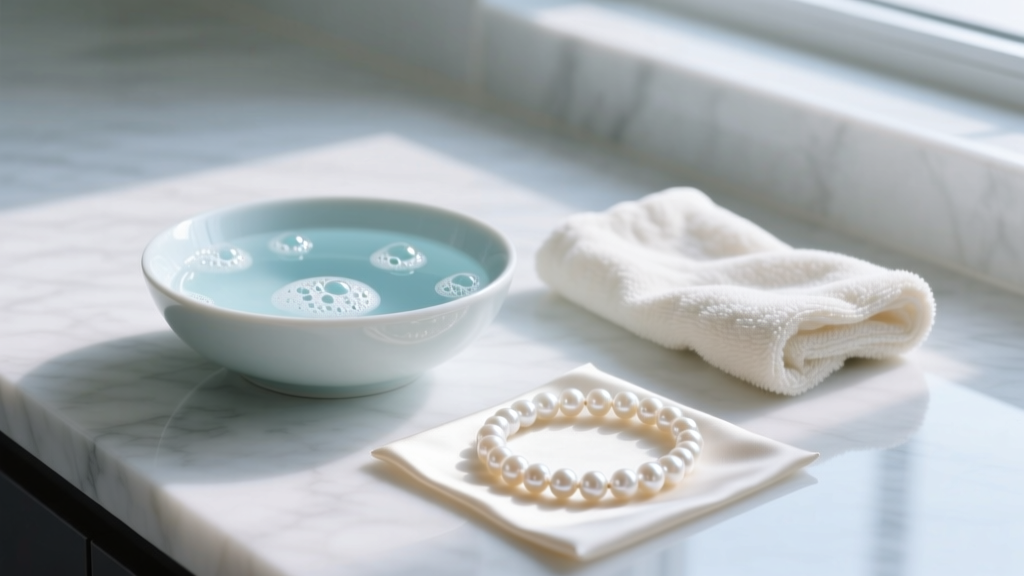
If the entire strand is heavily soiled, you may use a mild liquid bath. Mix a few drops of pH-neutral dish soap (such as original Dawn) into a bowl of lukewarm—not hot—distilled water. Dip a soft, natural-hair makeup brush (like a clean blush brush) into the solution and gently sweep it over the pearls. Do not submerge the necklace. Submerging the strand allows soapy water to enter the drill holes, which can degrade the internal stringing material and cause the adhesive at the bead tips to fail. Rinse the brush in clean distilled water and sweep the pearls again to remove soap residue, then pat dry immediately with a microfiber towel.
Cleaning Agent Impact Chart
| Cleaning Agent | Chemical Interaction | Result on Faux Pearls |
|---|---|---|
| Mild Dish Soap | Surfactants lift oils without dissolving lacquer | Safe; restores luster |
| Acetone | Dissolves epoxy/lacquer binders | Coating peels off entirely |
| Isopropyl Alcohol | Dries out and cracks synthetic resins | Micro-cracking and dullness |
| Baking Soda Paste | Abrasive physical scratching (Mohs 9) | Deep scratches, loss of orient |
| White Vinegar | Acetic acid etches metallic oxide pigments | Permanent chalky discoloration |
Strategic Storage to Prevent Coating Degradation
How you store your fake pearls necklace when it is not being worn is just as critical as how you clean it. Simulated pearls face three primary environmental threats in the jewelry box: UV radiation, friction, and chemical off-gassing.
UV Degradation: Prolonged exposure to direct sunlight or harsh fluorescent lighting will cause the plasticizers in resin-core pearls to break down, leading to a brittle texture and a sickly yellow tint. Always store your necklace in a dark environment.
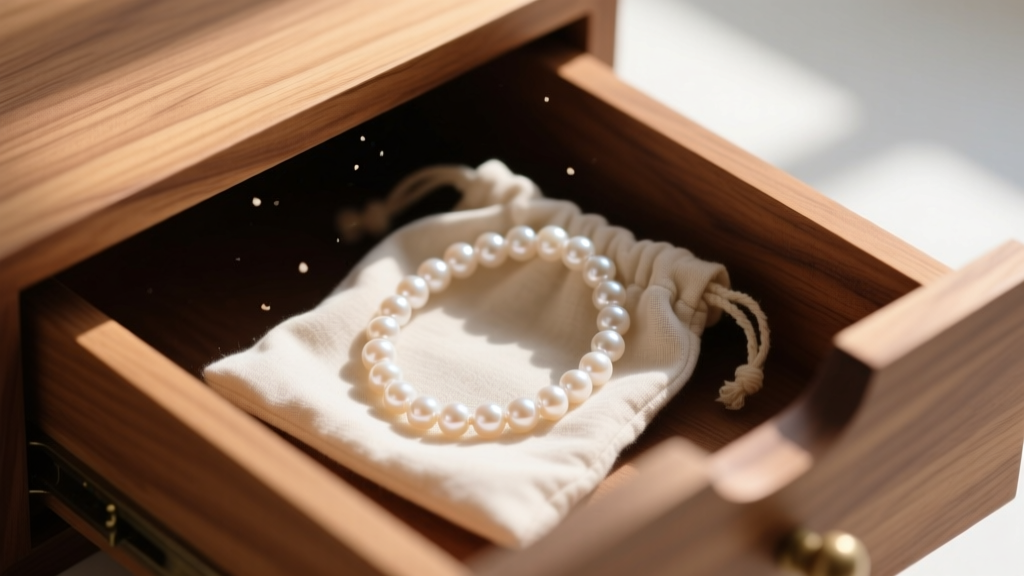
Friction and Hardness Mismatches: Because the faux pearl coating is exceptionally soft, storing the necklace loose in a drawer with diamonds, sapphires, or even metal clasps will result in severe scratching. The metal clasp of the necklace itself can scratch the adjacent pearl if left unfastened. Always fasten the clasp and store the strand in a dedicated, soft cotton or silk pouch.
Avoid Airtight Plastic Bags: While it might seem logical to seal the necklace in a plastic ziplock bag to keep dust out, this traps ambient humidity and can encourage the growth of mildew on the internal stringing material. Furthermore, some cheap plastics off-gas volatile organic compounds (VOCs) that can react with the pearl's lacquer. Opt for breathable fabric pouches instead.
Inspecting and Replacing the Stringing Material
The structural integrity of your fake pearls necklace relies entirely on the thread running through the drill holes. Traditional pearl knotting uses silk thread, which is beautiful but highly susceptible to stretching and rotting when exposed to the natural acids in human sweat. If you wear your faux pearls frequently, inspect the knots between the beads every six months.
Look for signs of fraying, darkening of the thread, or increased gaps between the knots and the beads. If the thread stretches too much, the beads will grind against one another, damaging the coating around the drill holes. For faux pearls that are worn daily, consider having the strand restrung on high-tenacity nylon or polyester thread. These synthetic threads are impervious to sweat acids and offer vastly superior tensile strength, ensuring your simulated strand remains secure and perfectly knotted for years to come.
Expert Insight: Never attempt to restring a knotted pearl necklace yourself unless you have been trained in using a French wire (gimp) at the clasp connection. The metal clasp will quickly saw through unprotected silk or nylon thread, leading to a catastrophic break and the loss of your beads.
By understanding the delicate chemistry of the pearlescent coating and adhering to these strict, non-invasive cleaning protocols, your fake pearls necklace will maintain its brilliant, deceptive luster, serving as a timeless and elegant staple in your jewelry collection without the anxiety associated with high-maintenance organic gems.


