Care Guide: Cleaning a Flower Necklace Rose Gold Pendant
Learn how to safely clean, polish, and store your flower necklace rose gold jewelry to prevent tarnish, protect gemstones, and maintain its blush finish.

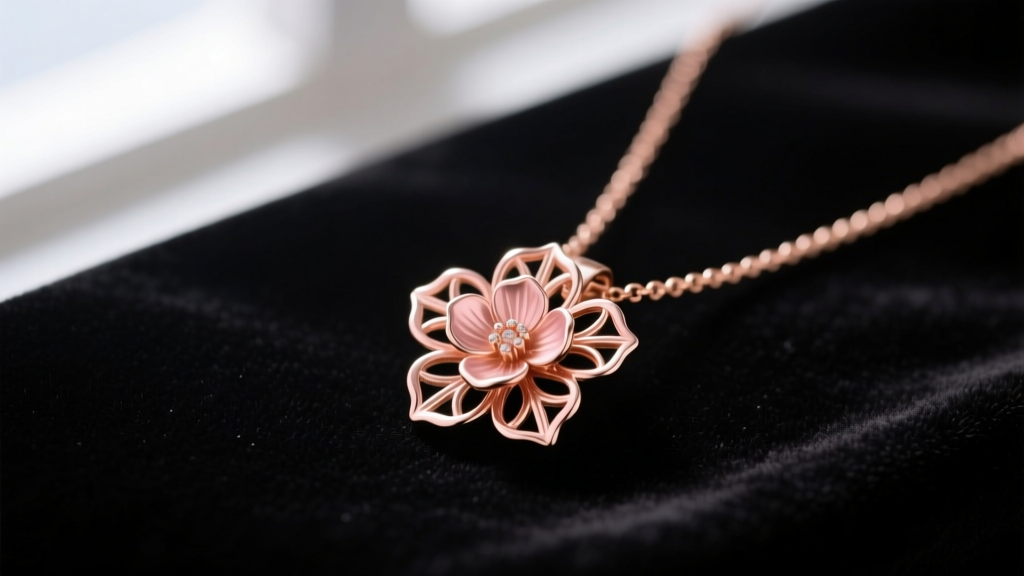
Rose gold has cemented its place as a favorite in fine jewelry, offering a warm, romantic hue that perfectly complements intricate botanical designs. However, maintaining the brilliance of a flower necklace rose gold piece requires more than a quick wipe with a cloth. The unique metallurgy of rose gold, combined with the complex topography of floral pendants—think overlapping petals, milgrain edges, and hidden prong settings—creates a perfect storm for trapped sebum, cosmetic buildup, and environmental oxidation.
Whether you own a delicate 14k rose gold daisy pendant or a bold 18k rose gold rose blossom choker, understanding the specific chemical and physical needs of your jewelry is critical. This comprehensive care guide will walk you through the exact protocols for cleaning, polishing, and storing your floral rose gold necklaces to ensure they remain pristine for decades.
The Metallurgy of Rose Gold: Why It Tarnishes
To properly clean your jewelry, you must first understand what it is made of. Pure 24k gold is entirely yellow and too soft for intricate floral casting. Rose gold is an alloy, and its signature blush tint comes from a high concentration of copper. According to the Gemological Institute of America (GIA), a standard 14k rose gold alloy consists of approximately 58.5% pure gold, 36% copper, and 5.5% silver. In 18k rose gold, the copper content drops to around 22.5%.
While gold is highly inert, copper is highly reactive. When exposed to oxygen, moisture, and the natural acids in your skin, the copper in your flower necklace will oxidize. This doesn't mean the gold is "fake"; rather, it is a natural chemical reaction that can cause the metal to darken or develop a slight patina over time. The intricate crevices of a floral design accelerate this process by trapping the very moisture and acids that trigger oxidation.
Anatomy of a Floral Pendant: Where Dirt Hides
Unlike a simple gold hoop or a smooth bezel-set solitaire, a flower necklace is a topographical maze. Dirt and grime accumulate in specific micro-zones:
- Petal Overlaps: The seams where cast or stamped petals meet are prime real estate for lotion and dead skin cell buildup.
- The Stamen Center: Floral centers often feature textured metalwork or cluster gemstone settings, which easily trap dust and cosmetic powders.
- The Bail and Jump Ring: The connection point between the chain and the pendant experiences the most friction, accumulating a dark, greasy residue that can dull the entire piece.
The Safe Cleaning Protocol for Rose Gold Florals
When it is time to deep clean your necklace, avoid harsh commercial dips. Follow this jeweler-approved, step-by-step method to safely lift grime from the most delicate petal crevices without damaging the alloy.
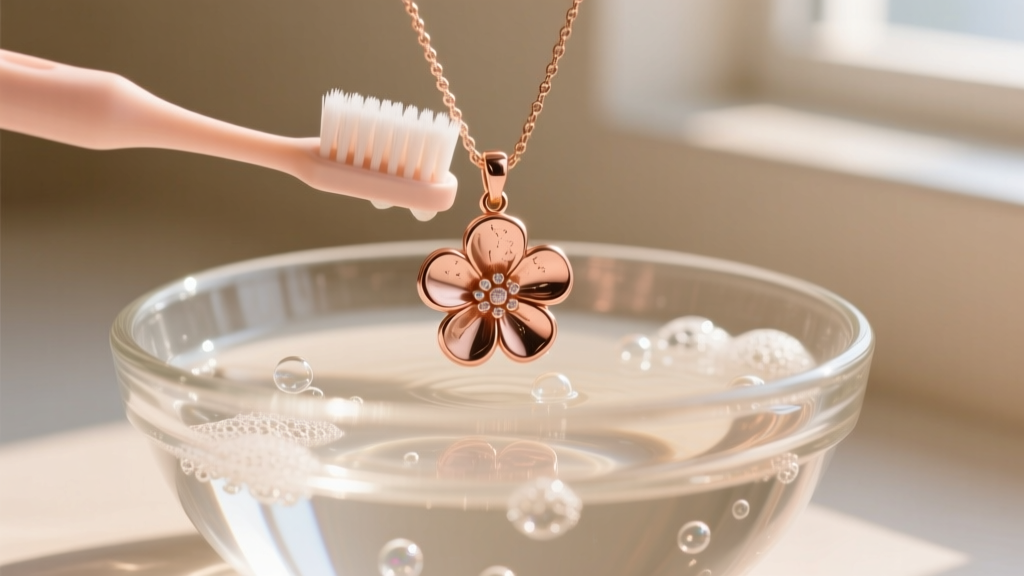
Step 1: The Gentle Soak
Fill a small glass bowl with lukewarm (never hot) water. Add three drops of a mild, phosphate-free liquid dish soap (such as original Dawn). Submerge your flower necklace and let it soak for exactly 10 to 15 minutes. This breaks down the lipid bonds of skin oils and cosmetics without shocking the metal or any set gemstones.
Step 2: Targeted Agitation
Remove the necklace from the bath. Using an extra-soft baby toothbrush (adult toothbrushes are too abrasive and will leave micro-scratches on high-polish rose gold), gently brush the pendant. Work the bristles into the petal seams and the back of the setting. Use a front-to-back sweeping motion rather than harsh circular scrubbing to avoid bending delicate gold prongs.
Step 3: The Purified Rinse
Rinse the necklace under a gentle stream of lukewarm water. Pro Tip: Always place a mesh strainer or a towel over the drain before rinsing jewelry. If your home has hard water, use distilled water for the final rinse to prevent calcium spots from drying on the floral details.
Step 4: Drying and Moisture Removal
Pat the piece dry with a lint-free microfiber cloth. To remove trapped moisture from the deep crevices of the flower design, use a hairdryer on the "cool" and "low" setting, holding it at least six inches away from the pendant. Leaving water trapped in the bail or petal seams can lead to localized copper oxidation.
Gemstone Caveats: When to Skip the Soak
Floral necklaces frequently feature gemstones set in the center of the bloom or scattered along the petals. You must identify your stones before cleaning, as the soak-and-scrub method will destroy porous gems.
| Gemstone Type | Common Floral Placement | Cleaning Protocol |
|---|---|---|
| Diamond, Sapphire, Ruby | Petal centers, dew drops | Safe for soapy soak and soft brushing. |
| Pearl, Opal, Turquoise | Flower centers, enamel accents | Wipe ONLY with a damp cloth. Never soak. |
| Emerald, Morganite | Large central blossoms | Avoid ultrasonic cleaners; use mild soapy water gently. |
As noted by Jewelers of America, ultrasonic cleaners are strictly prohibited for rose gold jewelry featuring fracture-filled stones or porous organics like pearls, as the high-frequency vibrations can shatter the stones or strip their delicate nacre.
Chemical Hazards: The Rose Gold Killers
Copper is highly susceptible to chemical corrosion. Exposing your flower necklace to the wrong household chemicals can permanently strip the rose color, leaving behind a pitted, brassy, or dark grey surface. Never wear your necklace in the following environments:
- Chlorinated Pools & Hot Tubs: Chlorine reacts violently with copper alloys, causing rapid structural weakening and severe discoloration.
- Bleach & Ammonia: Common household cleaners will permanently dull the high-polish finish of the petals.
- Sulfur: Found in hot springs, rubber bands, and some craft materials, sulfur causes immediate blackening of the silver and copper components in the alloy.
- Hairspray & Perfume: The alcohols and aerosol propellants can degrade the finish over time. Always apply cosmetics before putting on your necklace.
Solid Rose Gold vs. Rose Gold Vermeil: Know Your Finish
Before aggressively polishing your floral pendant, you must verify whether it is solid rose gold or rose gold plated/vermeil. Solid 14k or 18k rose gold can be polished repeatedly with a treated jeweler's cloth (like a Sunshine cloth) to remove oxidation and restore the blush tint.
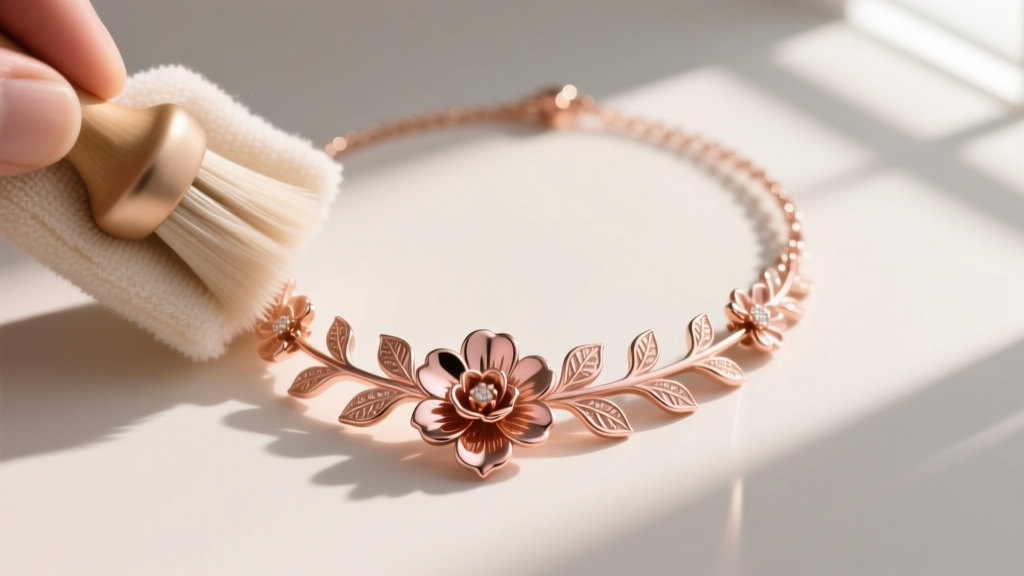
However, if your necklace is rose gold vermeil (a thick layer of rose gold plated over sterling silver) or standard gold-plated brass, aggressive polishing will literally rub the rose gold layer off, exposing the base metal beneath. For plated floral necklaces, rely solely on the gentle soap-and-water soak and dry with a soft cloth. Never use abrasive polishing pastes or treated chemical cloths on plated jewelry.
Proper Storage to Prevent Micro-Scratches and Tarnish
How you store your flower necklace is just as important as how you clean it. Rose gold is relatively soft, and the delicate tips of floral petals can easily become scratched or bent if tossed into a communal jewelry box.
- Individual Pouches: Store the necklace in its own soft flannel or anti-tarnish microfiber pouch to prevent the chain from tangling and scratching the pendant face.
- Anti-Tarnish Strips: Drop a 3M anti-tarnish tab into your jewelry box or pouch. These strips absorb the airborne sulfur and moisture that trigger copper oxidation.
- Climate Control: Avoid storing your jewelry in the bathroom. The constant fluctuations in humidity and temperature from showers will accelerate the tarnishing process of the copper alloy.
By respecting the unique alloy composition of rose gold and paying special attention to the intricate crevices of floral designs, your necklace will retain its romantic blush and structural integrity for a lifetime of wear.