How to Clean a Hart Tie Necklace: Expert Care Guide
Learn how to safely clean, polish, and store your delicate hart tie necklace. Expert tips on removing tarnish from intricate knot and tie crevices.

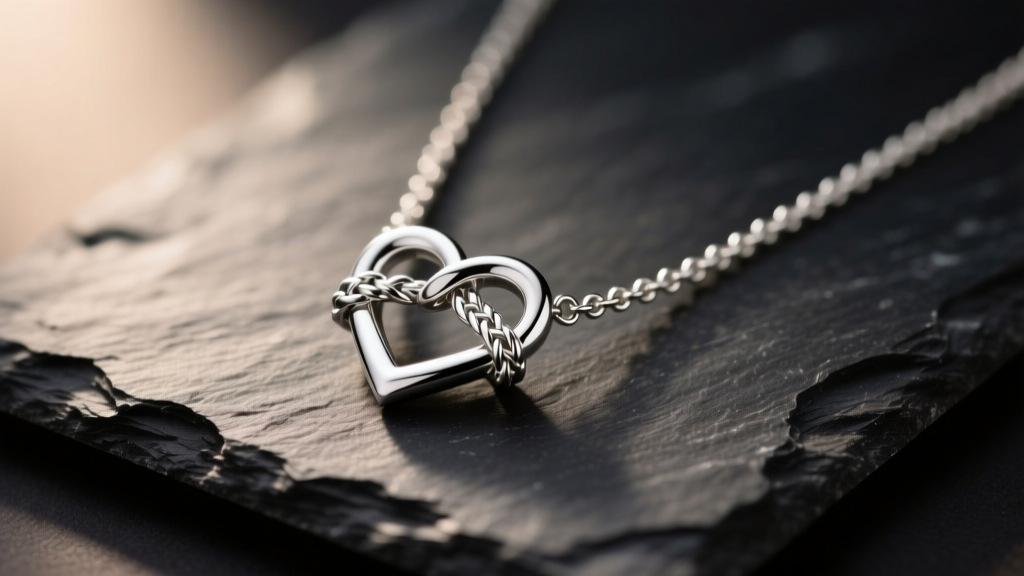
The hart tie necklace is a masterclass in metallurgical artistry, blending the romantic symbolism of a heart or stag motif with the intricate, overlapping geometry of a tied knot. Whether your piece is crafted from 925 sterling silver, 18k gold vermeil, or solid 14k gold, the defining feature of this pendant is its complex topography. The interlocking bands and tension-wrapped loops that create the 'tie' effect are visually stunning, but they present a unique challenge when it comes to jewelry maintenance.
Unlike flat, stamped pendants, the deep crevices and overlapping metal layers of a hart tie design act as microscopic traps for sebum, cosmetic residues, dead skin cells, and environmental pollutants. Over time, this buildup not only dulls the high-polish finish but accelerates localized tarnishing and crevice corrosion. In this comprehensive 2026 care guide, we break down the exact protocols required to clean, polish, and preserve the structural integrity of your hart tie necklace without damaging its delicate 0.9mm to 1.2mm chain or loosening the pendant's tension wraps.
The Unique Vulnerability of the Hart Tie Motif
To properly care for your hart tie necklace, you must first understand its structural vulnerabilities. The 'tie' or 'knot' motif is typically achieved through one of two manufacturing methods: micro-soldering overlapping wire segments, or casting a single piece with deep, simulated undercuts.
- Micro-Soldered Joints: If your pendant is constructed from wrapped wire, the friction-fit tension and microscopic solder joints holding the 'knot' together are highly sensitive to thermal shock and high-frequency vibrations.
- Simulated Undercuts: Cast pieces feature deep, narrow channels that mimic overlapping ribbons. These channels are notorious for trapping polishing compounds and moisture, which can lead to localized oxidation that is difficult to reach with standard jewelry cloths.
Furthermore, the chains paired with these pendants are usually delicate cable, box, or serpentine chains ranging from 0.8mm to 1.2mm in thickness. Aggressive pulling or snagging during the cleaning process can easily distort the links or snap the jump ring connecting the chain to the intricate bail of the hart tie pendant.
The Chemistry of Tarnish in Crevices
According to the Gemological Institute of America (GIA), sterling silver tarnish is primarily silver sulfide, a dark compound that forms when silver reacts with sulfur compounds in the air. However, the micro-environment inside the tight crevices of a hart tie knot accelerates this process.
When lotions, perfumes, and natural body oils settle into the overlapping bands of the tie, they create a moisture-sealed barrier. This barrier traps sulfur and limits oxygen flow, creating an ideal environment for rapid, localized tarnishing. If your necklace is gold vermeil (a thick layer of 18k or 24k gold over a sterling silver base), the tarnish will often manifest as a dark, bruised shadow seeping out from the deepest parts of the knot, indicating that the underlying silver core is oxidizing where the gold plating is thinnest.
Step-by-Step Deep Cleaning Protocol
Forget generic jewelry dips and harsh home remedies. Cleaning a hart tie necklace requires a gentle, multi-phase approach that prioritizes degreasing over abrasion. According to metallurgical guidelines from Rio Grande Jewelry Supply, surfactant-based cleaning is the safest method for intricate, multi-layered pendants.
Phase 1: The Degreasing Soak
Fill a small glass or ceramic bowl with warm distilled water. Avoid tap water, as the chlorine and fluoride additives can cause microscopic pitting on silver alloys and degrade gold vermeil over time. Add three drops of a mild, phosphate-free dish soap (like original blue Dawn). The surfactants will break the surface tension of the water, allowing it to penetrate the tightest loops of the tie knot. Submerge the necklace and let it soak for exactly 10 to 15 minutes. Do not exceed this time, especially for vermeil pieces, to prevent water from compromising the gold-to-silver molecular bond.
Phase 2: Micro-Scrubbing the Knot
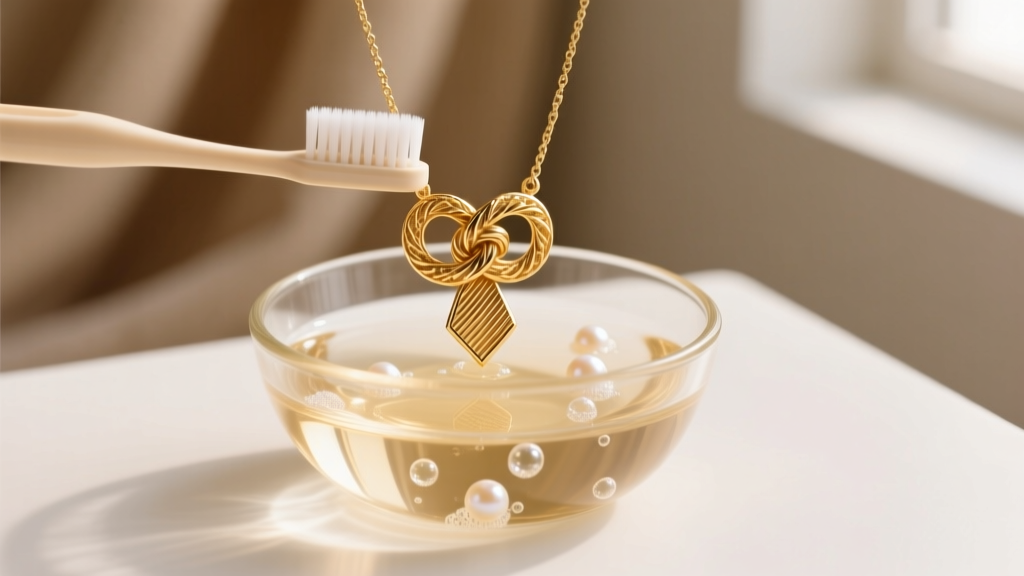
Remove the necklace from the soak and lay it flat on a clean, lint-free microfiber towel. Take an extra-soft baby toothbrush—standard adult toothbrushes have bristles that are too stiff and will leave micro-scratches on high-polish gold and silver surfaces. Dip the brush in the soapy water and gently agitate the bristles over the overlapping bands of the tie knot.
Use small, circular motions rather than aggressive back-and-forth scrubbing. Pay special attention to the bail (the loop where the chain connects) and the underside of the pendant, where skin contact is most frequent. If you encounter stubborn cosmetic buildup in a deep crevice, do not use a metal pin or needle to scrape it out; instead, use a wooden toothpick, which is softer than both silver and gold, to gently dislodge the debris.
Phase 3: The Rinse and Air-Dry
Rinse the necklace thoroughly under a gentle stream of lukewarm distilled water to remove all soap residue. Soap left in the crevices will dry into a cloudy, white film that is incredibly difficult to remove without re-soaking.
Critical Drying Step: Do not rub the necklace dry with a towel, as the terry cloth loops will catch on the delicate tie wraps and chain links. Instead, use a can of compressed air (held at least six inches away) or a hair dryer on the 'cool' setting to blow the water out of the knot's crevices. Allowing water to air-dry naturally inside the overlapping bands will result in hard water spots and accelerate crevice corrosion.
The Damage Matrix: Cleaners to Avoid
The intricate geometry of the hart tie necklace makes it highly susceptible to damage from conventional jewelry cleaning methods. Below is a breakdown of common cleaning agents and their specific failure modes when applied to knot and tie pendants.
| Cleaning Method | Chemical/Physical Action | Failure Mode on Hart Tie Necklaces |
|---|---|---|
| Ultrasonic Cleaners | High-frequency sound waves create cavitation bubbles. | Vibrations can fracture micro-solder joints on the tie wraps and loosen the jump ring on delicate 0.9mm chains. |
| Silver Dip (Thiourea) | Acidic chemical stripping of silver sulfide. | Instantly strips 18k gold vermeil. On solid silver, it leaves a porous surface that re-tarnishes twice as fast. |
| Baking Soda Paste | Mild abrasive (Mohs hardness 2.5). | Scratches high-polish surfaces. Paste packs into the knot crevices and dries into a concrete-like residue. |
| Ammonia Solutions | Alkaline degreaser and brightener. | Degrades the brass or copper base metals if the vermeil plating has micro-fractures, causing structural weakening. |
Polishing High-Relief Tension Wraps
Once the necklace is completely clean and dry, you may notice that the high-relief areas (the outer curves of the heart and the tops of the tie bands) still lack their original mirror finish. This is where a treated jewelry polishing cloth, such as a Sunshine Cloth, becomes essential.
Wrap the cloth around your index finger and gently buff the raised, accessible surfaces of the hart tie pendant. Never force the edge of the polishing cloth into the deep crevices of the knot. These cloths are embedded with micro-abrasives and tarnish-removing chemicals. If forced into the tight gaps, the abrasives will build up, creating a gritty paste that acts like sandpaper against the interior walls of the tie motif. For the recessed areas, rely on the chemical soak and soft brushing from Phase 1 and 2; accept that a slight patina in the deepest recesses actually enhances the three-dimensional contrast of the design.
Long-Term Storage and Maintenance
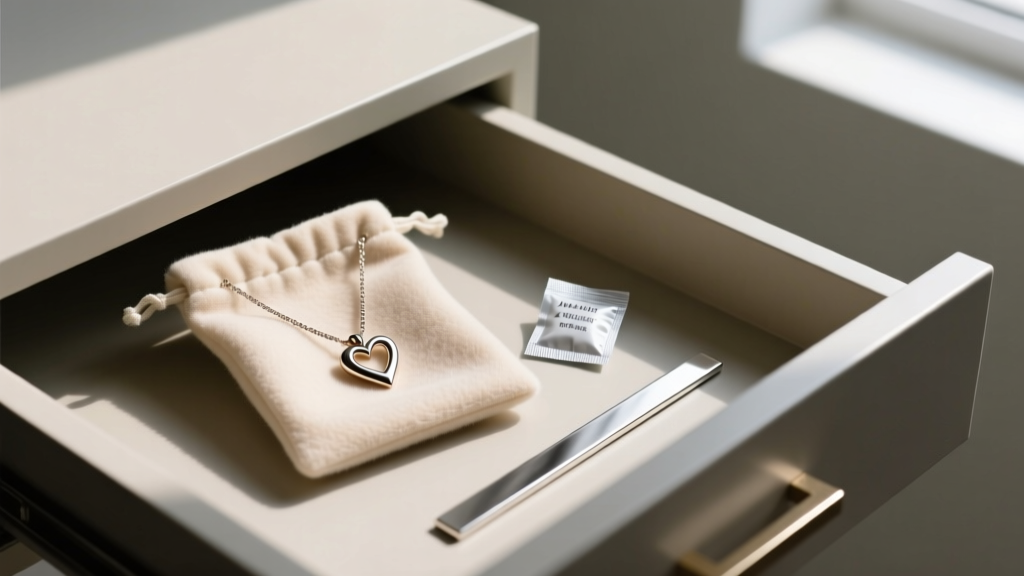
Proper storage is the most effective way to reduce the frequency of deep cleaning. Because the hart tie necklace features so many overlapping layers, it is highly prone to tangling when tossed into a communal jewelry box. A tangled chain pulled forcefully can warp the delicate bail of the pendant.
Store your necklace in an individual, anti-tarnish flannel pouch or a sealed polyethylene bag equipped with a 3M anti-tarnish strip. The strips absorb airborne sulfur and hydrogen sulfide before they can reach the silver alloy. Additionally, include a small silica gel packet in your storage drawer to control ambient humidity, which is a primary catalyst for oxidation.
Maintenance Schedule:
- After Every Wear: Wipe the pendant and the clasp area with a dry, untreated microfiber cloth to remove daily oils and sweat.
- Monthly: Perform the Phase 1 soapy soak to prevent cosmetic buildup from hardening in the knot crevices.
- Bi-Annually: Use a treated polishing cloth on the high-relief areas to restore the mirror finish.
By respecting the intricate architecture of the hart tie necklace and avoiding harsh, abrasive shortcuts, you ensure that its complex, interlocking beauty remains pristine for generations. Proper care is not just about maintaining shine; it is about preserving the structural tension and metallurgical integrity that makes this specific pendant style a timeless wardrobe staple.


