Expert Care: Cleaning Your Heart and Key Necklace Safely
Learn expert cleaning and maintenance tips for your heart and key necklace. Discover safe methods for silver, gold vermeil, and gemstone inlays.

The Anatomy of Tarnish: Why Symbolic Jewelry Traps Grime
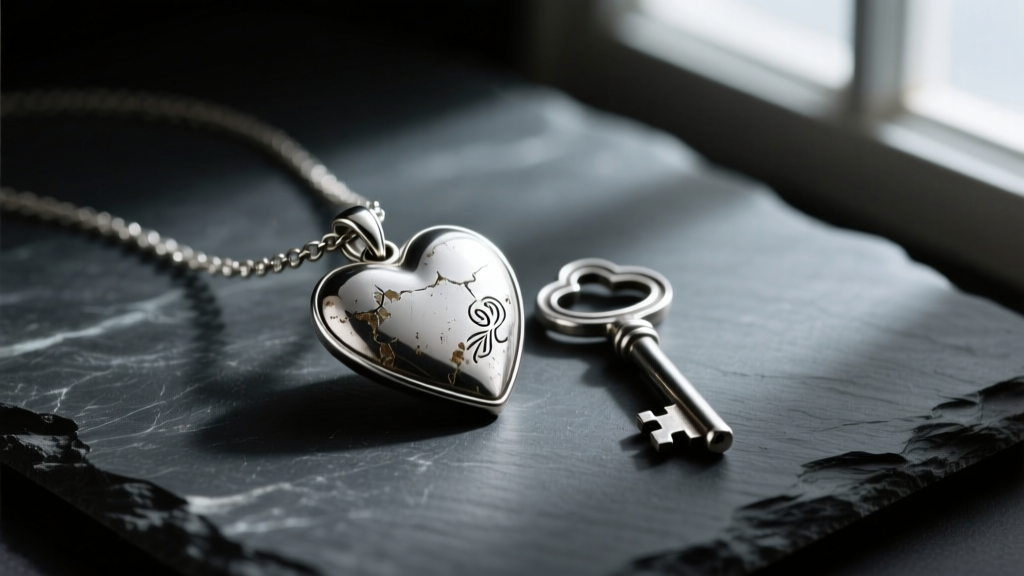
A heart and key necklace is more than just a beautiful accessory; it is a profound symbol of trust, love, and hidden depths. However, from a jeweler’s perspective, the intricate design of these multi-component pendants makes them notorious magnets for environmental tarnish, cosmetic buildup, and dead skin cells. The deep crevices carved into the 'key' teeth and the microscopic gaps beneath the pavé gemstones often found on the 'heart' pendant create perfect hiding spots for sebum and lotion residue.
When these organic compounds mix with sulfur in the air, they accelerate the oxidation process, particularly in sterling silver alloys. Furthermore, because the key and heart pendants constantly strike one another as you move, any abrasive grit trapped between them can cause micro-scratches on the metal surfaces. In 2026, while jewelry care has evolved with new eco-friendly enzymatic cleaners, the fundamental chemistry of metal oxidation and mechanical wear remains unchanged. Understanding how to properly clean your heart and key necklace is essential to preserving both its sentimental value and its structural integrity.
Material-Specific Cleaning Protocols
Before you mix any cleaning solutions, you must identify the exact metallurgy of your necklace. Using the wrong chemical agent can strip gold vermeil or permanently cloud porous gemstone inlays. Below is a definitive guide to matching your cleaning method to your necklace's material.
| Material Grade | Tarnish Risk | Safe Cleaning Agent | Recommended Tool | Cleaning Frequency |
|---|---|---|---|---|
| 925 Sterling Silver | High | Mild Dish Soap + Distilled Water | Extra-soft baby toothbrush | Bi-weekly |
| Gold Vermeil (2.5μm+) | Medium (if base metal exposed) | Ammonia-free Suds | Microfiber polishing cloth | Monthly |
| Solid 14k / 18k Gold | Very Low | Warm Water + Mild Detergent | Soft lint-free cotton cloth | As needed |
| Silver with Porous Stones (e.g., Turquoise, Pearl) | High (Metal) | Dry Polishing Cloth Only | Silver polishing cloth (avoid stones) | After every wear |
According to the Jewelers of America, vermeil pieces require exceptionally gentle care. Gold vermeil consists of a thick layer of gold (at least 2.5 microns) bonded over a sterling silver base. Aggressive scrubbing or harsh chemicals can wear through this layer, exposing the silver underneath to rapid tarnishing.
Step-by-Step Deep Cleaning Routine
For standard 925 sterling silver or solid gold heart and key necklaces without porous gemstones, follow this professional-grade deep cleaning routine to restore brilliance without causing abrasion.
1. The Pre-Clean Debris Removal
Before introducing any liquids, inspect the teeth of the key pendant and the gallery (the underside) of the heart pendant. Use a wooden toothpick to gently dislodge any hardened lotion or lint. Never use metal pins or needles, as these will scratch the gold or silver and weaken the prongs holding any accent stones in place.
2. The Distilled Water Soak
Fill a small glass bowl with warm distilled water. Tap water contains chlorine and hard minerals that can leave microscopic spots on high-polish metals. Add three drops of a mild, phosphate-free dish soap (like Dawn or Palmolive). Submerge the necklace and let it soak for exactly 5 to 10 minutes. This softens the sebum bonds without compromising the metal.
3. Targeted Agitation
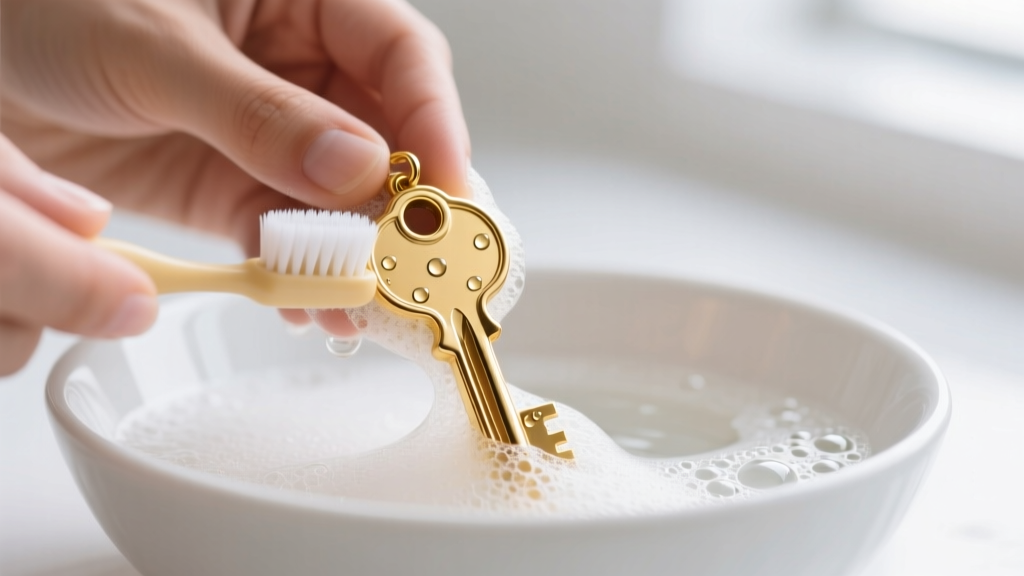
Remove the necklace from the bath. Using an extra-soft bristled baby toothbrush, gently brush the key pendant, paying special attention to the grooves and teeth. For the heart pendant, brush in small circular motions. If your heart pendant features pavé diamonds or cubic zirconia, brush gently from the back (the gallery) pushing outward to dislodge oils trapped directly beneath the stones, which are the primary cause of cloudiness.
4. The Rinse and Dry
Rinse the necklace thoroughly under a gentle stream of lukewarm distilled water. Pat it dry with a clean, lint-free microfiber cloth. Do not use paper towels or tissue paper; the wood pulp fibers in these products are surprisingly abrasive and will leave micro-scratches on polished gold and silver surfaces. Ensure the necklace is completely bone-dry before storing it to prevent water-induced oxidation.
The Danger Zone: What to Avoid
Many well-intentioned jewelry owners inadvertently destroy their favorite pieces by relying on outdated or overly aggressive cleaning methods. When caring for a heart and key necklace, strictly avoid the following:
- Ultrasonic Cleaners: While ultrasonic machines use 40kHz sound waves to blast away dirt, the intense vibrations can easily shake loose the tiny prongs securing pavé stones on the heart pendant. Furthermore, if your key pendant features enamel detailing, the heat and vibration can cause the enamel to crack or detach.
- Thiourea-Based Silver Dips: Commercial 'instant' silver dip solutions rely on thiourea, a toxic chemical that strips tarnish in seconds. However, it also strips the protective rhodium plating often applied to sterling silver to prevent tarnish, leaving the metal porous and prone to turning black even faster in the future.
- Toothpaste: A common DIY myth suggests using baking soda or toothpaste to polish silver. These substances are highly abrasive (rating 3-4 on the Mohs hardness scale) and will permanently dull the mirror finish of your key and heart pendants.
Expert Insight: The Gemological Institute of America (GIA) strongly advises against using ultrasonic cleaners on any jewelry featuring fracture-filled diamonds, porous gems, or tension settings, all of which are common in modern symbolic pendant designs.
Mechanical Wear: Inspecting Jump Rings and Clasps
Cleaning is only half the maintenance equation. A heart and key necklace typically features multiple jump rings—the small metal loops connecting the pendants to the chain. Because the key and heart swing freely, they create constant kinetic friction against these jump rings.
Every time you clean your necklace, perform a mechanical inspection. Gently pull the heart and key pendants away from each other. If you see the gap of the jump ring opening, or if the metal feels thin and brittle, it is suffering from work-hardening and metal fatigue. Never attempt to close a weakened jump ring with standard pliers, as this can snap the metal. Instead, use two pairs of smooth-jawed chain-nose pliers to gently twist the ring closed laterally, or take it to a jeweler for a micro-soldering repair.
Strategic Storage Solutions
How you store your heart and key necklace directly dictates how often you need to clean it. Tossing it into a communal jewelry box guarantees that the jagged edges of the key will scratch the polished face of the heart. It also invites chain tangling, which puts immense stress on the delicate links.
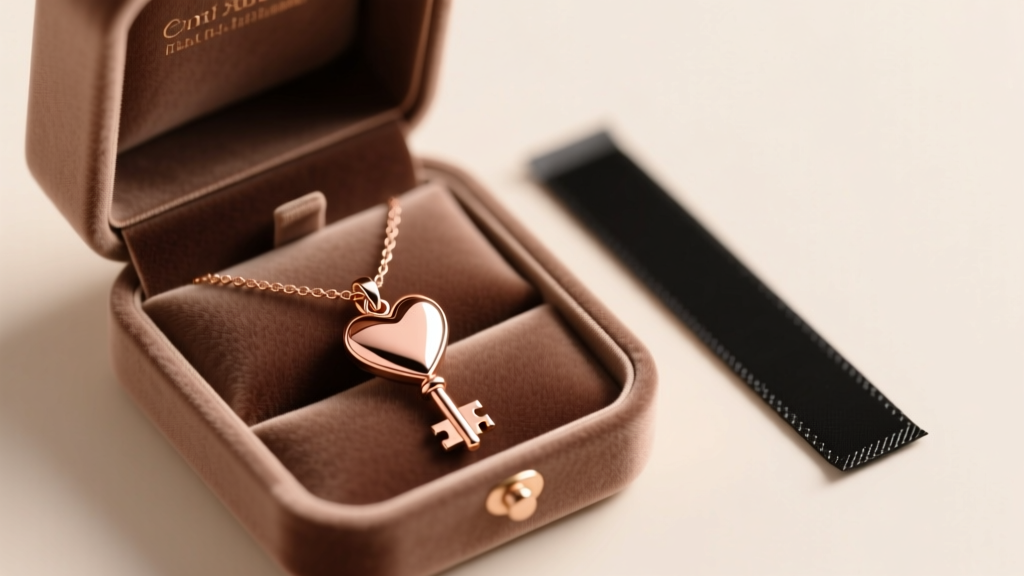
To prevent this, store the necklace in a dedicated, multi-compartment jewelry box or lay it flat in a felt jewelry roll. For sterling silver pieces, place a 3M anti-tarnish strip inside the storage compartment. These strips absorb the ambient sulfur gases that cause silver sulfide (tarnish) to form, keeping your necklace brilliant for months between wears. Always fasten the lobster clasp before storing to prevent the chain from threading itself through the pendants.
When to Seek Professional Jeweler Intervention
While home maintenance is excellent for surface grime and light oxidation, certain issues require professional intervention. If the gemstones in your heart pendant become loose, if the chain develops a kink, or if heavy, blackened tarnish has settled deep into the oxidized antiquing of the key's engraving, visit a certified bench jeweler. Professionals use specialized steam cleaners and microscopic prong-tightening tools that safely restore the structural integrity and optical brilliance of your jewelry without risking the delicate components that make your heart and key necklace so uniquely meaningful.


