How to Clean a Jimmy Choo Necklace: Crystal Care Guide
Learn how to safely clean and store your Jimmy Choo necklace. Expert tips on preserving gold plating and restoring Swarovski crystal sparkle.

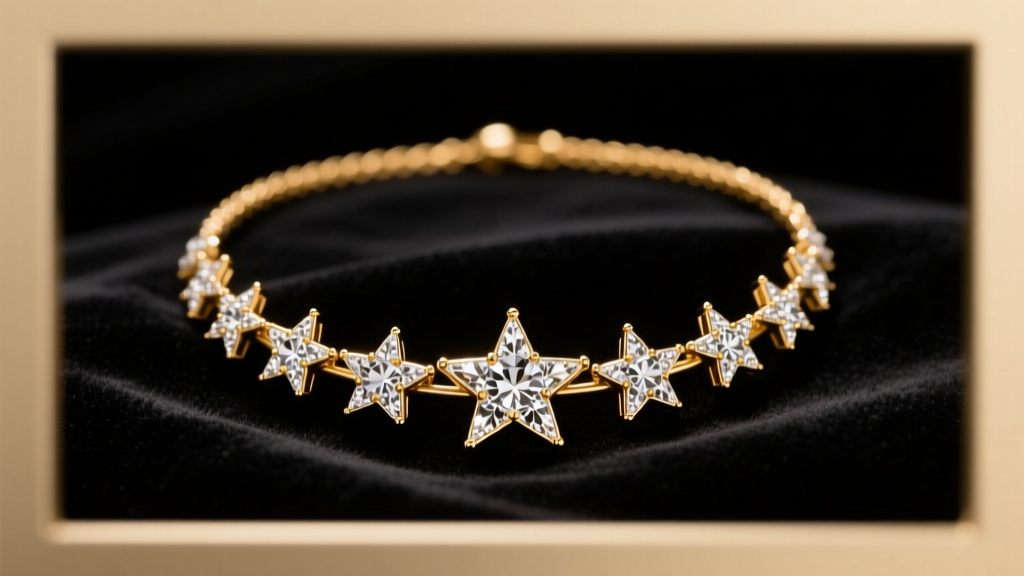
The Anatomy of a Jimmy Choo Necklace: Why Standard Cleaning Fails
To properly care for a Jimmy Choo necklace, you must first understand its metallurgical and gemological composition. Unlike fine jewelry crafted from solid 18k gold or platinum, Jimmy Choo pieces are high-end fashion jewelry. They typically feature a brass or stainless steel base metal that is electroplated with a micro-thin layer (usually 0.5 to 1.5 microns) of gold, rose gold, or rhodium. This plating is often sealed with an electrophoretic lacquer (e-coating) to delay tarnishing.
The hallmark of these necklaces is their brilliant pavé and statement crystals, predominantly sourced from Swarovski. According to the Gemological Institute of America (GIA), modern Swarovski Advanced Crystals are precision-cut, lead-free glass formulations with a high refractive index (approximately 1.7) designed to mimic the light dispersion of diamonds. However, because these crystals are set using specialized epoxy resins or jeweler's cement rather than prong tension, submerging the necklace in water or using ultrasonic cleaners will degrade the adhesive, causing stones to loosen and fall out.
Step-by-Step Cleaning Protocol for Crystal & Plated Jewelry
Restoring the brilliance of your necklace requires a gentle, moisture-controlled approach. Follow this three-step protocol to remove sebum, cosmetic buildup, and environmental dust without compromising the e-coating or crystal adhesives.
Step 1: The Dry Dusting
Before introducing any moisture, remove loose particulate matter. Use a clean, dry, soft-bristled makeup brush or a baby toothbrush (with bristles trimmed to 0.1mm stiffness). Gently sweep the bristles over the pavé crystal settings and the clasp mechanisms. This prevents microscopic dirt from turning into an abrasive mud when wet, which can scratch the soft gold plating.
Step 2: The Damp Wipe (No Soaking!)
Mix one drop of pH-neutral, lotion-free dish soap (such as original Dawn) into a bowl of distilled water. Tap water contains dissolved minerals like calcium and magnesium that will leave opaque water spots on the crystal facets. Dip a lint-free microfiber cloth into the solution, wring it out until it is barely damp, and gently wipe the metal chains and the flat tables of the crystals. Never use cotton balls or tissues, as their fibers will snag on the prongs and clasp springs.
Step 3: Crystal Polishing and Rapid Drying
To restore the optical clarity of the crystals, use a second, completely dry microfiber cloth to buff each stone individually. Pay special attention to the underside (the pavilion) of the pendant crystals, where skin oils accumulate and block light refraction. Immediately after polishing, use a hairdryer on the "cool" and "low" settings to blow out any microscopic moisture trapped between the crystal settings and the metal base.
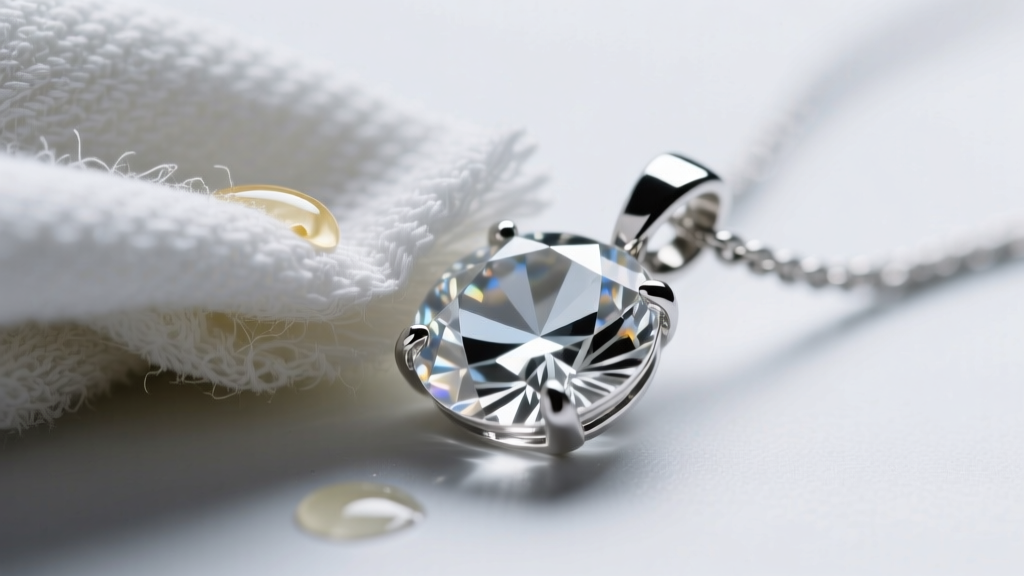
Chemical Compatibility Chart: What to Avoid
Fashion jewelry plating and crystal coatings are highly reactive to common household chemicals and cosmetics. The Swarovski Care Guidelines explicitly warn against harsh solvents. Refer to the table below to understand how everyday substances damage your necklace.
| Chemical / Substance | Effect on Metal Plating | Effect on Crystals & Adhesives |
|---|---|---|
| Chlorine (Pools/Bleach) | Instantly strips gold/rhodium and pits brass | Causes permanent surface clouding |
| Rubbing Alcohol | Degrades the protective e-coat sealant | Dissolves epoxy; strips Aurora Borealis (AB) finishes |
| Ammonia (Glass Cleaner) | Causes the brass base metal to oxidize rapidly | Etches the glass surface, dulling refraction |
| Perfume / Hairspray | Accelerates tarnish and creates sticky buildup | Leaves an oily film that blocks light dispersion |
| Silver Dip Solutions | Completely removes gold and rhodium plating | Chemically burns crystal facets |
Preventative Maintenance & Storage Tactics
Proper storage is arguably more critical than cleaning when it comes to preserving the lifespan of a Jimmy Choo necklace. The primary enemies of plated brass are humidity, sulfur, and friction.
The Golden Rule of Jewelry Wear: Always practice "Last On, First Off." Your necklace should be the final item you put on after applying lotions, perfumes, and hairsprays, and the very first item you remove when you begin your evening skincare routine or enter a shower.
Humidity & Anti-Tarnish Strategies
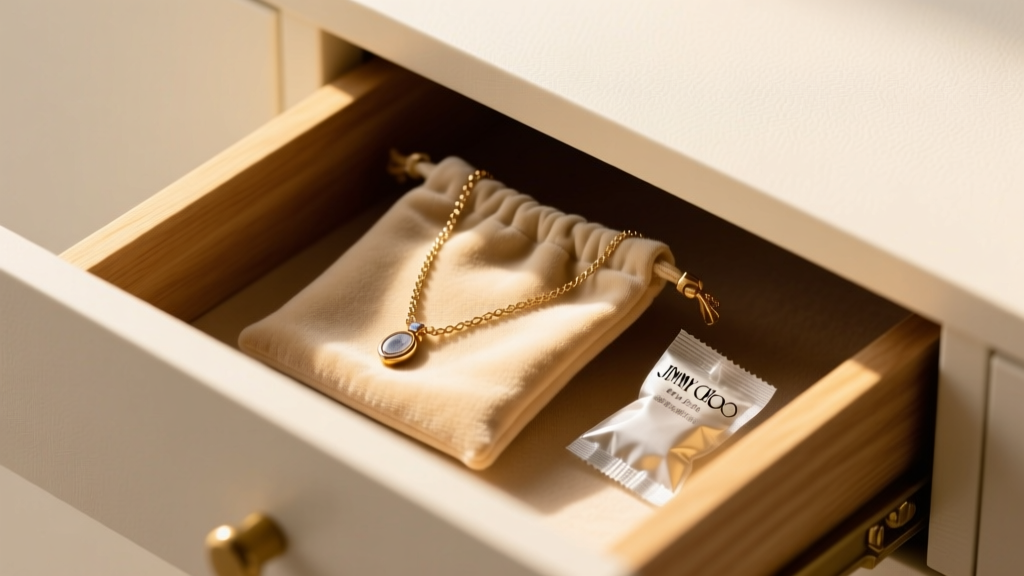
Never store your necklace in a bathroom where steam and high humidity will rapidly accelerate the oxidation of the base metal. Instead, store the piece in its original flannel pouch or a dedicated jewelry box lined with anti-tarnish fabric. For added protection, place a 3M anti-tarnish strip and a small, color-indicating silica gel packet inside the storage bag to absorb ambient moisture and neutralize sulfur gases. Ensure the storage bag is made of polyethylene; avoid PVC plastics, which off-gas chlorine compounds that corrode metal.
Troubleshooting Common Jimmy Choo Necklace Issues
Even with meticulous care, fashion jewelry can present specific challenges. Here is how to address the most common failure modes without causing further damage:
- The "Green Skin" Reaction: If the clasp or pendant leaves a green or black mark on your neck, this is not a sign of poor quality, but a natural chemical reaction between the copper in the brass base metal and the salts/acids in your sweat. Fix: Paint a thin layer of clear, hypoallergenic nail polish over the back of the pendant and the clasp to create a physical barrier between the metal and your skin.
- Loose or Missing Pavé Crystals: If a stone falls out, do not attempt to reattach it using Super Glue (cyanoacrylate). As cyanoacrylate cures, it releases fumes that cause "blooming"—a permanent, frosty white haze that will ruin the optical clarity of surrounding crystals. Fix: Use a specialized jeweler's adhesive like G-S Hypo Cement, applying a microscopic dot with a toothpick, and let it cure for 24 hours.
- Stubborn Hairspray Buildup: If a sticky residue has hardened in the crevices of the chain, do not scrape it with a metal needle. Fix: Use a wooden orange stick (commonly used for cuticle care) dipped very lightly in distilled water to gently lift the resinous buildup without scratching the soft gold plating.
Conclusion
A Jimmy Choo necklace is an investment in high-impact, red-carpet-worthy design. By respecting the material limitations of micro-plated metals and precision-cut crystals, you can maintain the piece's structural integrity and optical brilliance for years. Ditch the ultrasonic cleaners and harsh silver polishes, and embrace the gentle, moisture-controlled techniques outlined above to keep your crystals catching the light exactly as the designers intended.


