Restore & Clean Your Juicy Couture Pearl Necklace Safely
Learn how to safely clean, restore, and maintain your vintage Juicy Couture pearl necklace without damaging the faux pearl coating or rhinestones.

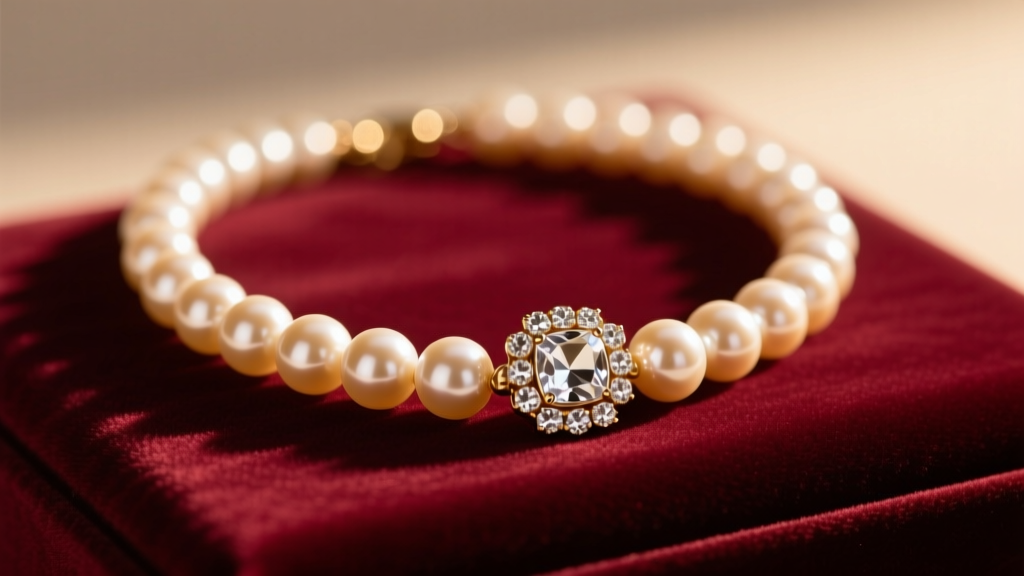
The resurgence of Y2K fashion has pushed vintage accessories into the spotlight, making the iconic juicy couture pearl necklace a grail piece for collectors and trendsetters alike in 2026. Whether you are rocking a classic single-strand choker or a layered crystal-and-pearl lariat, these early-2000s statement pieces require a radically different approach to maintenance than fine jewelry. Treating a vintage Juicy Couture piece like a strand of cultured Akoya pearls will result in irreversible damage, stripped plating, and ruined rhinestones.
This comprehensive conservation guide breaks down the exact material science behind your favorite Y2K costume jewelry and provides a safe, step-by-step framework for cleaning, storing, and troubleshooting common failure modes.
The Anatomy of a Juicy Couture Pearl Necklace
Before applying any cleaning solution, you must understand what you are actually cleaning. According to vintage jewelry conservation standards outlined by Lang Antiques, costume jewelry from the 2000s relies on layered synthetic materials that are highly reactive to modern chemical cleaners.
- The 'Pearls': These are rarely real nacre. They are typically glass or high-density acrylic beads coated with a synthetic 'pearl essence'—a lacquer often derived from titanium dioxide, mica, or synthetic guanine. This coating is glued to the bead and is highly susceptible to peeling when exposed to solvents.
- The Chain & Hardware: Most chains are brass or base metal with a microscopic 'flash' plating of gold or silver. The clasps (usually lobster or spring-ring) are often made of cheaper pot metal that can snap if bent during cleaning.
- The Rhinestones: The signature JC crown pendants and crystal accents use glass or acrylic rhinestones. Crucially, these stones rely on a delicate metallic foil backing to create their sparkle. If moisture breaches the prongs, this foil oxidizes and turns black—a phenomenon known as 'foil rot'.
What NEVER to Do: The Fastest Ways to Ruin Y2K Jewelry
Many well-meaning jewelry owners destroy their vintage pieces by following generic cleaning advice meant for solid gold or diamonds. Avoid these three catastrophic mistakes:
1. The Ultrasonic Cleaner Trap
Ultrasonic cleaners use high-frequency sound waves to create microscopic cavitation bubbles. When these bubbles collapse, they send localized shockwaves through the liquid. While great for solid diamond rings, these shockwaves will instantly blast the delicate pearlescent lacquer right off your faux pearls, leaving you with bare, cloudy glass beads.
2. Ammonia and Commercial Silver Dips
Products containing ammonia, alcohol, or harsh acids will strip the thin flash-plating off the brass chain, exposing the raw base metal which will rapidly turn your skin green. Furthermore, the Gemological Institute of America (GIA) warns that harsh chemicals degrade the structural integrity of pearl coatings, causing them to crack and flake.
3. The Toothpaste Myth
Toothpaste contains silica and calcium carbonate abrasives. Scrubbing a Juicy Couture pearl necklace with a toothbrush and toothpaste will create thousands of micro-scratches in the pearl essence, permanently dulling the luster and creating a cloudy, matte finish.
Step-by-Step Cleaning Guide for Faux Pearls & Rhinestones
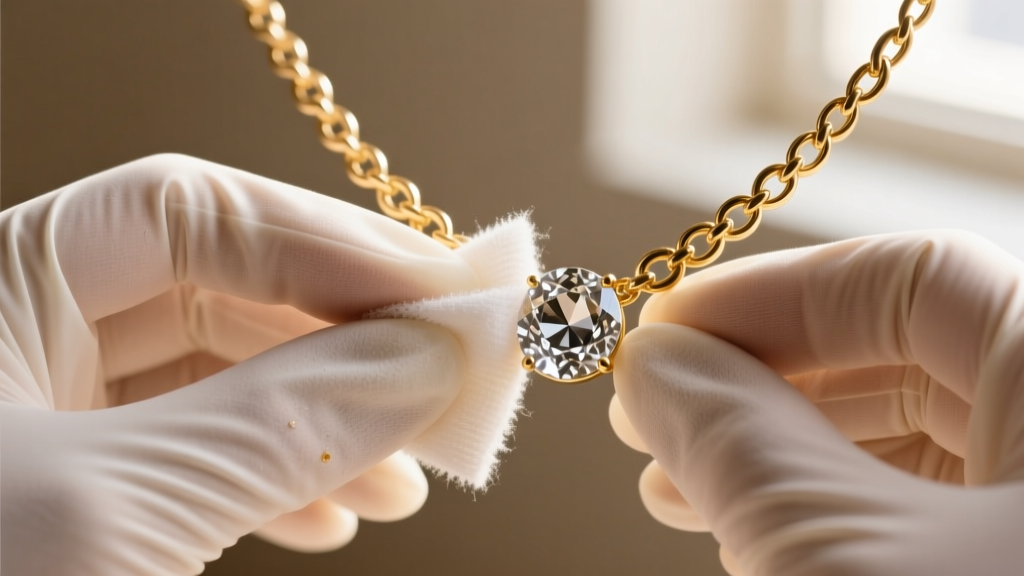
To safely restore the brilliance of your necklace, follow this conservative, low-moisture protocol. You will need a clean, soft-bristled makeup brush (like an eyeshadow blending brush), a lint-free microfiber cloth, cotton swabs, and distilled water.
Step 1: The Dry Dusting Method
Lay the necklace flat on a clean, dark microfiber towel. Using the dry makeup brush, gently sweep over the pearls, chain links, and rhinestone settings. This removes surface oils, dead skin cells, and cosmetic powders without introducing any moisture that could seep behind the stone prongs.
Step 2: The Damp Microfiber Wipe
Lightly mist a corner of your microfiber cloth with distilled water (never tap water, as the minerals will leave hard water spots on the faux pearls). Gently pinch each pearl between the damp cloth and roll it to lift stubborn body oils. Never submerge the necklace. Keep the chain and rhinestone pendants completely dry during this step.
Step 3: Rhinestone Foil Protection
If the crystal accents are smudged, use a dry cotton swab to gently polish the surface of the stone. Do not use water or glass cleaner on the rhinestones. If a stone is particularly cloudy due to surface oils, breathe lightly on it to create a tiny amount of condensation, then immediately buff it dry with the swab. This prevents moisture from pooling around the metal prongs and triggering foil rot.
Care Comparison: Real Pearl vs. Juicy Couture Faux Pearl
| Feature | Cultured / Saltwater Pearl | Juicy Couture Faux Pearl |
|---|---|---|
| Composition | Organic nacre secreted by mollusk | Glass/acrylic bead + pearlescent lacquer |
| Reaction to Acid | Dissolves (calcium carbonate) | Resistant to mild acids, but lacquer can peel |
| Ultrasonic Safe? | No (can fracture nacre) | Absolutely Not (strips coating instantly) |
| Moisture Tolerance | Needs slight humidity to prevent cracking | Must stay dry to protect rhinestone foil |
| Restringing | Knotted silk thread required | Often strung on nylon wire or glued links |
Long-Term Storage & Anti-Tarnish Maintenance
Proper storage is 90% of the battle when it comes to preserving Y2K costume jewelry. The base metals used in the 2000s are highly prone to oxidation when exposed to the sulfur and humidity in ambient air.
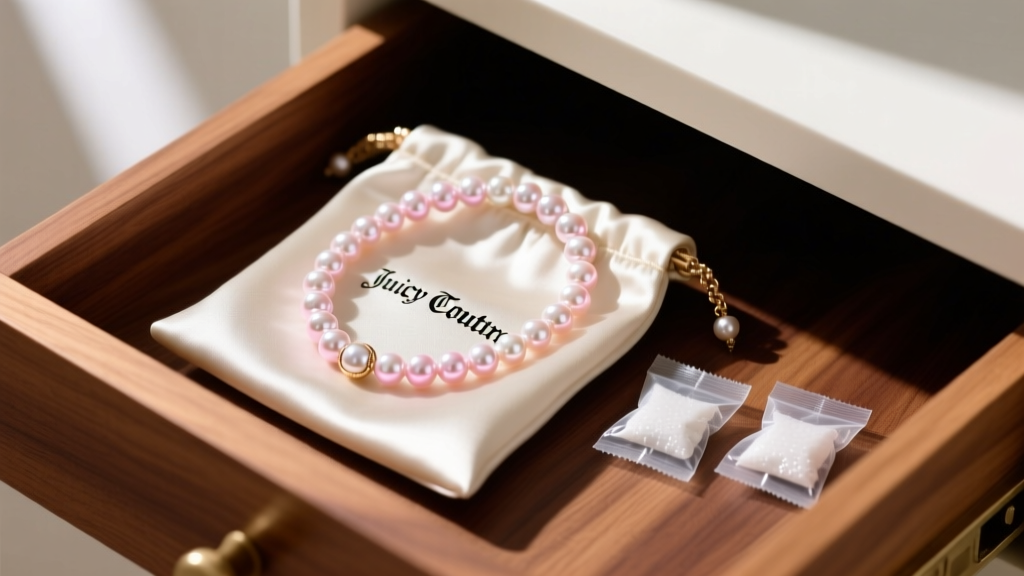
- Use Anti-Tarnish Strips: Place 3M anti-tarnish strips inside your jewelry box. These strips absorb airborne sulfur compounds before they can react with the brass chain, preventing the metal from turning black and brittle.
- Control Humidity: Store your necklace in a cool, dry place. Tossing a few silica gel packets into your jewelry drawer will drastically reduce ambient moisture, protecting the delicate rhinestone foils from oxidizing.
- Hang or Lay Flat: If the necklace features a heavy crystal pendant, lay it flat in a soft pouch. Hanging heavy costume jewelry for long periods can stress the unsoldered jump rings (a common manufacturing shortcut in the 2000s), causing the chain to snap at the clasp.
Expert Troubleshooting: Peeling Coatings & Cloudy Stones
'Foil rot and peeling lacquer are the two most common issues we see in early-2000s designer costume jewelry. Once the moisture breaches the setting, the damage is usually permanent, but stabilization is possible.' — Vintage Jewelry Conservation Note
Fixing Peeling Pearl Coatings
If you notice the pearlescent lacquer flaking near the drill holes of the beads, the structural integrity of the coating is failing. While you cannot re-plate a faux pearl, you can stabilize it. Carefully apply a microscopic layer of UV-curing clear resin or a high-quality clear topcoat over the peeling edge using a fine needle. This seals the lacquer to the glass bead and prevents further flaking during wear.
Dealing with Blackened Rhinestone Foil
If a rhinestone on your JC crown pendant has turned black or grey, the foil backing has oxidized. Unfortunately, no amount of surface cleaning will fix this, as the damage is underneath the glass. Your options are to embrace the vintage patina, or take the piece to a professional bench jeweler who can carefully lift the prongs, remove the dead stone, and replace it with a modern Swarovski or Preciosa flatback crystal of the exact same millimeter size.
Conclusion
Maintaining a vintage juicy couture pearl necklace requires patience, a gentle touch, and an understanding of synthetic material limits. By avoiding harsh chemicals, keeping moisture away from the rhinestone settings, and utilizing anti-tarnish storage methods, you can ensure your Y2K statement piece remains vibrant, sparkling, and ready to wear for decades to come.