Care Guide: Cleaning Custom Chains Like Kanye's Necklace Safely
Learn expert cleaning and maintenance tips for heavy, diamond-encrusted hip-hop chains and custom pendants inspired by Kanye's necklace collection.

The Evolution of Hip-Hop Jewelry Maintenance
When hip-hop culture collided with high horology and fine jewelry, the standard for chains shifted permanently. Looking at the cultural impact of Kanye's necklace collection—from the iconic diamond-encrusted Jesus pieces designed by Jacob the Jeweler to the heavy, custom-milled Cuban links and controversial crystal masks—it is clear that these are not standard commercial chains. They are bespoke, investment-grade artifacts. As of 2026, the secondary market for archival hip-hop jewelry has surged, making the preservation of these pieces not just a matter of aesthetics, but of serious asset protection.
However, the very elements that make these pieces iconic (high-karat gold, micro-pavé diamonds, and custom enamel work) make them incredibly vulnerable to improper maintenance. Standard jewelry cleaning methods can easily destroy a $100,000 custom piece. This guide provides a masterclass in cleaning, storing, and preserving heavyweight, diamond-draped chains without compromising their structural integrity or brilliance.
The Metallurgy of Heavyweight Chains
To properly care for a chain of this caliber, you must first understand its metallurgy. Most commercial chains are cast in 10k or 14k gold, which offers excellent durability due to the higher alloy content. However, elite custom pieces are frequently milled and hand-set in 18k or even 22k yellow gold to achieve that signature rich, warm hue.
The trade-off for this color depth is structural softness. Pure gold is highly malleable, and 18k gold (75% pure) is significantly more prone to micro-scratches, link deformation, and clasp stretch than 14k gold. When a heavy pendant weighing upwards of 50 grams is suspended on an 18k chain, the constant kinetic friction and gravitational pull can literally stretch the links over time. Understanding this metallurgical reality dictates how you handle, store, and clean the piece.
Archival Storage and Clasp Preservation
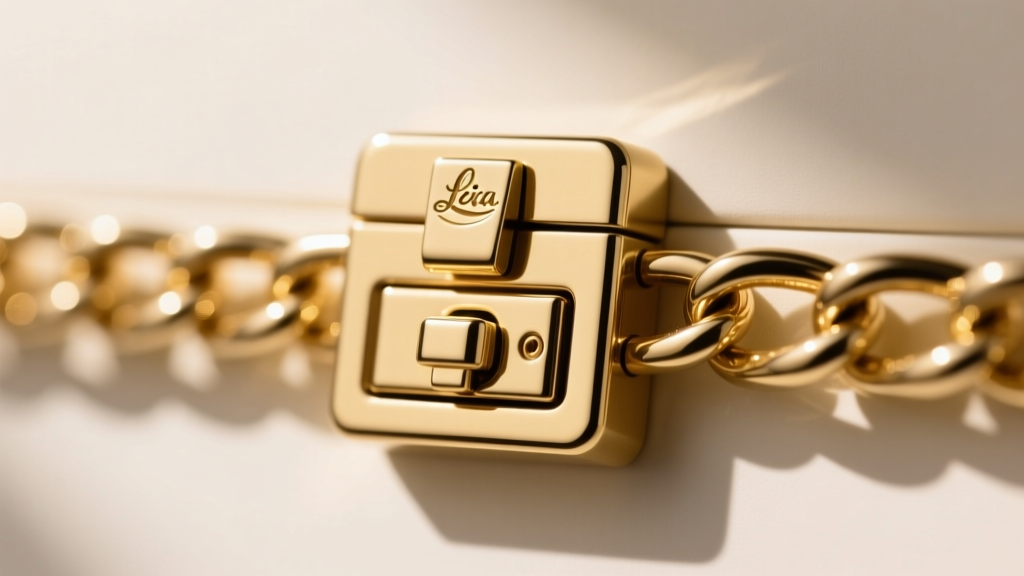
The most common point of catastrophic failure on a heavy custom chain is the clasp. Standard lobster clasps and spring rings are entirely insufficient for chains weighing over 100 grams. High-end chains utilize custom box clasps equipped with dual safety catches and figure-eight security wires.
Proper Hanging vs. Flat Storage
Never hang a heavy, diamond-encrusted chain on a standard jewelry hook. The concentrated weight on the top link will cause it to oval out and weaken. Instead, store the chain flat in a velvet-lined archival box, or drape it over a wide, padded display cylinder. If you must hang it, use a specialized wide-gauge velvet hanger that distributes the weight across at least six inches of the chain's length.
- Clasp Lubrication: Every six months, apply a microscopic drop of synthetic watch oil to the hinge of the box clasp to prevent the internal spring from seizing.
- Safety Catch Inspection: Use a 10x jeweler's loupe to inspect the figure-eight safety wires. If the wire shows any signs of thinning or bending, the chain must be retired from wear until a master jeweler solders a replacement.
The Ultrasonic Threat to Micro-Pavé
Walk into any standard mall jeweler, and they will likely drop your chain into an ultrasonic cleaner. For a heavy custom piece featuring VVS diamonds set in micro-pavé, this is a catastrophic mistake.
Ultrasonic cleaners work by generating high-frequency sound waves (typically around 40,000 Hz) that create microscopic cavitation bubbles in the cleaning solution. When these bubbles collapse, they create intense localized shockwaves. While this is excellent for blasting dirt out of a solid gold wedding band, it is deeply destructive to micro-pavé settings.
In a micro-pavé setting, hundreds of tiny diamonds are held in place by microscopic beads of gold pushed over the girdle of the stone. The high-frequency vibrations from an ultrasonic cleaner will literally shake these tiny gold beads loose. According to the Gemological Institute of America (GIA), ultrasonic cleaners should be avoided for jewelry with pavé settings, fracture-filled diamonds, or porous gemstones. Using one on a custom hip-hop chain is a guaranteed way to lose thousands of dollars in loose stones down the drain.
The Wet-Cleaning Protocol for VVS Stones
To safely restore the fire and brilliance of high-clarity diamonds set in high-karat gold, you must rely on a gentle, manual wet-cleaning protocol. This method lifts sebum, lotion, and environmental dust without subjecting the settings to mechanical stress.
Step-by-Step Manual Cleaning
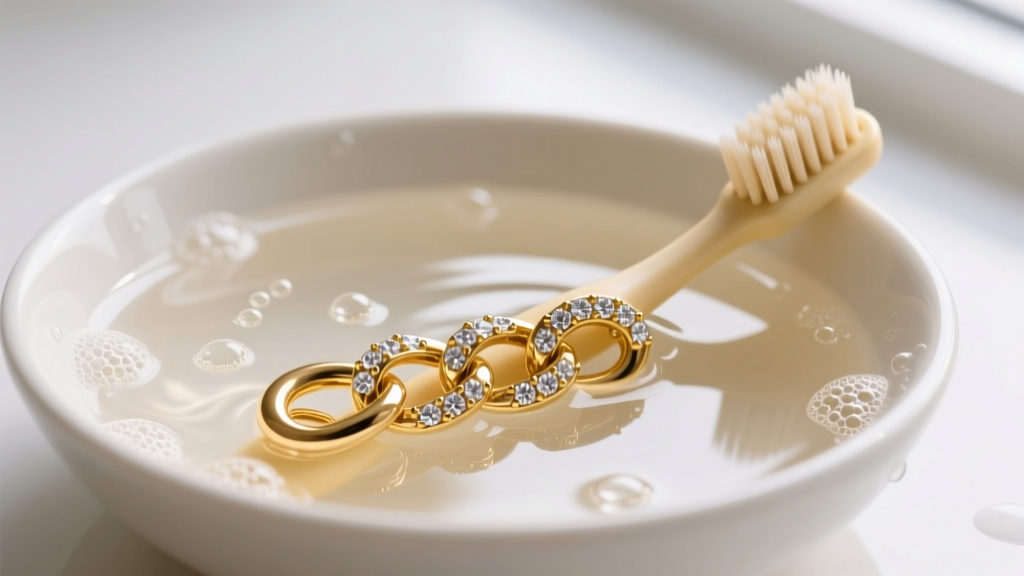
- Prepare the Solution: Fill a glass bowl with warm (not hot) distilled water. Add three drops of pH-neutral, lotion-free dish soap (such as original blue Dawn). Avoid soaps with added moisturizers, as they leave a cloudy film on the diamonds.
- Soak: Submerge the chain and pendant for exactly 15 minutes. This allows the surfactants to break down the oils trapped beneath the diamond galleries.
- Agitate Gently: Using a brand-new, ultra-soft baby toothbrush, gently sweep the bristles across the surface of the diamonds. Do not scrub in circles; use linear, sweeping motions following the direction of the chain links.
- The Underside Gallery: Flip the pendant over. The back of the diamonds (the culet and pavilion) trap the most dead skin and oil. Gently poke the bristles into the open gallery holes to push debris out.
- Rinse and Dry: Rinse the chain under a gentle stream of lukewarm distilled water. Pat dry with a lint-free microfiber cloth. Never use paper towels, as the wood pulp fibers will micro-scratch the high-polish 18k gold.
Cleaning Agent Comparison Matrix
Not all cleaning agents are safe for archival jewelry. Below is a breakdown of common household and commercial cleaners and their effects on high-karat, diamond-encrusted chains.
| Cleaning Agent | Effect on 18k/22k Gold | Effect on Pavé Diamonds | Verdict |
|---|---|---|---|
| Ultrasonic Cleaner | Safe for solid metal | High risk of loosening beads | NEVER USE |
| Ammonia-based Glass Cleaner | Can cause surface pitting over time | Safe for diamonds, risky for alloys | AVOID |
| Baking Soda Paste | Highly abrasive; ruins high-polish finish | Traps grit in settings | NEVER USE |
| pH-Neutral Dish Soap | Completely safe and non-reactive | Lifts oil safely from galleries | HIGHLY RECOMMENDED |
| Commercial Jewelry Dip | Can strip rhodium plating on white gold accents | Harsh chemicals degrade enamel | USE WITH CAUTION |
Preserving Enamel and Matte Finishes
Many iconic pieces in the hip-hop jewelry canon, including various iterations of the Jesus piece, incorporate cold enamel or guilloché enamel work to add vibrant color and contrast. Enamel is essentially fused glass, and it is highly susceptible to thermal shock.
If you take a cold chain from an air-conditioned vault and immediately run it under hot water, the rapid expansion of the gold base metal can cause the rigid enamel to crack or pop out of its channel. Always ensure your cleaning water is lukewarm and close to room temperature.
Additionally, some custom chains feature sandblasted or matte-finished gold links to create a two-tone visual effect. Over time, the natural friction of wearing the chain will slowly burnish these matte areas, making them shiny. To preserve the matte texture, avoid rubbing these specific links with your microfiber cloth during the drying process; simply let them air dry or pat them with a blotting motion.
Professional Servicing Intervals
Even with meticulous at-home care, a heavyweight chain requires professional attention. The Jewelers of America recommends having fine jewelry inspected by a professional at least once a year. For a heavy chain worn regularly, this interval should be shortened to every six months.
During a professional servicing, the jeweler will perform a prong and bead re-tipping. Using a microscope, they will identify any micro-pavé beads that have worn flat and carefully push new gold over the diamond girdles using a pneumatic micro-engraver. They will also check the structural integrity of the jump rings connecting the pendant to the chain, which endure the highest degree of torsional stress. By combining this rigorous at-home wet-cleaning protocol with bi-annual professional inspections, you ensure that your investment-grade chain remains as flawless as the day it was cast.