How to Clean and Maintain Your Delicate Heart Necklace Chain
Learn expert techniques to clean, untangle, and maintain your delicate heart necklace chain. Prevent tarnish and breakage with our care guide.

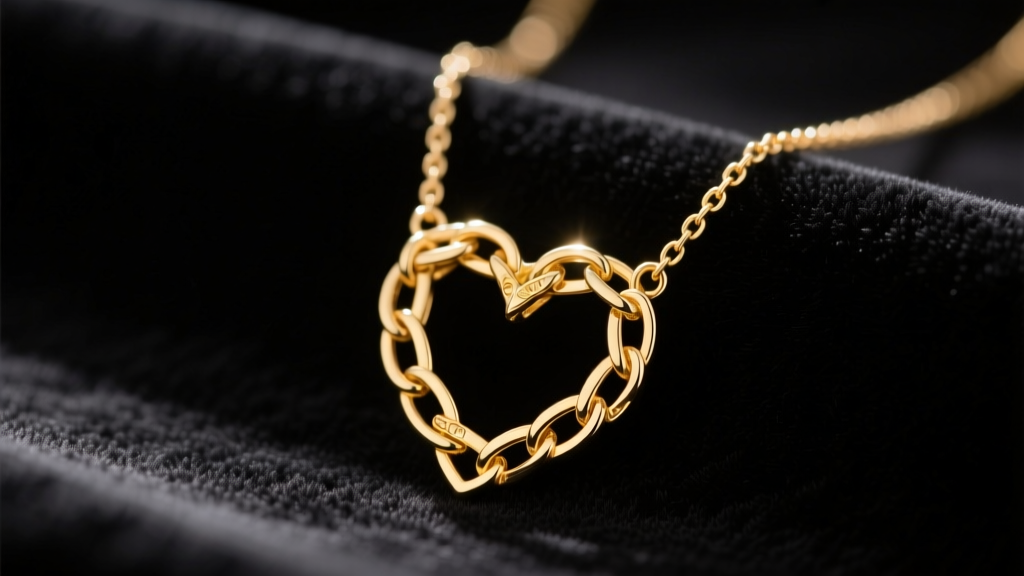
A heart necklace is often one of the most sentimental pieces in a jewelry collection, symbolizing love, connection, and personal milestones. However, the chains that hold these meaningful pendants are typically delicate, ranging from 0.8mm to 1.2mm in thickness to maintain an elegant, unobtrusive profile. This fine gauge makes them highly susceptible to kinking, micro-abrasions, and tarnish buildup. Proper care is not just about keeping the metal shiny; it is about preserving the structural integrity of the links and the security of the clasp.
Whether you are wearing a sterling silver cable chain or an 18k gold box chain, understanding the specific maintenance protocols for your jewelry will extend its lifespan by decades. Below, we break down the exact chemical, mechanical, and storage practices required to keep your heart necklace chain in pristine condition.
The Anatomy of Chain Vulnerabilities
Before applying any cleaning solutions, it is crucial to understand how different chain styles degrade. The structural design of your heart necklace chain dictates its primary failure points:
- Cable Chains: The most common and durable style. However, the open oval links can easily catch on hair or knitwear, causing the wire to stretch and thin out over time.
- Box Chains: Composed of square, interlocking links. While they lay flat and reflect light beautifully, they are notorious for kinking. Once a box chain kinks, the structural memory of the metal is compromised, making it prone to snapping at the fold.
- Snake Chains: These feature tightly joined rings that create a smooth, flexible tube. They are highly vulnerable to sebum (skin oils) and lotion buildup, which gets trapped in the microscopic grooves, eventually causing the chain to stiffen and crack.
- Rope Chains: The twisted links mimic a rope but create numerous friction points. They require the most meticulous cleaning, as dirt easily lodges deep within the twists.
According to the Gemological Institute of America (GIA), regular inspection of the clasp mechanism—specifically the spring inside a lobster claw or spring ring—is just as important as cleaning the metal itself. A fatigued spring will fail to close completely, leading to lost pendants.
The pH-Neutral Deep Cleaning Protocol
Many commercial jewelry dips contain harsh chemicals like thiourea or ammonia, which can strip the rhodium plating from white gold and cause micro-pitting in sterling silver. For routine maintenance of your heart necklace chain, a gentle, pH-neutral approach is vastly superior.
Step-by-Step Soak Method
- Prepare the Solution: Mix one cup of distilled water (avoid tap water, as chloramine and hard minerals can leave spots) with three drops of a mild, pH-neutral dish soap, such as Dawn Ultra.
- The Soak: Submerge the chain for exactly 10 to 15 minutes. This allows the surfactants to break down the lipid bonds of body oils and cosmetics without attacking the metal alloy.
- Agitation: Do not use a standard toothbrush; the nylon bristles are often too stiff and can leave micro-scratches on high-polish 14k or 18k gold. Instead, use a #0 or #1 soft artist’s brush or a dedicated baby toothbrush to gently sweep the links.
- Rinsing and Drying: Rinse thoroughly under a gentle stream of lukewarm distilled water. Pat dry with a lint-free microfiber cloth, and use a hair dryer on the 'cool' setting to blow water out of the clasp mechanisms.
Material-Specific Maintenance Matrix
Not all metals react to the environment in the same way. Use the table below to identify the specific care requirements for your chain's material grade.
| Material Grade | Primary Threat | Cleaning Agent | Polishing Method |
|---|---|---|---|
| Sterling Silver (925) | Sulfur exposure (tarnish) | Mild soap & distilled water | Silver polishing cloth (impregnated with anti-tarnish agents) |
| 14k / 18k Yellow Gold | Lotion and sebum buildup | Mild soap & distilled water | Soft microfiber cloth only |
| White Gold (Rhodium Plated) | Plating wear and scratching | Mild soap & distilled water | Never use abrasive cloths; requires professional re-plating |
| Gold Vermeil (2.5µm over Silver) | Gold layer stripping | Damp cloth wipe only | Do not polish; avoid all chemical dips |
| Platinum (950) | Surface patina (scratches) | Mild soap & distilled water | Professional buffing to restore high polish |
Note: If your heart necklace chain features a gemstone pendant (like a pearl or opal), never submerge the entire piece. These porous stones absorb water and chemicals, which can dissolve their adhesive settings or crack their structure. Clean only the chain links with a damp cotton swab.
Untangling Micro-Knots Without Breaking Links
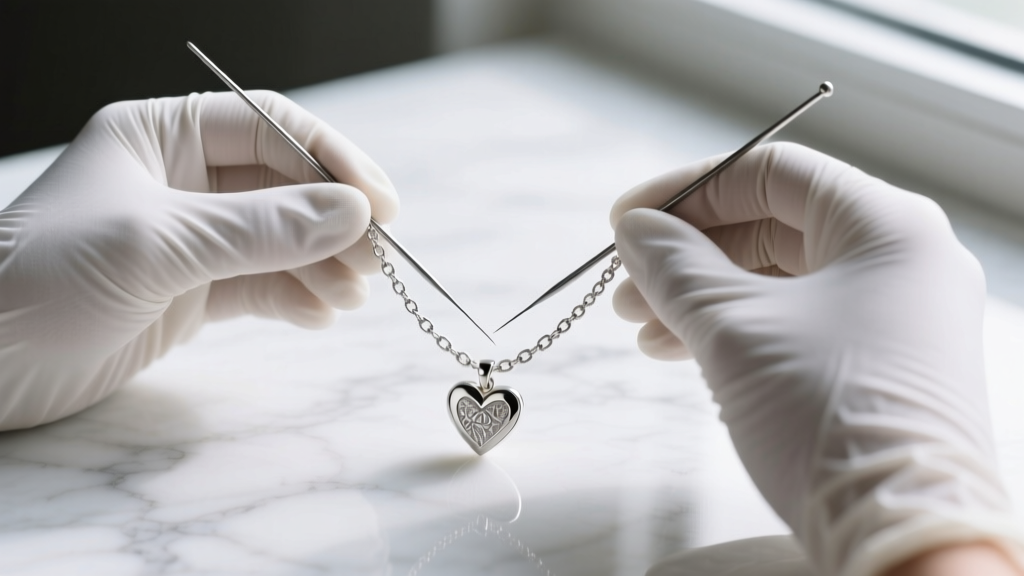
Fine chains, particularly those under 1.0mm, frequently develop tight micro-knots when stored loosely in a jewelry box. Pulling on the chain to force the knot apart will stretch the metal, weakening the link permanently.
To safely remove a knot, lay the chain flat on a hard, well-lit surface. Apply a tiny drop of mineral oil or a pinch of talcum baby powder directly to the center of the knot to reduce friction. Using two fine sewing needles or straight pins, gently work the needles into the center of the knot and push outward to loosen the links. The powder or oil acts as a dry lubricant, allowing the metal links to slide past one another without catching or bending.
Archival Storage and Tarnish Prevention
How you store your heart necklace chain when it is not being worn is the single biggest factor in preventing tarnish and tangles. Sterling silver tarnishes when it reacts with hydrogen sulfide in the air. Humidity accelerates this chemical reaction exponentially.
- Avoid the Bathroom: Never store jewelry in a bathroom. The fluctuating humidity and aerosolized cosmetics create a highly corrosive environment for silver and low-karat gold.
- Use Anti-Tarnish Strips: Place 3M anti-tarnish tabs or Pacific Silvercloth strips inside your jewelry box. These materials absorb sulfur compounds from the air before they can reach your metal.
- Individual Polybags: Store each chain in its own small, sealable polyethylene bag. Squeeze out the excess air before sealing. This prevents the chains from tangling with other pieces and limits oxygen exposure.
- Hang or Lay Flat: If using a jewelry armoire, hang the necklace by its clasp to let gravity keep the chain straight. If laying flat, ensure the chain is fully extended and not folded over itself.
When to Seek Professional Jeweler Intervention
While at-home maintenance is excellent for cleaning and minor tangles, certain issues require the expertise of a professional bench jeweler. The Jewelers of America recommends an annual professional inspection for all fine jewelry.
You should take your heart necklace chain to a jeweler if:
- The Clasp Feels Loose: If the spring mechanism lacks tension or the lever does not snap back flush against the body, the clasp needs to be replaced. This is a minor repair that prevents catastrophic loss.
- Visible Link Thinning: If you notice that the metal at the bottom of the chain (where the pendant rests) looks visibly thinner or flattened, it is experiencing friction wear. A jeweler can reinforce these links or replace the worn section.
- Chain Snapping: If the chain breaks, do not attempt to twist the links back together with pliers. Professional jewelers use laser welding to repair fine chains. Laser welding applies intense heat to a microscopic area, fusing the metal without melting the surrounding delicate links or damaging nearby gemstone pendants.
By adhering to these meticulous cleaning, handling, and storage protocols, your heart necklace chain will remain a secure and brilliant foundation for your favorite pendant for years to come.


