How to Clean and Maintain a Spinning Flower Necklace
Learn how to clean, lubricate, and fix a stuck spinning flower necklace. Expert tips on kinetic jewelry maintenance, PTFE lubes, and bail repair.

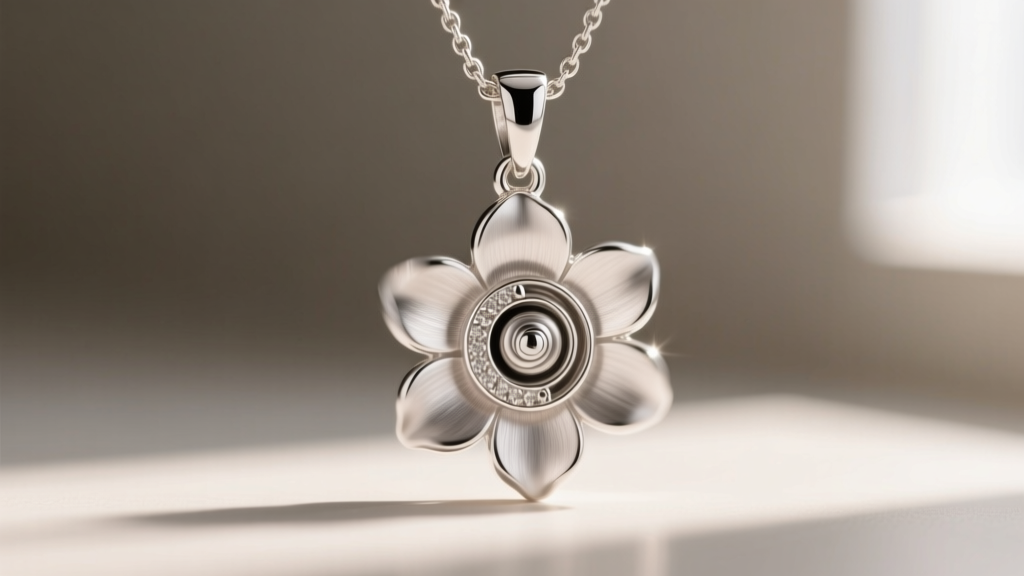
Kinetic jewelry has surged in popularity, bridging the gap between high fashion and tactile anxiety relief. At the forefront of this trend is the spinning flower necklace, a piece that features a rotating floral faceplate set inside a stationary outer bezel. While the mechanical action provides a satisfying fidget experience, the microscopic gaps between the moving parts make these pendants magnets for sebum, lotion, dead skin cells, and environmental dust. Over time, this buildup causes the spinner to squeak, stutter, or jam completely.
Maintaining a kinetic pendant requires a different approach than standard jewelry care. Submerging a mechanical necklace in harsh chemicals or using ultrasonic cleaners can destroy the internal friction washers or loosen the central rivet. In this comprehensive guide, we will break down the exact anatomy of a spinning flower necklace, how to safely flush out debris, and the specific synthetic lubricants required to keep your pendant spinning flawlessly for years.
Understanding the Mechanics of a Spinning Flower Necklace
Before attempting any repairs or deep cleaning, it is crucial to understand the engineering behind your pendant. A typical spinning flower necklace consists of four primary components:
- The Stator (Outer Bezel): The stationary frame that holds the piece together and connects to the bail.
- The Rotor (Inner Faceplate): The spinning flower design, usually stamped or cast with a central hole.
- The Friction Washers: Micro-thin discs (often made of Delrin, Teflon, or nylon) placed between the rotor and stator to prevent metal-on-metal galling.
- The Central Pin/Rivet: The axis that holds the assembly together. In premium pieces, this is a threaded micro-screw; in mass-produced items, it is a peened rivet.
The most common failure point in these necklaces is the degradation of the friction washers or the accumulation of compacted debris around the central pin, which increases rotational resistance.
Identifying Metal Galling vs. Debris Buildup
When your spinning flower necklace stops turning smoothly, you must diagnose the root cause before applying force. Forcing a stuck spinner can shear the central pin or warp the floral faceplate.
Debris Buildup
If the pendant feels "gritty" or makes a scratching sound when spun, the issue is particulate intrusion. Dust and dried lotions have infiltrated the gap between the rotor and stator. This is easily resolved with a solvent flush.
Metal Galling
Galling occurs when two unlubricated metal surfaces experience high friction, causing microscopic welding and tearing of the metal. This is particularly common in 925 sterling silver spinners that lack Delrin washers. If the pendant feels "locked" or binds at specific rotational points, galling has likely occurred. According to the Gemological Institute of America (GIA), silver is a relatively soft metal, making it highly susceptible to friction damage if not properly maintained. Galling requires professional jeweler intervention to file down the burrs and replace the internal washers.
Step-by-Step Cleaning Guide for Kinetic Pendants
Never place a spinning flower necklace in an ultrasonic cleaner. The high-frequency vibrations can shatter enamel detailing on the flower face and loosen the peened central rivet. Instead, follow this manual cleaning protocol:
Step 1: The Dry Brush Extraction
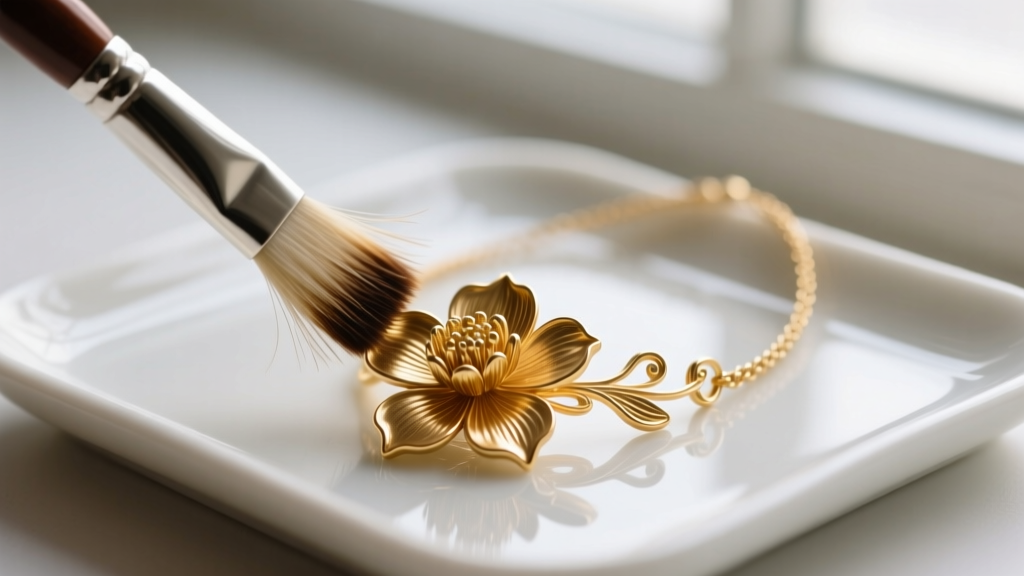
Use a clean, soft horsehair jewelry brush to gently sweep the perimeter gap between the spinning flower and the outer bezel. Do not use stiff nylon or wire brushes, as they will scratch gold plating or polished silver.
Step 2: The 99% Isopropyl Alcohol Flush
Fill a small glass beaker with 99% Isopropyl Alcohol (IPA). Submerge only the pendant (detach it from the chain first) for exactly 3 to 5 minutes. The high-concentration IPA will dissolve sebum and lotions without causing the oxidation that water-based cleaners might trigger in base-metal alloys. While submerged, gently spin the flower faceplate to work the solvent into the central axis.
Step 3: Compressed Air Drying
Remove the pendant and immediately blast the central gap with a can of compressed air. This forces out the suspended debris and evaporates the alcohol. Avoid using cotton swabs or microfiber cloths near the gap, as they will leave behind lint fibers that will quickly jam the mechanism again.
How to Lubricate a Squeaky or Stiff Spinner
If your necklace is clean but still squeaks or feels stiff, it requires lubrication. This is where most consumers make a catastrophic error. Never use standard WD-40, sewing machine oil, or olive oil. These wet lubricants attract dust and will eventually turn into a thick, abrasive sludge inside the pendant.
Instead, you must use a dry lubricant or a highly refined synthetic watch oil. Apply a microscopic drop to the central pin using a precision oiler or a toothpick, then spin the pendant to distribute it evenly.
| Lubricant Type | Best For | Pros | Cons |
|---|---|---|---|
| PTFE (Teflon) Dry Lube | Daily wear kinetic jewelry | Repels dust, zero residue, long-lasting | Requires precise application |
| Synthetic Watch Oil (e.g., Moebius 9010) | High-end gold/platinum spinners | Extreme precision, prevents metal wear | Expensive, requires watchmaker tools |
| Graphite Powder | Heavy-duty brass or steel pendants | Excellent dry lubrication | Messy, leaves black residue on skin/clothes |
| WD-40 / Household Oils | NOTHING (Avoid Completely) | None for jewelry | Attracts dust, ruins friction washers, causes tarnish |
Bail and Chain Maintenance for Fidget Jewelry
The mechanical stress on a spinning flower necklace extends beyond the rotor. Every time you flick or spin the pendant, lateral torque is transferred to the bail (the loop connecting the pendant to the chain). Over time, this friction wears down the interior of the bail and the jump ring connecting it to the chain.
Inspect the bail monthly. If you notice a deep groove worn into the metal, it is at risk of snapping. Jewelers Mutual recommends replacing standard split jump rings with laser-welded or soldered split rings for kinetic pendants to prevent accidental loss. Furthermore, pairing your spinner with a robust chain—such as a 2.0mm wheat chain or a solid box chain—will better withstand the constant pulling and flicking motions compared to delicate snake chains.
Daily Wear and Storage Protocols
To maximize the time between deep cleanings, adopt a few simple wear-and-tear prevention habits. Always apply perfumes, hairsprays, and lotions before putting on your necklace. The aerosolized chemicals in cosmetics can degrade the Delrin friction washers inside the spinner over time.
When storing the necklace, never toss it loosely into a jewelry box where heavier items can rest on top of the floral faceplate. Even slight pressure on the rotor can bend the central pin, permanently ruining the kinetic action. Store the spinning flower necklace flat in a dedicated, soft-lined pouch or hang it from a padded jewelry valet. If your pendant is made of 925 sterling silver, include an anti-tarnish silica tab in the pouch to prevent silver sulfide buildup in the microscopic gaps of the spinner mechanism.
When to Seek Professional Jeweler Repair
While routine cleaning and PTFE lubrication can be done at home, certain issues require a professional bench jeweler. If the central pin is visibly bent, if the floral faceplate wobbles vertically when spun, or if the metal galling has created physical burrs that catch on your skin, do not attempt a DIY fix. A jeweler can safely drill out the peened rivet, polish the internal contact points, install fresh Delrin washers, and re-rivet the assembly using specialized staking tools, restoring your spinning flower necklace to its original, satisfying kinetic glory.


