How to Clean and Maintain a Black Chain Necklace for Men
Discover expert tips to clean, protect, and maintain your black chain necklace for men. Prevent fading, rust, and tarnish with our detailed guide.

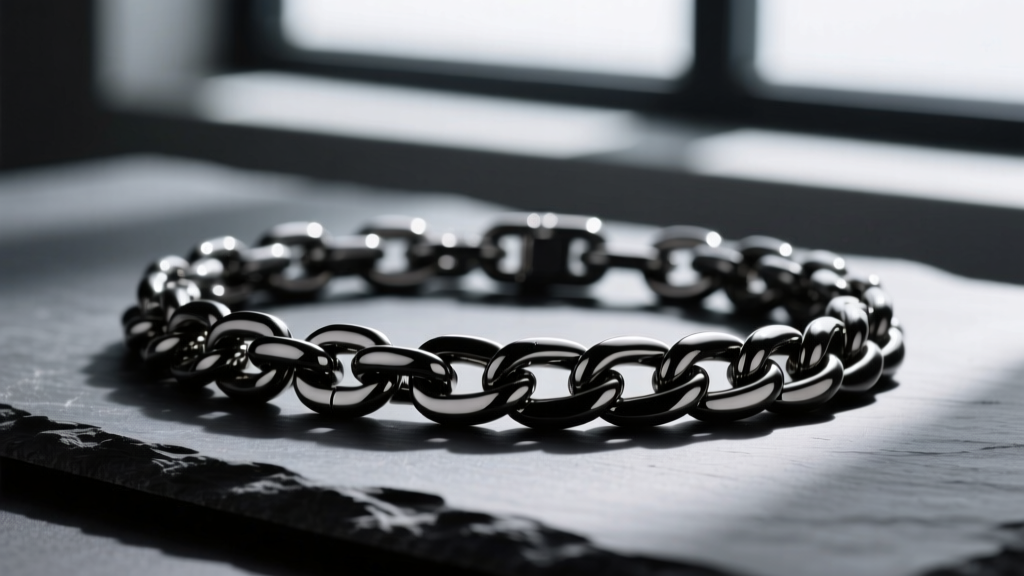
A black chain necklace for men is a staple of modern jewelry, offering a sleek, masculine, and versatile aesthetic that pairs effortlessly with everything from streetwear to tailored suits. However, the dark, moody finish that makes these chains so desirable is rarely a solid base metal. In most cases, black jewelry relies on advanced surface treatments, plating, or chemical patinas. Without proper care, these finishes can degrade, revealing the lighter base metal underneath or developing a patchy, worn appearance.
As we navigate the jewelry landscape in 2026, manufacturing techniques like Diamond-Like Carbon (DLC) and Physical Vapor Deposition (PVD) have become more accessible, but they still require specific maintenance protocols. If you want to protect your investment and keep your dark metals looking factory-fresh, you must understand the science behind the finish. This comprehensive guide breaks down the exact methods for cleaning, storing, and troubleshooting your black chain necklace.
The Anatomy of Black Metal Finishes
Before applying any cleaning solution, you must identify how your chain achieved its black color. The cleaning protocol for a $500 DLC-coated titanium chain will completely ruin a $40 black-plated brass chain. Here are the four primary black finishes used in men's jewelry:
1. PVD (Physical Vapor Deposition)
PVD is a vacuum-coating process that vaporizes materials like titanium nitride or zirconium and bonds them to the base metal (usually surgical steel or titanium) at a molecular level. A standard PVD black coating is between 0.25 and 1.0 microns thick. It is highly resistant to tarnish and sweat but can be compromised by harsh abrasive chemicals or prolonged exposure to chlorinated water.
2. DLC (Diamond-Like Carbon)
DLC is a premium subset of PVD that incorporates carbon, resulting in a finish that mimics the hardness of natural diamond. Measured on the Vickers Hardness (HV) scale, DLC can exceed 7000 HV, making it virtually scratch-proof in daily wear. DLC-coated black chains are the most durable on the market, but they still require gentle cleaning to maintain their specific matte or gloss luster.
3. Oxidized Sterling Silver
This is a chemical patina, not a coating. Jewelers apply a compound like liver of sulfur to sterling silver, creating a layer of black silver sulfide on the surface. Because it is a surface-level chemical reaction, the black oxidation will naturally wear off on the high-contact points of the chain over time, revealing the bright silver beneath. This is often considered a desirable "distressed" look, but it requires careful maintenance if you want to preserve the dark contrast.
4. Black Rhodium or Black Ruthenium Plating
Electroplating involves using an electrical current to deposit a microscopic layer of black rhodium or ruthenium (usually 0.1 to 0.3 microns thick) over gold or silver. While it provides a brilliant, mirror-like black finish, it is the most fragile of all black treatments. Friction and skin acids will eventually wear through the plating, requiring professional re-dipping.
Daily Wear Threats: What Destroys Black Chains
According to the Gemological Institute of America (GIA), the most common cause of jewelry degradation is not physical impact, but chemical exposure from the wearer's own body and environment. To maximize the lifespan of your black chain necklace for men, you must mitigate the following threats:
- Sebum and Sweat Acidity: Human sweat has a pH ranging from 4.5 to 7.0. Over time, the mild lactic acid and salts in sweat will eat away at electroplated black rhodium and accelerate the uneven rubbing of oxidized silver.
- Grooming Products: Cologne, aftershave, and hairspray contain high concentrations of alcohol and volatile organic compounds (VOCs). Alcohol acts as a solvent that can break down the binders in lower-grade black platings, causing them to flake or cloud.
- Chlorine and Bromine: Swimming pools and hot tubs are heavily treated with halogens. Chlorine will permanently discolor PVD coatings and cause rapid, irreversible tarnishing of oxidized silver bases.
- Micro-Abrasions: Wearing a black chain over rough textiles, like raw denim or heavy canvas jackets, creates continuous low-grade friction that acts like fine sandpaper on plated finishes.
The Step-by-Step Cleaning Protocol
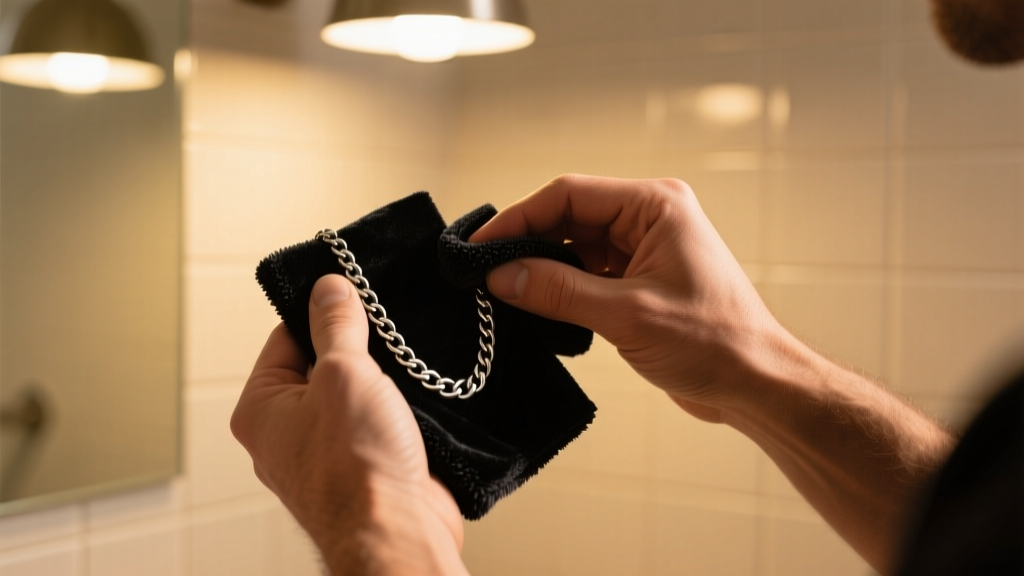
When it comes to cleaning dark jewelry, the golden rule is to avoid anything abrasive or highly alkaline. Jewelers of America strongly advises against using ultrasonic cleaners on plated or oxidized jewelry. The cavitation process—which creates microscopic vacuum bubbles that violently collapse—can literally blast delicate black rhodium or PVD layers right off the base metal.
Tools You Need (And What to Avoid)
Approved Tools: pH-neutral dish soap (like original Dawn), distilled water, a high-GSM microfiber cloth, and an ultra-soft baby hair brush.
Banned Tools: Baking soda, toothpaste (contains silica abrasives), silver dip solutions (will strip oxidation instantly), ultrasonic cleaners, and steam cleaners.
The 3-Minute Wash Technique
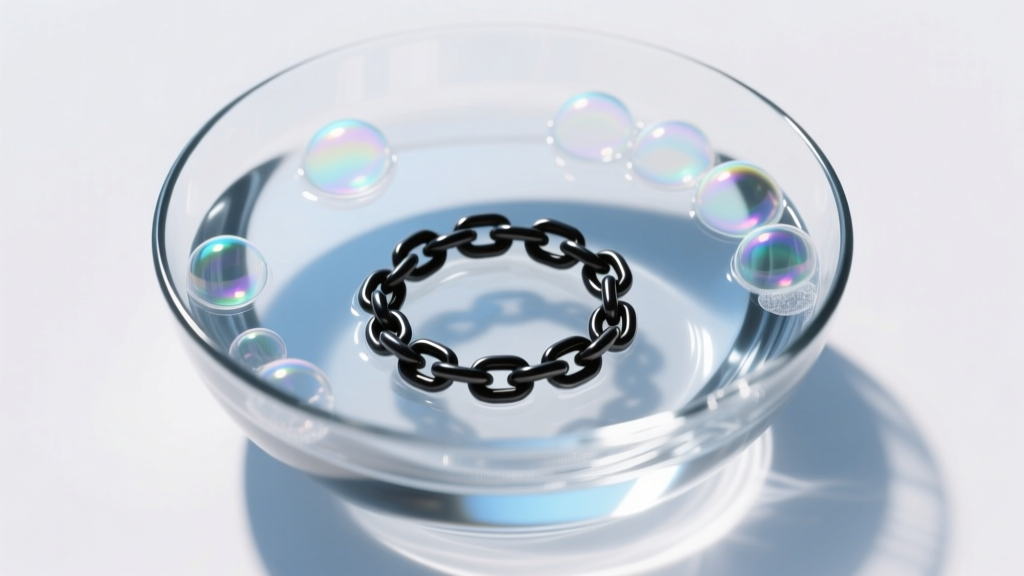
- Prep the Solution: Fill a small glass bowl with lukewarm distilled water. Tap water contains calcium and magnesium, which leave hard water spots that look like cloudy scratches on black metal. Add a single drop of pH-neutral dish soap.
- Submerge and Agitate: Place your black chain necklace for men into the solution. Let it soak for exactly 60 to 90 seconds to loosen body oils and dead skin cells trapped in the links. Gently agitate the chain with your fingers or use the ultra-soft baby brush to lightly sweep the crevices of Cuban or Figaro links.
- The Distilled Rinse: Remove the chain and rinse it thoroughly under a gentle stream of distilled water. This ensures no soap residue is left behind to dull the finish.
- Pat and Air Dry: Lay the chain flat on a clean, dry microfiber cloth. Gently pat it dry—never rub aggressively. Allow it to air dry completely for 10 minutes before storing or wearing.
Long-Term Storage and Environmental Control
How you store your necklace when it is not around your neck is just as critical as how you clean it. The jewelry industry standard for preserving delicate finishes involves controlling atmospheric sulfur and humidity.
Never store your black chain in a PVC (polyvinyl chloride) plastic bag or a leather valet tray. PVC off-gases hydrogen chloride over time, which creates a highly corrosive micro-environment that will pit and destroy black plating. Instead, store your necklace in an individual Polyethylene (PE) or Polypropylene (PP) ziplock bag. For oxidized silver or black rhodium chains, drop a 3M anti-tarnish strip into the bag. These strips absorb ambient sulfur and hydrogen sulfide gases, effectively pausing the chemical degradation of the metal finish.
Troubleshooting Common Black Chain Failures
Even with meticulous care, black chains can experience finish issues over years of wear. Use the diagnostic table below to identify the problem and determine if it can be salvaged at home or requires professional intervention.
| Issue | Probable Cause | Actionable Fix |
|---|---|---|
| Patchy Flaking / Peeling | Electroplated black rhodium wearing through to base metal due to friction or acidic sweat. | Cannot be polished. Must be sent to a jeweler for professional stripping and re-plating. |
| Cloudy / Hazy Finish | Hard water mineral buildup or soap residue trapped in the links. | Re-wash using only distilled water. For solid DLC/Tungsten, a 50/50 white vinegar wipe can dissolve minerals safely. |
| High-Point Fading | Natural wear of oxidized silver patina on the outermost edges of the links. | Embrace the contrast, or use a silver blackening solution (liver of sulfur) at home to re-darken the high points. |
| Green Skin Discoloration | Base metal (brass or copper) is exposed and reacting with skin acidity. | Apply a micro-thin coat of clear jewelry sealant to the back of the links, or upgrade to a PVD-coated surgical steel chain. |
Final Thoughts on Dark Metal Maintenance
A black chain necklace for men is an investment in a specific, bold aesthetic. By understanding the exact nature of your chain's finish—whether it is a molecularly bonded DLC coating or a delicate chemical oxidation—you can tailor your maintenance routine to prevent premature aging. Avoid ultrasonic cleaners, banish tap water from your washing routine, and store your pieces in sulfur-free polyethylene environments. With these expert protocols, your black chain will retain its dark, commanding presence for years to come.


