The Multiple Necklace Clasp: Engineering Multi-Strand Jewelry
Master the mechanics of the multiple necklace clasp. Learn about tension distribution, metal grades, and failure modes for heavy multi-strand jewelry.

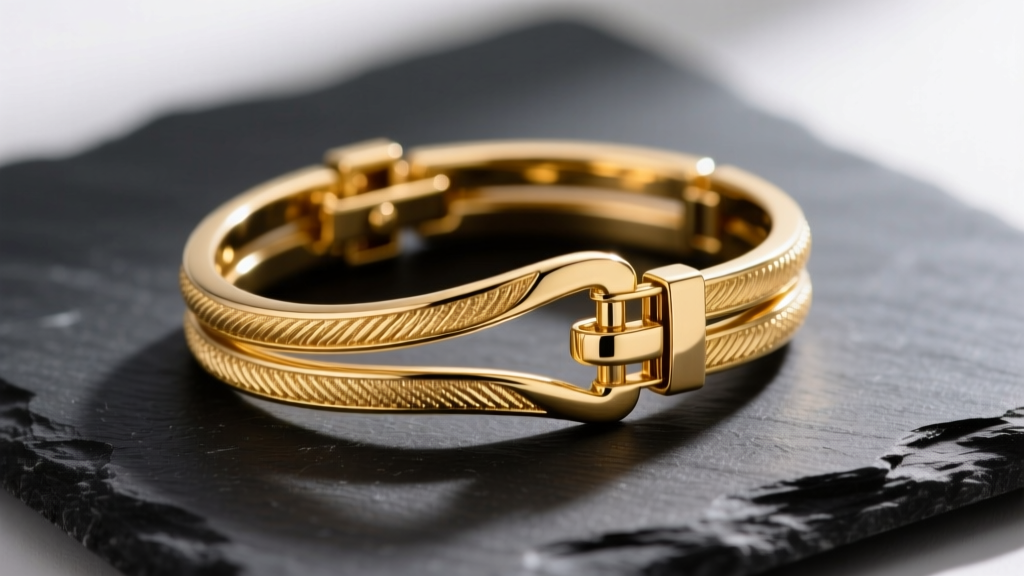
When designing, stringing, or repairing high-end multi-strand jewelry, the clasp is never a mere afterthought. A standard lobster claw or spring ring is entirely insufficient for the complex vector forces generated by three, five, or even seven strands of heavy gemstones or pearls. The multiple necklace clasp is a highly engineered component that must balance metallurgical strength, mechanical security, and aesthetic integration. In this technical deep dive, we examine the physics, material science, and structural mechanics required to secure heavy multi-strand necklaces without catastrophic failure.
The Physics of Multi-Strand Tension
Unlike a single-strand chain where tension is distributed linearly along the Y-axis, a multi-strand necklace introduces complex lateral and asymmetric loads. Consider a standard 5-strand Akoya pearl necklace. A single 18-inch strand of 7mm pearls weighs approximately 38 grams. Five strands total 190 grams, plus the weight of the clasp itself. When the wearer moves, the outermost strands experience the highest degree of lateral pull, creating a shearing force on the clasp's connection points.
If a multiple necklace clasp is designed with inline jump rings, the outer rings bear up to 60% of the total kinetic load during sudden movements. According to research presented at the Santa Fe Symposium on Jewelry Manufacturing Technology, asymmetric loading on multi-strand findings frequently leads to localized metal fatigue, particularly in cast components with microscopic porosity. To counteract this, master jewelers utilize "fan" or "spread" designs that distribute the vector forces evenly across a wider surface area of the clasp body.
Anatomy of a Heavy-Duty Multiple Necklace Clasp
The architecture of a reliable multi-strand finding generally falls into three categories, each with distinct mechanical advantages:
- The Box Clasp with Safety Latches: Features a V-shaped tongue that compresses and snaps into a square housing. For multi-strand applications, the box is widened, and the tongue is forged from high-tensile wire rather than cast. Dual figure-8 safety latches are mandatory to prevent accidental disengagement if the tongue loosens over time.
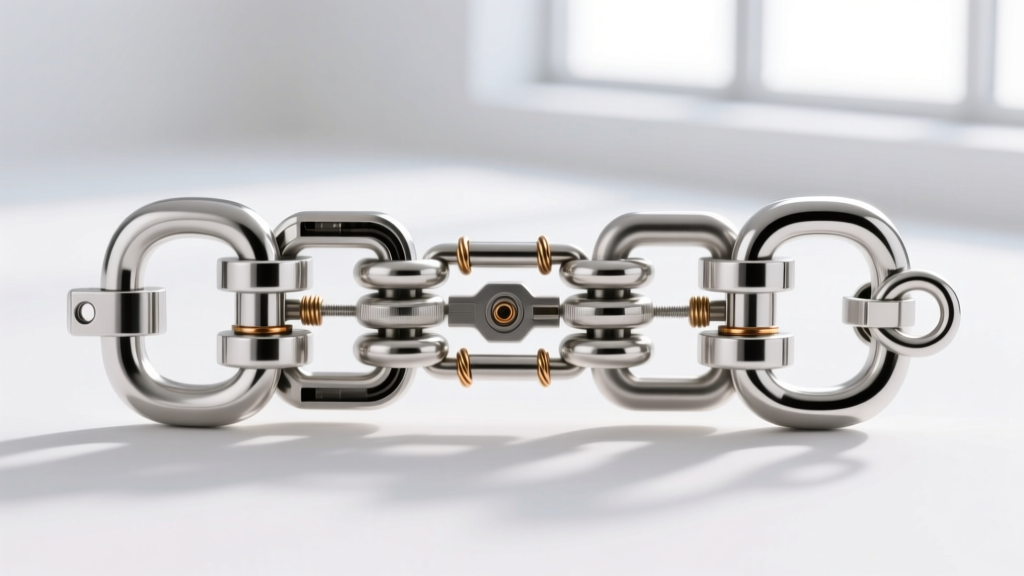
- The Multi-Strand Tube/Barrel Clasp: Consists of two cylindrical halves that screw or bayonet together. The ends feature multiple soldered rings. The internal threading must be precision-machined to prevent cross-threading, which is a common failure point in mass-produced versions.
- The Slide Clasp: Utilizes a silicone O-ring or internal tension spring inside a tubular housing to grip the inserted pin. While highly secure for 2-3 strand designs, slide clasps are generally not recommended for 5+ strand heavy gemstone necklaces due to the degradation of the internal elastomers over time.
Metallurgy and Material Grades: What Holds and What Snaps
The structural integrity of a multiple necklace clasp is dictated by the yield strength and Vickers Hardness (HV) of the chosen alloy. Sterling silver, while beautiful, is prone to "creep"—a slow, permanent deformation under constant mechanical stress. For heavy multi-strand pieces, gold alloys and platinum are the industry standard.
| Material Grade | Vickers Hardness (HV) | Yield Strength | Recommended Max Strands |
|---|---|---|---|
| Sterling Silver (Annealed) | 65 HV | Low | 1-2 strands (lightweight) |
| 14k Yellow Gold (Casted) | 110 HV | Medium | 3-4 strands (medium weight) |
| 18k White Gold (Nickel-free) | 130 HV | High | 4-5 strands (heavy beads) |
| Platinum 950/Ruthenium | 135+ HV | Very High | 5+ strands (heavy gemstones) |
As noted in metallurgical guidelines by Rio Grande, adding ruthenium to platinum (Pt950/Ru) significantly increases its hardness and wear resistance compared to traditional iridium alloys, making it the premier choice for the internal tongue-and-groove mechanisms of heavy box clasps.
Common Failure Modes and Troubleshooting
Even the most expensive multiple necklace clasp will fail if the assembly techniques are flawed. Jewelers and technicians must watch for the following specific failure modes:
- Jump Ring Gaping: The most frequent point of failure. When heavy strands pull laterally, standard butt-cut jump rings will gap open, allowing the stringing wire or thread to slip out. Solution: All connection rings on a multi-strand clasp must be soldered closed or laser-welded. Use 16-gauge or 14-gauge wire with a 3mm to 4mm outer diameter for heavy strands.
- Tongue Fatigue: The V-tongue in a box clasp loses its "spring" over years of compression. Solution: Periodic re-tensioning by a jeweler using nylon-jaw pliers, or complete replacement of the tongue component using hard-solder.
- Safety Latch Shearing: Figure-8 safety wires are often cast too thin (under 0.8mm) and snap under sudden impact. Solution: Fabricate safety latches from drawn 18-gauge round wire rather than relying on cast-in-place safeties.
Soldering and Assembly Techniques
Attaching the multiple necklace clasp to the stringing medium requires precise thermal management. If the necklace features heat-sensitive materials like pearls, opals, or emeralds near the termination points, traditional torch soldering is too risky. The heat can easily fracture the gems or burn the organic nacre of pearls.
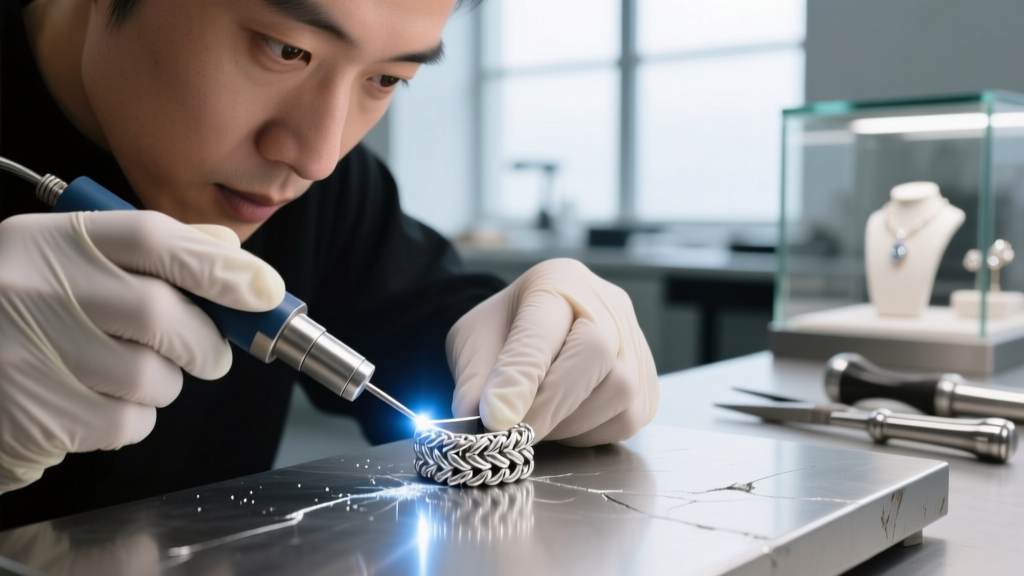
In these scenarios, GIA's technical literature often highlights the use of laser welding. Laser welders allow jewelers to fuse jump rings and attach termination loops to the clasp with pinpoint accuracy, generating virtually no ambient heat transfer to the adjacent beads. For torch-soldered assemblies, jewelers should use "IT" (Intense Temperature) or Hard solder for the initial structural rings, reserving Medium or Easy solder only for subsequent repairs to prevent previously soldered joints from melting.
Pricing and Sourcing Benchmarks
Understanding the cost structure of high-quality findings is essential for both jewelers and collectors. Mass-produced, cast sterling silver 3-strand box clasps can be sourced from wholesale suppliers for $25 to $45. However, these are prone to porosity and mechanical creep.
For fine jewelry applications, a cast 14k gold 3-strand or 4-strand box clasp with forged safety latches typically ranges from $180 to $350. Custom-fabricated, hand-assembled Platinum 950 5-strand clasps, machined with internal bayonet fittings and laser-welded connection rings, represent the pinnacle of the craft and generally cost between $800 and $1,500. While the initial investment is steep, a properly engineered multiple necklace clasp ensures that a $20,000 multi-strand sapphire and diamond necklace remains securely anchored for generations.


