How to Clean and Care for Your Everyday Men's Necklace
Learn how to properly clean, polish, and store your men's necklace. Expert tips for stainless steel, gold, silver, and titanium chains.

Why Men's Jewelry Requires Specialized Care
A high-quality men's necklace is an investment in personal style, but the unique architecture of men's chains demands specialized maintenance. Unlike delicate women's jewelry, men's chains—such as 5mm to 12mm Cuban links, thick Figaro chains, and heavy rope designs—feature deeper crevices that trap sebum, dead skin cells, and environmental pollutants. Furthermore, men frequently wear their necklaces in high-exposure environments like gyms, workshops, and outdoor spaces, subjecting the metals to corrosive sweat, friction, and harsh chemicals. Understanding the metallurgical properties of your specific chain is the first step toward preserving its structural integrity and visual luster.
Material-Specific Cleaning Protocols
Not all metals react identically to cleaning agents. Using the wrong chemical compound can strip plating, accelerate oxidation, or cause microscopic stress fractures. Here is how to approach the most common materials used in men's jewelry.
316L Surgical Stainless Steel
Stainless steel is highly resistant to rust due to its chromium oxide layer, but it is not impervious to grime. For 316L marine-grade steel, which contains molybdenum for added chloride resistance, an ultrasonic jewelry cleaner operating at 40kHz is highly effective. The cavitation bubbles will penetrate the tight interlocking links of a Cuban chain, dislodging trapped debris without manual scrubbing. If cleaning manually, use a few drops of phosphate-free dish soap and a soft-bristled baby toothbrush. Never use steel wool or abrasive scouring pads, as they will mar the polished or brushed finish.
925 Sterling Silver
Silver tarnishes when it reacts with sulfur compounds in the air and on the skin, forming silver sulfide. According to the GIA Silver Care Guidelines, the safest method for light tarnish is a specialized microfiber silver polishing cloth impregnated with jeweler's rouge. For heavy, blackened tarnish, avoid harsh chemical dips that strip the silver layer. Instead, use a galvanic reduction method: line a glass bowl with aluminum foil (shiny side up), place the necklace inside, and pour boiling water mixed with two tablespoons of baking soda. The electrochemical reaction transfers the sulfur from the silver to the aluminum, restoring the metal in minutes.

14k and 18k Solid Gold
Solid gold is an alloy. 14k gold is 58.5% pure gold, with the remainder consisting of copper, silver, and zinc. The Gemological Institute of America (GIA) warns that exposure to chlorine (found in hot tubs, swimming pools, and household bleach) attacks the zinc and copper alloys, leading to a phenomenon known as stress corrosion cracking. This can cause a thick gold chain to snap under its own weight. Clean solid gold chains using warm water and a mild, ammonia-free soap. Rinse thoroughly and dry immediately with a lint-free cotton cloth to prevent water spots.
Titanium and Tungsten Carbide
Titanium (particularly aerospace-grade Grade 5) and tungsten carbide are virtually scratch-proof and do not tarnish. However, anodized titanium features a colored surface layer created by light refraction through an oxide film. Clean these with isopropyl alcohol and a microfiber cloth. Avoid ultrasonic cleaners for anodized pieces, as the high-frequency vibrations can alter the oxide layer's thickness, shifting the color of the metal.
The Cleaning Matrix: What to Use and What to Avoid
| Material | Safe Cleaners | Hazardous Chemicals | Best Drying Method |
|---|---|---|---|
| 316L Stainless Steel | Mild dish soap, 40kHz ultrasonic | Bleach, hydrochloric acid | Microfiber cloth |
| 925 Sterling Silver | Polishing cloth, baking soda/foil | Chlorine, ammonia, salt water | Air dry, then buff |
| 14k/18k Solid Gold | Warm water, phosphate-free soap | Chlorine, iodine, harsh abrasives | Lint-free cotton |
| Titanium (Grade 5) | Isopropyl alcohol, mild soap | Hydrofluoric acid | Air dry or microfiber |
Chain Link Architecture and Dirt Traps
The structural design of a men's necklace dictates its cleaning frequency. Rope chains, characterized by their twisted, multi-strand geometry, are notorious dirt traps. The tight spirals capture lint from clothing and natural oils from the neck. To properly clean a rope chain, wrap it loosely around your hand, apply a lather of castile soap, and gently work the links between your thumb and forefinger. This linear friction forces out embedded grime without stressing the twisted joints.
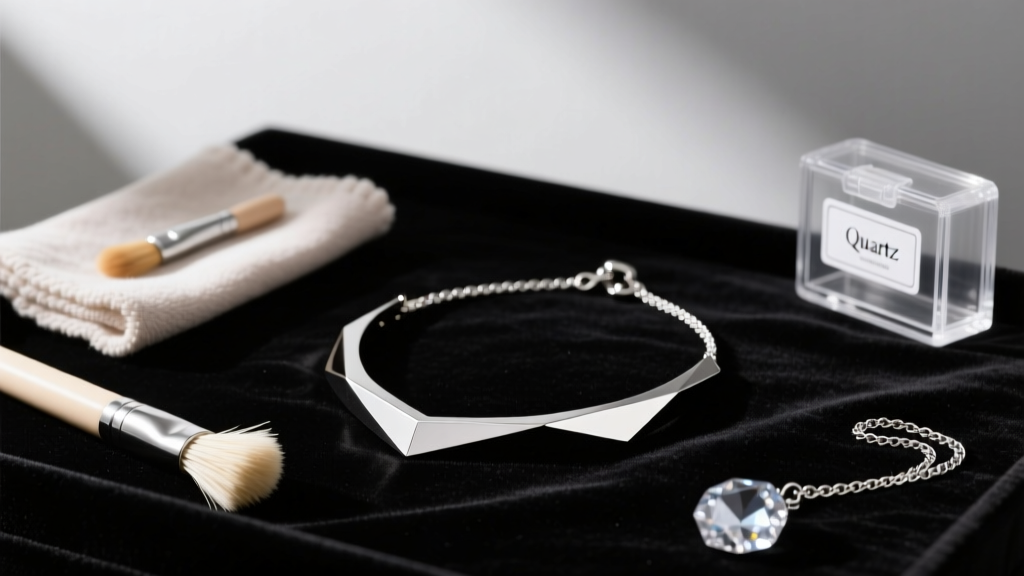
Conversely, flat-link chains like the Cuban or Curb sit flush against the skin, accumulating a film of sweat and dead epidermis on their underside. For these designs, a specialized jewelry cleaning brush with dual-sided bristles (stiff on one side, soft on the other) allows you to scrub the flat surfaces while gently sweeping the interlocking seams.
Clasp Mechanics and Lubrication
The clasp is the most critical failure point on any men's necklace. Heavy pendants and thick chains exert significant tensile stress on lobster clasps and spring rings. Over time, the internal spring mechanism can accumulate microscopic debris or lose its lubrication, resulting in a stiff lever that fails to snap shut securely.
To maintain clasp tension and mobility, clean the hinge area with a cotton swab dipped in isopropyl alcohol. Once dry, apply a minuscule amount of synthetic watch oil or dry graphite powder to the hinge pin. Avoid using standard household oils like WD-40, which contain solvents that can degrade the metal and attract dust, ultimately creating a thicker, more stubborn sludge inside the clasp housing.
Storage, Environment, and Emergency Troubleshooting
Proper storage is just as vital as active cleaning. Tossing a heavy men's necklace into a crowded drawer invites tangling and abrasion. Store chains individually in polyethylene zip-lock bags (avoid PVC, which traps moisture and off-gasses chemicals that accelerate tarnishing). For silver pieces, include a 3M anti-tarnish strip or a silica gel packet to control ambient humidity. If you prefer a valet tray, ensure the necklace is hung vertically by its clasp rather than coiled, which can cause long-term metal memory and kinking.
Troubleshooting Stubborn Knots
If a fine-gauge section of your chain or a pendant bail becomes knotted, do not pull it tight. Lay the necklace flat on a hard surface. Apply a single drop of mineral oil or baby oil directly to the knot to reduce friction. Using two fine sewing needles, gently work from the outer edges of the knot toward the center, lifting the loops rather than pulling them laterally. Once undone, wash the chain with mild soap to remove the oil residue.
Addressing Skin Discoloration
If your necklace leaves a green or black mark on your neck, it is rarely an allergic reaction; it is a chemical one. The copper alloys in lower-karat gold or silver-plated brass react with the acids and salts in your sweat, creating copper chloride or silver sulfide salts that transfer to the skin. To combat this, ensure the chain is completely dry before wearing it, and consider having a jeweler apply a microscopic rhodium plating to the inner links that rest directly against your skin, creating an inert, hypoallergenic barrier.