Montana Silversmith Turquoise Necklace Care & Cleaning Guide
Learn how to safely clean and maintain your Montana Silversmith turquoise necklace. Expert tips on polishing silver without damaging porous turquoise.

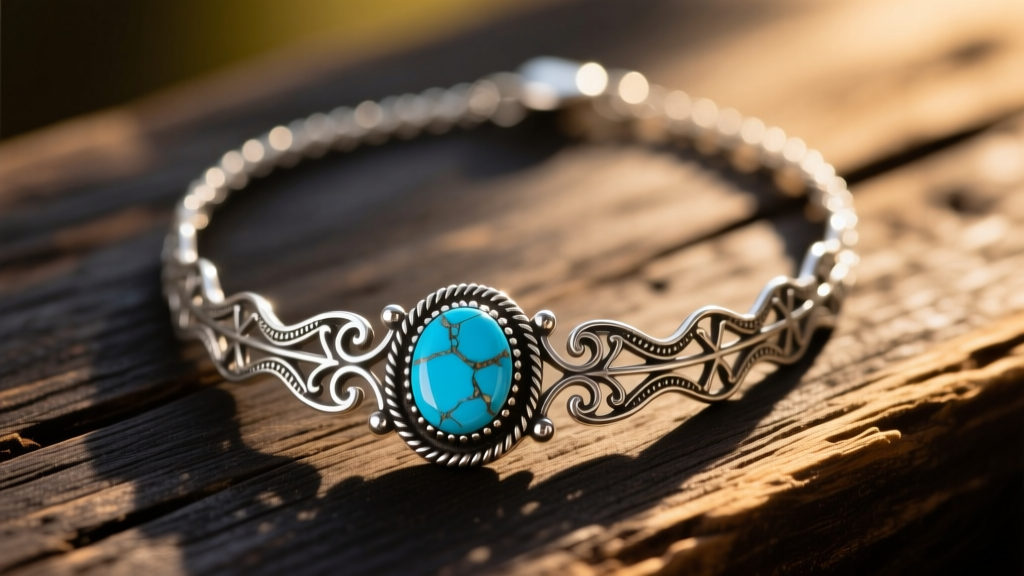
Western jewelry represents a unique intersection of rugged durability and intricate artistry. When you invest in a Montana Silversmith turquoise necklace, you are acquiring a piece that combines oxidized sterling silver with one of the most historically significant and chemically sensitive gemstones in the world. However, the very characteristics that make turquoise visually stunning—its porosity and complex mineral composition—make it notoriously difficult to clean when paired with tarnish-prone silver.
Standard silver cleaning methods will permanently ruin a turquoise cabochon. This comprehensive guide provides a masterclass in maintaining your Western jewelry, preserving the brand's signature antiqued finishes, and protecting the structural integrity of your stones.
Understanding the Materials: Silver, Stabilization, and Coatings
Before applying any cloth or solution to your necklace, you must understand the three distinct material layers you are dealing with:
1. The Sterling Silver Base
Montana Silversmith utilizes 925 sterling silver (92.5% pure silver, 7.5% copper alloy). The copper is what reacts with sulfur in the air to create silver sulfide, commonly known as tarnish. Furthermore, many Western pieces feature an antiqued or oxidized finish, where tarnish is intentionally forced into the recessed stamping to create contrast. Aggressive polishing will strip this intentional patina, leaving the piece looking flat and cheap.
2. The Turquoise Stone
According to the Gemological Institute of America (GIA), natural turquoise is a hydrous phosphate of copper and aluminum, ranking between 5 and 6 on the Mohs hardness scale. Because it is highly porous, it acts like a sponge, absorbing skin oils, cosmetics, and harsh chemicals, which can alter its color or cause it to crack. Most modern Western jewelry utilizes stabilized turquoise—stones infused with a clear epoxy resin under pressure to harden the material and lock in the color. While stabilization makes the stone more durable, the resin can melt or cloud if exposed to high heat or harsh solvents.
3. Proprietary Anti-Tarnish Coatings
Many Montana Silversmith pieces are treated with a proprietary protective coating (often referred to as Montana Armor) designed to slow down the oxidation process. Using abrasive treated polishing cloths or chemical silver dips will strip this microscopic protective layer, exposing the raw silver to rapid tarnishing.
The "Never Do This" List: Avoiding Catastrophic Damage
The GIA's official turquoise care guidelines explicitly warn against several common jewelry cleaning methods. If you want to keep your necklace intact, avoid these at all costs:
- Ultrasonic Cleaners: The high-frequency vibrations can easily fracture turquoise, especially if the stone has natural matrix veins or micro-fissures. The heat generated by the machine can also melt the epoxy used in stabilized stones.
- Liquid Silver Dips (e.g., Tarn-X): These solutions contain thiourea and hydrochloric acid. They will instantly strip the antiquing from your silver and chemically burn the surface of your turquoise, leaving it permanently cloudy and pitted.
- Steam Cleaners: Thermal shock from sudden temperature changes can cause the turquoise to crack or separate from the epoxy backing.
- Commercial Jewelry Wipes: Pre-moistened wipes often contain ammonia or mild abrasives that will degrade the stone's polish and strip protective silver coatings.
Step-by-Step Dry Cleaning Protocol
For routine maintenance and light tarnish removal, a dry cleaning approach is the safest and most effective method. This process removes dirt from the intricate Western stamping without risking moisture damage to the stone.
Step 1: Dry Dusting and Debris Removal
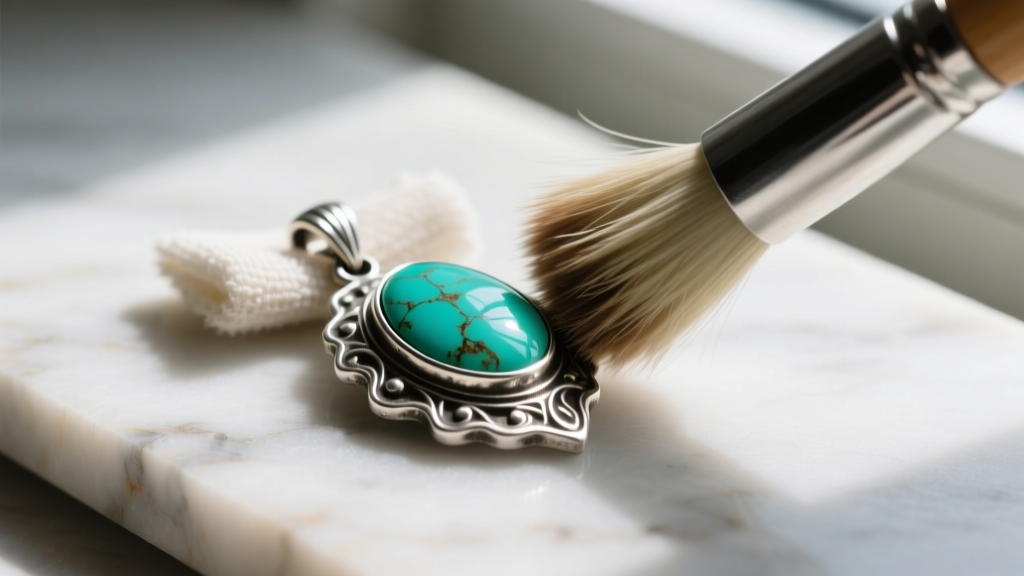
Use a clean, soft-bristled horsehair detailing brush. Horsehair is soft enough that it will not scratch the silver (Mohs 2.5-3) or the turquoise (Mohs 5-6). Gently sweep the bristles into the recessed areas of the silver stamping and around the bezel setting to dislodge dead skin cells, dust, and cosmetic residue.
Step 2: Targeted Silver Polishing
Use a high-quality, untreated microfiber cloth or a 100% cotton flannel. If your piece has a heavy antiqued finish or a protective coating, do not use chemically treated polishing cloths (like Sunshine cloths), as the micro-abrasives will strip the dark oxidation from the crevices. Gently buff only the raised, high-polish areas of the silver. Avoid touching the turquoise stone with the cloth, as any residual oils from your hands can transfer to the gem.
Step 3: Stone Buffing
Switch to a separate, clean, dry microfiber cloth. Lightly buff the surface of the turquoise cabochon to remove fingerprints and restore its natural luster. If the stone looks dull despite buffing, it may have absorbed skin oils, requiring the wet cleaning method below.
Safe Wet Cleaning for Stubborn Grime
If your necklace has been exposed to heavy sweat, sunscreen, or environmental grime, dry cleaning will not suffice. You must use a highly controlled wet cleaning method.
- Prepare the Solution: Mix a few drops of pH-neutral, phosphate-free dish soap (like original Dawn) into a bowl of lukewarm distilled water. Distilled water prevents hard water mineral deposits from settling into the turquoise pores.
- The Dab Technique: Dip a cotton swab or a very soft baby toothbrush into the solution. Gently dab and lightly scrub the silver crevices. Do not submerge the necklace. Keep the liquid away from the turquoise stone as much as possible.
- Rinse Quickly: Dampen a clean cloth with plain distilled water and wipe away the soap residue from the silver immediately.
- Immediate Drying: Moisture trapped under the bezel can cause the silver to corrode or the stone backing to degrade. Use a hairdryer on the cool, low setting from a distance of 12 inches to blow water out of the crevices, then buff completely dry with a microfiber cloth.
Long-Term Storage and Tarnish Prevention
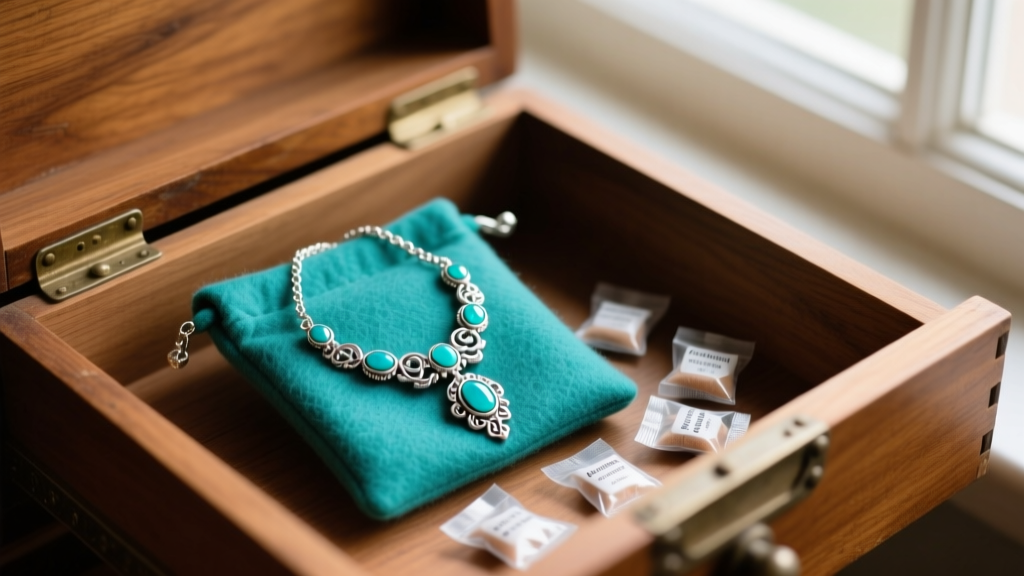
Because turquoise is sensitive to extreme dryness and silver is sensitive to humidity and sulfur, storing a combined piece requires a balanced environment. The goal is to neutralize airborne sulfur while maintaining a stable humidity level.
| Storage Material | Effect on Sterling Silver | Effect on Turquoise | Verdict |
|---|---|---|---|
| Polyethylene Ziploc Bags | Traps existing moisture; accelerates tarnish if not sealed with an anti-tarnish strip. | Can trap humidity against the stone, potentially affecting epoxy backings over years. | Use only with 3M anti-tarnish strips. |
| Pacific Silvercloth | Excellent. Embedded with fine silver particles that absorb sulfur before it reaches your jewelry. | Safe and breathable; prevents rapid humidity fluctuations. | Highly Recommended. |
| Cardboard / Paper Boxes | Poor. Wood pulp and paper glues emit sulfur and acidic gases that cause rapid, severe tarnishing. | Can draw moisture out of natural (unstabilized) turquoise, leading to cracking. | Never Use. |
| Silica Gel Packets | Good. Reduces ambient moisture that facilitates the tarnishing chemical reaction. | Risky in excess. Extreme desiccation can cause micro-fractures in natural turquoise matrix. | Use sparingly (one small packet per drawer). |
Troubleshooting Common Western Jewelry Issues
The Turquoise is Turning Green or Cloudy
If your stone is losing its vibrant blue hue, it is likely absorbing acidic skin oils, lotions, or perspiration. While stabilized turquoise resists this better than natural stone, prolonged exposure will still cause discoloration. Unfortunately, once oils penetrate the resin or stone, the color change is often permanent. Prevention is your only defense: always put your necklace on after applying cosmetics, perfumes, and hairspray, and wipe the stone with a dry cloth immediately after taking it off.
The Stone Rattles in the Bezel
Western jewelry often features stamped or cast bezels that are pushed over the stone by hand. Over time, temperature fluctuations and minor impacts can cause the metal to relax or the epoxy backing to shrink. If you hear a rattle, stop wearing the necklace immediately. Continued wear will cause the turquoise to grind against the silver, eventually chipping the edge or popping out entirely. Take it to a professional jeweler who specializes in Western or Native American jewelry to have the bezel gently re-tightened with a bezel pusher.
Skin Discoloration (Green Neck)
If the silver leaves a green or black mark on your chest, it is not a sign of fake silver. It is a chemical reaction between the copper alloy in the 925 sterling silver and the acidity/salts in your sweat. To mitigate this, you can apply a very thin layer of clear nail polish or a specialized jewelry shielding product (like Jeweler's Skin) to the back of the pendant that rests against your skin. Never apply this to the front of the silver or the turquoise.
Final Thoughts on Heirloom Maintenance
A Montana Silversmith turquoise necklace is more than an accessory; it is a piece of wearable art that reflects the heritage of the American West. By abandoning harsh chemical dips in favor of gentle, targeted dry cleaning and proper Pacific cloth storage, you ensure that the silver retains its striking contrast and the turquoise maintains its vibrant, sky-blue matrix for generations to come. Treat the materials with the respect their geological and metallurgical complexity demands, and your jewelry will age beautifully alongside you.


