How to Clean a Necklace Purple Gem: Expert Maintenance Guide
Learn expert care, cleaning, and maintenance tips for your necklace purple gem. Discover safe methods for amethyst, tanzanite, and sapphire pendants.

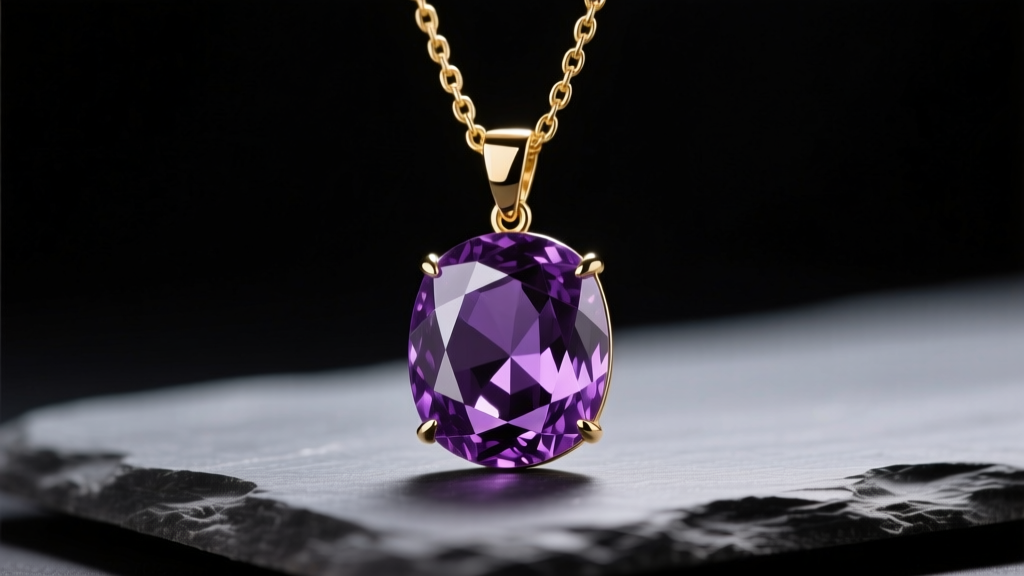
The Mohs Scale and Your Purple Gemstone Necklace
When maintaining your fine jewelry, understanding the mineralogy of your stones is non-negotiable. If you own a necklace, purple gem pendants require highly specific care protocols dictated by their crystalline structure and hardness. The Mohs scale of mineral hardness is a relative scale, not a linear one. For instance, a purple sapphire (Mohs 9) is not just slightly harder than an amethyst (Mohs 7); it is exponentially more resistant to scratching and mechanical abrasion. In 2026, while ultrasonic cleaning technology has become more refined with adjustable frequencies, the fundamental rules of gemology remain unchanged. Misidentifying your purple gemstone and applying the wrong cleaning method can lead to catastrophic failure, from micro-fractures to complete chemical etching. Before applying any cleaning solution, you must accurately identify whether your purple gem is a quartz (amethyst), a zoisite (tanzanite), a corundum (sapphire), or a porous silicate (sugilite or charoite).
Gem-Specific Cleaning Protocols
Each purple gemstone family possesses unique inclusions, cleavage planes, and chemical sensitivities. According to the Gemological Institute of America (GIA), treating all colored gemstones with a single 'universal' cleaning method is the leading cause of avoidable jewelry damage. Below is a technical breakdown of the most common purple gemstones used in pendants and their specific tolerances.
| Gemstone | Mohs Hardness | Ultrasonic Safe? | Steam Safe? | Primary Risk Factor |
|---|---|---|---|---|
| Amethyst | 7 | Usually Yes | No | Thermal Shock, UV Fading |
| Tanzanite | 6 - 7 | NEVER | NEVER | Cleavage Fractures |
| Purple Sapphire | 9 | Yes (if unfractured) | Yes | Chipping at the Girdle |
| Sugilite / Charoite | 5.5 - 6.5 | NEVER | NEVER | Porosity, Chemical Etching |
Amethyst (Quartz Family)
Amethyst derives its purple hue from iron impurities and natural irradiation. While it is relatively durable, amethyst is highly susceptible to thermal shock. Sudden temperature changes—such as moving a cold pendant into a hot steam cleaner—can cause internal stress fractures. Furthermore, prolonged exposure to direct UV light can alter the oxidation state of the iron, causing the vibrant purple color to fade to a dull gray or brown. Amethyst can generally withstand ultrasonic cleaning, but only if the stone is free of significant liquid inclusions or surface-reaching fractures.
Tanzanite (Zoisite Family)
Tanzanite is notoriously fragile due to its perfect cleavage in one direction. This means that high-frequency vibrations from an ultrasonic cleaner can cause microscopic internal fissures to propagate, potentially splitting the stone in half. Tanzanite must only ever be cleaned using lukewarm water and mild soap. The American Gem Society (AGS) explicitly warns against mechanical cleaning for tanzanite jewelry. Additionally, tanzanite is often heat-treated to enhance its violet-blue-purple hue; harsh chemicals can degrade surface polish over time.
Purple Sapphire (Corundum)
Purple sapphire is exceptionally durable and can withstand both ultrasonic and steam cleaning, provided the stone has not been fracture-filled with lead glass or heavy resins. If your sapphire is heavily included with rutile silk or possesses surface-reaching cracks, the high-pressure steam can force moisture into the fissures, leading to internal cloudiness or structural weakening.
Sugilite and Charoite (Porous Silicates)
These opaque, deeply purple gems are highly porous and relatively soft. They act like microscopic sponges. Submerging sugilite or charoite in soapy water will draw chemical residues deep into the stone's matrix, resulting in permanent dullness and white, crusty deposits that cannot be polished out. These stones require dry or barely damp cleaning methods only.
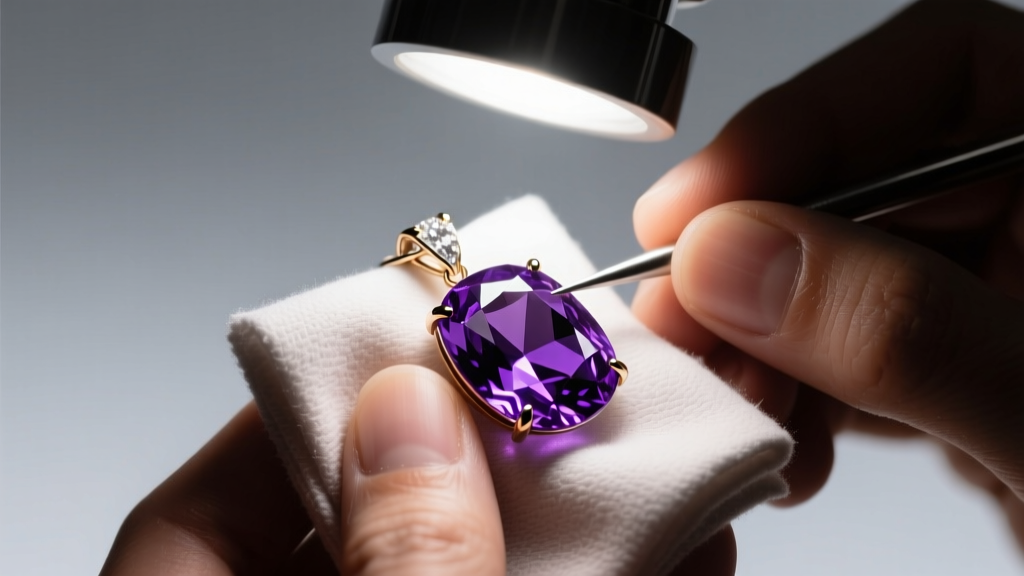
Step-by-Step Wet Cleaning Method for Safe Purple Gems
For amethyst, tanzanite, and purple sapphire, the safest and most effective at-home cleaning method relies on chemical gentleness and mechanical softness. Follow this precise protocol to restore your pendant's brilliance without risking structural damage.
- Prepare the Solution: Mix 1 part mild, non-detergent liquid soap (such as pure Castile soap or unscented baby wash) with 10 parts lukewarm distilled water. Avoid tap water, as the chlorine, fluoride, and dissolved minerals can leave a microscopic film on the gemstone's pavilion facets, reducing light return.
- Soak Briefly: Submerge the pendant for exactly 3 to 5 minutes. This allows the surfactant to break down sebum, dead skin cells, and cosmetic residues trapped beneath the setting. Do not exceed 10 minutes, especially for tanzanite.
- Agitate Gently: Using an extra-soft baby toothbrush (bristles rated at 0.1mm or less), lightly sweep the back of the gemstone (the pavilion). Dirt accumulates most heavily on the lower facets, drastically reducing the stone's refractive brilliance. Brush in a circular motion, applying zero downward pressure.
- Rinse Thoroughly: Rinse the pendant under a gentle stream of lukewarm distilled water. Ensure the drain is securely plugged or use a mesh strainer to prevent catastrophic loss.
- Dry and Polish: Pat the chain and setting dry with a lint-free microfiber cloth. Use a clean, dry cotton swab to carefully wick away any remaining moisture from the tight crevices where the prongs meet the gemstone's girdle.
What to Avoid: Chemical and Mechanical Failure Modes
Misusing household chemicals is the fastest way to destroy both the gemstone and the precious metal setting of your necklace. Understanding these failure modes will save you thousands of dollars in replacement costs.
- Chlorine and Bleach: Never wear your purple gem necklace in a swimming pool or clean with bleach. Chlorine reacts violently with the alloy metals in 14k and 18k gold (specifically copper and silver), causing a phenomenon called 'stress corrosion cracking.' This literally dissolves the microscopic bonds in the metal, leading to prong failure and lost stones.
- Ammonia-Based Cleaners: While ammonia is excellent for diamonds, it can strip the protective polish from softer purple gems like tanzanite and sugilite, leaving a permanently etched, cloudy surface.
- Toothpaste and Baking Soda: These are abrasive compounds. Toothpaste often contains hydrated silica (Mohs 7), which will easily scratch tanzanite, sugilite, and charoite, creating a network of micro-scratches that scatter light and make the gem look milky.
Expert Insight: If your purple gemstone appears cloudy even after a thorough wet cleaning, the dirt may not be on the surface. Over time, the metal setting can wear down, allowing the stone to shift and trap debris deep within the setting's gallery. In this case, a professional jeweler must carefully unseat the stone, clean the gallery wire, and re-tighten the prongs.
Chain and Setting Maintenance (Prongs and Bails)
The longevity of your necklace purple gem relies just as much on the metalwork as the stone itself. The bail (the loop connecting the pendant to the chain) experiences constant friction. Inspect the bail's interior hole every six months; if the metal has thinned by more than 20%, it requires immediate laser welding by a professional to prevent the pendant from snapping off and falling.
Prongs holding faceted purple gems must be checked for 'lifting.' Use a 10x jeweler's loupe to inspect the tips of the prongs. They should be smooth, rounded, and resting flush against the gemstone's crown. If a prong is snagging on your clothing, it has lifted and poses a severe risk of dropping the stone. For sterling silver chains, regular polishing with a treated silver cloth is required to remove silver sulfide (tarnish), but ensure the cloth does not rub against porous gems like sugilite, as the tarnish-removing chemicals can stain the stone.
Storage and Environmental Protection
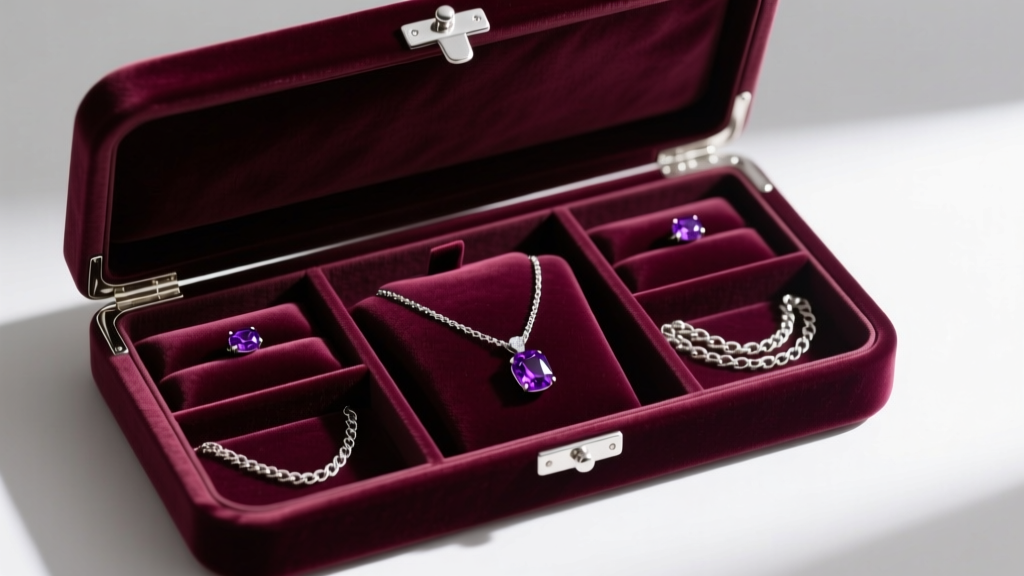
Proper storage is the final pillar of gemstone maintenance. Purple gemstones must be stored in a climate-controlled, dark environment. Amethyst and kunzite (a pinkish-purple gem) are particularly vulnerable to prolonged UV exposure, which alters their color centers. Store your necklace in a lined jewelry box with individual compartments to prevent the chain from tangling and the metal links from scratching the softer purple gems. For optimal protection, place silica gel desiccant packets in your jewelry safe or storage drawer to maintain a relative humidity below 40%, preventing the oxidation and tarnishing of silver and low-karat gold alloys. By adhering to these rigorous, gem-specific care protocols, your purple gemstone pendant will retain its optical brilliance and structural integrity for generations.


