Ultimate Care Guide for Your Black Gold Cross Necklace
Learn expert cleaning and maintenance tips for your black gold cross necklace. Protect black rhodium and PVD finishes from fading and damage.


When you invest in a black gold cross necklace, you are acquiring a piece of jewelry that commands attention. The striking, dark aesthetic offers a modern, edgy alternative to traditional yellow or white gold. However, maintaining that deep, obsidian-like luster requires a highly specific care regimen. Unlike solid yellow gold, which is relatively low-maintenance, black gold is the result of advanced surface treatments that are vulnerable to friction, chemicals, and improper cleaning techniques.
In this comprehensive guide, we will break down the metallurgy behind black gold, outline a strict daily wear protocol, and provide a jeweler-approved, step-by-step cleaning method to ensure your cross pendant remains flawless for years to come.
The Science of Black Gold: Why Your Cross Needs Special Care
To properly care for your necklace, you must first understand what you are actually wearing. Naturally occurring black gold does not exist in jewelry. The dark finish on your cross pendant is achieved through one of three primary methods, each with distinct vulnerabilities:
- Black Rhodium Plating: This is the most common method. An electroplated layer of black rhodium (often mixed with ruthenium or tin) is applied over a 14k or 18k white or yellow gold base. While it provides a brilliant, mirror-like dark finish, the plating is incredibly thin (usually between 0.75 and 1.0 microns) and will naturally wear away over 12 to 24 months with daily friction.
- Physical Vapor Deposition (PVD):strong> A more advanced, highly durable coating where titanium nitride or carbon-based compounds are vaporized in a vacuum and bonded to the gold at a molecular level. PVD coatings are up to 10 times harder than electroplating and can last 5+ years, but they cannot be easily spot-repaired if deeply scratched.
- Laser-Induced Oxidation: A rare, premium technique where femtosecond lasers alter the surface nanostructures of the gold to absorb light. This is permanent and will not wear off, but it requires specialized cleaning to avoid trapping oils in the micro-textures.
Because the vast majority of black gold cross necklaces on the market utilize black rhodium or ruthenium plating, the cleaning protocols below are specifically designed to prevent the premature stripping of these delicate electroplated layers.
Daily Wear Rules: Preventing Plating Degradation
The lifespan of your black gold finish is determined more by your daily habits than by how often you clean it. The primary enemies of black rhodium are acidity, sulfur, and abrasion.

The 'Last On, First Off' Rule
Always put your black gold cross necklace on after applying cosmetics, perfumes, hairsprays, and lotions. Many beauty products contain alcohols and volatile organic compounds (VOCs) that can chemically degrade the binding agents in black rhodium plating. Conversely, make it the first item you remove when you get home.
Avoid High-Sulfur Environments
Sulfur is highly reactive with the alloys used in dark plating. Hot springs, heavily polluted urban environments, and even certain dietary supplements (like high-dose garlic or sulfur-based amino acids) can accelerate the breakdown of the black finish through contact with your skin's natural perspiration.
Friction and Clothing
Cross pendants naturally rest against the sternum, an area prone to friction from shirts, scarves, and seatbelts. If you wear your necklace daily, opt for smooth fabrics like silk, fine cotton, or modal. Avoid coarse wools or heavily textured synthetics that act like microscopic sandpaper against the rhodium layer.
The 5-Step Safe Cleaning Protocol
When your black gold cross necklace accumulates body oils, dead skin cells, and environmental dust, it will begin to look cloudy or dull. Never use commercial jewelry dips, silver polish, or ultrasonic cleaners. According to the Jewelers of America, ultrasonic vibrations combined with heat can cause micro-fractures in electroplated layers, leading to immediate peeling.
Follow this precise, gentle protocol every 3 to 4 weeks:
- The Distilled Water Bath: Fill a small glass bowl with lukewarm (never hot) distilled water. Tap water contains chlorine and hard minerals that can leave microscopic water spots on the dark finish.
- Mild Surfactant Addition: Add exactly two drops of a pH-neutral, lotion-free dish soap (such as original Dawn). Avoid soaps with added moisturizers or citrus extracts, as the citric acid can etch the plating.
- Gentle Agitation: Submerge the cross pendant for no more than 3 minutes. Using a brand-new, ultra-soft baby toothbrush, gently sweep the bristles over the surface. Pay special attention to the bail (the loop connecting the cross to the chain) and any intricate filigree or pave diamond settings where sebum builds up.
- The Rinse: Rinse the necklace under a gentle stream of lukewarm distilled water to remove all soap residue.
- Microfiber Drying: Do not air dry. Water spots are highly visible on black gold. Immediately pat the necklace dry with a clean, lint-free microfiber cloth. Avoid paper towels, as the wood pulp fibers can cause micro-scratches.
Troubleshooting Common Black Gold Issues
Even with meticulous care, black gold jewelry presents unique challenges. Use this diagnostic table to address common issues without causing further damage to your cross pendant.
| Issue | Root Cause | Expert Solution |
|---|---|---|
| Yellow/White spots appearing on the cross edges | Plating wear from friction, exposing the base gold alloy. | Stop wearing the piece. Take it to a professional jeweler for a black rhodium re-dip (typically costs $45–$90). |
| Pave diamonds looking cloudy or gray | Soap scum and skin oils trapped under the gemstone girdles. | Use a wooden toothpick to gently dislodge debris from the prongs, then repeat the soapy water soak. Never use metal tools. |
| Chain turning skin green or gray | Acidic sweat reacting with the copper/zinc alloys in lower-karat base metals beneath the plating. | Wipe the chain daily with a damp cloth. Consider upgrading to an 18k solid white gold chain with PVD black coating. |
| White, chalky residue in crevices | Dried hard water minerals or leftover polishing compounds. | Soak in a 50/50 mix of distilled water and white vinegar for exactly 60 seconds, then rinse thoroughly. (Use sparingly). |
Long-Term Storage and Maintenance
How you store your black gold cross necklace when it is not being worn is just as critical as how you clean it. Leaving the piece exposed to ambient air and humidity accelerates the oxidation of the underlying alloys, which can cause the black plating to blister or flake from the inside out.
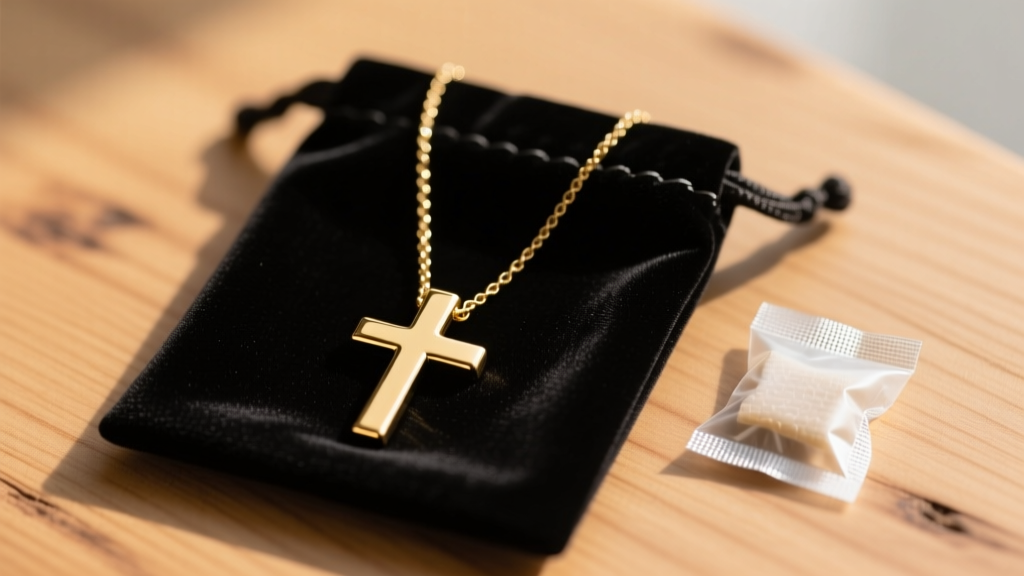
Always store your necklace in an airtight, anti-tarnish polyethylene bag. Include a small silica gel desiccant packet to control moisture levels. If the cross pendant features sharp points or a heavy bail, store it completely separate from your other jewelry to prevent the harder pieces from scratching the relatively soft black rhodium surface.
Finally, if your cross features pave-set black or white diamonds, the Gemological Institute of America (GIA) recommends having the prongs checked by a professional jeweler every 12 months. The cleaning process of re-dipping a piece in black rhodium requires mild acids that can loosen compromised prongs, so structural integrity must always precede cosmetic restoration.
By respecting the delicate chemistry of black gold and adhering to this strict maintenance protocol, your cross necklace will retain its bold, dark elegance and remain a standout piece in your collection for years to come.


