Troubleshooting Your Blood Vials Necklace: Leaks, Clouding & Fixes
Is your blood vials necklace leaking or clouding? Learn expert troubleshooting for O-ring seals, glass care, and thread maintenance to keep it safe.

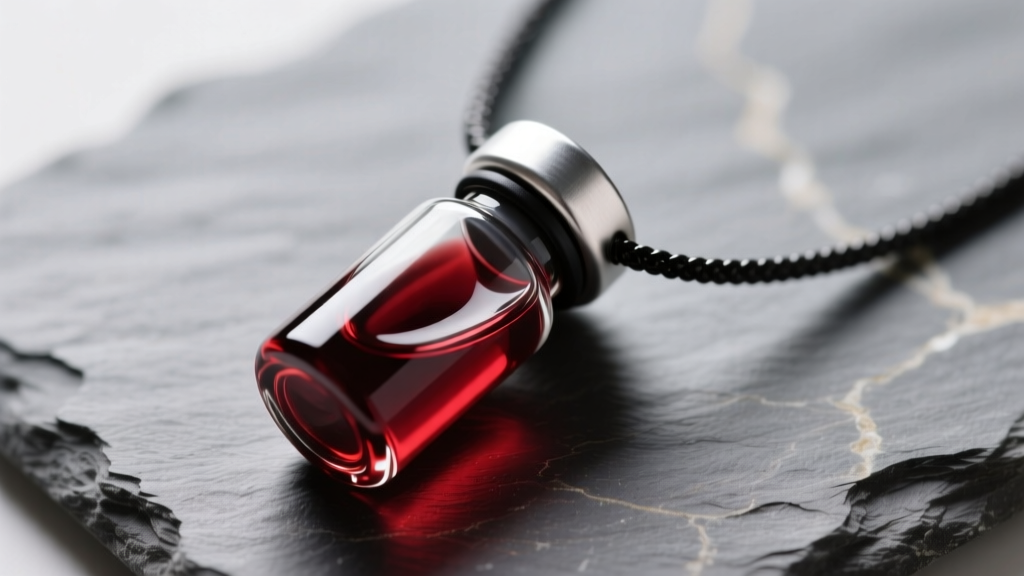
Blood vial necklaces are among the most deeply sentimental pieces of memorial and gothic jewelry available. Whether your pendant holds actual blood, cremation ashes suspended in resin, or a symbolic synthetic liquid, the mechanical reality of these pieces is surprisingly complex. Unlike standard cast pendants, a blood vial necklace is essentially a miniature pressure vessel. When seals fail, glass clouds, or threads strip, the sentimental contents are at immediate risk of oxidation, leakage, or permanent loss.
This comprehensive troubleshooting guide addresses the most common failure modes of blood vial pendants. We will explore the material science of borosilicate glass, the biological realities of preserving organic matter, and the exact mechanical protocols required to reseal and maintain your necklace for decades.
The Anatomy of a Blood Vial Pendant: Where Failures Occur
To troubleshoot a failing vial, you must first understand its mechanical anatomy. A high-quality blood vial necklace consists of four primary components, each with specific failure points:
- The Vessel: Typically a cylindrical tube made of borosilicate glass or surgical-grade stainless steel. Glass offers visibility but is susceptible to thermal shock and impact.
- The Cap: Usually machined from 316L stainless steel or titanium, featuring fine internal threads. Cross-threading is the most common user error here.
- The O-Ring Seal: A microscopic rubber gasket seated in a machined groove on the cap or the glass lip. This is the single point of failure for 90% of leaking pendants.
- The Bail and Jump Ring: The connector connecting the cap to the chain. Unsoldered jump rings frequently pull apart under the pendulum weight of a glass vial.
The Biological Reality: Real Blood vs. Synthetic Liquids
Before addressing mechanical leaks, we must address the most frequent cause of 'clouding' and discoloration: biological degradation. If your vial contains real human or animal blood, you are fighting a chemical battle against oxidation and coagulation.
Untreated blood exposed to the microscopic air gap inside a sealed vial will rapidly oxidize. The hemoglobin turns from bright crimson to a dark, muddy brown or black. Furthermore, without an anticoagulant like EDTA (Ethylenediaminetetraacetic acid) or sodium citrate, the blood will separate into a dark clot and a yellowish serum called plasma. This separation often looks like 'clouding' or 'mold' to the untrained eye, prompting users to aggressively shake the vial, which can cause micro-fractures in the glass.
Expert Fix: If you are preparing a real blood vial, the blood must be mixed with a clear, non-toxic suspension medium or a professional biological preservative before sealing. Never use tap water to dilute blood, as the chlorine and minerals will accelerate bacterial growth and cloud the glass interior permanently.
Troubleshooting Matrix: Leaks, Clouding, and Seals
Use the following diagnostic table to identify your specific pendant failure and apply the correct mechanical solution.
| Problem Symptom | Root Cause Analysis | Expert Mechanical Fix |
|---|---|---|
| Liquid weeping from cap threads | O-ring compression set (flattening) or missing seal | Replace with a Shore A 70 Viton (FKM) O-ring; apply 2 wraps of PTFE tape. |
| Cap won't tighten / spins freely | Cross-threading or stripped internal cap threads | Reverse thread until a tactile 'click' is felt, then tighten gently. If stripped, replace cap. |
| Interior glass looks cloudy/foggy | Hard water mineral deposits or hemoglobin oxidation | Flush with distilled water and 99% isopropyl alcohol; avoid abrasive brushes. |
| Cap is completely stuck | Dried biological residue acting as glue, or vacuum lock | Soak cap (not the glass) in warm water for 5 minutes; use a textured rubber grip to twist. |
| Chain detaches from pendant | Unsoldered jump ring pulled apart by vial weight | Replace with a soldered jump ring or a heavy-duty split ring rated for 3+ lbs. |
Step-by-Step Resealing Protocol
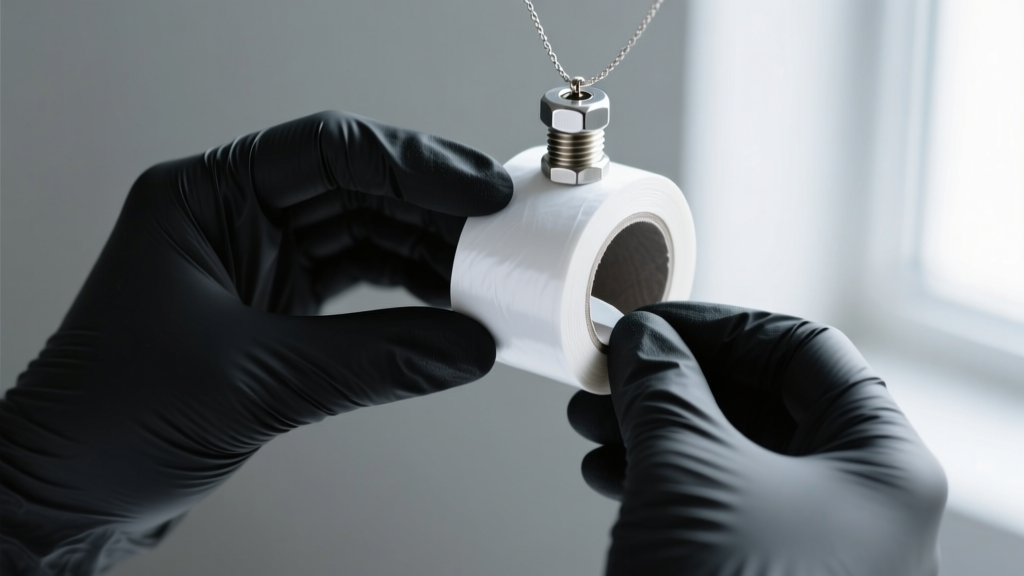
If your pendant is leaking, simply tightening the cap will not fix the issue and may shatter the glass lip. You must perform a complete reseal using proper plumbing and engineering techniques adapted for micro-jewelry.
- Evacuate and Clean: Empty the contents into a sterile secondary container. Clean the glass vial and the cap threads with 99% isopropyl alcohol. Allow to dry completely. Moisture trapped under the O-ring will cause fungal growth.
- Inspect the O-Ring: Remove the existing O-ring using a plastic dental pick (never metal, which scratches the sealing groove). If the O-ring is flattened, cracked, or sticky, it has suffered 'compression set' and must be discarded. According to the McMaster-Carr O-ring sealing guide, Viton (FKM) is the superior choice for biological and saline resistance compared to standard silicone, which degrades when exposed to certain body oils and preservation chemicals.
- Apply PTFE Thread Seal Tape: Wrap the male threads of the glass or metal neck with high-density PTFE (Teflon) plumber's tape. Apply exactly two to three wraps in a clockwise direction (when looking down at the threads). This fills the microscopic tolerances between the threads without requiring excessive torque.
- Torque and Test: Reinsert the O-ring, seat the cap, and tighten until you feel firm resistance. Do not use pliers. Submerge the empty, sealed vial in a bowl of water and squeeze it gently. If no air bubbles escape, the seal is hydrostatically sound.
Material Science: Glass vs. Surgical Steel Vials
The longevity of your blood vials necklace is heavily dictated by the base materials. Cheap pendants often use soda-lime glass and 304 stainless steel. Soda-lime glass has a high coefficient of thermal expansion (CTE), meaning it expands and contracts rapidly with temperature changes. When the metal cap and the glass tube expand at different rates, the O-ring is either crushed or pulled away from the sealing surface, resulting in sudden leaks.
High-end memorial jewelry utilizes borosilicate glass (commonly known as Pyrex). Borosilicate has an extremely low CTE, making it highly resistant to thermal shock. You can wear a borosilicate vial in freezing winter weather or a hot sauna without risking a shattered vessel.
Similarly, the cap should be machined from 316L stainless steel or Grade 2 Titanium. 316L contains molybdenum, which prevents pitting corrosion from the saline content in human blood or sweat. 304 steel will eventually rust from the inside out when in constant contact with organic saline fluids, staining your contents orange and compromising the threads.
Thermal Expansion and Temperature Shocks
Even with borosilicate glass, extreme temperature differentials can cause a vacuum lock. If you fill a vial with warm liquid and seal it immediately, the cooling liquid will contract, creating a negative pressure vacuum inside the tube. This vacuum pulls the O-ring inward, potentially breaking the seal and drawing in outside air and bacteria. Always ensure liquids are at exact room temperature (68°F to 72°F) before final sealing.
Chain, Bail, and Stress Point Failures
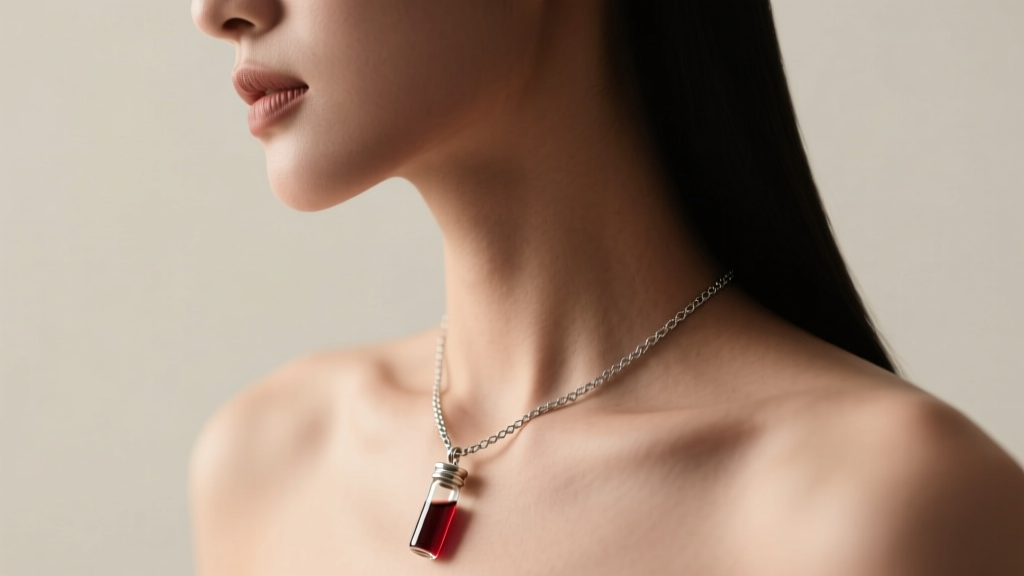
A fully loaded glass blood vial pendant can weigh between 15 and 30 grams. While this seems light, the pendulum effect created by walking or running multiplies the dynamic force exerted on the bail and jump ring.
The most catastrophic failure occurs when an unsoldered jump ring pulls open, dropping the vial onto a hard surface. To prevent this, inspect the jump ring connecting the chain to the pendant bail. If you see a seam or split in the metal ring, replace it immediately with a soldered jump ring or a heavy-duty split ring (similar to a miniature keyring). Furthermore, ensure the bail itself is friction-fitted or soldered to the cap, rather than relying on a weak adhesive, which will degrade when exposed to skin oils and UV light.
Safe Handling and Long-Term Storage
When not being worn, blood vial necklaces require specific storage conditions to preserve both the hardware and the organic contents. UV radiation from direct sunlight will rapidly degrade synthetic red dyes and accelerate the oxidation of real hemoglobin, turning it permanently black. Store the pendant in a UV-blocking velvet pouch or a sealed opaque jewelry box.
Finally, avoid exposing the pendant to harsh chemicals, including chlorine pools, sulfur hot springs, and household bleach. These chemicals will rapidly degrade silicone O-rings and cause micro-pitting on even 316L stainless steel caps. By treating your blood vial necklace not just as jewelry, but as a precision-sealed biological containment vessel, you ensure that your most sentimental keepsake remains intact, vibrant, and secure for a lifetime.


