Beginner Guide to Buying and Styling a Sea Shell Necklace
Discover how to choose, style, and care for an authentic sea shell necklace. Learn about shell types, durable stringing, and neckline pairings.

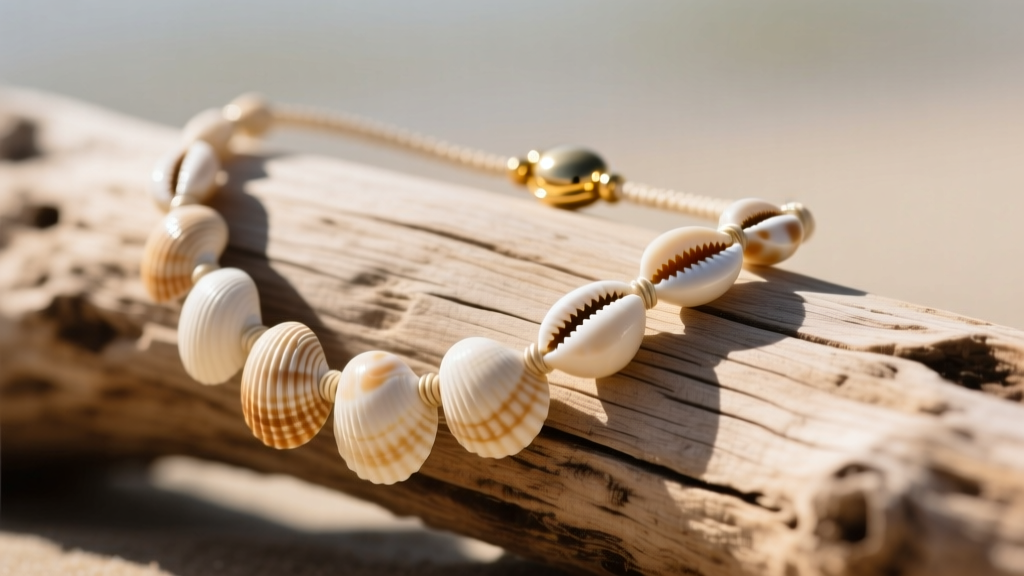
The Enduring Appeal of the Sea Shell Necklace
The sea shell necklace has transcended its mid-century surf culture roots to become a permanent staple in fine and fashion jewelry. For beginners, navigating the market can be surprisingly complex. Unlike faceted gemstones graded by the 4Cs, organic shell jewelry requires an understanding of marine biology, material durability, and specialized stringing techniques. Whether you are looking for a casual beach accessory or an elevated layering piece, understanding the anatomical and structural nuances of these organic gems is essential for making a smart purchase.
In this comprehensive guide, we will break down the exact shell species used in jewelry, the structural anatomy of a well-made piece, and actionable care protocols to prevent the degradation of calcium carbonate structures.
Decoding Shell Varieties: A Beginner’s Material Guide
Not all shells are created equal. The Mohs hardness of most marine shells ranges between 2.5 and 3.0, making them softer than quartz but highly variable in density and porosity. According to the Gemological Institute of America (GIA), organic gem materials require specific environmental conditions to maintain their luster. Here are the three most common shells you will encounter.
Puka Shells (The Cone Snail Apex)
Authentic puka shells are not simply discs cut from larger shells; they are the naturally occurring apex (tip) of the cone snail. The word 'puka' translates to 'hole' in Hawaiian, referring to the natural opening at the tip. Genuine puka shells are asymmetrical, with one side slightly more convex than the other. Because they are naturally tumbled by the ocean, their edges are smooth, and the central hole is rarely perfectly round. Mass-produced imitations are often stamped from flat sheets of mother-of-pearl or plastic, resulting in perfectly uniform, symmetrical discs with sharp, machine-cut edges.
Cowrie Shells (Polished & Historical)
Cowrie shells are renowned for their high natural polish and historical use as currency. In jewelry, they are typically used as focal pendants rather than strand beads due to their size and weight. High-quality cowrie pendants retain their natural enamel-like surface. When buying a cowrie sea shell necklace, inspect the dorsal ridge (the top spine). Lower-quality pieces will have rough, unfinished ridges that can snag on delicate fabrics like silk or chiffon.
Mother of Pearl (Nacreous Elegance)
Mother of pearl (nacre) is the iridescent inner lining of mollusks like the pearl oyster and abalone. It is composed of microscopic aragonite platelets layered with conchiolin (an organic protein). This brick-and-mortar microstructure gives nacre its incredible toughness and light-diffracting properties. Nacre is frequently carved into cameos, inlaid into pendants, or cut into geometric beads.
| Shell Type | Average Price Range | Durability & Porosity | Best Use Case |
|---|---|---|---|
| Authentic Puka | $80 - $250 | High density, low porosity | Everyday choker or 18-inch strand |
| Cowrie | $40 - $120 | Medium density, enamel surface | Solo pendant on a durable cord |
| Mother of Pearl | $60 - $300+ | Tough but prone to surface scratching | Elevated pendants and inlay work |
| Faux/Resin Shells | $10 - $25 | Highly durable, zero porosity | Water sports and heavy beachwear |
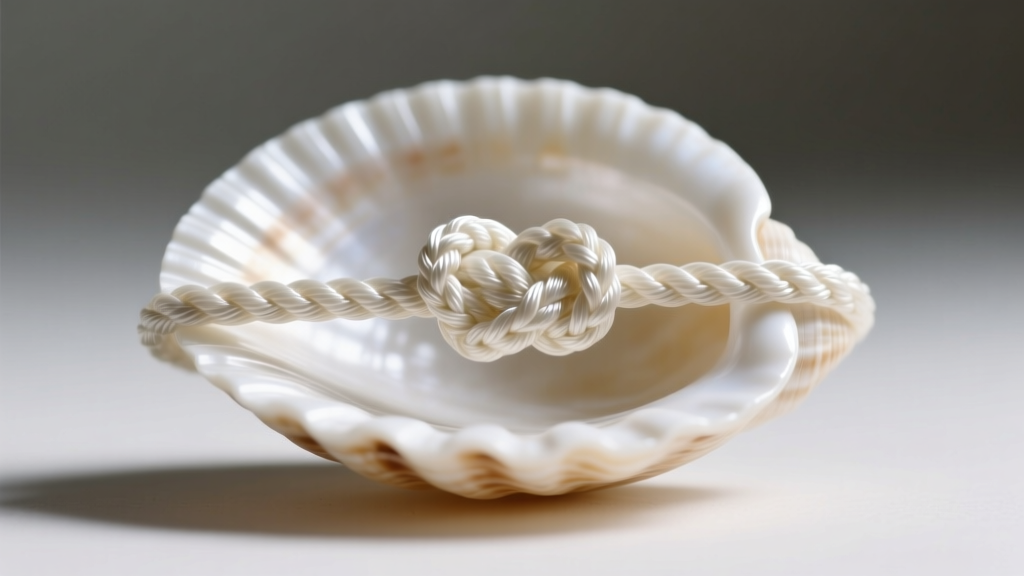
The Anatomy of a Durable Sea Shell Necklace
The failure point of 90% of shell necklaces is not the shell itself, but the stringing material and clasp hardware. Shells have abrasive inner edges that can saw through weak threads over time. When evaluating a sea shell necklace, turn your attention to the following structural elements.
Stringing Materials: Silk vs. Synthetic
Traditional shell necklaces were strung on silk cord. While silk offers a beautiful drape, it is highly susceptible to water damage, sweat, and UV degradation. If you plan to wear your necklace in the ocean or pool, silk will rot and snap. For active wear, look for pieces strung on braided polyethylene (like Power Pro) or coated stainless steel micro-wire. Braided polyethylene offers a thread-like drape but possesses a tensile strength capable of holding up to 50 lbs, making it virtually impossible to snap under normal wear.
Knotting Techniques
For graduated shell strands, each bead should be individually hand-knotted. This prevents shell-on-shell friction (which causes micro-chipping) and ensures that if the cord breaks, you only lose one bead. Look for tight, uniform knots that sit flush against the shell. Sloppy, loose knots indicate machine-stringing or low-tier assembly.
Clasp Hardware
Avoid base metals or plated brass clasps, which will quickly corrode when exposed to saltwater and sunscreen chemicals. Opt for solid 14k gold, surgical-grade stainless steel (316L), or solid sterling silver with a rhodium plating to prevent tarnish.
Styling Frameworks: Necklines and Proportions
Styling a sea shell necklace requires balancing its organic, textured aesthetic with your wardrobe. The key is contrast and proportion.
Length and Neckline Pairing
- 14-16 Inches (Choker/Collar): Best worn with off-the-shoulder tops, boat necks, or deep V-necks. A tightly strung puka choker draws the eye directly to the collarbone and pairs beautifully with minimalist linen garments.
- 18 Inches (Princess Length): The most versatile length. It rests perfectly on the clavicle and works well with scoop necks and casual button-downs. This is the ideal length for layering a single cowrie pendant over a plain white t-shirt.
- 20-24 Inches (Matinee Length): Ideal for high necklines, turtlenecks, and bohemian maxi dresses. Longer shell strands create a vertical line that elongates the torso.
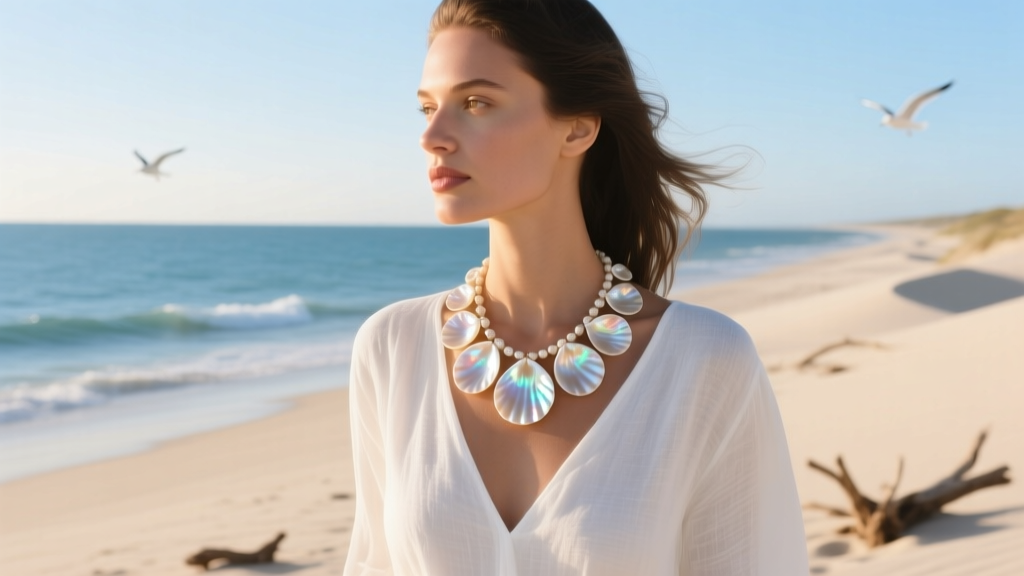
The Art of Layering
When layering shells with metal chains, adhere to the 'Rule of Three' and vary the textures. Pair a matte, natural puka strand with a high-polish 14k gold snake chain and a delicate pearl pendant. Ensure there is at least a 2-inch difference in length between each layer to prevent the abrasive shells from scratching the metal chains.
Preservation: Protecting Calcium Carbonate
Shells are primarily composed of calcium carbonate, a compound that is highly reactive to acids. This makes your sea shell necklace vulnerable to everyday chemicals.
- Sunscreen and Lotions: Chemical sunscreens containing oxybenzone and avobenzone can dull the natural polish of cowrie and mother-of-pearl shells. Always apply sunscreen and let it absorb for 15 minutes before putting on your jewelry.
- Chlorine and Salt: While brief ocean exposure is fine, prolonged soaking in chlorinated pools will etch the surface of the shell, leaving it chalky and brittle. Rinse your necklace with fresh, cool water immediately after swimming.
- Storage: Never store shell jewelry in airtight plastic bags, as trapped humidity can promote fungal growth on organic stringing materials. Store them in a breathable cotton pouch away from direct sunlight, which can yellow white shells over time.
Authenticity Checks: Spotting Treated and Faux Shells
As the demand for sustainable jewelry rises, so does the market for treated and synthetic alternatives. Here is how to verify the authenticity of your sea shell necklace:
- The Temperature Test: Genuine shells feel noticeably cool to the touch and take a few seconds to warm up against your skin. Plastic or resin imitations will feel room temperature immediately.
- The Weight Test: Real shells have a dense, satisfying weight. Faux shells made from compressed shell powder and resin often feel unnaturally light or uniformly heavy.
- Visual Imperfections: Examine the strand under a bright light. Authentic puka strands will feature slight variations in color, thickness, and hole placement. If every bead is a flawless, identical white disc, you are likely looking at bleached, machine-cut imitations or dyed howlite.
By understanding the material science and structural requirements of shell jewelry, beginners can confidently invest in a sea shell necklace that is not only aesthetically striking but built to withstand the elements and last for decades.


