Technical Guide to Choosing a Peruvian Opal Necklace
Master the technical details of buying a Peruvian opal necklace. Learn about Mohs hardness, matrix grading, stabilization, and bezel settings.

The Gemological Profile of Peruvian Opal
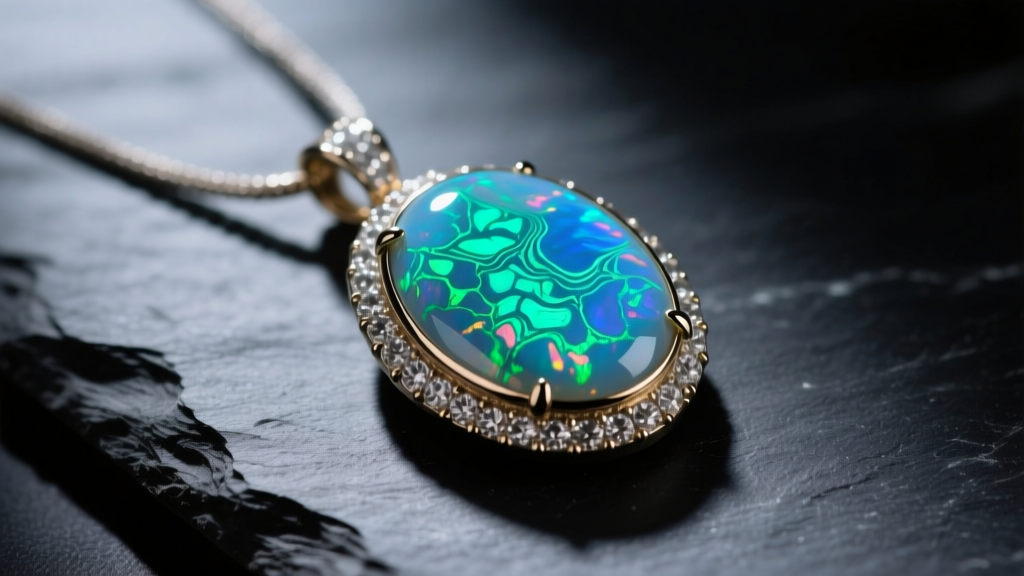
When sourcing a peruvian opal necklace, buyers and jewelers often mistake this striking gem for a fragile novelty rather than a serious gemological specimen. Unlike Australian or Ethiopian precious opals, Peruvian opal is classified as a 'common' opal. This means it lacks the regular, three-dimensional lattice of silica spheres required to produce play-of-color. However, what it loses in spectral fire, it makes up for in profound, saturated body colors and unique matrix patterns.
Chemically, Peruvian opal is a hydrated silicon dioxide (SiO2·nH2O). According to the Gemological Institute of America (GIA), its amorphous structure can contain anywhere from 3% to 20% water by weight. This high water content is the defining factor in both its cutting process and its long-term stability as a pendant. With a Mohs hardness ranging from 5.5 to 6.5 and a specific gravity of roughly 2.10 to 2.20, it is softer and lighter than quartz, requiring specialized lapidary techniques to achieve a high-gloss cabochon finish suitable for necklaces.
Blue vs. Pink: Sourcing and Color Grading
The market for Peruvian opal pendants is dominated by two distinct color varieties, each sourced from specific geological formations in the Andes and coastal deserts.
Blue Peruvian Opal (Lily Mine)
The most highly prized variety is the vivid, opaque blue-to-teal opal sourced primarily from the Lily Mine in the Pisco province of Ica. The striking blue color is not caused by copper inclusions, as is common in turquoise, but rather by the scattering of light through microscopic silica structures and trace mineral inclusions. High-grade blue Peruvian opal often features a 'matrix' pattern, where the opal is intimately mixed with the host sandstone, creating striking dendritic or landscape-like inclusions.
Pink Peruvian Opal (Acari Valley)
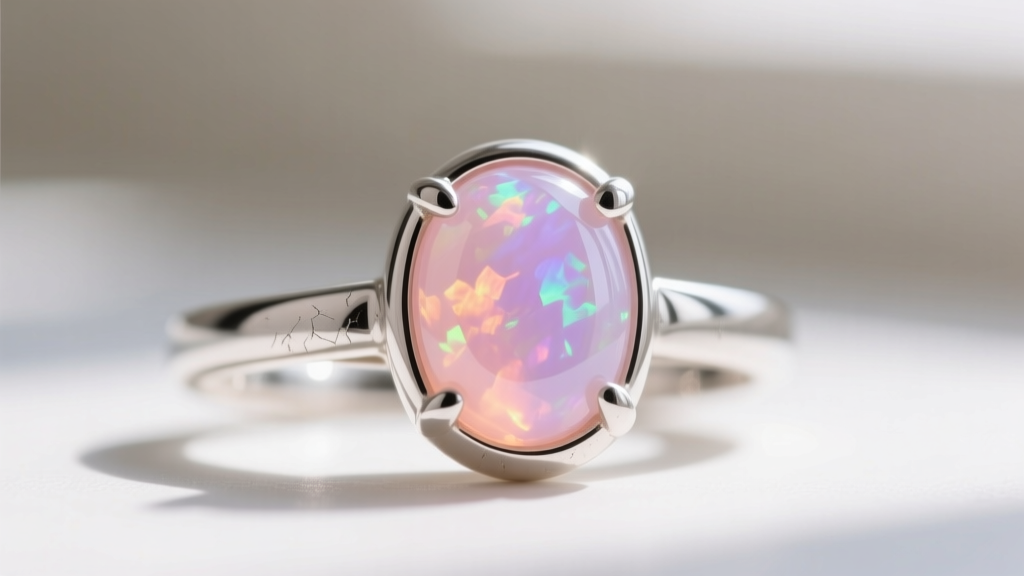
Pink opal is mined primarily in the Acari Valley of the Arequipa region. Its pastel to vibrant pink hue is caused by inclusions of palygorskite, a fibrous clay mineral, and occasionally trace amounts of manganese. Pink opal is generally more uniform in color and less likely to feature the dramatic matrix patterns seen in its blue counterpart.
Technical Specifications & Comparison Table
Understanding the physical properties of these stones is critical for jewelry designers and collectors. Below is a comparative breakdown of the two primary varieties used in necklace pendants.
| Property | Blue Peruvian Opal | Pink Peruvian Opal |
|---|---|---|
| Primary Source | Lily Mine, Ica | Acari Valley, Arequipa |
| Mohs Hardness | 5.5 - 6.0 | 6.0 - 6.5 |
| Color Cause | Rayleigh scattering / Silica structure | Palygorskite clay inclusions |
| Porosity | Moderate (Matrix dependent) | Low to Moderate |
| Typical Cut | Freeform Cabochon with Matrix | Calibrated Oval/Round Cabochon |
| Avg. Pendant Price (2026) | $45 - $150+ | $30 - $90 |
Setting Mechanics: Why Bezel is Non-Negotiable
A frequent failure mode in commercial gemstone jewelry is the use of prong settings for stones with a Mohs hardness below 7.0. When designing or purchasing a peruvian opal necklace, prong settings must be strictly avoided. The point-pressure exerted by metal prongs during setting—and subsequently during daily wear—will inevitably cause micro-fractures or catastrophic chipping along the stone's girdle.
The only structurally sound setting for a Peruvian opal pendant is a full bezel or a heavy half-bezel. A bezel setting distributes compressive force evenly around the perimeter of the cabochon. Furthermore, because Peruvian opal is sensitive to prolonged exposure to human skin oils, sweat, and cosmetics, a well-constructed bezel with a sealed or partially enclosed backplate will protect the porous stone from chemical degradation and color-altering contamination over decades of wear.
Stabilization and Matrix Treatments
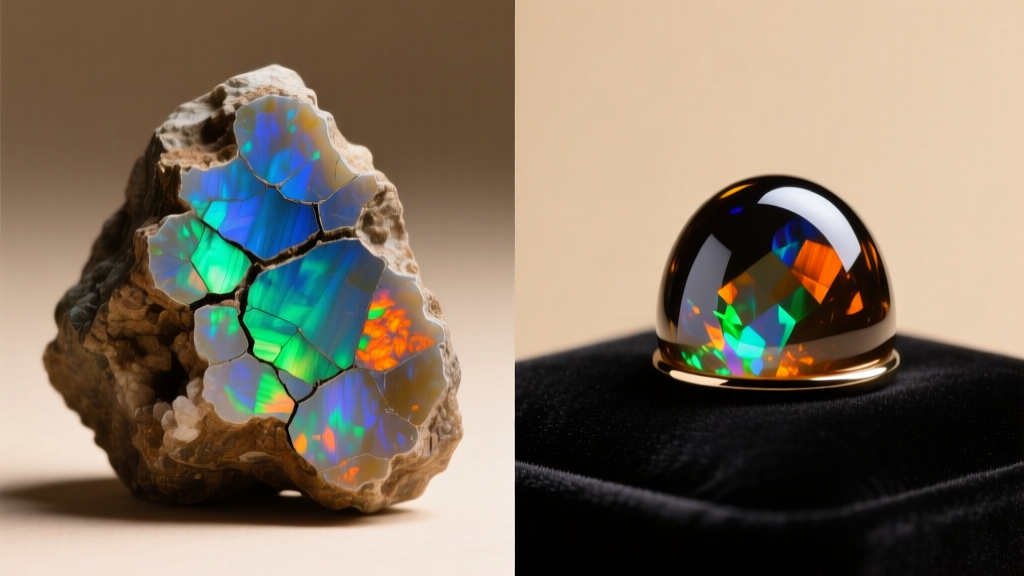
Because blue Peruvian opal is frequently cut as 'matrix opal' (meaning the gem material is intergrown with the host sandstone), the stone can be highly porous and structurally inconsistent. To prevent the sandstone from crumbling and to allow for a high-gloss polish, lapidaries routinely stabilize the material.
- Vacuum Impregnation: The rough stone is placed in a vacuum chamber to extract air and moisture from the pores.
- Resin Infusion: A low-viscosity polymer, such as Opticon C-40 or a specialized jeweler's epoxy, is introduced under pressure. This resin hardens within the host rock, binding the matrix together without altering the optical properties of the opal veins.
- Surface Coating: Lower-grade stones may receive a superficial cyanoacrylate or UV-resin coating to enhance the polish. While acceptable in commercial tiers, high-end gemological labs like the SSEF (Swiss Gemmological Institute) will note this as a surface treatment, which impacts the stone's appraisal value.
When buying a premium peruvian opal necklace, always ask the jeweler if the matrix has been vacuum-stabilized. Untreated matrix opal is highly susceptible to absorbing water and oils, leading to dark, muddy patches over time.
Pricing Tiers for Peruvian Opal Pendants
The valuation of a peruvian opal necklace is not based on carat weight alone, but on the purity of color, the aesthetic appeal of the matrix, and the stability of the stone. In the current market, pendants are generally categorized into three tiers:
1. Commercial Grade ($15 - $35 per piece)
These pendants feature pale or mottled colors with heavy, unpolished host rock. They are almost always heavily stabilized with surface resins to maintain structural integrity. The silver settings are usually mass-produced and may feature inadequate bezels.
2. Gem Grade ($50 - $150 per piece)
Gem-grade pendants showcase vivid, saturated colors (deep robin's egg blue or vibrant bubblegum pink) with minimal, aesthetically pleasing matrix patterns. The stones are expertly domed and polished, often backed with a stabilizing epoxy to prevent dehydration. Settings are custom-fitted bezels in sterling silver or 14k gold.
3. Museum / Collector Grade ($200 - $500+ per piece)
Reserved for exceptional specimens from the Lily Mine, these pieces feature dramatic, high-contrast dendritic inclusions that resemble landscapes or flora. The opal is naturally stable, requiring minimal to no chemical stabilization, and is set in high-karat gold by master artisans.
Long-Term Care and Hydration Management
The most critical vulnerability of any opal necklace is 'crazing'—the development of a microscopic network of cracks caused by rapid moisture loss. While Peruvian opal is generally more stable than Ethiopian hydrophane opal, it is still susceptible to dehydration in arid environments.
Expert Care Directive: If you reside in a low-humidity climate (such as the American Southwest or the Middle East), store your peruvian opal necklace in a sealed ziplock bag with a slightly damp piece of cotton fabric when not in wear. This maintains a localized micro-climate of humidity, preventing the silica gel structure from shrinking and cracking.
Never subject a Peruvian opal pendant to ultrasonic cleaners. The high-frequency acoustic cavitation will shatter the amorphous silica structure and strip away any stabilizing resins. Similarly, avoid steam cleaning and prolonged exposure to direct sunlight or tanning beds, as heat will rapidly drive the internal water content out of the stone. For routine cleaning, use only a soft, lint-free microfiber cloth lightly dampened with distilled water. For a deeper look into the mineralogical structure and global occurrences of this material, consult the Mindat.org database.
By understanding the gemological realities, setting requirements, and environmental vulnerabilities of this unique stone, you can confidently select a peruvian opal necklace that will remain stable, vibrant, and structurally sound for a lifetime.


