How to Safely Clean a Delicate Necklace with Bird Pendants
Learn expert techniques to clean and maintain your necklace with bird pendants. Discover material-specific care for silver, vermeil, and enamel.

The Unique Challenges of Avian Jewelry Designs
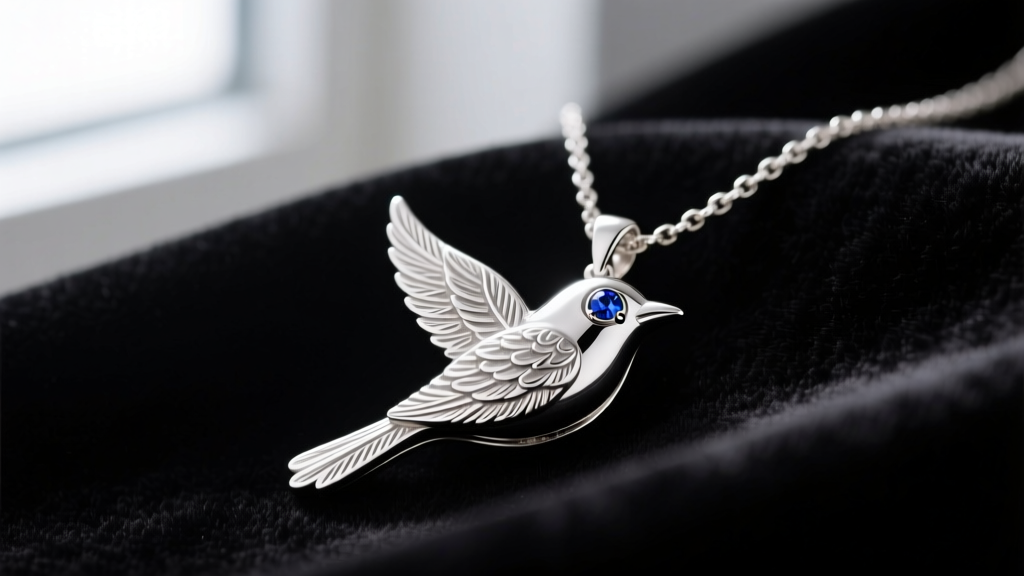
A beautifully crafted necklace with bird motifs is more than just an accessory; it is a miniature sculpture. Whether it features a soaring swallow, a detailed hummingbird, or a classic owl, avian pendants present unique maintenance challenges that standard jewelry cleaning methods simply cannot address. The intricate filigree of wings, the delicate points of beaks and talons, and the frequent use of mixed media like enamel or micro-pavé gemstones require a highly specialized approach to care.
Standard jewelry cleaning often involves aggressive brushing or ultrasonic vibrations. However, applying these methods to a bird pendant can lead to catastrophic failure modes: loosening the micro-prongs holding a sapphire 'eye' in place, snapping a delicate silver tail feather, or stripping the gold layer off a vermeil wing. In this comprehensive 2026 guide, we break down the exact protocols for preserving the structural integrity and brilliance of your avian necklaces, drawing on conservation techniques used by professional jewelers.
Material-Specific Cleaning Protocols
Before applying any liquid or cloth to your pendant, you must identify the base metal and any secondary treatments. The American Gem Society (AGS) emphasizes that treating a porous gemstone or a plated metal with the wrong solution can cause irreversible chemical damage.
Sterling Silver (925) vs. Gold Vermeil
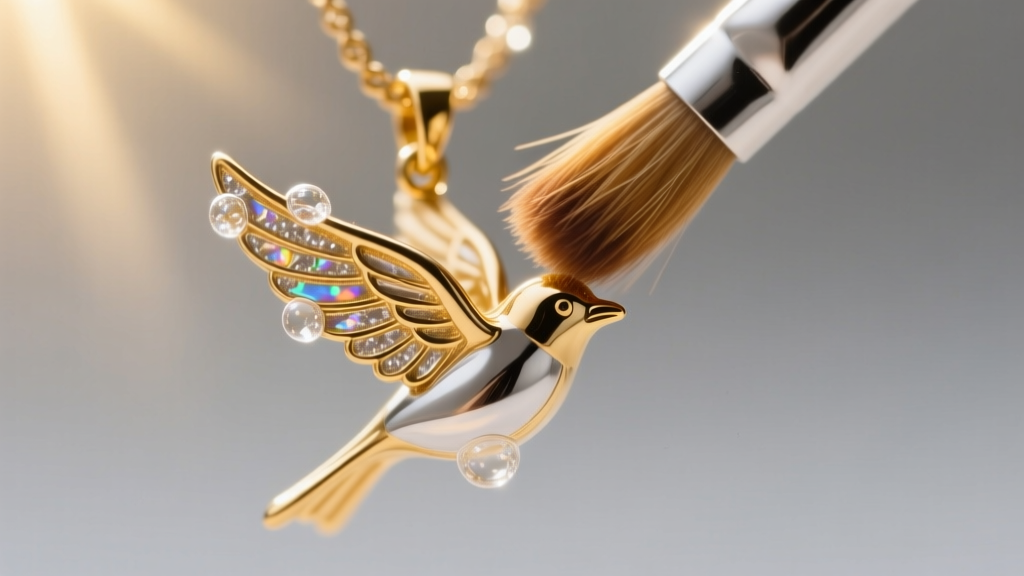
Solid sterling silver is prone to sulfur-induced tarnish, particularly in the deep crevices of engraved feathers. While chemical silver dips can remove tarnish instantly, they often leave a dull, matte finish on high-polish areas like the bird's beak. Instead, use a treated micro-abrasive polishing cloth (like a Sunshine cloth) for the flat surfaces, and a 0.1mm soft sable makeup brush dipped in a mild soap solution for the crevices.
Gold vermeil, by definition, consists of a sterling silver base plated with at least 2.5 microns of gold. According to the London Assay Office, this thickness is substantial but still vulnerable. Never use a polishing cloth or chemical dip on vermeil bird pendants, as the friction and chemicals will strip the gold layer, exposing the silver beneath and ruining the pendant's aesthetic.
Protecting Enamel and Gemstone Eyes
Many artisan bird pendants utilize guilloché or cold enamel to create vibrant wing patterns. Enamel is essentially glass (or a resin equivalent) and is highly susceptible to thermal shock. Never use hot water on an enameled necklace with bird details, as the rapid expansion can cause the enamel to craze or pop out of its metal bezel.
Gemstone eyes require care based on their Mohs hardness and porosity. If your bird features a turquoise or opal eye (Mohs 5-6.5), avoid all liquid soaks; these stones are porous and will absorb chemicals, leading to internal discoloration. If the eye is a sapphire or diamond (Mohs 9-10), it can withstand gentle washing, but the setting (often a delicate micro-prong or bead setting) remains vulnerable to snagging.
Step-by-Step Deep Cleaning Framework
For a routine deep clean that is safe for 95% of bird pendants (including those with micro-pavé wings and enamel accents), follow this exact four-step framework. You will need: distilled water, pH-neutral dish soap (such as Dawn), a 0.2mm sable detail brush, a lint-free microfiber cloth, and a can of compressed air.
- The Prep: Mix three drops of pH-neutral dish soap into a small bowl of lukewarm (not hot) distilled water. Distilled water is critical here; tap water contains chlorine and hard minerals that can leave microscopic calcium deposits in the intricate feather engravings.
- The Agitation: Submerge the pendant for no more than 60 seconds. Take your sable detail brush and gently sweep in the direction of the feather engravings. Brushing against the grain of the metalwork can trap bristles in micro-prongs and bend them outward.
- The Rinse: Rinse the necklace under a gentle stream of lukewarm distilled water. Ensure all soap residue is removed from the jump ring and lobster clasp, as dried soap can stiffen the clasp mechanism over time.
- The Dry: Pat the chain and flat surfaces dry with a microfiber cloth. For the deep crevices of the bird's talons or layered wings, use a can of compressed air held at a 45-degree angle to blow out trapped moisture. Leaving water in these crevices accelerates localized oxidation.
Expert Tip: If your necklace with bird charms features a delicate chain (like a 0.9mm cable or box chain), always unclasp it and lay it perfectly flat on a towel before cleaning. Bird beaks and talons are notorious for snagging and tangling in loose chain links when agitated in a bowl of water.
What to Avoid: Common Cleaning Disasters
Understanding what not to do is just as important as knowing the proper cleaning techniques. Below is a breakdown of common household cleaning methods and how they interact with the specific materials found in avian jewelry.
| Cleaning Method | Sterling Silver | Gold Vermeil | Enamel Details | Micro-Pavé Wings |
|---|---|---|---|---|
| Ultrasonic Cleaners | Safe (if no gems) | NEVER | NEVER | NEVER |
| Chemical Silver Dips | Safe (rinse well) | NEVER | NEVER | Avoid |
| Toothpaste & Toothbrush | NEVER | NEVER | NEVER | NEVER |
| Mild Soap & Sable Brush | Highly Recommended | Highly Recommended | Highly Recommended | Highly Recommended |
Why Toothpaste is a Disaster: Many people default to toothpaste for cleaning silver. However, toothpaste contains hydrated silica with a Relative Dentin Abrasivity (RDA) often exceeding 70. This acts like sandpaper on high-polish silver beaks and will instantly create micro-scratches on gold vermeil, dulling the reflective surface of the pendant.
Storage and Long-Term Preservation
The longevity of your necklace with bird pendants is largely dictated by how it is stored. Avian shapes are inherently asymmetrical and feature protruding elements (wings, beaks, tail feathers) that make them prone to bending and snagging.
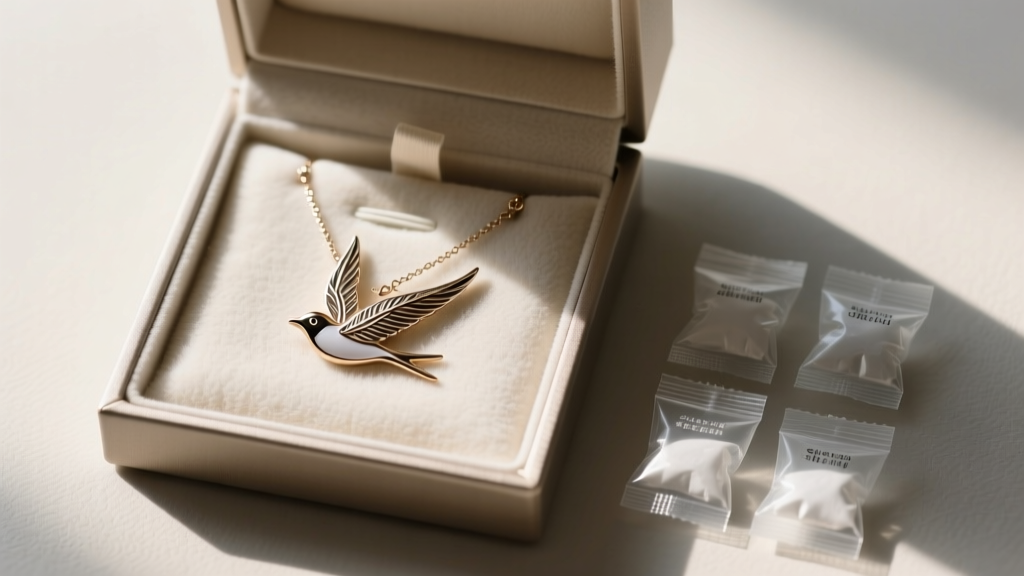
- Flat Storage is Mandatory: Never toss a bird pendant into a communal jewelry box. The weight of heavier chains or bangles can easily bend a protruding silver wing or snap a delicate gold tail. Store the necklace flat in its own dedicated compartment.
- Anti-Tarnish Environments: For sterling silver pieces, store the necklace inside an anti-tarnish flannel pouch or a ziplock bag equipped with a 3M anti-tarnish strip. These strips absorb atmospheric sulfur and hydrogen sulfide, preventing the silver from blackening in the deep, hard-to-clean crevices of the feather engravings.
- Clasp Maintenance: Once a month, apply a microscopic drop of synthetic watch oil (not WD-40, which attracts dust) to the hinge and spring of the lobster clasp. This prevents the mechanism from seizing, which is a common failure point for necklaces worn frequently in humid environments.
Conclusion
Maintaining a necklace with bird motifs requires a shift in mindset from 'cleaning' to 'conserving.' By abandoning harsh chemicals and abrasive tools in favor of pH-neutral solutions, soft sable brushes, and meticulous drying techniques, you ensure that every intricate feather and sparkling gemstone eye remains as vibrant as the day it was crafted. Treat your avian jewelry with the specialized care it deserves, and it will remain a stunning, wearable piece of art for decades to come.


