How to Clean a Necklace with Woman's Face (Cameo Care Guide)
Learn expert care, cleaning, and storage tips for your necklace with woman's face, including shell cameos, agates, and portraits.

The Unique Vulnerability of Portrait and Cameo Jewelry
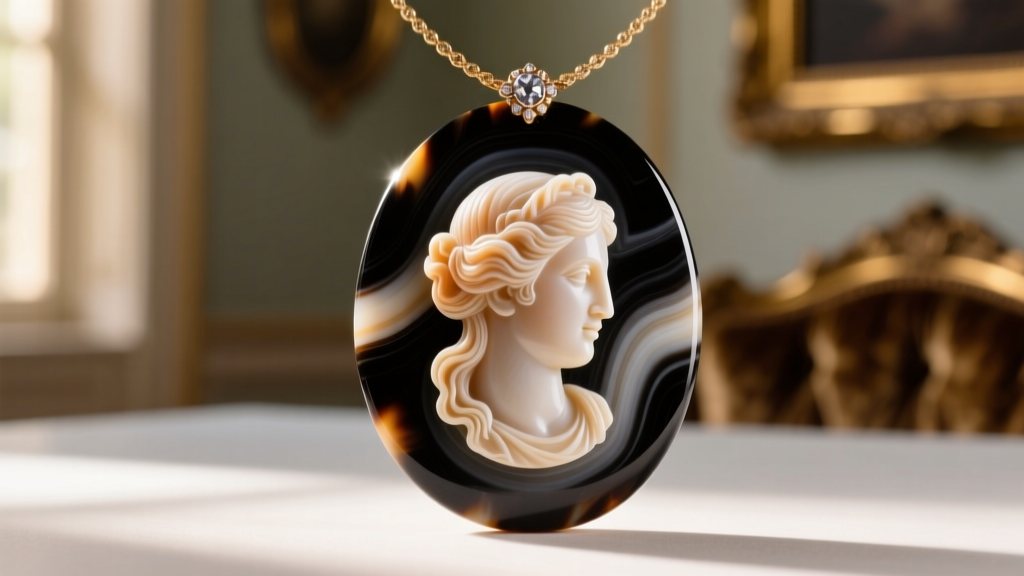
When you invest in a necklace with woman's face—whether it is a meticulously carved Victorian shell cameo, a layered sardonyx agate silhouette, or a custom-painted enamel portrait—you are acquiring a piece of dimensional art. Unlike flat gemstone pendants, the intricate topography of a carved face creates microscopic valleys, hair curls, and facial contours that act as magnets for sebum, cosmetic powders, and environmental dust. Standard jewelry cleaning methods are not just ineffective for these pieces; they are actively destructive.
The primary failure mode for portrait necklaces is the trapping of acidic skin oils in the carved crevices, which slowly etches into calcium carbonate-based materials like conch shell. Furthermore, the bezels holding these cameos are often crafted from gold vermeil or oxidized sterling silver, requiring a dual-material approach to maintenance. In this comprehensive guide, we break down the exact protocols for preserving the structural integrity and visual depth of your portrait and cameo pendants.
Material Identification: What is Your Pendant Made Of?
Before applying any cleaning agent, you must accurately identify the material of the carved face. The Gemological Institute of America (GIA) emphasizes that misidentifying a porous organic gem as a hard silicate can lead to irreversible surface dulling. Use a jeweler's loupe (10x magnification) to inspect the pendant.
| Material | Mohs Hardness | Visual Identification Clues | Safe Cleaners | Fatal Mistakes to Avoid |
|---|---|---|---|---|
| Carved Shell (Conch) | 2.5 - 3.0 | Warm to touch; subtle growth lines; matte finish in crevices. | Distilled water, dry microfiber. | Ultrasonic cleaners, acids, hot water, ammonia. |
| Sardonyx Agate | 6.5 - 7.0 | Cold to touch; glass-like luster; sharp, crisp carving edges. | Mild phosphate-free soap, soft brush. | Hydrofluoric acid, hard impacts, steam cleaning. |
| Resin / Polymer | 2.0 | Mold lines visible under loupe; lightweight; uniform color. | Dry microfiber cloth only. | Alcohol, acetone, liquid immersion of any kind. |
| Painted Enamel | Varies (Glass base) | Vitreous shine; painted details over a metal or glass base. | Dry, soft-bristled makeup brush. | Liquid immersion, abrasives, ultrasonic vibrations. |
Step-by-Step Cleaning Protocol for Carved Faces
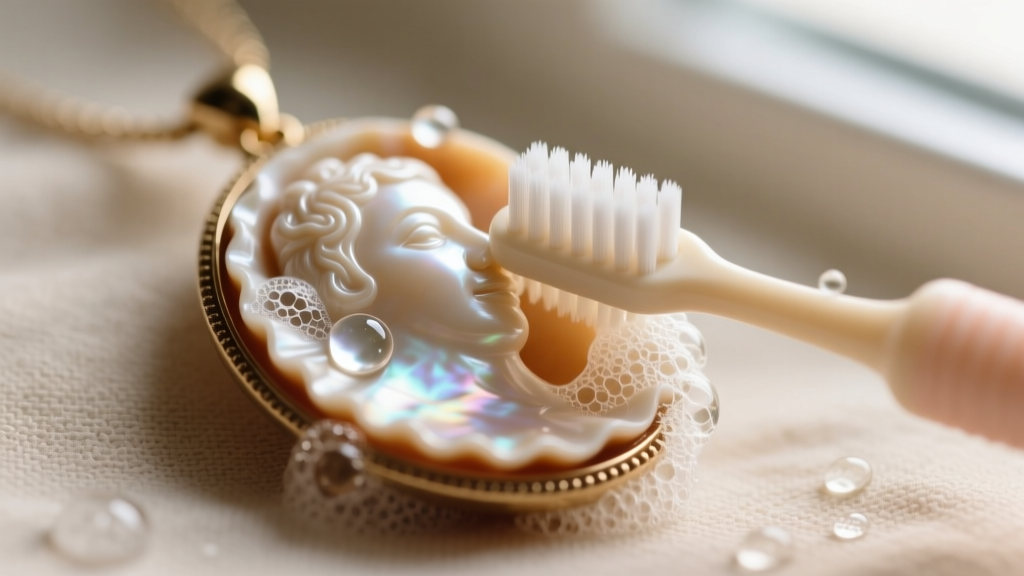
If you have confirmed your necklace with woman's face is carved from shell or agate, follow this conservative, low-impact cleaning methodology. Never submerge a cameo necklace in water, as moisture can become trapped between the carved stone and the metal backing, leading to silver sulfide tarnish or adhesive failure.
Phase 1: Dry Debris Removal
Begin by removing loose particulate matter. Take a clean, soft-bristled makeup brush (such as a goat-hair blush brush) and gently sweep across the surface of the cameo. Pay special attention to the carved hair curls and the neckline of the portrait, where dead skin cells and setting powders accumulate. For stubborn debris lodged deep in the engraving lines, use a wooden toothpick. Never use metal needles or safety pins, as they will scratch the softer layers of shell or agate.
Phase 2: The Damp Swab Technique
For agate cameos, mix one drop of phosphate-free dish soap (like Dawn) into a bowl of distilled water. Dip a cotton swab (Q-tip) into the solution and squeeze it out until it is merely damp—not dripping. Gently roll the swab through the recessed areas of the woman's face and hair. Immediately follow with a second swab dampened only with pure distilled water to rinse the soap residue. Finally, dry the piece instantly with a microfiber cloth. Shell cameos should skip the soap entirely; use only the distilled water swab to prevent stripping the shell's natural moisture barrier.
Chain Maintenance: Preventing Tarnish Transfer
The chain supporting your pendant requires a completely different chemical approach. Most portrait necklaces are strung on sterling silver or gold vermeil chains. Silver tarnish (silver sulfide) can transfer onto the porous edges of a shell cameo if left in prolonged contact, creating a dark, stubborn halo around the portrait.
- Sterling Silver Chains: Use a specialized silver polishing cloth infused with micro-abrasives. Unclasp the chain and pull it through the cloth using a flossing motion. Keep the cloth at least two inches away from the pendant to avoid scratching the carving.
- Gold Vermeil Chains: Vermeil is a thick layer of gold over sterling silver. Aggressive polishing will strip the gold layer, exposing the silver beneath. Clean vermeil chains using only a soft microfiber cloth and a mild degreasing spray applied to the cloth, never directly onto the metal.
- Clasp Lubrication: If the lobster clasp becomes stiff, apply a microscopic drop of synthetic watch oil to the hinge mechanism using a pin. Wipe away any excess immediately to prevent oil transfer to the pendant.
Hydration and Preservation: Avoiding "Cameo Bloom"
One of the most devastating failure modes for antique shell cameos is "crazing" or cracking, caused by severe dehydration. Shell is an organic material that requires a specific humidity level (ideally between 40% and 50%) to maintain its structural integrity. When a shell cameo dries out, it develops a network of microscopic fractures and a chalky white residue known as "cameo bloom."
Conservator's Tip: Once a year, apply a single drop of pure, unfragranced mineral oil or sweet almond oil to a cotton swab. Lightly dab the swab over the surface of the shell cameo, allowing it to absorb for 12 hours before buffing it away with a microfiber cloth. This mimics the natural oils the shell would have absorbed from being worn against the skin, preventing micro-fractures. (Source: Victoria and Albert Museum Jewelry Conservation Guidelines).
Proper Storage Architecture for Portrait Necklaces
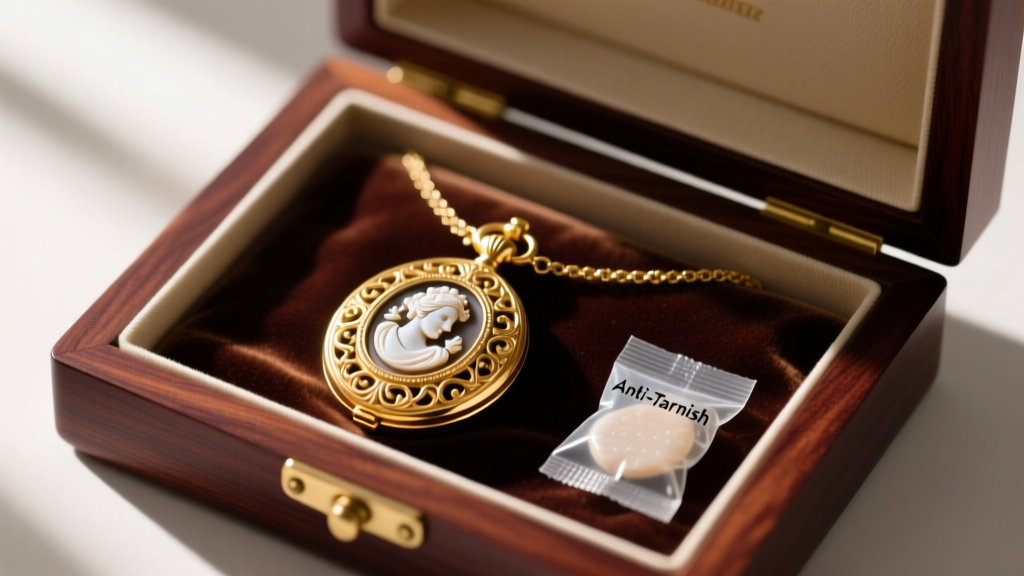
How you store your necklace with woman's face is just as critical as how you clean it. Tossing a carved pendant into a communal jewelry box guarantees that harder gemstones (like diamonds or sapphires from other pieces) will scratch the softer surface of the cameo or enamel portrait.
- Individual Pouches: Store the necklace in an anti-tarnish flannel pouch. The flannel is infused with silver sulfide inhibitors that protect the chain without emitting the harsh chemicals found in some plastic ziplock bags.
- Pendant Isolation: If the necklace is stored in a box, ensure the pendant rests in a dedicated compartment or is wrapped in a separate piece of acid-free tissue paper to prevent the metal bail from scratching the carved face.
- Climate Control: Avoid storing shell cameos in bathrooms or near heating vents. The rapid fluctuations in humidity and temperature will cause the organic shell to expand and contract, eventually popping it out of its metal bezel setting.
Summary Checklist for Cameo and Portrait Care
Maintaining the delicate artistry of a portrait necklace requires patience and the right tools. By avoiding ultrasonic cleaners, utilizing distilled water and wooden implements for deep crevice cleaning, and annually hydrating organic shell materials, you ensure that the intricate details of the woman's face remain crisp and luminous for generations. Always prioritize dry cleaning methods first, and reserve damp swabbing only for heavily soiled, non-porous agate pieces.


