Expert Care and Cleaning Guide for a Night Sky Necklace
Learn how to safely clean and maintain your night sky necklace. Expert tips for enamel, lapis lazuli, oxidized silver, and celestial gold vermeil.

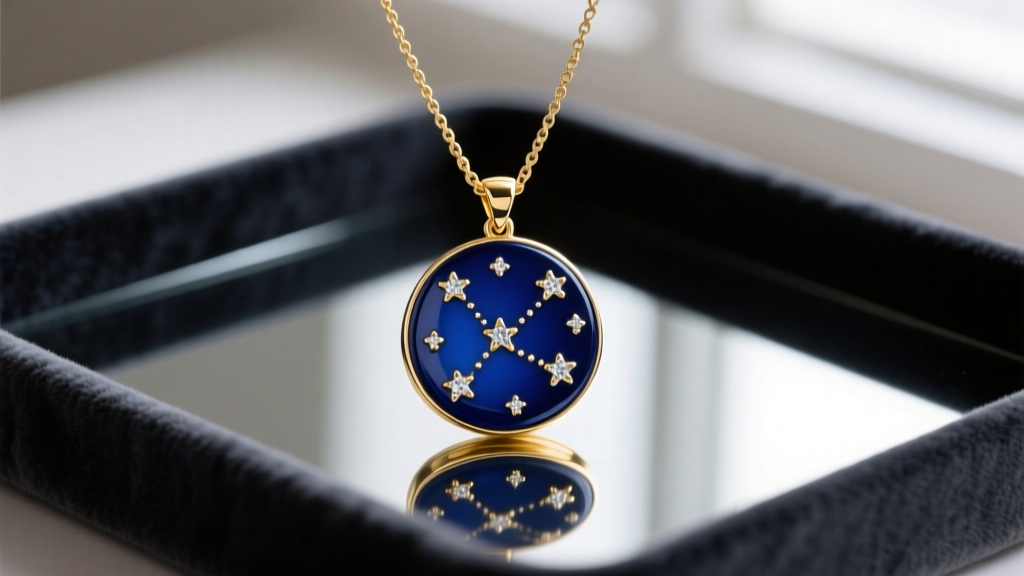
A night sky necklace is more than just an accessory; it is a deeply personal talisman. Whether your piece features a custom star map of a significant date, a crescent moon carved from lapis lazuli, or a constellation mapped out in diamonds across dark enamel, these celestial designs require highly specialized care. The very elements that give a night sky necklace its magical depth—mixed metals, porous gemstones, and delicate glass enamels—also make it uniquely vulnerable to standard jewelry cleaning methods.
Using an ultrasonic cleaner on the wrong celestial pendant can shatter enamel or dissolve gemstone inclusions in minutes. In this comprehensive guide, we break down the exact material science behind your favorite astronomical jewelry and provide a masterclass in maintaining its brilliance for decades to come.
The Anatomy of a Night Sky Necklace: Materials Matter
To properly care for your jewelry, you must first identify the specific materials used to create the "night sky" effect. Jewelers typically rely on four primary mediums to capture the cosmos, each with distinct physical properties and vulnerabilities.
- Lapis Lazuli & Sodalite: Prized for their natural deep blue hues and golden pyrite flecks (resembling stars). These are porous, relatively soft stones that react poorly to acids and prolonged moisture.
- Champlevé & Cloisonné Enamel: Glass powder fused to metal at extreme temperatures. Enamel provides a brilliant, opaque midnight blue or black background but is susceptible to thermal shock and micro-fractures.
- Oxidized Sterling Silver: Silver intentionally darkened using liver of sulfur to create contrast, making raised silver stars and moons pop against a blackened background.
- Epoxy Resin: Often used in modern, personalized star-map necklaces to encapsulate gold flakes or printed celestial maps. Resin is highly prone to UV yellowing and surface scratching.
Material-Specific Cleaning Matrix
Never use a one-size-fits-all approach to celestial jewelry. Refer to this matrix before applying any cleaner to your pendant or chain.
| Material | Mohs Hardness | Safe Cleaning Method | Strictly Avoid |
|---|---|---|---|
| Lapis Lazuli | 5.0 - 6.0 | Dry microfiber; damp Q-tip | Ultrasonic, steam, acids, baking soda |
| Enamel | 6.0 - 7.0 (Glass) | Mild soap, lukewarm water, soft brush | Extreme temperature changes, hard bristles |
| Oxidized Silver | 2.5 - 3.0 | Untreated polishing cloth on raised areas only | Silver dip liquids, liquid polish, baking soda |
| Epoxy Resin | 2.0 - 3.0 | Damp microfiber, Novus plastic polish | Alcohol, acetone, paper towels, UV light |
Step-by-Step Cleaning Protocols by Material
1. Cleaning Lapis Lazuli Celestial Pendants
Lapis lazuli is a complex rock composed of lazurite, calcite, and pyrite. According to the Gemological Institute of America (GIA), the calcite inclusions are highly sensitive to mild acids, meaning even the natural pH of your skin or standard tap water can cause the stone's polish to dull over time. Furthermore, the golden pyrite flecks (your natural "stars") contain iron and can rust if exposed to prolonged moisture.
The Protocol: Never submerge a lapis lazuli night sky necklace in water. Instead, use a dry, untreated microfiber cloth to gently buff the surface after every wear to remove skin oils. If the stone requires a deeper clean, lightly dampen a cotton swab with distilled water and a drop of phosphate-free dish soap. Gently swab the surface, avoiding the metal prongs, and immediately dry it with a separate, clean microfiber cloth.
2. Preserving Enamel Star Maps and Moons
Enamel is essentially glass fused to a metal base. The greatest threat to an enamel night sky necklace is thermal shock. Moving the piece from hot water to a cool room can cause invisible micro-fractures in the glass, eventually leading to chipping or a cloudy appearance.
The Protocol: Mix a few drops of mild, lotion-free dish soap into a bowl of room-temperature distilled water. Submerge the pendant for no more than three minutes. Use a baby toothbrush with ultra-soft bristles to gently sweep away debris from the metal bezels surrounding the enamel. Rinse under a gentle stream of room-temperature distilled water and pat dry. Never use a hairdryer to speed up the process.
3. Maintaining the Dark Patina on Oxidized Silver
The dramatic contrast of a silver night sky necklace relies on intentional oxidation (tarnish) applied in the recessed areas. Standard silver polishes and chemical "silver dips" are designed to strip tarnish. If you use them, you will erase the dark sky, leaving your necklace looking flat and entirely silver.
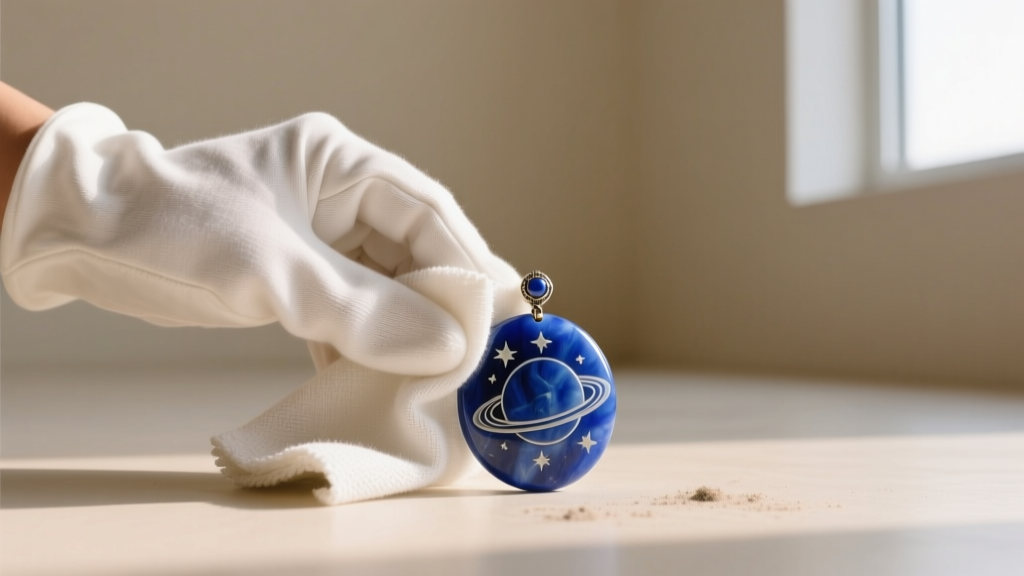
The Protocol: Use only an untreated, non-abrasive microfiber cloth. Wrap the cloth around your index finger and gently buff only the raised, high-polish stars and moons. Avoid pressing into the dark, recessed background. If the chain begins to tarnish, clean it separately using a mild soap solution, ensuring the oxidized pendant is not submerged.
Troubleshooting Common Night Sky Necklace Issues
Even with meticulous care, celestial jewelry can encounter specific environmental hazards. Here is how to troubleshoot the most common issues identified by professional lapidaries and jewelers.
Cloudy or Scratched Resin Star Maps
Epoxy resin is notoriously soft. If your custom star map necklace has developed a cloudy, scratched surface from friction against clothing, do not use metal polishes. Instead, apply a tiny drop of Novus Plastic Polish #2 to a soft cotton pad. Buff the resin in small, circular motions for 30 seconds, then wipe clean. This mild abrasive will level the micro-scratches and restore optical clarity to the resin.
Fading Oxidation in Silver Crevices
Over years of wear, friction and skin oils will naturally wear away the dark oxidation in the crevices of your silver night sky necklace. While you cannot permanently stop this, you can slow it down by storing the piece with anti-tarnish strips. If the contrast is entirely lost, do not attempt to re-oxidize it at home using sulfur compounds, as this can stain adjacent gemstones. Take it to a jeweler for a professional liver-of-sulfur dip and selective polishing.
Storing Your Constellation & Star Map Pendants
Proper storage is just as critical as cleaning. The American Gem Society emphasizes that jewelry should be stored in a way that prevents pieces from scratching one another. This is especially vital for night sky necklaces, where a diamond-encrusted star on one chain can easily scratch the soft lapis lazuli or resin of another.
- Use Individual Pouches: Store each necklace in a separate, soft flannel or anti-tarnish cloth pouch. Pacific Silvercloth pouches are highly recommended for oxidized silver pieces as they actively absorb airborne sulfur.
- Hang or Lay Flat: Delicate chain necklaces (like 14k gold vermeil cable chains) should be hung on a padded jewelry stand or laid perfectly flat. Tangled chains often lead to pulling, which can snap the delicate soldered rings near the pendant bail.
- UV Protection for Resin: If your necklace features a resin star map, store it in a dark drawer or closed box. Prolonged exposure to ultraviolet light will cause the epoxy to undergo a chemical reaction, resulting in an irreversible yellow tint that ruins the "night sky" illusion.

When to Seek Professional Jeweler Maintenance
While at-home maintenance will keep your necklace beautiful, certain structural issues require a professional bench jeweler. Schedule an annual inspection if your night sky necklace features any of the following:
- Prong-Set Gemstones: If your stars are represented by prong-set diamonds or sapphires, a jeweler must check the prongs under a loupe. A snagged prong can result in the loss of a stone.
- Bezel-Set Enamel: If you notice the metal bezel pulling away from the enamel, a jeweler can carefully burnish the metal back into place before the enamel pops out and shatters.
- Clasp Tension: The spring rings and lobster clasps on delicate celestial chains lose their tension over time. A jeweler can replace weakened clasps for a minimal fee, preventing the heartbreaking loss of a sentimental pendant.
Conclusion
A night sky necklace is a wearable piece of the universe, capturing a specific moment in time or a love for the cosmos. By understanding the unique material properties of lapis lazuli, enamel, oxidized silver, and resin, you can tailor your cleaning routine to protect these delicate elements. Ditch the harsh chemical dips and ultrasonic machines, embrace the gentle touch of microfiber and distilled water, and your celestial jewelry will continue to shine as brightly as the stars it represents.


