How to Clean and Maintain an Oxidized Rune Necklace
Learn how to safely clean and maintain your oxidized silver or bronze rune necklace without stripping the dark patina from the carved symbols.

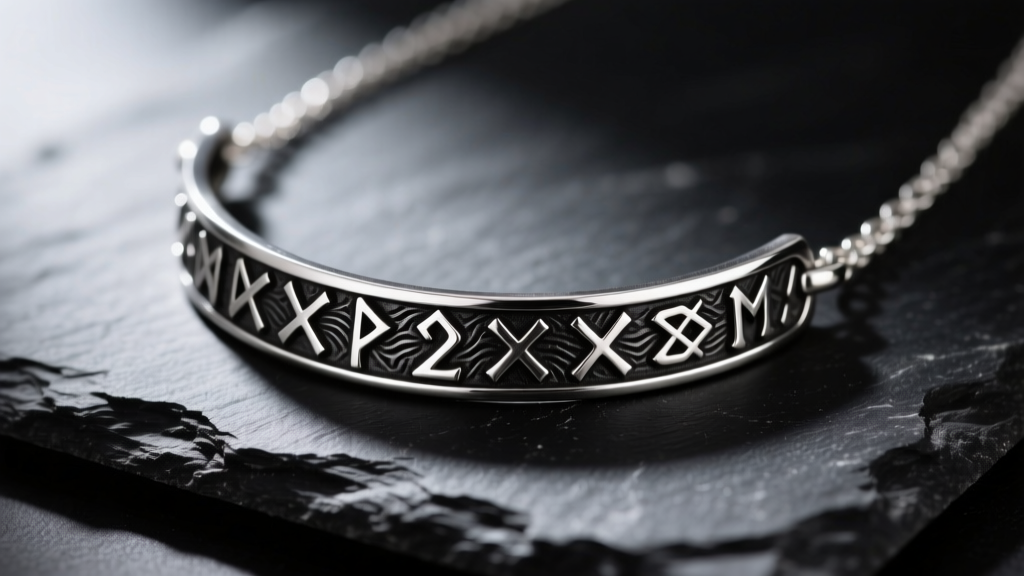
The Allure and Vulnerability of Runic Jewelry
A rune necklace is more than a simple piece of adornment; it is a talisman steeped in history, symbolism, and artisanal craftsmanship. Whether you wear a pendant featuring the Elder Futhark for spiritual grounding or a sleek, modern runic band for its bold aesthetic, the contrast between the bright metal and the darkened, carved symbols is what gives these pieces their striking visual depth. However, this very contrast—achieved through intentional oxidation or patination—makes cleaning a rune necklace a delicate operation. Standard jewelry cleaning methods that work beautifully for plain chains can permanently ruin the antique finish of a runic pendant in seconds.
In this comprehensive guide, we will explore the exact chemistry behind runic jewelry finishes, outline a safe, step-by-step cleaning protocol, and provide actionable maintenance frameworks to ensure your necklace remains legible and visually striking for decades.
The Chemistry of Tarnish vs. Intentional Oxidation
To properly care for your jewelry, you must first understand the difference between environmental tarnish and intentional oxidation. According to the Gemological Institute of America (GIA), natural tarnish on sterling silver (925) is a surface reaction between the copper alloy in the silver and sulfur compounds in the air, resulting in a dull, yellowish-brown film.
Intentional oxidation, however, is typically achieved using liver of sulfur (potassium sulfide). When applied to a carved silver rune pendant, the jeweler creates a thick layer of black silver sulfide. The piece is then polished on a wheel, removing the black layer from the high, flat surfaces while leaving it packed deep inside the carved runic grooves. This creates the high-contrast, antique look. If you use harsh chemical dips designed to remove natural tarnish, you will simultaneously strip the intentional black silver sulfide from the runes, leaving you with a flat, illegible, and entirely silver-colored pendant.
The Golden Rule: Preserve the Darkened Runes
The absolute golden rule of maintaining any rune necklace is to never use liquid silver dips or chemical tarnish removers. Products containing thiourea or hydrochloric acid will instantly dissolve the dark patina inside the runic carvings. Furthermore, the popular internet hack of using aluminum foil, boiling water, and baking soda creates an electrochemical reaction that transfers sulfur away from the silver. While excellent for plain silverware, this method will strip the black oxidation right out of your runic symbols.
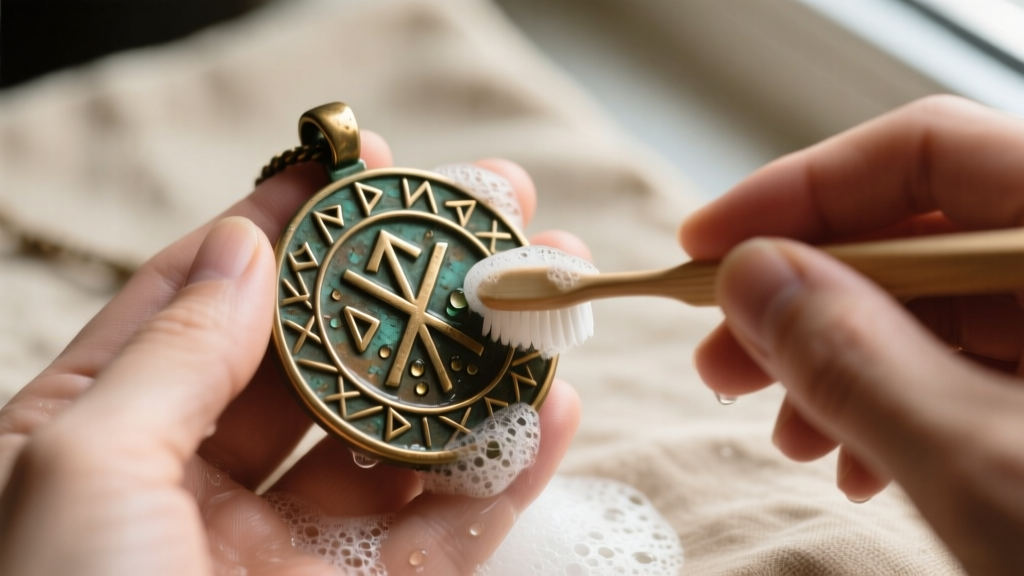
Step-by-Step Cleaning Guide for Oxidized Silver Runes
When your rune necklace accumulates skin oils, lotions, and environmental dust, it requires a mechanical, rather than chemical, cleaning approach. Follow this precise protocol to clean the metal without disturbing the darkened grooves.
Step 1: The Mild Soap Bath
Mix a few drops of pH-neutral dish soap (like Dawn) into a bowl of lukewarm distilled water. Avoid tap water, as the chlorine and dissolved minerals can leave microscopic water spots on high-polish silver. Submerge the pendant for no more than three to five minutes to loosen sebum and debris.
Step 2: Targeted Agitation
Using an extra-soft baby toothbrush, gently brush the surface of the pendant. Critical Technique: Brush parallel to the runic grooves, not perpendicular. Brushing across the grooves can slowly wear away the oxidation packed inside them over time. Focus on the bail (the loop where the chain connects), as this area traps the most dead skin and lint.
Step 3: Rinsing and Drying
Rinse the pendant under a gentle stream of lukewarm distilled water. Immediately pat it dry with a lint-free microfiber cloth. Do not let it air dry, as water pooling in the runic grooves can cause localized oxidation spots on bronze or copper alloys.
Step 4: Selective Polishing
To restore the shine to the high points of the metal without touching the dark runes, use a treated polishing cloth, such as a Town Talk Silver Polish Cloth. Wrap the cloth tightly around your index finger and gently rub only the raised, flat surfaces of the pendant. Never push the cloth deep into the carved lines.
Material-Specific Maintenance Matrix
Rune necklaces are crafted from various metals, each requiring a slightly different maintenance approach. Refer to the table below to identify your material and its specific care requirements.
| Material | Oxidation Method | Safe Cleaning Agent | Polishing Frequency | Vulnerability |
|---|---|---|---|---|
| 925 Sterling Silver | Liver of Sulfur (Silver Sulfide) | pH-neutral soap & distilled water | Monthly (Selective) | Chemical dips strip grooves |
| Bronze / Brass | Natural Patina or Heat Oxidation | Lemon juice & salt (High spots only) | Bi-annually | Acidic cleaners cause pitting |
| 316L Stainless Steel | Laser-etched Black Enamel | Isopropyl alcohol (70%) | As needed | Abrasives scratch the steel |
| Pewter | Antiquing Stain (Paint/Resin) | Damp microfiber cloth only | Rarely | Solvents dissolve the stain |
Common Mistakes That Ruin Runic Pendants
Even well-intentioned jewelry owners can inadvertently damage their pieces. Avoid these three critical errors:
- Ultrasonic Cleaners: The high-frequency cavitation bubbles generated by ultrasonic machines can literally shake the oxidized layer out of the runic grooves, especially if the oxidation was poorly sealed by the manufacturer.
- Toothpaste: Toothpaste contains hydrated silica, a harsh abrasive. While it might shine the high spots, it will act like sandpaper inside the carved runes, scratching the silver and lightening the dark patina.
- Wearing in Chlorinated Pools: Chlorine reacts violently with the copper in sterling silver and bronze, causing deep, irreversible pitting and a permanent milky discoloration that cannot be polished out.

Proper Storage to Prevent Unwanted Tarnish
Because you cannot use chemical dips to clean your rune necklace, preventing excessive environmental tarnish on the high-polish areas is paramount. The Victoria and Albert Museum recommends storing silver in environments with low humidity and minimal sulfur exposure.
Store your rune necklace in an airtight ziplock bag alongside a 3M Anti-Tarnish Strip. These strips absorb airborne sulfur compounds before they can react with your silver. For a premium solution, invest in Pacific Silvercloth pouches, which are embedded with microscopic silver particles that sacrifice themselves to tarnish-causing gases, keeping your pendant pristine for years without the need for polishing.
When to Seek Professional Restoration (or DIY Re-Oxidation)
If you have accidentally stripped the black patina from your runic symbols, or if years of wear have naturally faded the contrast, the piece can be re-oxidized. While a professional jeweler can apply a precise layer of liver of sulfur and re-polish the high spots on a buffing wheel, you can perform a mild DIY restoration at home using the boiled egg method.
'The boiled egg method relies on the natural hydrogen sulfide gas released by the egg yolk. It is a slower, gentler way to darken silver compared to concentrated liver of sulfur, making it safer for amateur restorers working on intricate runic carvings.' - Master Silversmith Journal
The Boiled Egg Re-Oxidation Technique
- Hard-boil two eggs and immediately peel them while hot.
- Place the hot, peeled eggs into a sealed plastic container and crush them with a fork to expose the yolks.
- Suspend your clean, grease-free silver rune pendant above the eggs using a piece of fishing line or wire (do not let the silver touch the egg directly, or it will cause spotty oxidation).
- Seal the container and wait 2 to 6 hours. The hydrogen sulfide gas will slowly turn the entire pendant black.
- Remove the pendant and use a soft polishing cloth to gently buff the raised, flat surfaces, leaving the newly formed black oxidation locked inside the runic grooves.
By understanding the specific metallurgical needs of your jewelry and adopting a conservative, mechanical approach to cleaning, your rune necklace will maintain its striking contrast and historical resonance for a lifetime.


