Chunky Necklaces Silver Guide: Sterling vs Argentium Alloys
Compare sterling, Argentium, and fine silver for chunky necklaces. Learn about alloy properties, tarnish resistance, and durability for heavy chains.

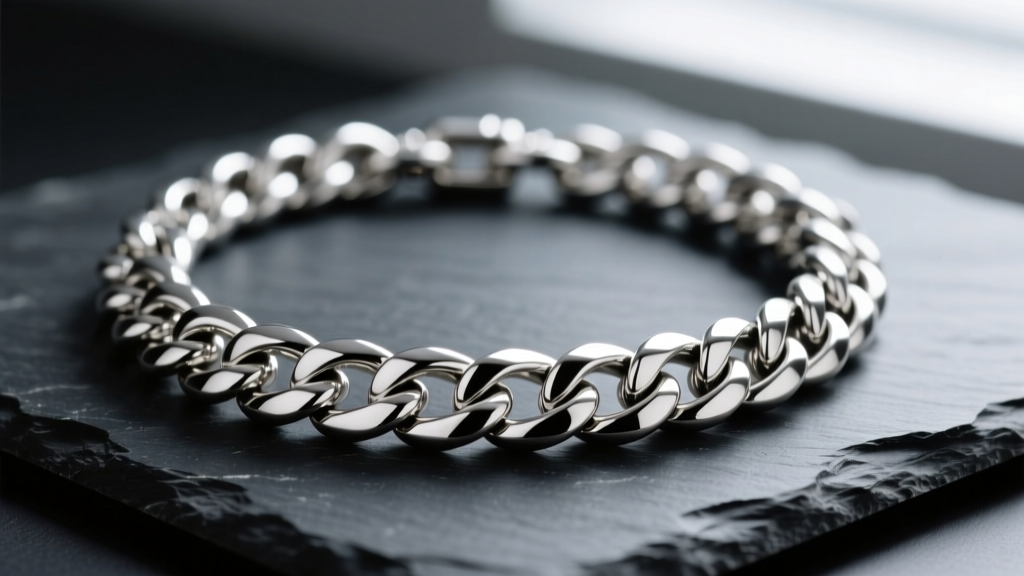
When investing in heavy jewelry, the metallurgical properties of your chosen metal dictate not just the aesthetic, but the structural lifespan of the piece. The market for chunky necklaces silver pieces has expanded dramatically, but not all silver is created equal. A thick, 10mm Cuban link chain can easily weigh over 200 grams, placing immense tensile stress on individual links, solder joints, and clasps. Understanding the differences between Fine, Sterling, and Argentium silver is critical for making an informed purchase that balances brilliance, durability, and maintenance.
The Physics of Heavy Silver: Why Alloy Matters
Unlike delicate pendant chains that weigh mere grams, chunky chains are subject to significant gravitational pull and kinetic friction. Every time you move, the heavy links grind against one another. This constant micro-abrasion requires a metal with adequate surface hardness. Furthermore, the sheer weight of a dense chain—such as a 12mm Franco or a thick Rope chain—creates a continuous downward force that can slowly stretch softer metals over time. According to the Gemological Institute of America (GIA), pure silver is exceptionally malleable, making alloying essential for any jewelry intended for daily, heavy-duty wear.
Metallurgical Breakdown of Silver Grades
To choose the right heavy chain, you must look beyond the surface shine and examine the elemental composition. Here is how the three primary silver grades perform under the stress of chunky chain fabrication.
Fine Silver (999)
Fine silver is 99.9% pure. It possesses a stunning, bright white luster and is entirely hypoallergenic. However, its Vickers hardness is remarkably low (around 25 HV). In the context of chunky chains, fine silver is a structural liability. The heavy links will stretch, deform, and lose their precise geometric shape under their own weight. Additionally, the jump rings and clasp mechanisms will quickly fail due to metal fatigue. Fine silver should be strictly avoided for heavy, link-based necklaces.
Traditional Sterling Silver (925)
Sterling silver is the industry standard, composed of 92.5% silver and 7.5% copper. The addition of copper increases the hardness to approximately 60-70 HV, providing the necessary tensile strength to support heavy links. However, copper introduces a significant vulnerability: oxidation. When exposed to hydrogen sulfide in the air and moisture from the skin, the copper in sterling silver reacts to form silver sulfide—the black tarnish that plagues silver jewelry. In chunky chains with complex weaves (like Rope or Figaro), this tarnish accumulates deep within the crevices, making polishing a labor-intensive nightmare.
Argentium Silver (935 and 960)
Argentium silver represents a modern metallurgical triumph. By replacing a portion of the copper alloy with the metalloid germanium, Argentium achieves a higher silver purity (93.5% or 96%) while dramatically altering the metal's physical properties. According to the official Argentium Silver alliance, the germanium forms a transparent, self-healing oxide layer on the surface that blocks sulfur from reaching the copper. This makes Argentium up to seven times more tarnish-resistant than traditional sterling. Furthermore, Argentium can be heat-hardened to reach a Vickers hardness of over 130 HV, making it exceptionally resistant to the stretching and scratching that plagues heavy chains.
Material Properties Comparison Chart
The following table summarizes how these alloys perform specifically in the context of heavy, chunky chain necklaces.
| Property | Fine Silver (999) | Sterling Silver (925) | Argentium Silver (935/960) |
|---|---|---|---|
| Silver Purity | 99.9% | 92.5% | 93.5% or 96.0% |
| Primary Alloy | None | Copper (7.5%) | Copper & Germanium |
| Hardness (Vickers) | ~25 HV (Very Soft) | ~65 HV (Moderate) | Up to 130 HV (Heat Treated) |
| Tarnish Resistance | Excellent | Poor (Prone to blackening) | Exceptional |
| Link Stretching Risk | High | Low | Very Low |
| Joining Method | Solder Required | Solder Required | Can be Fused (No Solder) |
Tarnish, Crevices, and the Polishing Nightmare
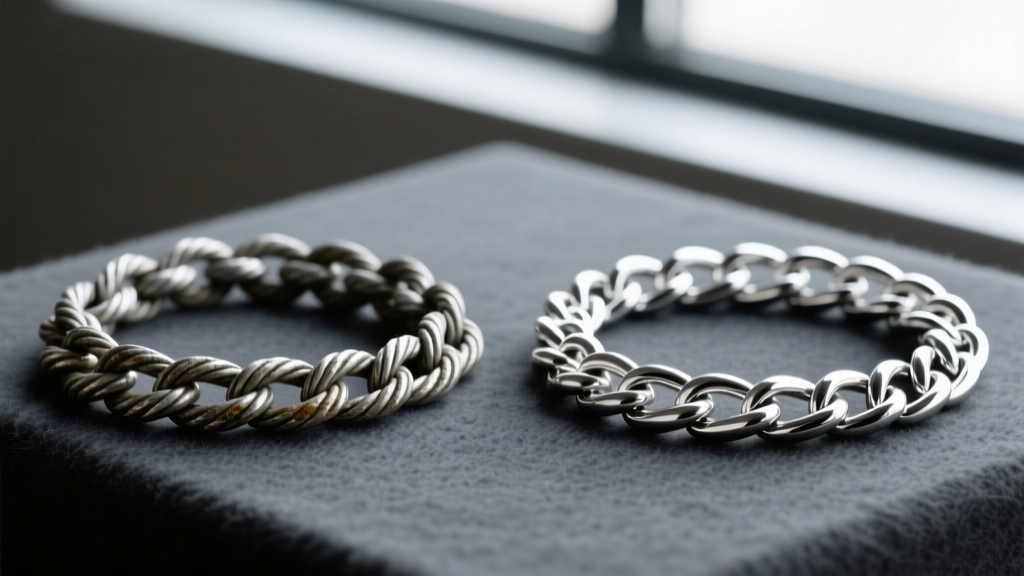
The structural design of a chunky chain directly impacts its maintenance requirements. A 10mm Cuban link chain features flat, interlocking surfaces that are relatively easy to wipe down with a polishing cloth. Conversely, a thick Rope chain consists of tightly twisted, diamond-cut links that create thousands of microscopic crevices.
When traditional sterling silver tarnishes in a Rope chain, the black silver sulfide becomes trapped deep inside the weave. Removing it requires aggressive chemical dips or ultrasonic cleaners, which can degrade the structural integrity of the chain over time if used frequently. By choosing Argentium silver for complex, chunky weaves, you effectively eliminate the need for deep-clean polishing, preserving the sharp, diamond-cut facets of the links for years.
Structural Failure Points: Clasps and Solder Joints
The weakest point of any heavy necklace is not the chain itself, but the connections. A 250-gram Franco chain exerts massive kinetic force on its clasp when the wearer moves suddenly.
- The Clasp Problem: Standard lobster clasps are entirely inadequate for chunky chains. The internal spring mechanism will fatigue and fail under heavy, swinging loads. For any silver chain exceeding 100 grams, a heavy-duty tongue box clasp (minimum 20mm) equipped with a secondary figure-eight safety catch is mandatory.
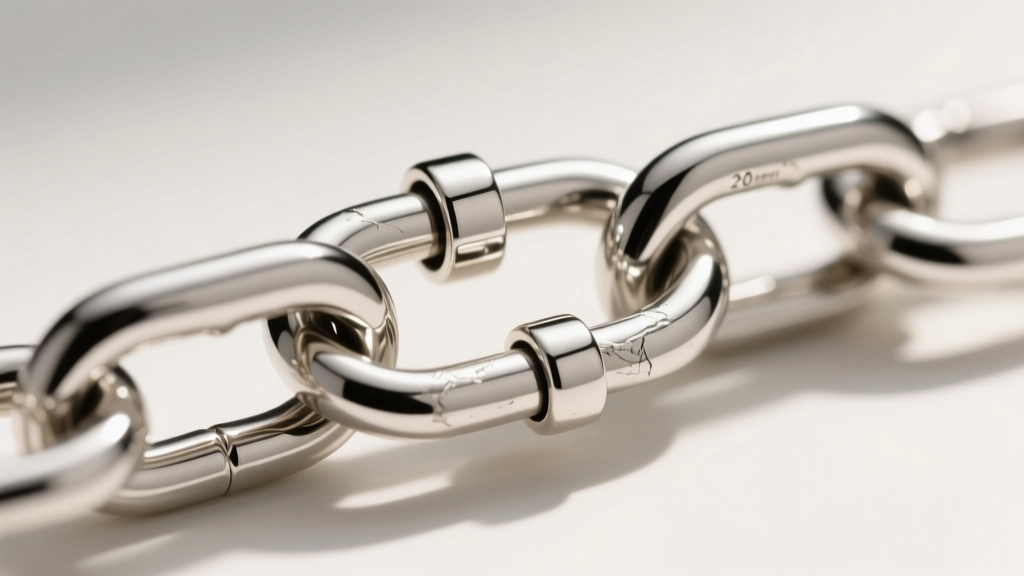
- Solder vs. Fusion: Traditional sterling chains rely on silver solder to close the links. Solder has a different melting point and color than the parent metal, often leaving visible seams or weak points where firescale (copper oxide) has formed. Because Argentium silver can be fused—meaning the metal is melted into itself without any foreign solder—the resulting joints are virtually invisible and possess the exact same tensile strength as the rest of the link.
Pricing Tiers and Market Value
When shopping for high-end silver chains, pricing is dictated by the spot price of silver, the complexity of the chain weave, and the alloy premium. As of current market trends, traditional sterling silver chains are priced primarily by gram weight plus a fabrication fee. Argentium silver commands a 20% to 35% premium over standard sterling. This premium covers the higher cost of germanium and the specialized manufacturing environment required to prevent contamination during the smelting process. While the upfront cost of an Argentium chunky chain is higher, the elimination of rhodium plating (often used to hide sterling tarnish) and the drastic reduction in maintenance costs make it a superior long-term investment.
"For heavy statement pieces, the initial savings of buying traditional sterling are quickly erased by the cost of professional ultrasonic cleaning and rhodium re-plating. Argentium's fusion capability also means fewer structural weak points at the clasp." — Master Bench Jeweler Insights via Rio Grande Metallurgy Data
Final Verdict: Which Silver Should You Choose?
If you are purchasing a simple, flat Cuban link chain and do not mind occasional polishing, traditional Sterling Silver (925) remains a highly durable and cost-effective choice. However, if you are investing in a complex, heavy weave like a Rope or Franco chain, or if you live in a humid climate that accelerates oxidation, Argentium Silver is unequivocally the superior material. Its enhanced hardness prevents link stretching, its germanium oxide layer repels tarnish, and its fusion capabilities ensure that your heavy chain remains structurally sound for a lifetime. Avoid Fine Silver entirely for chunky applications, as its softness guarantees structural failure.


