How to Clean and Care for a Pearl Hancerchief Necklace
Discover expert cleaning and maintenance tips for your pearl hancerchief necklace. Learn how to protect delicate nacre and vintage silk lattice structures.

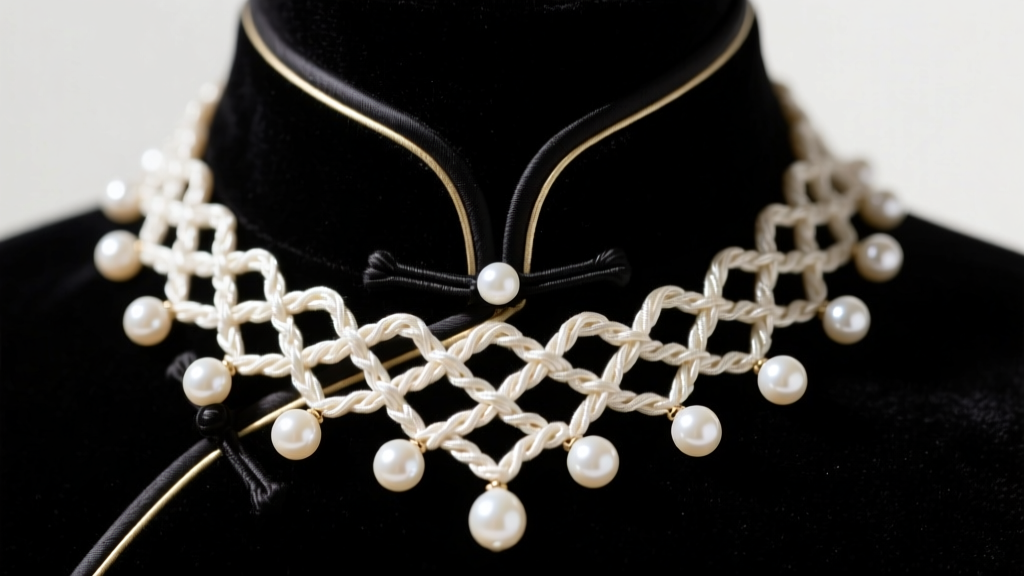
The Unique Anatomy of a Pearl Hancerchief Necklace
The pearl hancerchief necklace is a marvel of vintage and bespoke jewelry design. Characterized by its delicate, handkerchief-like draped lattice, this style intertwines lustrous pearls with intricate silk or fine wirework to create a soft, scarf-like silhouette across the collarbone. Unlike standard single-strand princess or opera-length necklaces, the hancerchief design features multiple intersecting nodes, varying strand lengths, and complex weight distribution. While breathtaking, this unique architecture demands a highly specialized approach to care, maintenance, and cleaning.
Because these pieces are often heirloom antiques or artisan-crafted masterpieces, they frequently feature natural or cultured Akoya pearls with thinner nacre layers (often between 0.3mm and 0.5mm) compared to modern bead-nucleated alternatives. The structural integrity of the necklace relies entirely on the tensile strength of the silk threading and the precision of the hand-tied knots. As of 2026, jewelry conservationists emphasize that treating a hancerchief lattice with standard jewelry cleaning methods is a guaranteed path to irreversible damage.
Daily Wear: The Chemistry of Nacre Degradation
To properly care for your pearl hancerchief necklace, you must first understand the chemical vulnerabilities of the materials involved. Pearls are organic gemstones composed primarily of calcium carbonate (aragonite) held together by an organic protein called conchiolin. According to the Gemological Institute of America (GIA), calcium carbonate is highly susceptible to acidic degradation.
The Threat of Lactic Acid and Cosmetics
- Human Sweat: The natural pH of human sweat ranges from 4.5 to 7.0. When lactic acid accumulates on the surface of a pearl, it slowly dissolves the calcium carbonate, leading to a loss of luster, pitting, and eventually, the flaking of the nacre.
- Perfumes and Hairsprays: Alcohol and volatile organic compounds (VOCs) found in cosmetics can dry out the conchiolin protein, causing the pearls to become brittle and crack, especially around the drill holes where the nacre is thinnest.
- Body Oils: Sebum can attract microscopic dust particles, which act as abrasives against the pearl's 2.5 to 4.5 Mohs hardness scale rating when the necklace shifts against the skin.
"The golden rule of pearl jewelry remains unchanged: pearls should always be the last thing you put on when dressing, and the first thing you take off when undressing. This single habit prevents 90% of cosmetic damage." — Jewelers of America
Step-by-Step Cleaning Protocol
Commercial jewelry dips, ultrasonic cleaners, and steamers are strictly forbidden for pearl hancerchief necklaces. Ultrasonic cavitation will literally shatter the delicate nacre layers or detach the pearl from its silk mounting. Instead, follow this conservation-grade cleaning protocol.
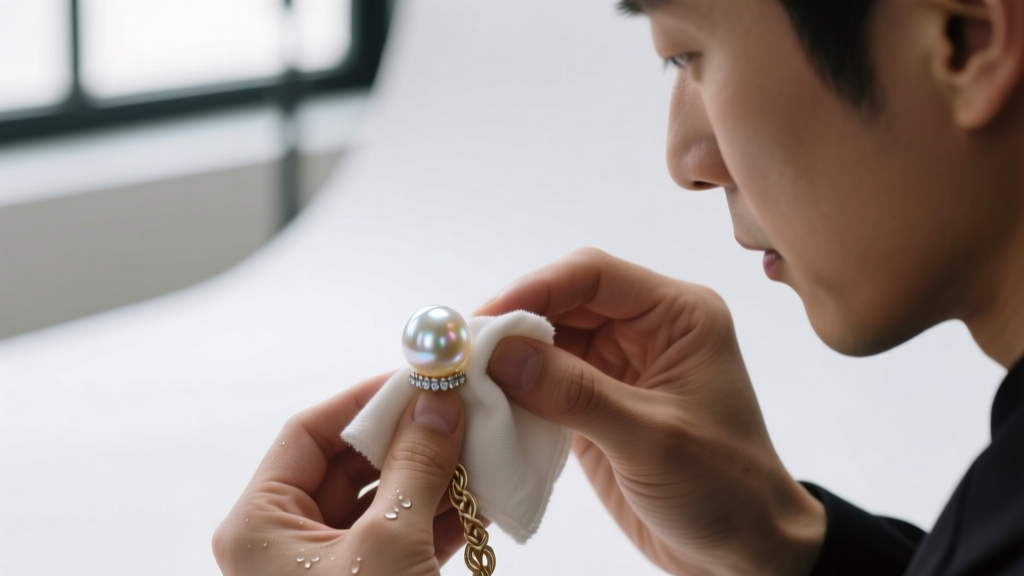
Phase 1: Dry Dusting
- Lay the necklace completely flat on a clean, lint-free microfiber towel. Never hang the hancerchief piece while cleaning, as the added weight of moisture can stretch the wet silk.
- Use a clean, dry, ultra-soft makeup brush (like a goat-hair blending brush) to gently sweep away dead skin cells, cosmetic powders, and dust from the intersecting lattice nodes and knot crevices.
Phase 2: Targeted Damp Cleaning
- Mix a solution of distilled water and a single drop of pH-neutral, unscented castile soap (such as Dr. Bronner's Baby Unscented). Avoid tap water, as chlorine and fluoride can leave microscopic mineral deposits.
- Dampen a soft chamois cloth or lint-free cotton pad in the solution, then wring it out until it is barely moist. Never submerge the necklace. Submerging the piece forces water into the drill holes, leading to silk hydrolysis (rot) and internal bead degradation.
- Gently wipe each pearl individually, supporting the lattice structure from beneath with your other hand to avoid pulling on the silk threads.
- Use a slightly damp cloth with pure distilled water to wipe away any soap residue.
Phase 3: Drying and Resting
Pat the pearls dry with a separate, clean chamois cloth. Allow the necklace to rest flat on a dry towel in a well-ventilated room for at least 12 hours before storing or wearing. This ensures any microscopic moisture trapped near the drill holes fully evaporates, protecting the silk knots.
Storage and Structural Maintenance
The hancerchief drape is notoriously prone to tangling and silk stretching if stored improperly. The complex overlapping strands require a dedicated storage environment that balances humidity control with physical protection.
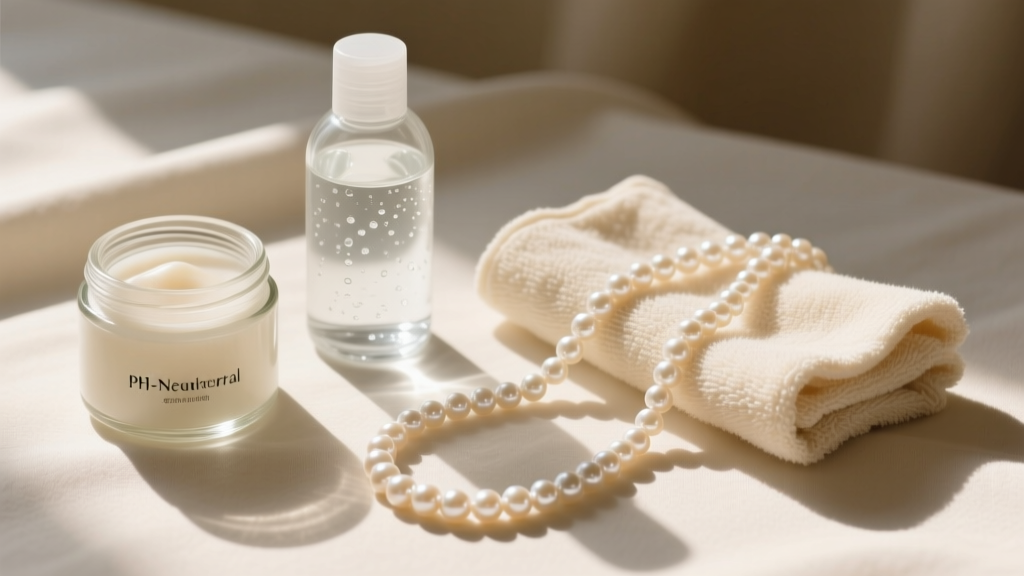
The Danger of Desiccation and Scratching
Storing pearls in a plastic bag or a bank safety deposit box for extended periods will dehydrate the conchiolin, leading to crazing (surface cracking). Conversely, storing them in a fabric-lined jewelry box alongside diamond or sapphire pieces guarantees severe scratching, given the vast difference in Mohs hardness.
- Ideal Storage: Wrap the necklace in a soft, untreated cotton pouch or acid-free tissue paper.
- Humidity Control: If you live in an arid climate, store the cotton pouch inside a wooden jewelry box with a small, dampened silica gel packet (sealed in a separate tiny plastic bag) nearby to maintain a 40-50% ambient humidity level.
- Positioning: Always store the hancerchief necklace completely flat. Hanging it will cause the gravity-loaded silk threads to stretch asymmetrically, ruining the precise drape of the lattice.
Maintenance Schedule & Cost Guide (2026 Estimates)
Proactive maintenance is significantly cheaper than restoring a damaged antique lattice. Use the following table to schedule professional care for your pearl hancerchief necklace.
| Maintenance Task | Frequency | Estimated Cost (USD) | Warning Signs It's Needed |
|---|---|---|---|
| Professional Silk Restringing | Every 1-2 Years | $150 - $350+ | Visible gaps between pearls and knots; silk feels stiff or brittle. |
| Clasp & French Wire (Gimp) Check | Annually | $40 - $80 | Fraying silk near the metal clasp; loose jump rings. |
| Deep Conservation Cleaning | Every 3-5 Years | $75 - $150 | Stubborn yellowing or dullness that home cleaning cannot resolve. |
| Nacre Polishing / Buffing | As Needed (Rare) | $100 - $250 | Severe surface etching from acid exposure (requires master jeweler). |
Expert Troubleshooting for Vintage Pieces
Dealing with Yellowing Silk
If the silk threading in your hancerchief lattice has turned yellow or brown, do not attempt to bleach it. Bleach will instantly dissolve the silk protein, causing the necklace to fall apart. Yellowing is a natural result of silk oxidation and exposure to UV light and skin oils. The only safe remedy is a complete restringing using modern, high-grade Griffin silk or conservation-grade synthetic alternatives that resist hydrolysis while mimicking the drape of traditional silk.
Loose Pearls at the Intersecting Nodes
In a hancerchief design, the intersecting nodes endure double the friction of a standard strand. If you notice a pearl sliding over its knot or rotating to expose a dark drill hole, stop wearing the necklace immediately. The drill holes of vintage pearls are often conical rather than perfectly cylindrical, which accelerates silk fraying. A jeweler must inspect the node, potentially adding a microscopic bead of conservation-grade adhesive inside the drill hole to secure the pearl to the new knot without compromising the silk.
Addressing Surface Pitting
If your pearls have lost their luster and show microscopic pitting, they have suffered acid erosion. While a master lapidary can sometimes lightly buff the surface to reveal fresh nacre beneath, this is only viable if the pearls possess a thick nacre layer (0.8mm or greater). For thinner vintage Akoya pearls, the damage is permanent, underscoring the critical importance of the daily wear and cleaning protocols outlined above.
Final Thoughts on Heirloom Preservation
A pearl hancerchief necklace is more than an accessory; it is a wearable piece of textile and lapidary art. By respecting the organic nature of the pearls and the physical limitations of the silk lattice, you ensure that the intricate, handkerchief-soft drape of the necklace remains flawless for generations. Consistent, gentle care and a strict adherence to professional restringing schedules are the true secrets to preserving these magnificent estate pieces.


