Care Guide: Cleaning a Dad Necklace From Daughter Safely
Learn how to safely clean and maintain a custom dad necklace from daughter. Expert tips for engraved, resin, and birthstone pendants.

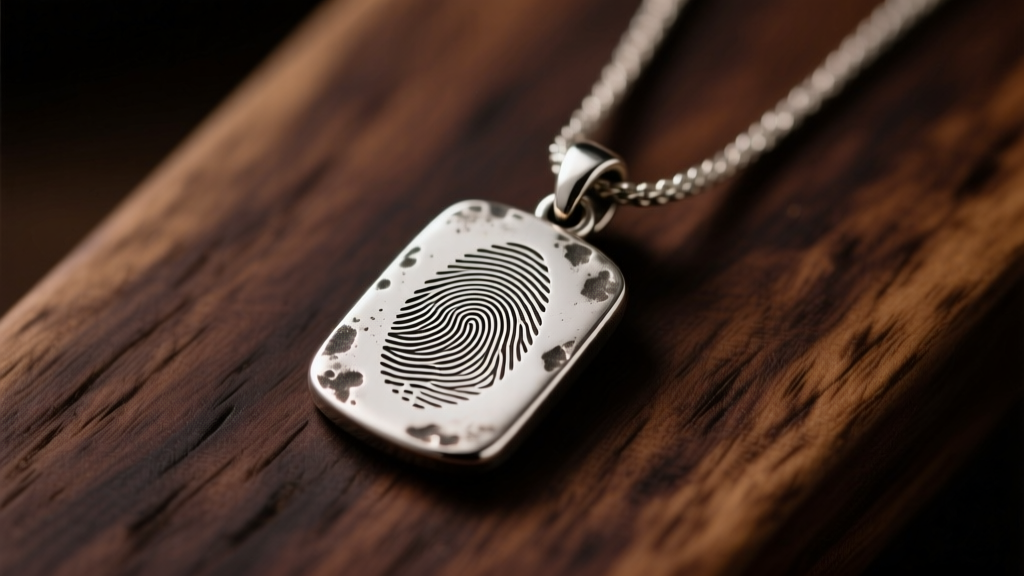
A dad necklace from daughter is far more than a simple fashion accessory; it is a profound emotional anchor and a cherished keepsake. Whether the pendant features a custom 3D fingerprint casting, a handwritten note laser-etched into metal, or a delicate birthstone inlay, these pieces are worn close to the heart. However, the daily reality of a father's lifestyle—ranging from intense gym sessions and outdoor yard work to manual labor and constant exposure to sweat—creates a remarkably harsh environment for personalized jewelry.
Proper care and maintenance are not just about preserving the metallic shine; they are about protecting the intricate, often fragile details that make the sentimental piece irreplaceable. In this comprehensive guide, we break down the exact metallurgical and material science required to safely clean, maintain, and store custom men's necklaces without destroying the personalized elements.
The Hidden Vulnerabilities of Personalized Men's Jewelry
Men's jewelry is frequently marketed as 'indestructible,' especially when crafted from robust materials like tungsten carbide or 316L surgical stainless steel. While the base metal may survive a drop onto concrete, the personalization is inherently fragile. Techniques used to customize a dad necklace from daughter introduce distinct vulnerabilities:
- Laser Etching and Antiquing: Many custom engravings are darkened using an oxidizing agent (like liver of sulfur) to create contrast. Harsh chemicals, chlorine, and abrasive polishes will strip this oxidation, leaving the engraving invisible against the base metal.
- Epoxy Resin Fills: Fingerprint jewelry often uses a raised, hardened epoxy resin to capture the ridges of a print. Resin is highly susceptible to micro-scratches, heat warping, and chemical clouding from alcohols and acetones.
- Enamel Inlays: Hand-painted or kiln-fired enamel adds beautiful color but can shatter or craze if subjected to sudden temperature changes or ultrasonic vibrations.
Material Identification and Cleaning Compatibility Chart
Before applying any cleaning solution, you must accurately identify the pendant's base material. Using the wrong agent can cause irreversible galvanic corrosion or strip protective platings. Refer to the compatibility chart below to determine the safest approach for your specific necklace.
| Base Material | Common Personalization | Safe Cleaning Agent | Strictly Avoid |
|---|---|---|---|
| 925 Sterling Silver | Deep CNC engraving, oxidized text | Mild dish soap, microfiber cloth | Silver dip liquids, baking soda paste |
| 316L Stainless Steel | Laser etching, black enamel fills | Isopropyl alcohol (70%), soapy water | Bleach, chlorine, steel wool |
| 18k Gold Vermeil | Handwritten script, delicate milling | Lukewarm water, phosphate-free soap | Ultrasonic cleaners, polishing compounds |
| Titanium (Grade 23) | Anodized color, fingerprint resin | Distilled water, soft baby toothbrush | Hydrofluoric acid, abrasive brushes |
The Safe Cleaning Protocol for Engraved and Resin Pendants
When tackling the grime, sebum, and dead skin cells that accumulate in the crevices of a custom pendant, a gentle, methodical approach is mandatory. Follow this professional jeweler's protocol to restore the piece safely.
Step 1: The Lukewarm Soak
Fill a small glass bowl with lukewarm distilled water and add three drops of a mild, phosphate-free dish detergent (such as original blue Dawn). Submerge the pendant for no more than three minutes. Warning: If the necklace features an epoxy resin fingerprint, limit the soak to 60 seconds to prevent water from seeping under the resin bond.
Step 2: Targeted Agitation
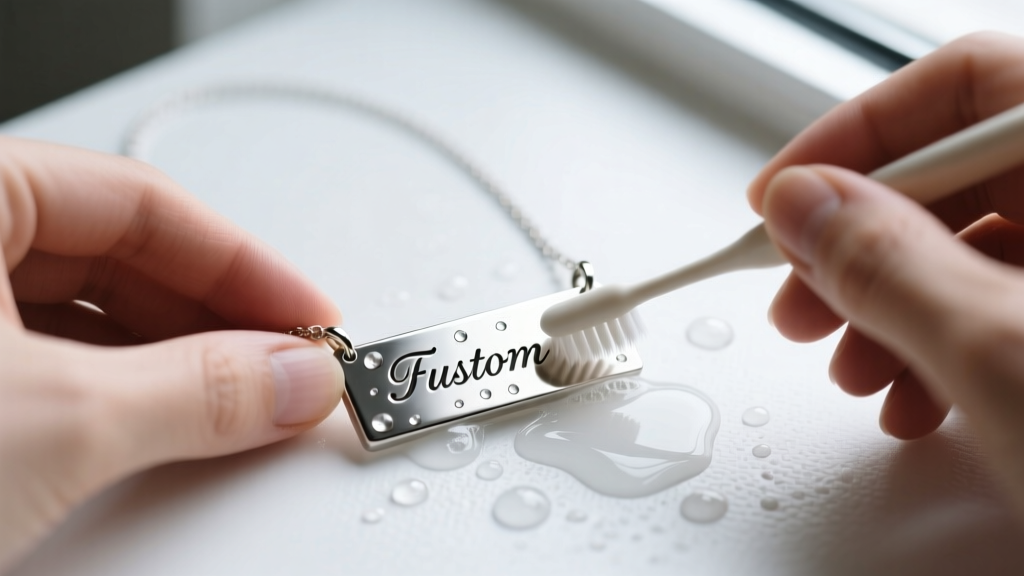
Remove the pendant and use a soft-bristled baby toothbrush (bristle diameter of approximately 0.1mm) to gently sweep across the engravings. Brush in a single direction rather than in circles to avoid trapping grit that could cause micro-scratches on soft metals like 24k gold accents or pure silver.
Step 3: The Distilled Rinse and Dry
Rinse the pendant under a gentle stream of distilled water. Tap water contains dissolved minerals and chlorine that can leave hard water spots or accelerate tarnishing on silver. Immediately pat dry with a lint-free microfiber jewelry cloth. Never air-dry personalized pendants, as water pooling in engraved crevices will leave stubborn mineral deposits.
Pro-Tip from the Bench: If your 925 sterling silver pendant has lost the dark contrast in its engraved lettering, do not use a silver polishing cloth on the text itself. The mild abrasives in the cloth will erase the oxidation. Instead, polish only the high, flat surfaces of the metal, leaving the dark crevices untouched.
Special Considerations for Inlaid Birthstones
Many sentimental necklaces incorporate a daughter's birthstone. According to the Gemological Institute of America (GIA), gemstones require care dictated by their position on the Mohs hardness scale and their porosity. For example, if the necklace features an Opal (Mohs 5.5-6.5) or Turquoise (Mohs 5-6), these stones are highly porous and water-sensitive. Never submerge them. Instead, use a barely damp microfiber swab to gently wipe the stone's surface, avoiding any chemical contact that could strip their natural moisture and cause crazing (internal cracking).
Chain and Clasp Maintenance: The Unsung Heroes
The pendant may hold the sentiment, but the chain bears the mechanical stress. Dads frequently wear necklaces in environments that expose the chain to friction, sweat, and tension. Understanding the mechanics of the chain and clasp is vital for preventing catastrophic loss.
Gauge Thickness and Sebum Buildup
Men's chains typically range from 18-gauge (1.0mm) for a subtle look to 14-gauge (1.6mm) or thicker for a bolder presence. In tighter weaves like the Box chain or Wheat chain, the small interlocking links act as traps for sebum (body oils) and dead skin. Over time, this buildup creates an acidic micro-environment that can degrade unsoldered jump rings. Use a wooden toothpick to gently dislodge compacted grime from between the links before performing the soapy soak mentioned above.
Lobster Clasp Spring Failure
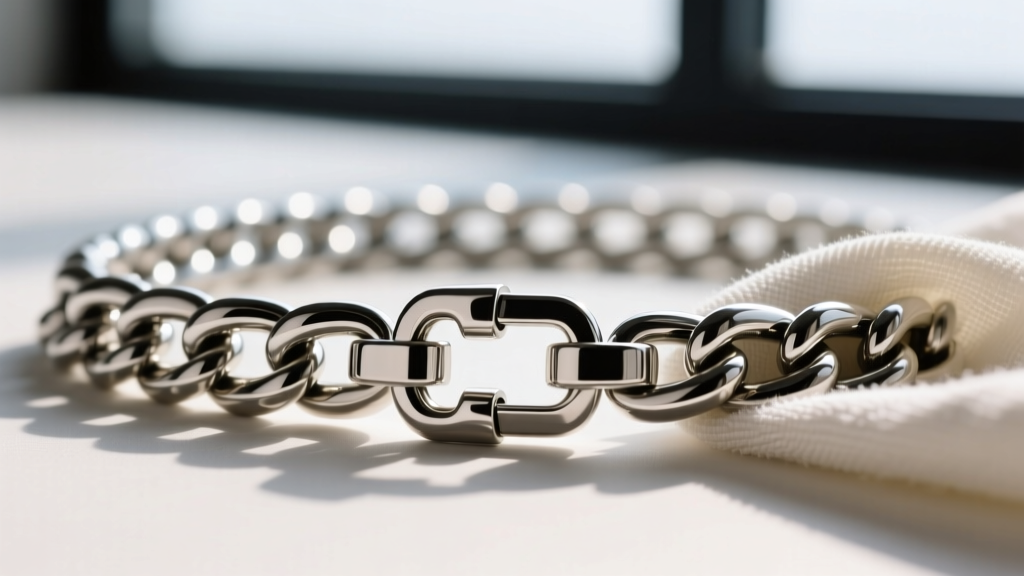
The lobster clasp relies on a tiny internal steel spring to keep the lever closed. When exposed to hairspray, lotions, or thick sweat, this spring can become gummed up, causing the clasp to stick open or fail to snap shut securely. Once a month, use a can of compressed air or a precise blast from a jewelry steam cleaner to clear debris from the clasp mechanism. Apply a microscopic drop of synthetic watch oil to the hinge to maintain smooth operation.
Catastrophic Cleaning Mistakes to Avoid
Well-intentioned cleaning can easily ruin a dad necklace from daughter if internet hacks are followed blindly. Avoid these common disasters at all costs:
- The Ultrasonic Trap: Ultrasonic cleaners use high-frequency sound waves to create microscopic cavitation bubbles that blast dirt away. While excellent for plain diamond rings, these vibrations will instantly shatter kiln-fired enamel, cloud epoxy resin fingerprints, and shake loose the tiny prongs holding delicate birthstones.
- The Baking Soda and Foil Hack: A popular DIY silver cleaning method involves boiling water, baking soda, and aluminum foil. While this creates an ion-exchange reaction that removes silver sulfide (tarnish), it will also completely strip away any intentional antiquing or oxidation used to make custom engravings pop, leaving the piece looking flat and washed out.
- Toothpaste Polishing: Toothpaste contains hydrated silica, an abrasive designed to scrub plaque off teeth. On jewelry, it acts like sandpaper, leaving thousands of microscopic swirl marks on high-polish finishes and packing a white, chalky residue deep into engraved letters that is nearly impossible to remove.
Long-Term Storage and Preservation Tips
When the necklace is not being worn—such as during contact sports, swimming, or heavy lifting—proper storage is essential to prevent environmental degradation. According to metallurgical guidelines from suppliers like Rio Grande, controlling the micro-climate around the jewelry is the best defense against tarnish.
Store the necklace in an airtight, zip-lock style bag made from Pacific Silvercloth or a similar anti-tarnish fabric that actively absorbs sulfur compounds from the air. Include a small, rechargeable silica gel desiccant packet in the bag to control humidity, which acts as a catalyst for the oxidation process. Always fasten the lobster clasp to the end ring before storage; this prevents the chain from tangling and stops the clasp's tiny lever from being accidentally bent or snapped while resting in a jewelry box.
By treating a dad necklace from daughter with the specialized care it deserves, you ensure that the physical beauty of the piece endures just as long as the emotional bond it represents. Regular, gentle maintenance is the key to keeping those custom fingerprints, handwritten etchings, and precious birthstones pristine for decades to come.


