6-7 Necklace Guide: Gold Weights & Material Properties
Discover the material properties, karat differences, and durability of a 6-7 necklace in gold. Expert guide to lightweight chain metallurgy.

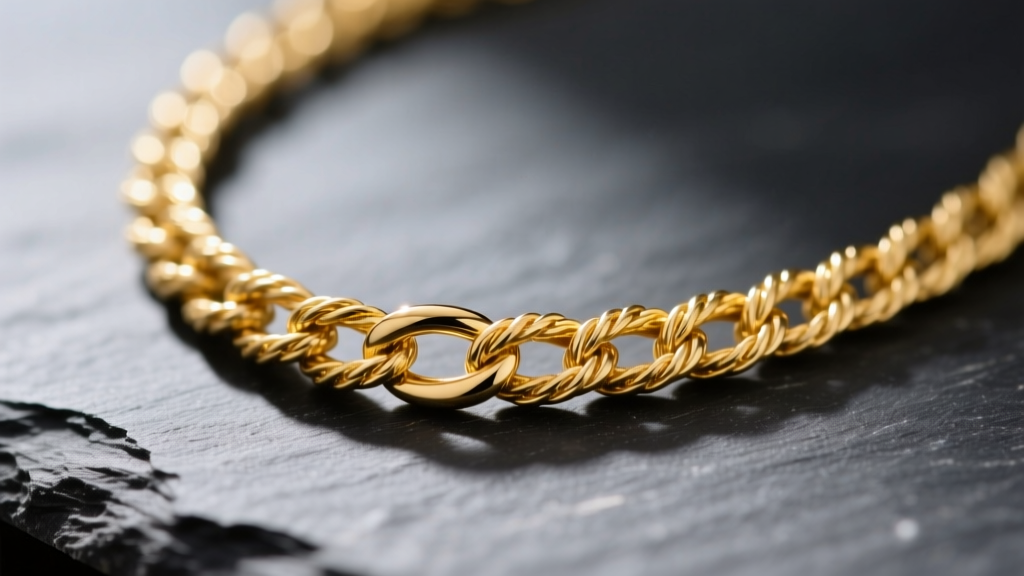
Understanding the 6-7 Necklace Weight Class
In the fine jewelry sector, categorizing chains by gram weight is standard practice for inventory, pricing, and structural assessment. When industry professionals and seasoned collectors reference a 6-7 necklace, they are typically categorizing a lightweight-to-medium gold chain that falls precisely between 6.0 and 7.0 grams. This specific weight class represents a crucial threshold in jewelry design: it is substantial enough to resist the immediate tangling and snapping associated with ultra-delicate 2-3 gram chains, yet light enough to provide all-day, frictionless comfort for the wearer.
However, operating within this narrow weight constraint introduces unique metallurgical and structural challenges. A 6.5-gram chain must distribute its mass efficiently to maintain tensile strength without sacrificing aesthetic drape. In this comprehensive 2026 guide, we will deconstruct the material properties, alloy behaviors, and structural failure modes inherent to the 6-7 gram gold necklace category, providing you with the actionable data needed to make an informed purchase.
Metallurgical Breakdown: 10k, 14k, and 18k Gold Alloys
Pure 24-karat gold is far too malleable for everyday chain links; it would stretch and deform under the mere weight of a pendant. Therefore, gold is alloyed with metals like copper, silver, zinc, and occasionally palladium to increase its structural integrity. According to the Gemological Institute of America (GIA), the karatage of your 6-7 necklace fundamentally dictates its hardness, color, and long-term durability.
The Vickers Hardness Scale in Lightweight Chains
When dealing with a lightweight 6-7 necklace, the Vickers Hardness (HV) of the alloy is critical. A harder alloy resists scratching and link deformation, but if it is too hard, it becomes brittle and prone to snapping under sudden tension.
- 10k Gold (41.7% Pure): Measuring around 135-140 HV, 10k gold is highly durable and resistant to surface scratching. However, its high copper and zinc content can make it slightly brittle. In a thin 6-gram chain, this brittleness can lead to sudden link fracture rather than gradual stretching.
- 14k Gold (58.5% Pure): The industry standard for everyday chains. With a hardness of approximately 140-150 HV (depending on the exact copper-to-silver ratio), 14k gold offers the optimal balance of tensile strength and malleability. It can endure the micro-stresses of daily wear without catastrophic failure.
- 18k Gold (75% Pure): Softer and richer in color, 18k gold measures around 120-125 HV. While beautiful, an 18k 6-7 necklace is highly susceptible to link stretching. The higher pure gold content means the chain will slowly elongate over years of wear, eventually compromising the clasp solder points.
Chain Styles and Dimensional Physics at 6-7 Grams
The physical dimensions of a 6-7 necklace vary drastically depending on the weave pattern. Because the total mass is fixed, a chain with a complex, dense weave will be shorter or thinner than a chain with a simple, open weave. Understanding how mass distribution affects structural integrity is key to selecting the right chain style.
| Chain Style | Approx. Width (20-inch) | Durability Rating | Kink Resistance | Best Use Case |
|---|---|---|---|---|
| Cable | 2.0mm - 2.5mm | Moderate | High | Lightweight pendants, layering |
| Figaro | 2.5mm - 3.0mm | High | High | Everyday wear, standalone |
| Rope | 2.0mm - 2.5mm | Very High | Moderate | Heavy pendants, durability |
| Box | 1.5mm - 2.0mm | Low | Very Low | Minimalist aesthetics only |
| Snake | 1.5mm - 2.0mm | Low | None | Smooth drape, no pendants |
The Vulnerability of Box and Snake Chains
At the 6-7 gram weight class, box chains and snake chains are notoriously fragile. A 20-inch box chain weighing 6.5 grams will be exceptionally thin (often under 1.8mm). The sharp 90-degree angles in the square links create natural stress concentrators. If bent against the grain, a box chain will kink, and the structural integrity of that specific link is permanently compromised. Similarly, snake chains are essentially tightly wound metal ribbons; once kinked, they cannot be repaired and must be replaced.
Rope and Figaro: The Structural Champions
Conversely, rope and Figaro chains excel in this weight class. A 6.5-gram rope chain utilizes twisted, interlocking links that distribute tensile stress across multiple planes. This geometric redundancy means that even if one micro-solder fails, the surrounding twists prevent the chain from separating. For a 6-7 necklace intended to hold a 2-4 gram pendant, a solid or semi-solid rope chain is the most metallurgically sound choice.
Common Failure Modes in Lightweight Chains
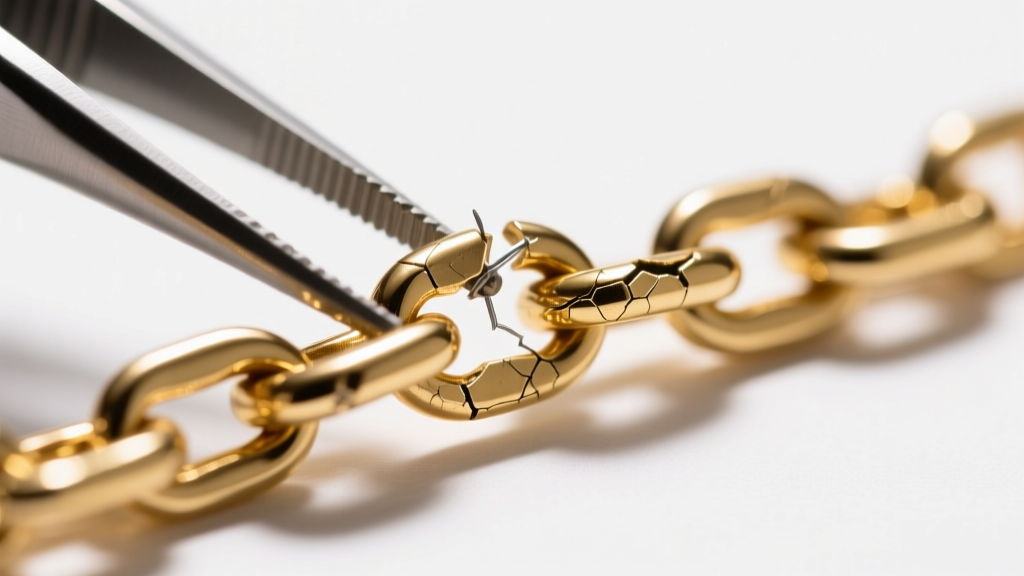
Even the finest 14k gold 6-7 necklace will eventually succumb to mechanical fatigue if subjected to improper stress. As a domain expert, I frequently evaluate broken chains, and the failure points are remarkably consistent.
Clasp Mechanics and Solder Fatigue
The weakest point of any lightweight chain is the jump ring connecting the chain to the clasp. Manufacturers often equip a 6-7 necklace with a 5mm or 7mm spring-ring clasp to save on gold weight and production costs. Spring rings rely on a tiny internal steel spring that frequently corrodes or fails, and the soldered jump ring is prone to pulling apart under lateral tension.
Expert Troubleshooting Tip: If you purchase a 6-7 gram chain with a spring-ring clasp, take it to a bench jeweler immediately. For under $30, they can snip off the weak jump ring and solder on a 7mm or 9mm lobster claw clasp, increasing the break-point threshold by over 40%.
Interlink Abrasion
Over a period of 3 to 5 years, the constant friction of gold rubbing against gold at the contact points of the links will cause microscopic material loss. In a 6-7 necklace, where the link wire might only be 0.8mm thick, losing 0.1mm to abrasion represents a 12% reduction in cross-sectional thickness, significantly lowering the chain's tensile break-point. Regular ultrasonic cleaning and proper storage mitigate this abrasive wear.
2026 Pricing Dynamics and Market Value
Understanding the intrinsic melt value versus the retail markup is essential when shopping for a 6-7 necklace. According to data from the World Gold Council, gold prices have seen significant fluctuations leading into 2026. Let us break down the mathematics of a 6.5-gram 14k gold chain.
- Total Weight: 6.5 grams (0.209 troy ounces)
- Pure Gold Content: 3.80 grams (58.5% of 6.5g)
- Estimated Spot Melt Value: Assuming a 2026 spot price of $2,250 per troy ounce, the intrinsic gold value is approximately $185 to $195.
- Retail Markup: Brick-and-mortar jewelers typically apply a 2.5x to 4x markup on lightweight chains to cover labor, overhead, and design. Expect to pay between $450 and $750 for a high-quality, machine-made 14k 6-7 necklace.
Be highly skeptical of any 6-7 necklace priced below its intrinsic melt value, as this is a primary indicator of gold-plated base metals or hollow-core manufacturing defects.
Care, Maintenance, and Chemical Vulnerabilities
The alloy metals that give 14k and 18k gold their strength also introduce chemical vulnerabilities. The Federal Trade Commission (FTC) jewelry guidelines note that consumers must be aware of how environmental factors degrade precious metal alloys.
The most severe threat to a 6-7 necklace is Stress Corrosion Cracking (SCC). When the copper and zinc in 14k gold are exposed to chlorine (found in swimming pools, hot tubs, and harsh household bleach), a microscopic chemical reaction occurs. This reaction eats away at the alloy's grain boundaries. Because a 6-7 necklace is already lightweight and under constant tension from its own drape, chlorine exposure can cause the chain to spontaneously snap without any physical pulling. Always remove your chain before swimming or cleaning.
Final Verdict: Selecting Your Ideal Chain
The 6-7 necklace weight class remains the undisputed champion of everyday versatility. To maximize your investment, prioritize a 14k gold alloy for the optimal balance of hardness and malleability. Opt for interlocking weaves like the rope or Figaro to ensure structural redundancy, and always upgrade the clasp hardware to prevent mechanical failure at the connection points. By respecting the metallurgical realities of lightweight gold, your chain will provide decades of reliable, elegant wear.


