Heavy-Duty Punk Necklace Anatomy: Chain Gauges & Hardware Grades
Explore the technical anatomy of a heavy-duty punk necklace. We break down chain gauges, O-ring hardware grades, and leather tanning for lasting durability.

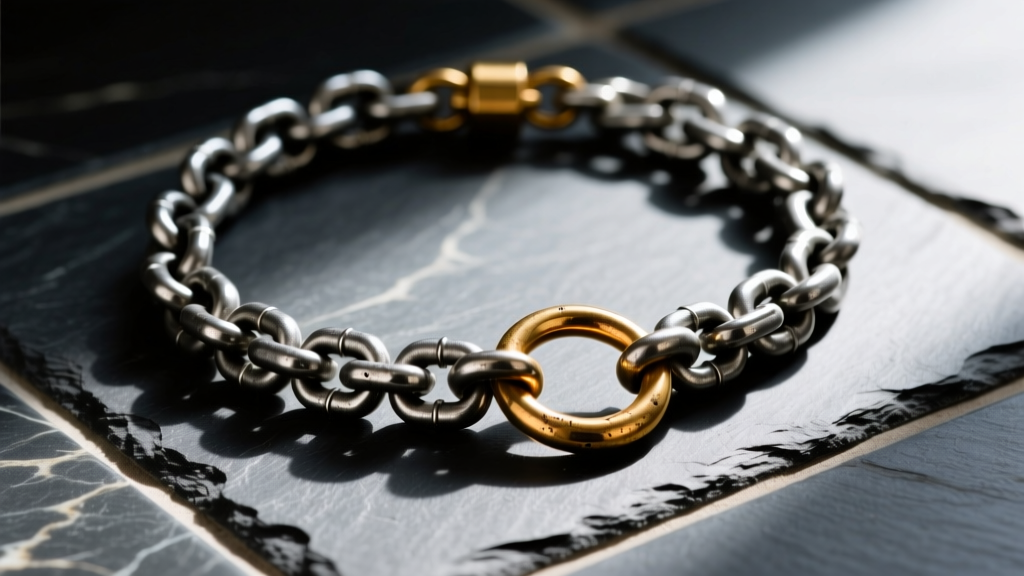
When evaluating alternative jewelry, the distinction between a fast-fashion costume piece and a genuine, heavy-duty punk necklace comes down to structural engineering. Authentic punk and post-punk aesthetics rely on industrial hardware, heavy chains, and thick leather—materials that must withstand significant tensile stress, environmental exposure, and daily friction. In this technical deep dive, we deconstruct the anatomy of high-end punk necklaces, examining the exact wire gauges, metallurgical compositions, and leather tanning processes required to build gear that lasts a lifetime.
The Core Framework: Chain Gauges and Link Welding
The foundation of any chain-based punk necklace is the wire gauge and the link closure method. In jewelry manufacturing, wire thickness is typically measured using the American Wire Gauge (AWG) or Standard Wire Gauge (SWG). According to the Engineering Toolbox, a lower gauge number indicates a thicker, heavier wire. For a true heavy-duty collar, the main structural links should range from 8-gauge (3.26mm) to 10-gauge (2.59mm). Thinner chains, such as 14-gauge (1.63mm) or 16-gauge (1.29mm), are suitable for secondary dangles or pendant bails but will deform under the weight of heavy spikes or padlocks.
Welded vs. Split Links
The failure point of most mass-market chains is the link closure. Split rings and butted links (where the wire is simply cut and bent shut) possess minimal tensile strength and will pull apart when subjected to lateral stress or snagging. A high-quality punk necklace utilizes TIG-welded or laser-welded links. Welding fuses the wire ends into a continuous loop, increasing the tensile load-bearing capacity by over 400%. When inspecting a piece, look for a smooth, uniform bead at the weld joint; a sloppy weld with excessive slag indicates poor quality control and creates a weak point prone to snapping.
Hardware Metallurgy: O-Rings, Spikes, and D-Rings
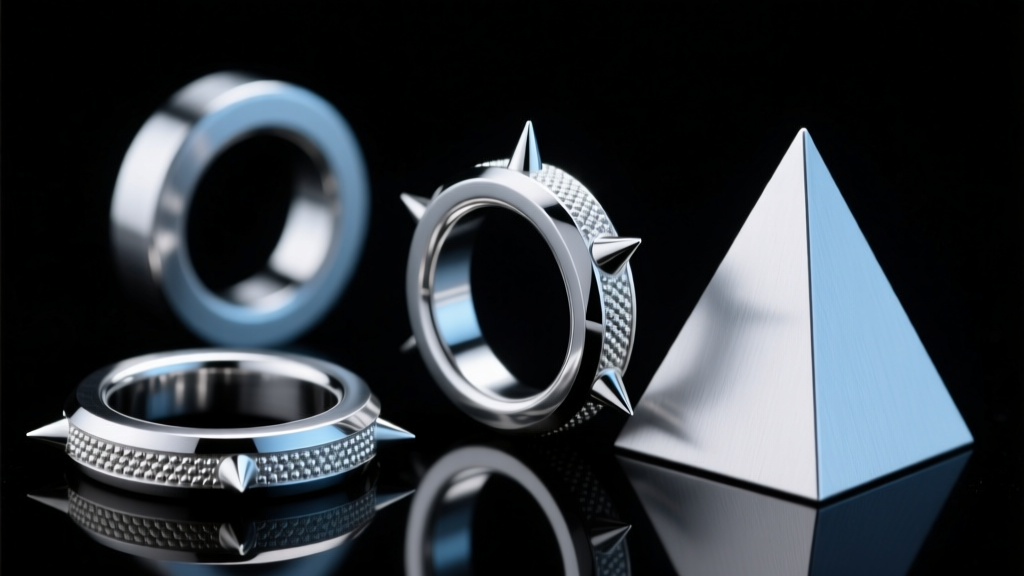
Hardware components like O-rings, D-rings, and pyramid spikes serve as both focal points and load-bearing junctions. The metallurgical composition of these parts dictates their corrosion resistance and structural integrity. Many entry-level punk necklaces utilize Zamak (a zinc-aluminum-magnesium-copper alloy). While Zamak is cheap to cast, it is inherently brittle, prone to pitting, and will snap under sudden shock loads.
For enduring quality, hardware must be machined or cast from 316L surgical stainless steel or solid brass. The British Stainless Steel Association notes that 316L contains molybdenum, which drastically increases its resistance to chloride corrosion. Since human sweat is highly saline and corrosive, 316L is vastly superior to standard 304 stainless steel for body-adjacent hardware, preventing the green discoloration and rust commonly seen in inferior pieces.
Hardware Material Comparison Matrix
| Material | Tensile Strength | Sweat/Corrosion Resistance | Relative Cost | Best Application |
|---|---|---|---|---|
| Zamak (Zinc Alloy) | Low (Brittle) | Poor (Pits and oxidizes) | $ | Lightweight decorative spikes |
| 304 Stainless Steel | High | Moderate (Can rust over time) | $$ | Internal chain links |
| 316L Surgical Steel | Very High | Excellent (Molybdenum alloy) | $$$ | O-rings, clasps, skin-contact hardware |
| Solid Brass (C260) | Moderate | Good (Develops patina) | $$$ | Aesthetic focal rings, vintage styling |
Leather and Textile Choker Bases: Tanning and Degradation
For spiked chokers and harness-style punk necklaces, leather remains the premier base material. However, not all leather survives prolonged skin contact. The tanning process fundamentally alters the hide's protein structure, dictating its reaction to moisture, body oils, and friction.
- Chrome-Tanned Leather: Treated with chromium sulfate, this leather is highly water-resistant, flexible, and retains its color when exposed to sweat. It is the optimal choice for daily-wear punk chokers.
- Vegetable-Tanned Leather: Tanned using natural tannins from tree bark. While it offers beautiful tooling and carving potential, veg-tan leather is highly reactive to moisture and alkaline substances. It will quickly warp, stain, and degrade when exposed to heavy perspiration unless heavily sealed with synthetic finishes.
For structural rigidity, a heavy-duty leather collar should be cut from the shoulder or back of the hide and measure between 8 oz and 10 oz (3.2mm to 4.0mm) in thickness. According to Weaver Leather Supply, selecting the correct tannage and weight ensures the leather will not stretch out or tear around the hardware punch holes over time.
Fastening Mechanisms: Shear Strength and Threadlocking
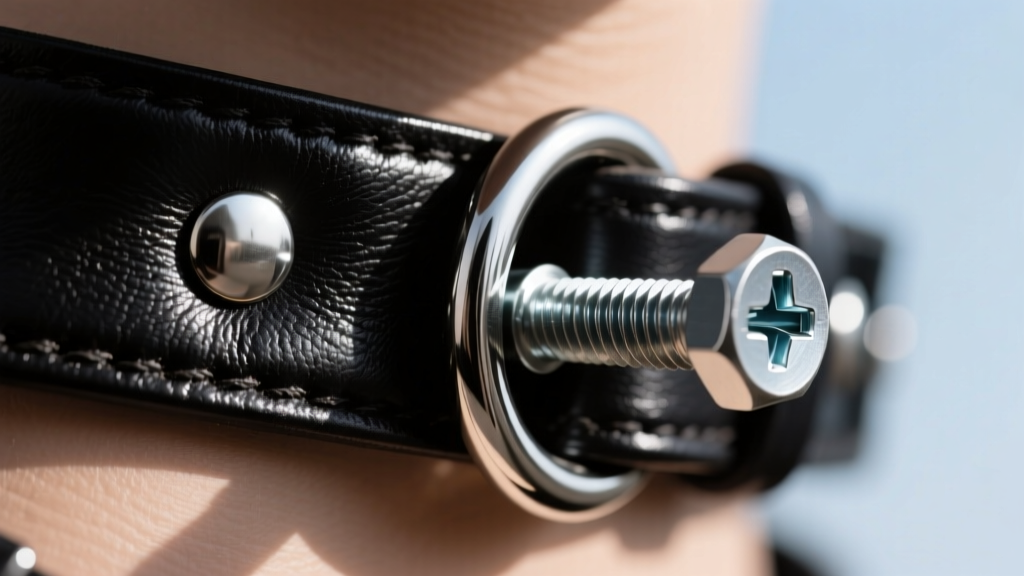
The clasp or fastener is the most critical failure point on any necklace. Standard lobster clasps and spring rings rely on tiny internal springs that easily fail when supporting heavy steel chains or padlocks. Heavy-duty punk necklaces typically employ one of three robust fastening systems:
- Chicago Screws (Sex Bolts): These provide exceptional shear strength and a flush, industrial aesthetic. To prevent them from vibrating loose during wear, the threads must be treated with a low-strength threadlocker (such as Loctite 222). Avoid high-strength threadlockers (like Loctite 271), which will permanently seize the screw and make removal impossible without a heat gun.
- Heavy-Duty Bolt Rings: Unlike spring rings, bolt rings feature a threaded barrel that screws shut over the jump ring. They offer high tensile strength but require two hands to operate.
- Magnetic Neodymium Clasps: While convenient, they are generally unsuitable for heavy punk chains. The sheer weight of a 10-gauge steel chain can overcome the magnetic pull, leading to accidental drops and lost jewelry.
Maintenance and Rust Prevention for Daily Wear
Even premium 316L stainless steel and solid brass require maintenance to retain their structural integrity and aesthetic edge. Environmental pollutants, lotions, and sweat create a microscopic film that can trap moisture against the metal. For uncoated brass hardware, applying a micro-crystalline wax (such as Renaissance Wax) every few months will seal the pores and slow the oxidation process, preserving the desired level of patina without allowing corrosive verdigris to form. For leather components, periodic conditioning with a light mineral oil or a dedicated leather balm prevents the fibers from drying out and cracking around the high-stress O-ring punctures. By understanding the precise gauges, metallurgical grades, and tanning processes involved, you can confidently select or commission a punk necklace that is as mechanically sound as it is visually striking.


