How to Clean & Care for Your Favorite Pizza Necklace
Learn how to safely clean, store, and maintain your pizza necklace. Expert tips for enamel, resin, and plated metals to keep foodie jewelry pristine.

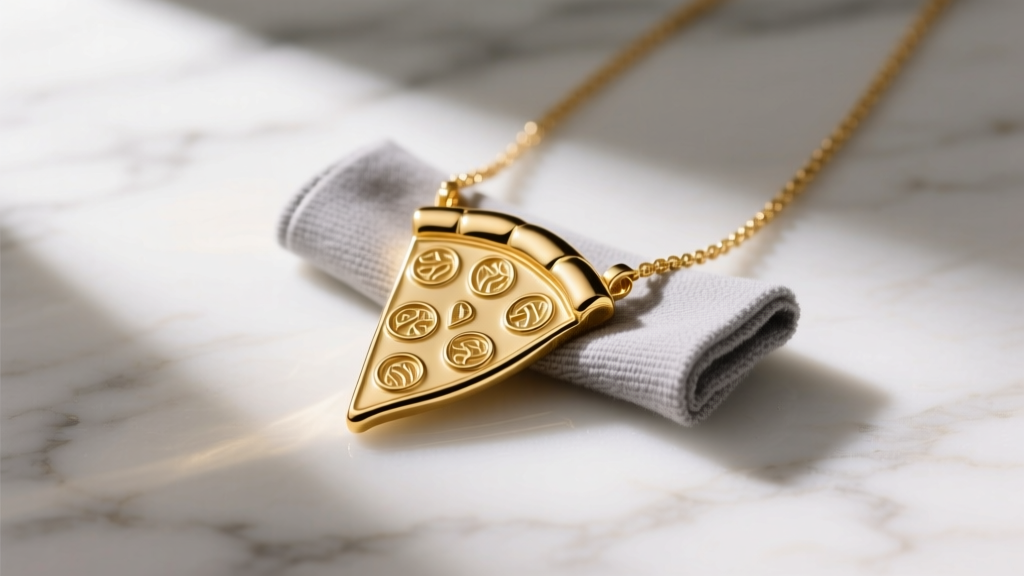
Foodie fashion has firmly cemented its place in the jewelry world, and the iconic pizza necklace remains a beloved staple for expressing playful, nostalgic personal style. Whether you own a high-end sterling silver slice adorned with vitreous enamel or a trendy brass-and-resin piece from an indie boutique, novelty jewelry requires highly specific maintenance. As we navigate the evolving jewelry trends of 2026, the craftsmanship behind these whimsical pendants has improved, but the fundamental vulnerabilities of mixed-material jewelry remain. Cleaning a pizza necklace is not as simple as tossing it into an ultrasonic bath; doing so can easily shatter enamel inlays or melt resin 'cheese' details.
In this comprehensive guide, we break down the exact material science behind your favorite foodie pendant and provide a meticulous, step-by-step care framework to ensure your pizza necklace stays vibrant, untarnished, and ready to wear for years to come.
Material Breakdown: What is Your Pizza Necklace Made Of?
Before applying any cleaning solution, you must identify the materials used in your pendant and chain. The Gemological Institute of America (GIA) emphasizes that mixed-media jewelry requires compartmentalized care, as a cleaner that is safe for a silver chain might completely dissolve the adhesive holding a pendant's gemstones or resin inlays together.
| Material | Common Use in Pizza Pendants | Primary Vulnerability | Safe Cleaning Agent |
|---|---|---|---|
| Vitreous Enamel | Fired glass 'sauce' or 'cheese' layers | Shattering from impact or thermal shock | Mild soap, distilled water |
| Cold Enamel (Epoxy) | Painted details, pepperoni inlays | Clouding or melting from alcohol/acetone | Damp microfiber cloth only |
| Gold Vermeil | High-quality chains and pendant bases | Stripping if polished abrasively | Non-abrasive polishing cloth |
| Brass (Flash Plated) | Budget-friendly pendant bases | Green oxidation, plating wear | pH-neutral dish soap |
Step-by-Step Cleaning Guide for Enamel and Resin Pendants
The most critical rule of cleaning novelty pendants is to avoid ultrasonic cleaners at all costs. Ultrasonic machines use high-frequency sound waves to create microscopic cavitation bubbles in the cleaning solution. When these bubbles implode against the surface of your jewelry, they can easily cause micro-fractures in vitreous enamel or completely dislodge cold enamel epoxy.
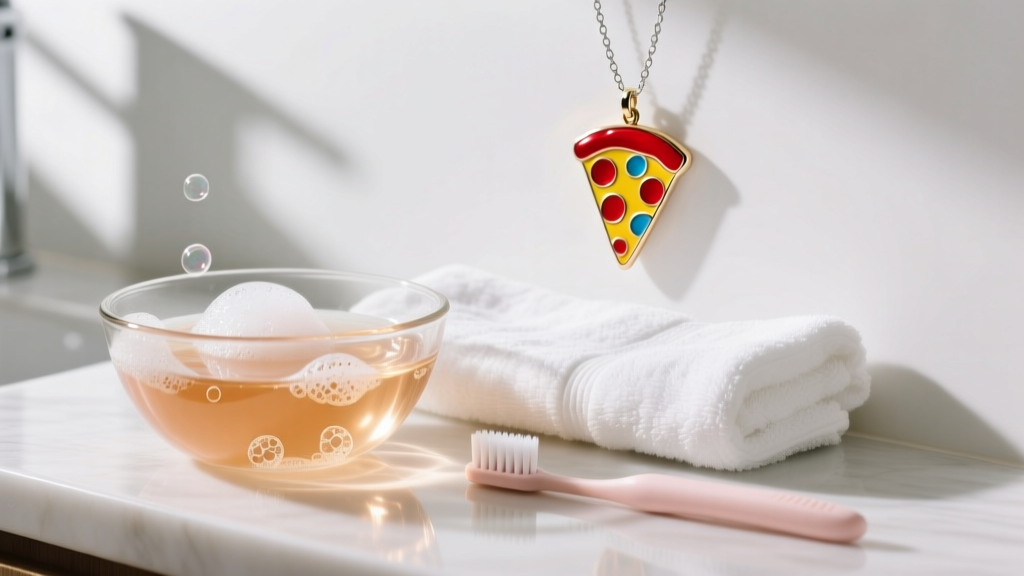
The Lukewarm Soak Method
- Prepare the Solution: Mix three drops of pH-neutral dish soap (like Dawn) into a bowl of distilled water. Avoid tap water, as the chlorine and heavy minerals can leave a cloudy film on resin and enamel.
- Temperature Control: Ensure the water is lukewarm, ideally around 85°F to 95°F (29°C to 35°C). Water that is too hot will soften the jeweler's epoxy used to secure rhinestone 'sesame seeds' or resin pepperoni slices.
- Gentle Agitation: Submerge only the pendant for a maximum of three minutes. Use a soft-bristled baby toothbrush to gently sweep away sebum and lotion buildup from the crevices of the 'crust' detailing.
- Rinse and Dry: Rinse briefly under a slow stream of distilled water. Pat dry immediately with a lint-free microfiber cloth. Do not air dry, as water spots will permanently etch into porous cold enamel over time.
Chain Maintenance: Preventing Tarnish on Plated Metals
While the pizza pendant is the star of the show, the chain requires equal attention. Many novelty necklaces pair a brass pendant with a sterling silver or gold vermeil chain. According to Jewelers of America, silver tarnish is a natural chemical reaction between silver alloys and sulfur compounds in the air, accelerated by humidity and cosmetics.
The Dip-and-Avoid Technique
If your chain is heavily tarnished but your pendant features delicate cold enamel, you must use the dip-and-avoid technique. Apply a specialized silver dip or polishing cream only to the chain links using a cotton swab, keeping the solution at least half an inch away from the pendant bail. Standard silver polishing cloths are impregnated with micro-abrasives; rubbing these cloths over a gold-plated brass pizza slice will strip the flash plating (often only 0.175 microns thick) right off, exposing the raw brass underneath.
Storage and Daily Wear Rules for Novelty Pendants
Proper storage is just as vital as active cleaning. Pizza necklaces often feature protruding elements—like a jagged crust edge or a dangling charm—that can easily scratch softer metals or become tangled.
- The 'Dress Last' Rule: Always put your pizza necklace on after applying perfume, hairspray, and lotion. The alcohol and volatile organic compounds (VOCs) in cosmetics will degrade cold enamel and cause gold plating to flake.
- Anti-Tarnish Strips: Store the necklace in an airtight polyethylene ziplock bag along with a 3M anti-tarnish strip. These strips absorb airborne sulfur and hydrogen sulfide, effectively pausing the oxidation process.
- Individual Compartments: Never toss your pizza necklace into a communal jewelry box. The hardened enamel on the pizza slice acts like sandpaper against softer gold or silver chains, causing irreversible micro-scratches.
Troubleshooting Common Pizza Necklace Disasters
Even with meticulous care, novelty jewelry can encounter specific issues. Here is how to troubleshoot the most common failures associated with foodie-themed pendants.
Problem: The 'Green Skin' Effect
If the back of your pizza pendant or the chain is leaving a green or black mark on your chest, you are experiencing a copper oxidation reaction. Brass and bronze are copper alloys; when they mix with the acidic pH of your sweat or the lactic acid in your body lotion, they create copper chloride, which stains the skin.
The Fix: Coat the back of the pendant and the inside of the chain links with a thin layer of clear, non-yellowing nail polish or a specialized jewelry shield spray. This creates an invisible polymer barrier between the metal and your skin. Reapply every few months.
Problem: Cloudy or Scratched Resin 'Cheese'
If the yellow resin meant to mimic melted cheese has become dull or scratched from daily wear, standard metal polishes will only make it worse by embedding abrasive grit into the soft plastic.
The Fix: Use a plastic polish designed for acrylics, such as Novus No. 2 Fine Scratch Remover. Apply a tiny drop to a clean cotton pad and buff the resin in tight, circular motions until the optical clarity returns. Wipe away the residue with a damp cloth.
Problem: Loose Rhinestone 'Sesame Seeds'
Temperature fluctuations and minor impacts can weaken the cyanoacrylate adhesives used to set tiny rhinestones or cubic zirconia accents on the crust of the pizza.
The Fix: Do not use super glue, which dries rigid and can fog surrounding enamel. Instead, use a flexible jeweler's epoxy like G-S Hypo Cement. Apply a microscopic bead using a toothpick, press the stone into place, and let it cure undisturbed on a flat surface for 24 hours.
Final Thoughts on Preserving Foodie Fashion
A pizza necklace is more than just a quirky accessory; it is a conversation starter and a reflection of your unique aesthetic. By understanding the distinct material properties of enamel, resin, and plated metals, you can move beyond generic jewelry care advice and implement a targeted maintenance routine. Treat your novelty pieces with the same respect you would give to fine jewelry, and your favorite slice will continue to look fresh, vibrant, and delicious for many years to come.


