How to Clean and Care for Your Plunder Tabitha Necklace
Learn expert care, cleaning, and storage tips for your Plunder Tabitha necklace to protect its mixed-media finishes, glass, and brass elements.


Understanding the Anatomy of the Plunder Tabitha Necklace
Owning a statement piece like the Plunder Tabitha necklace requires a deliberate departure from standard, one-size-fits-all jewelry care. Unlike solid gold or platinum chains that can withstand rigorous polishing, the Tabitha necklace is celebrated for its intricate, mixed-media construction. To properly maintain this piece, you must first understand the specific materials that compose it and how they react to environmental stressors.
Typically, the Plunder Tabitha design features a combination of jeweler's brass (a copper-zinc alloy), antiqued metal plating, glass cabochons, and occasionally resin inlays or acrylic elements. The 'antiqued' finish is not a solid metal color; it is a carefully applied surface oxidation or chemical patina designed to highlight the intricate filigree and textured brasswork. Furthermore, the glass cabochons—ranking between 5.5 and 7 on the Mohs hardness scale—are often set using specialized jewelry epoxies rather than traditional metal prongs. This means that harsh chemicals or extreme temperature fluctuations can compromise the adhesive bond, leading to loose stones or cloudy resin degradation. According to the Gemological Institute of America (GIA), mixed-media jewelry requires highly specific, pH-neutral cleaning protocols to preserve both the metal finishes and the optical clarity of the stones.
The Daily Wear Rules: Prevention is Better Than Cure
The most effective maintenance strategy for the Plunder Tabitha necklace begins before you even leave your vanity. Mixed-media pendants are highly susceptible to galvanic corrosion and chemical stripping from everyday cosmetics. To preserve the dark antiqued patina and the brilliance of the glass elements, you must adopt the 'Last On, First Off' methodology.
- Perfumes and Body Sprays: The high alcohol content in fragrances acts as a solvent. Over time, it will degrade resin inlays and strip the protective clear-coat often applied over brass to prevent unwanted oxidization. Always apply perfumes at least 10 minutes before donning the necklace.
- Lotions and Oils: Emollients leave a microscopic film that accumulates in the crevices of the brass filigree, dulling the metal and attracting airborne dust. This grime buildup is the primary cause of cloudy glass cabochons.
- Sweat and pH Levels: Human sweat is naturally acidic (typically a pH of 4.5 to 7.0). Prolonged exposure to acidic perspiration will rapidly accelerate the oxidation of the copper in the brass alloy, turning the metal an unnatural, splotchy green and eating away at the deliberate antiqued finish.
Step-by-Step Cleaning Guide for Mixed-Media Pendants
When your Plunder Tabitha necklace accumulates daily oils and environmental dust, it requires a gentle, methodical cleaning process. Never submerge the entire piece in water, and absolutely avoid ultrasonic cleaners. The high-frequency cavitation of an ultrasonic bath will shatter glass cabochons and instantly strip the antiqued patina from the brass.
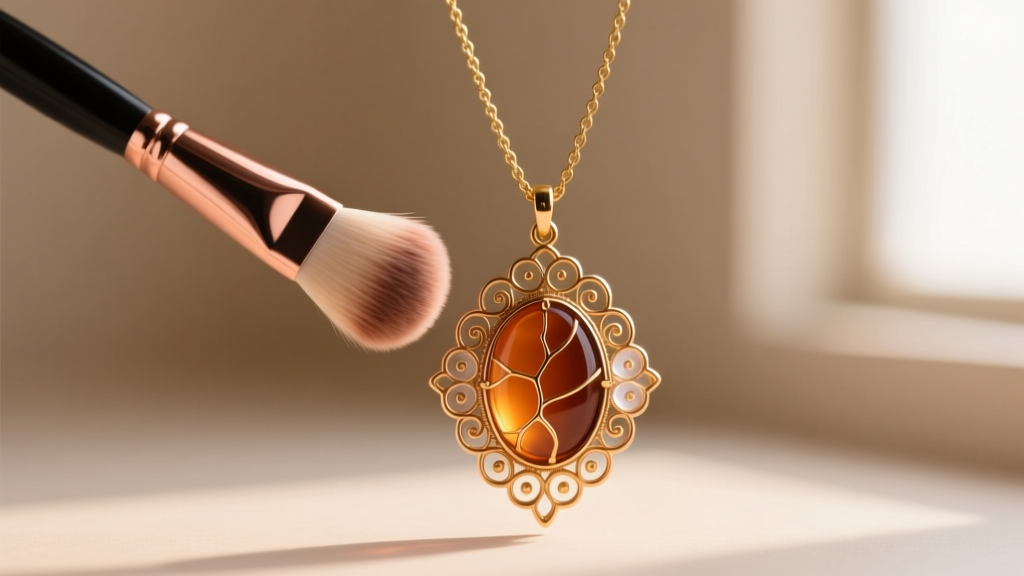
Step 1: Dry Particulate Removal
Before introducing any moisture, use a clean, soft-bristled makeup brush (like a fluffy eyeshadow blending brush) to gently sweep away loose dust, dead skin cells, and cosmetic powders from the intricate metalwork. Brushing dry prevents dust from turning into an abrasive mud when wet, which could micro-scratch the glass surfaces.
Step 2: The pH-Neutral Spot Clean
Mix a solution of distilled water and a single drop of pH-neutral, dye-free dish soap (such as original Dawn). Distilled water is critical here; tap water contains chlorine and dissolved minerals that can leave hard water spots on glass and react with the brass. Dip a cotton swab or a microfiber cloth into the solution, wring it out until it is merely damp, and gently wipe the glass cabochons and the smooth metal surfaces. Avoid aggressively scrubbing the deep crevices of the brass, as you risk removing the dark oxidized contrast that gives the piece its vintage character.
Step 3: Capillary Drying
Moisture trapped beneath the glass settings can rust the base metal or degrade the epoxy. Use a lint-free microfiber cloth to pat the piece dry. For hard-to-reach crevices, use a can of compressed air (held upright to prevent propellant spray) to blow out trapped moisture, or use a hair dryer on the 'cool' setting to gently evaporate residual dampness.
What to Avoid: The Chemical Danger Zone
Many well-meaning jewelry owners ruin their mixed-media pieces by applying cleaning agents designed for solid precious metals. The Library of Congress Preservation Guidelines explicitly warn against using abrasive or highly reactive chemicals on historically styled or patinated metals. Below is a breakdown of common household cleaners and the catastrophic damage they inflict on the Plunder Tabitha necklace.
| Chemical Agent | Effect on Antiqued Brass | Effect on Glass/Resin Elements |
|---|---|---|
| Silver Dip / Tarnish Remover | Instantly strips the dark patina, leaving a flat, bright yellow, unnatural finish. | Can melt the epoxy adhesive holding glass cabochons in place. |
| Ammonia-Based Cleaners | Causes rapid, uneven oxidation and pitting on the brass surface. | Clouds acrylic and resin inlays permanently by degrading the polymers. |
| Baking Soda Paste | Acts as an abrasive, scratching the metal and removing protective clear-coats. | Micro-scratches the surface of glass cabochons, ruining their optical clarity. |
| Ultrasonic Cavitation | Vibrates the metal at frequencies that can snap delicate chain links. | Shatters glass and porous stones due to intense microscopic shockwaves. |
Long-Term Storage and Anti-Tarnish Strategies
How you store the Plunder Tabitha necklace when it is not being worn is just as critical as how you clean it. Brass is highly reactive to sulfur and humidity in the ambient air. As of 2026, the gold standard for storing mixed-media costume and boutique jewelry relies on creating a micro-climate that neutralizes airborne corrosive gases.
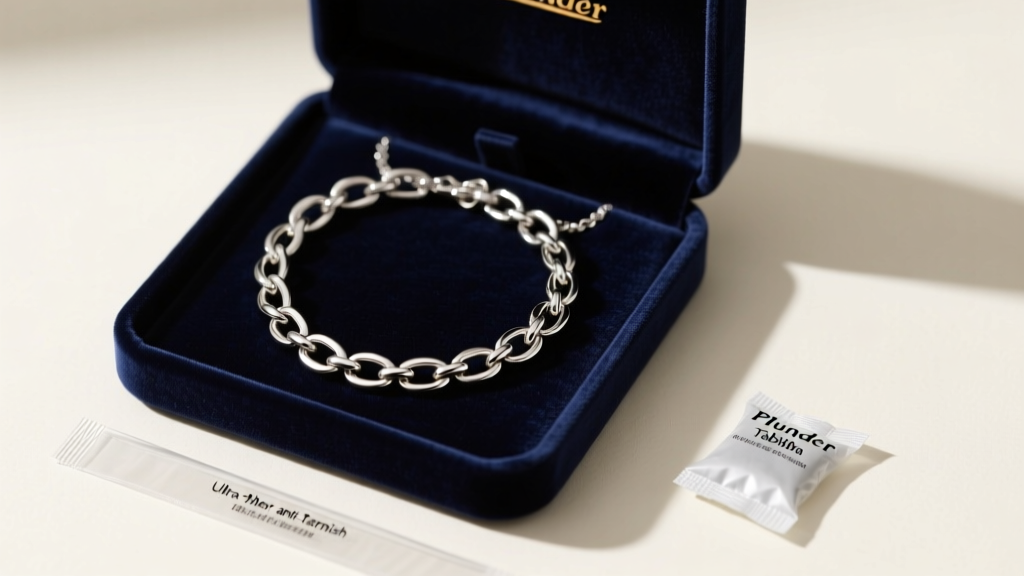
Utilizing Intercept Technology
Do not rely on standard ziplock bags, as many plastics emit trace sulfur gases during off-gassing. Instead, store the necklace in an airtight container lined with an anti-tarnish strip utilizing Intercept Technology. This specialized material uses copper particles embedded in a polymer matrix to actively attract and neutralize corrosive gases before they can reach your brass pendant. These strips typically remain effective for 6 to 12 months before needing replacement.
Humidity and UV Control
Keep the storage environment below 50% relative humidity by including a small, rechargeable silica gel desiccant packet in the jewelry box. High humidity accelerates the electrochemical reactions that cause brass to tarnish. Additionally, ensure the necklace is stored in a dark place. Prolonged exposure to ultraviolet (UV) light can cause colored resin elements to yellow and fade, permanently altering the aesthetic balance of the piece.
The Coiling Method
To prevent the delicate chain from kinking or tangling, fasten the lobster clasp and lay the necklace flat in a figure-eight pattern. Never hang heavy mixed-media pendants by their chains for long-term storage; the constant gravitational pull can stretch the chain links and weaken the jump rings connecting the pendant to the chain.
Troubleshooting Common Issues
Even with meticulous care, mechanical and environmental issues can arise. Here is how to address them without causing further damage to your necklace.
Stiff or Sticky Lobster Clasps
If the clasp mechanism becomes difficult to open, do not reach for WD-40 or standard lubricants. These contain harsh petroleum solvents that will melt nearby resin and degrade the metal finish. Instead, use a wooden toothpick to apply a microscopic drop of synthetic watch oil or pure mineral oil directly into the clasp hinge. Work the lever back and forth to distribute the oil, then wipe away any excess with a cotton swab.
Cloudy Glass Cabochons
If the glass elements appear cloudy despite cleaning, the issue may be on the underside of the stone or within the adhesive layer. Unfortunately, if moisture has breached the setting and clouded the epoxy, this requires professional jewelry repair to re-set the stone. However, if the cloudiness is merely a buildup of hard water spots or stubborn oils on the surface, a gentle wipe with a 50/50 mixture of distilled water and isopropyl alcohol (applied only to the glass with a precision swab, avoiding the metal) can restore the optical clarity.
Chain Tangling
For severe chain knots, lay the necklace on a flat, hard surface. Apply a tiny amount of baby powder or cornstarch to the knot to reduce friction between the metal links. Use two fine sewing needles to gently tease the links apart from the center outward, avoiding pulling, which will only tighten the brass links.
By respecting the unique material composition of the Plunder Tabitha necklace and adhering to these specialized maintenance protocols, you ensure that its vintage-inspired charm and intricate details remain pristine for years of continuous wear.


