Necklace White Stone Guide: Hardness, Refraction & Setting Security
Discover the technical differences between popular necklace white stone options. Compare hardness, refraction, and setting security.

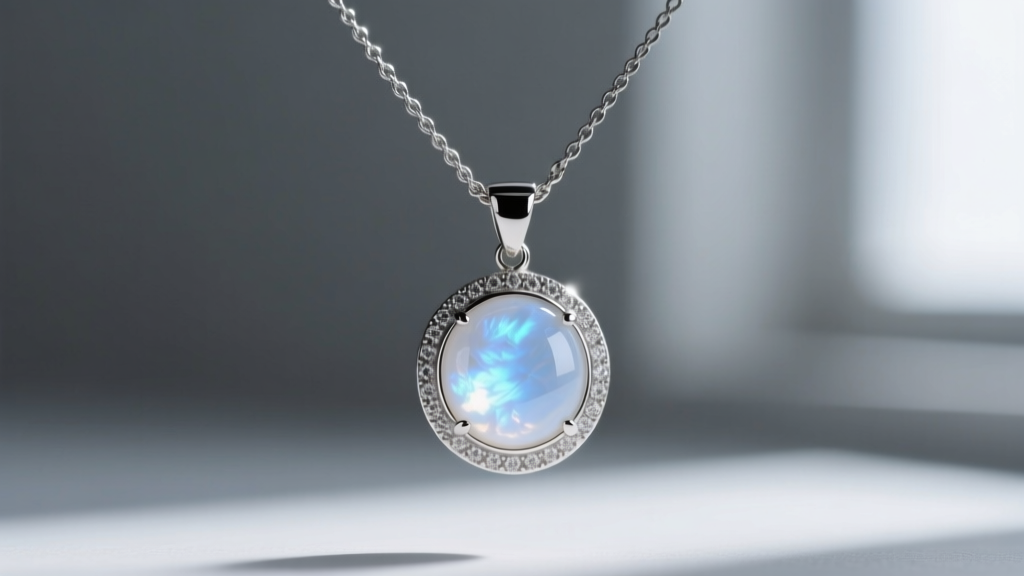
The Mineralogy of White Gemstones: Beyond the Sparkle
When selecting a necklace white stone for everyday wear or heirloom pendants, aesthetic appeal must be balanced with structural integrity. The term 'white stone' encompasses a vast array of mineralogies, from amorphous silica (opal) to crystalline corundum (white sapphire). As of 2026, advancements in gemological scanning allow buyers to verify treatment disclosures with unprecedented accuracy, but understanding the foundational physics of these stones remains critical for jewelry designers and collectors.
A pendant is subjected to different kinetic stresses than a ring. While it avoids direct impact from hand-washing or door handles, a necklace white stone swings, collides with the sternum, and rests against the skin, exposing it to thermal shocks, cosmetics, and perspiration. Choosing the correct stone requires a deep dive into Mohs hardness, cleavage planes, and refractive indices.
Comparative Analysis: Mohs Hardness and Cleavage Planes
The Mohs scale is a relative, non-linear scale of scratch resistance. However, scratch resistance does not equate to toughness (resistance to breaking). Cleavage—the tendency of a mineral to break along structural planes—is the true enemy of pendant settings.
| Gemstone | Mineral Family | Mohs Hardness | Cleavage | Toughness | Avg. Price/Carat (2026) |
|---|---|---|---|---|---|
| Diamond | Carbon | 10 | Perfect (Octahedral) | Excellent | $1,500 - $5,000+ |
| White Sapphire | Corundum | 9 | None | Excellent | $300 - $800 |
| White Topaz | Silicate | 8 | Perfect (Basal) | Poor | $20 - $60 |
| Moonstone | Feldspar | 6 - 6.5 | Perfect (2 directions) | Fair | $15 - $100 |
| White Opal | Amorphous Silica | 5.5 - 6.5 | None (Conchoidal fracture) | Poor | $50 - $500 |
Expert Warning: White Topaz possesses perfect basal cleavage. If a jeweler applies uneven pressure to the culet or girdle during prong setting, the stone can cleave entirely in half. Never use V-prongs on white topaz pendants.
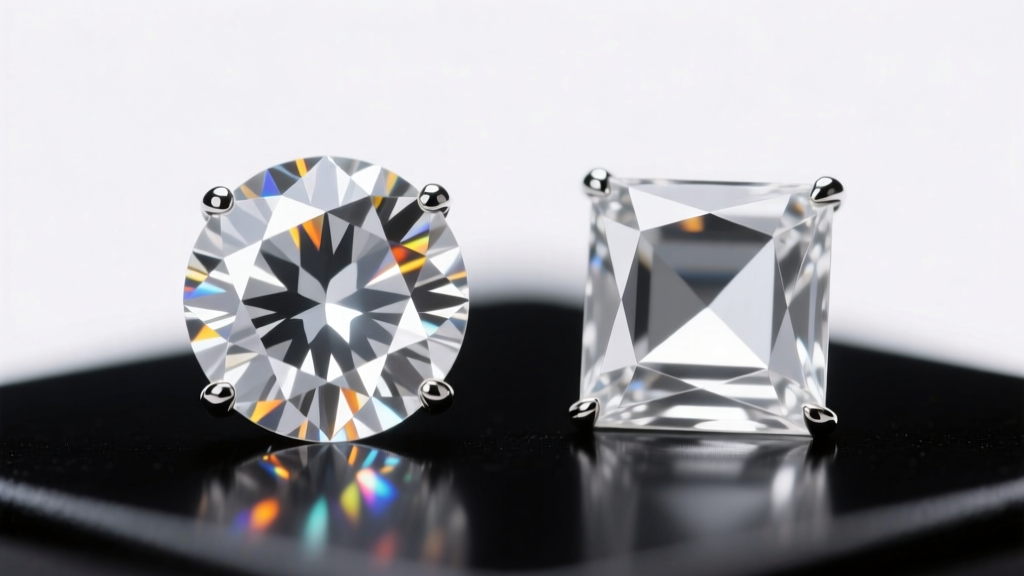
Refractive Index (RI) and Dispersion: Engineering the Brilliance
The visual impact of a necklace white stone is dictated by its Refractive Index (RI) and dispersion. RI measures how much light bends upon entering the stone, while dispersion measures the separation of white light into spectral colors (fire).
Why Step-Cuts Fail in Low-RI Stones
White sapphire has an RI of 1.76-1.77, significantly lower than diamond (2.41). Because of this, light leaks out of the pavilion of a poorly cut sapphire, creating a 'window' or dead zone. To maximize brilliance in white sapphire pendants, lapidaries must cut shallower pavilions and utilize round brilliant or crushed-ice faceting patterns. Step-cuts (like emerald cuts) in low-RI white stones often look glassy and lifeless unless the stone possesses exceptional color saturation, which defeats the purpose of a 'white' stone.
Conversely, moonstone relies on adularescence—a floating optical phenomenon caused by light scattering between alternating layers of orthoclase and albite feldspar. Faceting a moonstone destroys this effect. Moonstones must be cut en cabochon with high domes to properly capture and reflect the internal light scatter.
Setting Security: Prong vs. Bezel for Fragile White Stones
The setting architecture must be engineered around the specific failure modes of the chosen necklace white stone. According to the GIA Gem Encyclopedia, matching the setting to the gem's toughness is the primary factor in heirloom longevity.
- White Sapphire & Diamond: High toughness and lack of problematic cleavage (in the case of sapphire) allow for traditional 4-prong or 6-prong settings. This maximizes light entry from the crown.
- Moonstone & Opal: Both require full bezel settings. Opals contain 3% to 21% water. Prongs leave the edges exposed to micro-impacts that can cause crazing (a network of fine cracks). A bezel wall protects the girdle and provides structural support against thermal shock.
- White Topaz: Requires a tension-less halo or a custom-fitted bezel. The Mindat Mineral Database notes that topaz is highly susceptible to cleavage from thermal stress and directional pressure.
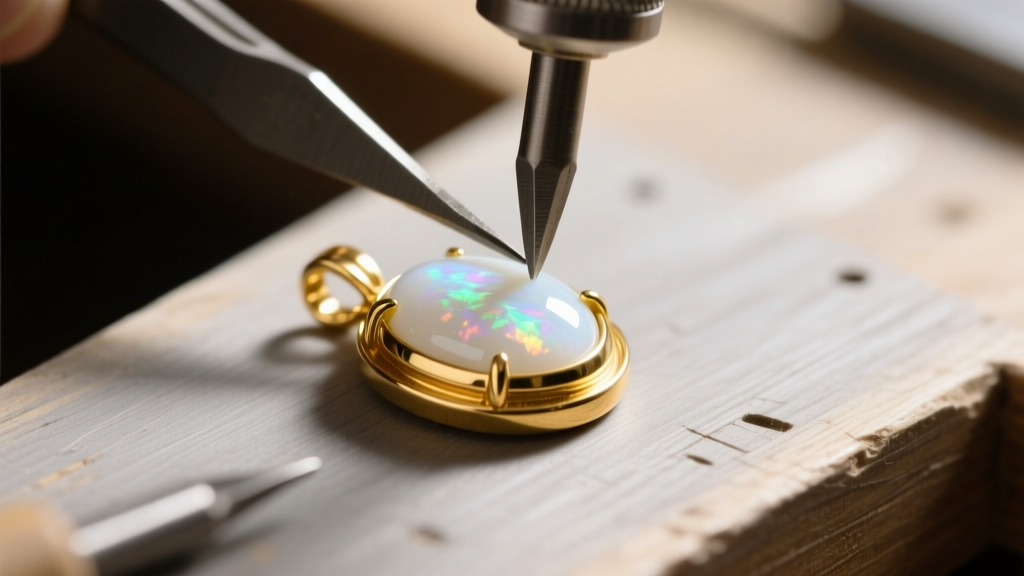
The Bezel Mandrel Technique for Cabochons
When setting a cabochon white opal or moonstone into a pendant, jewelers should avoid pushing the bezel wall directly down from a 90-degree angle, which can exert downward pressure on the dome and fracture the stone. Instead, the bezel wire (typically 22-gauge or 0.6mm thick) should be pushed at a 45-degree angle using a bezel roller, gradually working in a star pattern around the circumference to distribute kinetic force evenly.
Chain Pairing: Weight Ratios and Bail Engineering
A common failure point in necklace design is the mismatch between the pendant weight and the chain gauge. A heavy white stone pendant requires specific chain engineering to prevent bail wear and eventual snapping.
The 1:6 Weight Ratio Rule: The chain should weigh at least one-sixth of the total pendant weight to ensure proper drape and prevent the clasp from migrating to the front of the neck. For a 15mm x 10mm white sapphire pendant weighing approximately 8 grams, a 1.5mm solid wheat or box chain (weighing 5-7 grams) is mandatory. Using a delicate 0.8mm rolo chain will result in rapid friction wear at the jump ring, eventually leading to chain failure.
Furthermore, the bail (the loop connecting the pendant to the chain) must be soldered, not glued. For heavy stones, a 'V-bail' or a double-loop tube bail distributes the kinetic load across a wider surface area of the pendant's mounting plate, reducing the risk of the bail tearing away from the silver or gold backing.
Maintenance and Ultrasonic Risks
Maintenance protocols vary wildly across the white stone spectrum. Ultrasonic cleaners operate at frequencies between 20 kHz and 40 kHz, creating microscopic cavitation bubbles that implode with immense localized force.
- Diamond & White Sapphire: Safe for ultrasonic cleaning and steam. However, if the sapphire has been fracture-filled with lead glass (a common treatment for low-grade stones), ultrasonic cavitation will shatter the filler, ruining the stone.
- Moonstone: Never use ultrasonics or steam. The internal lamellar layers can separate under high-frequency vibration. Clean only with lukewarm water, a mild pH-neutral soap, and a soft brush.
- White Opal: Highly porous. Exposure to harsh chemicals or ultrasonic waves will draw out internal moisture, leading to irreversible crazing and opacity loss. Wipe with a damp microfiber cloth only.
Sourcing and Treatment Disclosures
In 2026, ethical sourcing and treatment transparency are paramount. When purchasing a necklace white stone, always request a gemological report detailing any enhancements. White topaz is frequently irradiated to alter color, though this is generally stable. Moonstones may be coated with colorless wax to fill surface-reaching fractures, which degrades over time when exposed to skin oils and perfumes. Always verify that the pendant setting allows for future stone removal and re-polishing without compromising the metalwork, ensuring the piece can be maintained for generations.


