Diamond Shaped Necklace Engineering: Geometry & Settings
Explore the technical engineering, casting challenges, and setting mechanics behind the perfect diamond shaped necklace pendant design.

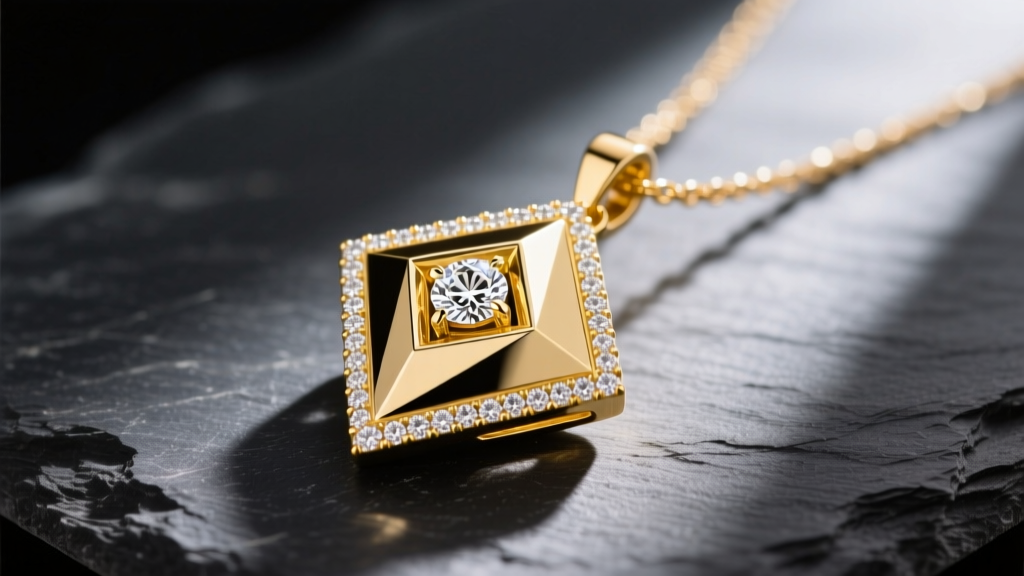
The Engineering Challenge of the Rhombus Silhouette
When discussing a diamond shaped necklace, most consumers immediately picture the gemstone itself. However, in advanced jewelry design, the "diamond shape" refers to the geometric rhombus or kite silhouette. This striking, angular profile is a staple of modern and Art Deco fine jewelry, but it presents a unique set of metallurgical and structural challenges that separate mass-produced trinkets from master-crafted fine jewelry. Designing a pendant with acute vertices requires a deep understanding of fluid dynamics during casting, gemstone cleavage planes, and pendulum physics.
As of 2026, advanced CAD software like MatrixGold allows jewelers to simulate metal flow and thermal shrinkage before a physical prototype is ever printed. Yet, the fundamental physics of lost-wax casting remain unchanged. Creating a flawless geometric diamond pendant requires deliberate engineering at every stage of the manufacturing process, from the initial wireframe to the final polish.
CAD Tolerances and Casting Porosity at Acute Vertices
The defining feature of a rhombus pendant is its sharp points—typically featuring acute angles of 60 degrees or less at the top and bottom vertices. In the lost-wax casting process, molten metal (such as 14k gold or platinum) is forced into a plaster mold under high pressure and centrifugal force. The acute corners of a diamond shape act as thermal sinks. Because the metal volume at the very tip is so small, it cools and solidifies significantly faster than the main body of the pendant.
This rapid cooling cuts off the "feed path" for the rest of the shrinking metal, resulting in localized shrinkage porosity. If left uncorrected, the tips of the pendant will be brittle, pitted, and prone to snapping off during setting or daily wear. To combat this, expert CAD designers apply a 0.2mm to 0.4mm micro-chamfer (truncation) to the extreme vertices in the digital model. This slight flattening is imperceptible to the naked eye but provides enough mass to maintain a stable thermal gradient during casting, ensuring a dense, porosity-free tip. According to manufacturing guidelines from Stuller's Bench Tips, managing thermal mass distribution is the single most critical factor in casting sharp geometric jewelry.
Gemstone Integration: Protecting the Kite Points
When a diamond shaped necklace incorporates an actual gemstone cut into a kite or rhombus silhouette, the structural focus shifts to stone security. Unlike round brilliant cuts, which distribute impact force evenly across a continuous girdle, kite-cut and rose-cut diamonds terminate in sharp, fragile points. These acute corners align directly with the diamond's natural cleavage planes, making them highly susceptible to chipping if subjected to lateral pressure or blunt force.
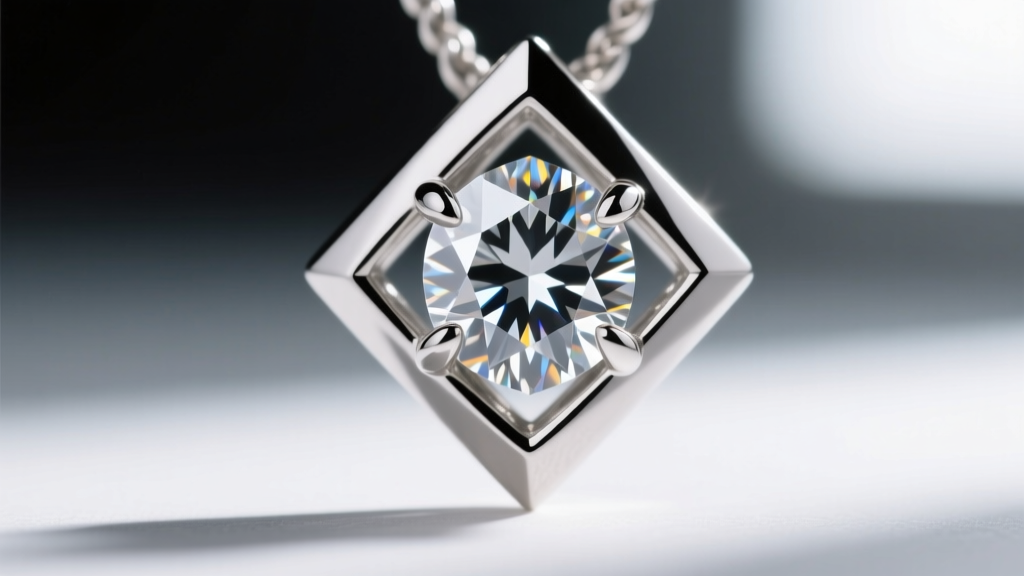
Standard round prongs are entirely inadequate for securing the points of a geometric diamond cut. A round prong applies uneven pressure to the sharp corner, creating a high-stress focal point that can fracture the stone during the setting process or during everyday wear. Instead, master jewelers rely on specialized V-prongs or custom-fitted bezels.
Comparing Setting Architectures for Rhombus Stones
| Setting Type | Structural Mechanism | Durability Rating | Best Application |
|---|---|---|---|
| V-Prong | Features a 90-degree interior angle that cups the sharp point, distributing pressure evenly along the facets rather than the tip. | High | Kite-cut diamonds, elongated rhombus pendants. |
| Full Bezel | A continuous metal rim that completely encircles the stone. The corners are folded over the stone's points using a pusher and burnisher. | Maximum | Active lifestyles, softer gemstones (e.g., opals, emeralds) cut into diamond shapes. |
| Tension Set | Relies on the tensile strength of the metal band to grip the stone. Requires heavily reinforced corners to prevent slippage. | Low to Medium | Avant-garde designs; not recommended for the acute points of kite cuts. |
The Gemological Institute of America (GIA) strongly advises that any fancy-shaped gemstone with points or corners must have those specific areas fully protected by metal. A properly executed V-prong should have the interior angle filed to perfectly match the angle of the gemstone's corner, ensuring zero air gaps and uniform pressure distribution.
Bail Mechanics and Center of Gravity
One of the most frequent complaints regarding poorly engineered geometric pendants is the "pendulum flip." A diamond shape is inherently top-heavy if the bail (the loop that connects the pendant to the chain) is simply soldered to the top vertex. Because the center of mass in a rhombus sits slightly below the geometric center, a standard top-loop bail causes the pendant to constantly swing forward and flip upside down against the wearer's chest.
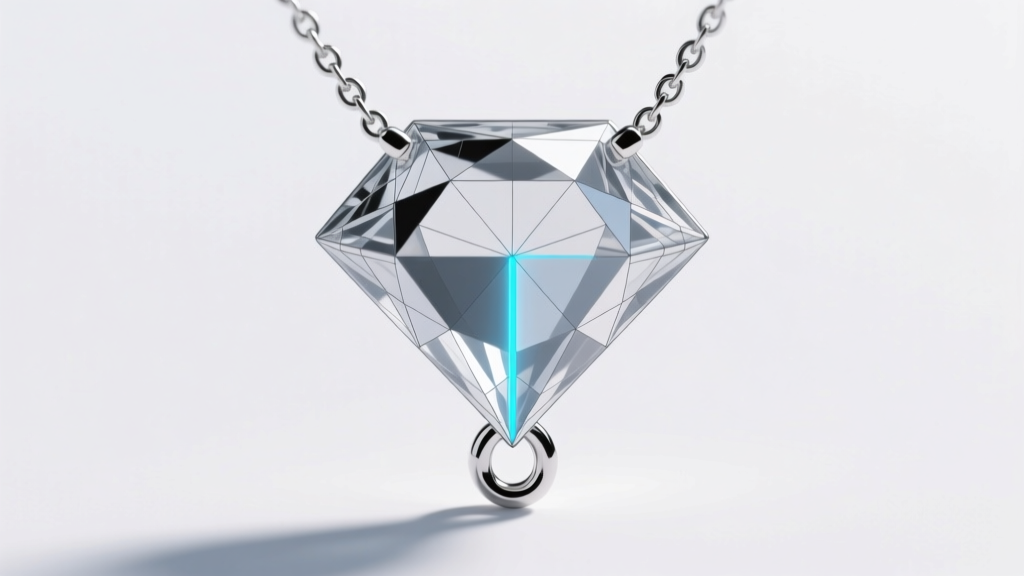
Preventing the Flip Effect
To solve this, high-end jewelry engineers utilize two primary countermeasures:
- Integrated Hidden Bails: Instead of a loop at the top point, a horizontal tube or "drop-bail" is integrated into the upper third of the pendant's backplate. This shifts the suspension point closer to the actual center of gravity, allowing the pendant to lay perfectly flat against the sternum.
- Vertex Counterweighting: If a top-loop design is aesthetically required, the bottom vertex is deliberately cast with a thicker cross-section, or a small, dense melee diamond is flush-set into the bottom point. This lowers the center of mass, stabilizing the pendant and preventing the flip.
"A geometric pendant is only as good as its physics. If you don't engineer the bail to respect the center of gravity, the wearer will spend their entire day flipping the necklace back around. It's the hallmark of amateur design." — Senior CAD Technician, Jewel Style Radar Engineering Desk
Metallurgical Hardness: 14K vs 18K Gold for Sharp Edges
The choice of precious metal alloy drastically affects the longevity of a diamond shaped necklace's sharp edges. Pure 24k gold is far too soft for geometric jewelry; the sharp points would blunt and dent within weeks of wear. Therefore, alloying is essential.
18k gold (75% pure gold) offers a rich, warm color but sits lower on the Vickers hardness scale (approximately 110-130 HV). While suitable for the main body of the pendant, the acute vertices of an 18k rhombus are prone to micro-bending if they catch on heavy clothing. Conversely, 14k gold (58.5% pure gold) contains a higher percentage of strengthening alloys like copper, silver, and zinc. This elevates its Vickers hardness to roughly 140-160 HV. For a diamond shaped necklace characterized by razor-sharp, elongated points, 14k gold or platinum (which work-hardens significantly during polishing) are the superior metallurgical choices to maintain the crispness of the geometry over decades of wear.
Chain Pairing and Visual Weight
The chain you select for a geometric pendant dictates the overall visual weight and kinetic movement of the piece. The rigid, straight lines of a diamond shape require careful chain pairing to avoid visual dissonance.
- Box Chains: The square, interlocking links of a box chain mirror the geometric rigidity of the rhombus pendant. This creates a cohesive, architectural, and modern aesthetic. A 1.5mm to 2.0mm box chain provides enough tensile strength to support heavy solid-gold pendants without stretching.
- Cable Chains: The oval links of a standard cable chain introduce organic curves that soften the harsh angles of the diamond shape. This is ideal for vintage-inspired or romantic interpretations of the geometric motif.
- Snake Chains: While visually sleek, snake chains are notoriously prone to kinking and lack the structural rigidity to support heavy geometric pendants. They should be avoided for top-heavy rhombus designs unless the pendant is exceptionally lightweight (under 3 grams).
Ultimately, mastering the diamond shaped necklace requires looking past the surface aesthetics and respecting the underlying physics, metallurgy, and lapidary science that keep the piece beautiful, durable, and structurally sound for a lifetime.


