Bead Chain Necklace Guide: Gauge Sizes, Link Types, and Metallurgy
Explore the engineering of the bead chain necklace. Discover technical specs, gauge sizes, link mechanics, and metallurgy for lasting durability.

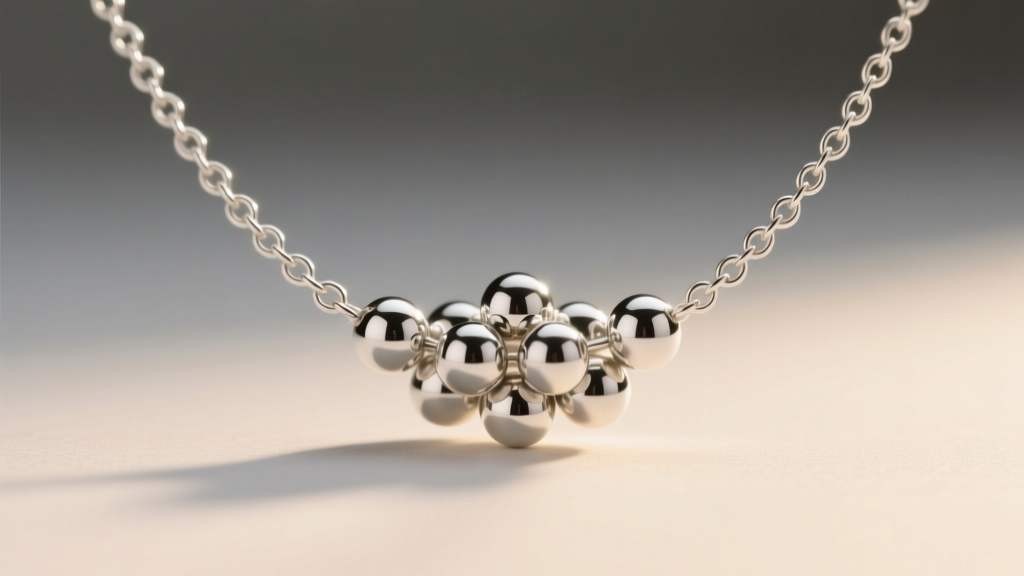
The Micro-Mechanics of the Bead Chain
Often dismissed in the fine jewelry sector as a utilitarian accessory or a relic of mid-century military dog tags, the bead chain necklace (frequently referred to as a ball chain) is actually a marvel of micro-mechanical engineering. Unlike traditional cable or curb chains that rely on interlocking closed loops, the bead chain operates on a ball-and-socket articulation principle. Understanding the structural integrity, gauge tolerances, and metallurgical constraints of a bead chain necklace is essential for jewelers, designers, and informed collectors who demand both fluid drape and long-term durability.
At its core, the bead chain consists of two primary components: the spherical bead and the connecting link. The link is typically shaped like a miniature dumbbell or a flared cylinder. The ends of this link are inserted into the hollow cavities of adjacent beads and mechanically secured. This articulation allows for a 360-degree rotational range of motion, giving the bead chain its signature fluid, fabric-like drape that resists tangling far better than traditional interlocking link chains.
Manufacturing Tolerances: Peening and Articulation
The quality of a bead chain necklace is dictated by the precision of its assembly. High-end chains are manufactured using CNC-machined components where the connecting wire is cut, formed, and then inserted into the bead. The critical step is the 'peening' or flaring process. The tips of the dumbbell link are mechanically deformed inside the hollow sphere to create a head larger than the bead's exit hole.
If a chain is under-peened, the link head will eventually slip through the bead hole under tensile stress, causing catastrophic chain failure. Conversely, if the link is over-peened, it restricts the rotational articulation, leading to a stiff chain that is prone to bending and snapping at the neck of the wire link. According to manufacturing standards cited by major jewelry suppliers like Rio Grande, the tolerance variance between the bead hole diameter and the peened link head must be kept within 0.05 millimeters to ensure optimal fluidity without compromising tensile yield.
Gauge, Diameter, and Tensile Yield Data
Selecting the correct bead chain necklace requires balancing the visual weight of the sphere with the tensile strength of the connecting wire gauge. The wire gauge dictates the maximum load the chain can bear before the connecting link stretches or snaps. Below is a technical breakdown of standard bead chain specifications and their corresponding structural limits.
| Ball Diameter | Wire Gauge (Link) | Tensile Limit (Approx.) | Best Application |
|---|---|---|---|
| 1.2mm | 26 Gauge | 1.5 lbs (0.68 kg) | Ultra-fine gemstone pendants, layering |
| 1.5mm | 24 Gauge | 3.0 lbs (1.36 kg) | Lightweight everyday wear, small charms |
| 2.4mm | 20 Gauge | 8.5 lbs (3.85 kg) | Standard pendants, medium-weight lockets |
| 3.0mm | 18 Gauge | 14.0 lbs (6.35 kg) | Statement pieces, heavy gemstone settings |
| 4.5mm | 14 Gauge | 25.0+ lbs (11.3+ kg) | Industrial aesthetics, heavy menswear |
Note: Tensile limits assume solid beads and properly peened links. Hollow beads significantly reduce the overall structural integrity of the chain, regardless of wire gauge.

Metallurgical Constraints and Alloy Selection
The choice of metal profoundly impacts the lifespan of a bead chain necklace. The friction between the interior of the bead and the connecting link creates a continuous wear environment. According to metallurgical data from the Gemological Institute of America (GIA), the Vickers hardness (HV) of the chosen alloy dictates how quickly the link will degrade from internal friction.
925 Sterling Silver vs. Argentium
Standard 925 sterling silver (HV ~65) is relatively soft. In a bead chain, the constant rotation can cause work-hardening at the neck of the dumbbell link, eventually leading to brittle fracture. Furthermore, sterling silver is prone to tarnish, and the interior of the hollow beads is nearly impossible to polish, meaning tarnish can accumulate and increase internal friction. Argentium silver, alloyed with germanium, offers superior tarnish resistance and a slightly higher hardness, making it a technically superior choice for bead chain applications.
14k Gold vs. 18k Gold
While 18k gold is prized for its rich color and purity, it is too soft for the mechanical stress of a bead chain link. 14k gold, containing a higher percentage of copper, zinc, and silver alloys, exhibits a higher tensile strength and better resistance to the abrasive wear of the bead-and-socket joint. For bead chains, 14k gold is the industry standard for ensuring the links do not stretch over time.
316L Surgical Stainless Steel
For maximum durability, 316L stainless steel is unmatched. With a high tensile strength and excellent corrosion resistance, steel bead chains will not stretch or snap under normal wear conditions. However, steel is highly rigid. A steel bead chain lacks the buttery drape of precious metals and can feel stiff against the skin, particularly in larger gauges.
Diamond-Cut vs. Smooth Finishes
Aesthetic finishes also play a role in structural integrity. 'Diamond-cut' bead chains feature faceted surfaces created by CNC lathes that slice microscopic planes into the metal spheres. While this dramatically increases light return and brilliance, the cutting process removes material from the bead. On hollow beads, diamond-cutting can weaken the outer shell, making them more susceptible to crushing. Solid beads can withstand diamond-cutting without structural compromise, making them the required choice for high-end faceted bead chains.
Structural Failure Modes in Bead Chains
Despite their resistance to tangling, bead chain necklaces are susceptible to specific failure modes that buyers and jewelers must understand:
- Link Neck Fatigue: The thinnest point of the chain is the 'neck' of the dumbbell link where it exits the bead. Repeated bending at extreme angles causes metal fatigue, leading to a clean snap.
- Bead Crushing: Hollow beads are highly vulnerable to compressive forces. If a heavy pendant is attached to a hollow bead chain, the downward force can deform the top bead, trapping the link and destroying the chain's articulation.
- Internal Abrasion: Over years of wear, the interior hole of the bead can act as a file against the connecting link. If the chain is not occasionally lubricated or cleaned, the link will eventually thin and fail.
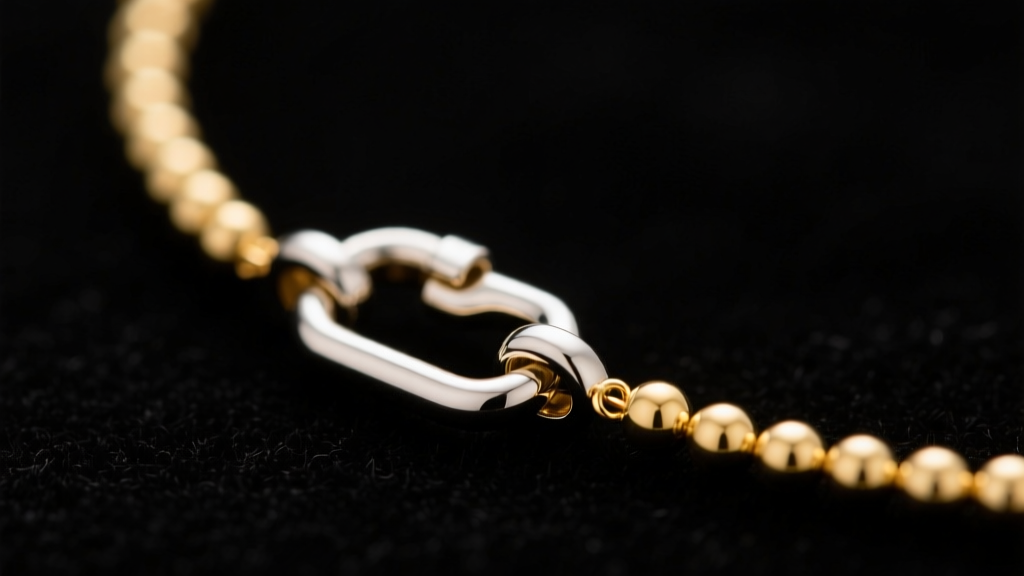
Clasp Engineering: The Tolerance Problem
The clasp is historically the weakest point of any necklace, but the bead chain presents a unique engineering challenge. Traditional lobster clasps require a soldered jump ring to attach to the chain. This jump ring disrupts the continuous, uniform flow of the beads and creates a localized stress point. Furthermore, standard jump rings can easily be pried open by the specific rotational torque that bead chains generate.
The technical solution is the 'bead clasp' (or tube clasp). This mechanism consists of a hollow cylinder designed to mimic the exact diameter of the chain's beads. The end link of the chain is inserted into the clasp and secured via an internal friction-fit spring or a precision threading mechanism. For a bead clasp to function correctly, the manufacturing tolerances must be exact; a 2.4mm clasp will not securely hold a 2.3mm chain, leading to accidental unfastening. When sourcing bead chains, always verify that the clasp mechanism is specifically calibrated to the chain's exact millimeter diameter, a detail frequently highlighted in technical reviews by JCK.
Expert Maintenance and Storage Protocols
To maximize the lifespan of a bead chain necklace, proper maintenance is required. Unlike cable chains, bead chains should never be pulled through a polishing cloth with excessive force, as this can bend the exposed wire links. Instead, they should be cleaned using an ultrasonic cleaner (for solid steel or gold chains) or a mild chemical silver dip (for sterling silver), followed by a thorough rinse and air drying.
Expert Storage Tip: Never store a bead chain necklace in a tightly coiled bundle. While they resist tangling, tight coiling forces the wire links to rest at their maximum articulation angle for prolonged periods, accelerating work-hardening and metal fatigue. Always store bead chains hanging vertically or laid out in a gentle, sweeping curve.
By understanding the precise gauge requirements, metallurgical properties, and mechanical tolerances of the bead chain necklace, jewelers and consumers can select pieces that offer both the iconic, fluid drape the style is known for, and the structural longevity required for fine jewelry.


