How to Clean a Real Heart Necklace: Expert Care Guide
Learn how to safely clean, polish, and store your real heart necklace. Expert tips for gold, silver, and gemstone heart pendants to keep them shining.

The Anatomy of a Heart Pendant: Why It Needs Special Care
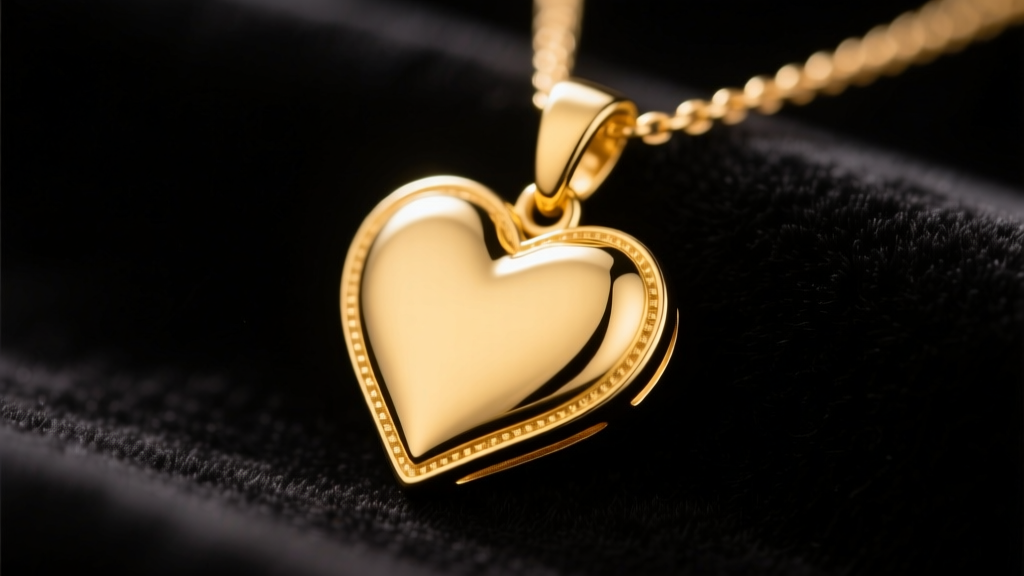
A real heart necklace is more than just a sentimental keepsake; it is a complex piece of micro-engineering. Unlike simple geometric pendants, the classic heart shape features a deep central cleft, curved outer lobes, and often intricate milgrain or pavé detailing. These design elements create microscopic crevices where sebum, cosmetic residues, and environmental dust accumulate. Over time, this buildup not only dulls the metal's luster but can also degrade the structural integrity of the bail (the loop connecting the pendant to the chain) and loosen gemstone prongs.
Furthermore, the chains accompanying heart pendants are typically delicate—ranging from 0.8mm to 1.2mm cable or box chains. These fine links are highly susceptible to kinking and tension damage if handled roughly during cleaning. To maintain the pristine condition of your jewelry, you must adopt a material-specific approach that addresses both the pendant's geometry and the chain's tensile limits.
Material-Specific Cleaning Protocols
The metallurgical composition of your necklace dictates the chemical agents and mechanical actions it can safely withstand. Using the wrong cleaner can result in irreversible surface etching or gemstone fracturing.
Solid Gold (14k and 18k)
Gold alloys are mixed with metals like copper, silver, and zinc to increase durability. 14k gold (58.5% pure gold) is highly resistant to tarnish and scratching, making it ideal for daily wear. 18k gold (75% pure gold) offers a richer yellow hue but is softer and more prone to micro-abrasions. For both, a pH-neutral solution of warm distilled water and a few drops of mild dish soap (such as Dawn) is the gold standard. Avoid any cleaners containing chlorine, as chlorine can cause 'stress corrosion cracking' in the alloyed metals, leading to sudden chain or prong failure.
Sterling Silver (925)
Sterling silver contains 92.5% silver and 7.5% copper. The copper reacts with sulfur and moisture in the air to form silver sulfide, the black tarnish commonly seen on unworn silver heart necklaces. To remove light tarnish, use a specialized micro-abrasive silver polishing cloth (like a Sunshine cloth). For heavier oxidation, a chemical silver dip can be used, but it must be thoroughly rinsed. Never use the popular 'baking soda and aluminum foil' electrolysis method on oxidized silver heart pendants or those set with porous gems, as it will strip intentional antiquing and damage the stones.
Gemstone-Set Heart Pendants
If your real heart necklace features diamonds or sapphires (Mohs hardness 9-10), they can withstand gentle scrubbing and ultrasonic cleaning. However, diamonds are hydrophobic and naturally attract oils, requiring regular degreasing. Conversely, if your heart pendant is set with pearls, opals, emeralds, or turquoise, you must strictly avoid soaking, ultrasonic frequencies, and steam. These stones are porous or heavily included; sudden temperature changes or high-frequency vibrations (typically 40 kHz in jewelry ultrasonics) can cause internal fractures or dissolve the epoxy used in their settings.
Step-by-Step Deep Cleaning Routine
For a standard solid gold or diamond-set heart necklace, follow this professional-grade cleaning protocol to restore its original brilliance without risking damage to the delicate chain.
- Preparation: Fill a small glass bowl with warm (not hot) distilled water. Add three drops of pH-neutral, ammonia-free dish soap. Avoid using tap water if you live in an area with hard water, as mineral deposits can leave a cloudy film on the metal.
- Soaking: Submerge the necklace for 10 to 15 minutes. This allows the surfactants to break down the lipid bonds of skin oils trapped in the heart pendant's cleft and the chain links.
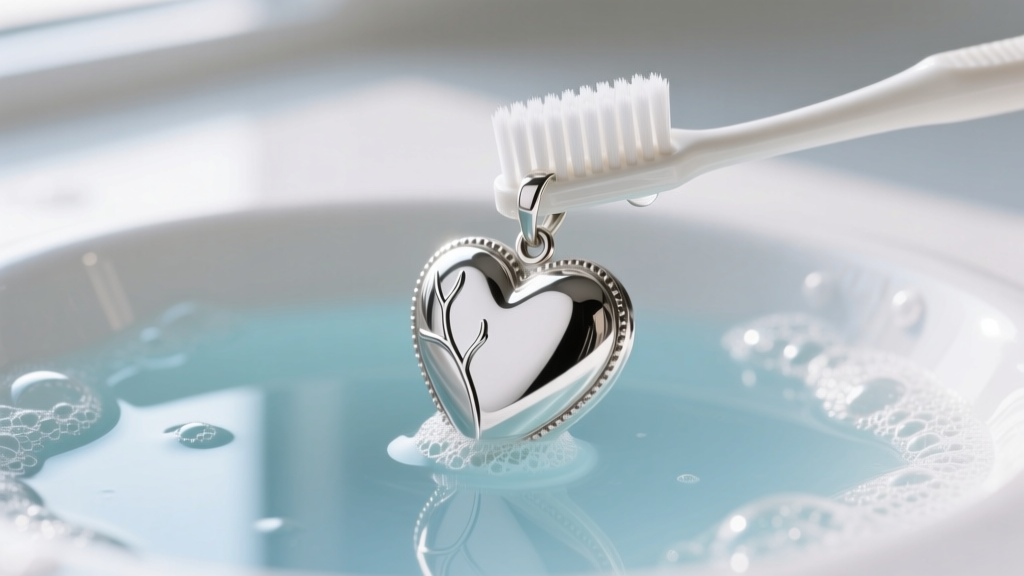
- Agitation: Using an extra-soft baby toothbrush or a dedicated jewelry brush with ultra-fine bristles, gently sweep the cleft of the heart, the back of the setting (the gallery), and the bail. Brush the chain by laying it flat on your palm and brushing in the direction of the links to prevent snagging.
- Rinsing: Rinse the piece under a gentle stream of lukewarm distilled water. Ensure the drain is securely plugged or use a mesh strainer to prevent accidental loss.
- Drying: Pat dry with a lint-free microfiber cloth. Use a hairdryer on the 'cool' setting to blow water out of the tiny crevices and chain links, preventing water spots.
Chain Maintenance and Clasp Care
The chain is often the weakest point of a real heart necklace. Delicate box chains and cable chains easily develop kinks if stored haphazardly or pulled through hair. If a link kinks, do not forcefully bend it back, as this will work-harden the metal and cause it to snap. Instead, use two pairs of smooth-jawed chain-nose pliers to gently manipulate the link back into alignment.
Additionally, pay attention to the clasp. Springring clasps contain a tiny internal steel spring that can rust if exposed to moisture, while lobster clasps rely on a small tension lever. Periodically apply a microscopic drop of synthetic watch oil to the clasp mechanism to ensure smooth operation and prevent internal corrosion.
Common Maintenance Mistakes to Avoid
Well-intentioned cleaning efforts often result in severe damage. Refer to the table below to ensure you are not compromising your jewelry's integrity.
| Common Mistake | Failure Mode / Consequence | Correct Professional Action |
|---|---|---|
| Using toothpaste for polishing | Hydrated silica in toothpaste is harder than gold and silver, causing deep micro-scratches and a dull, matte finish over time. | Use a dedicated, non-abrasive jewelry polishing cloth impregnated with jeweler's rouge. |
| Boiling water for sterilization | Thermal shock can shatter temperature-sensitive gems (like opals) and melt the solder joints on delicate chain links. | Use warm water (approx. 100°F / 38°C) with mild surfactants. |
| Sleeping in the necklace | Body weight creates lateral tension, stretching the chain links and bending the pendant's bail or prongs. | Always remove the necklace before sleeping and store it flat or hanging. |
| Exposing to aerosol hairspray | Polymers and alcohols in hairspray create a hardened, cloudy resin film on diamonds and gold that is difficult to remove. | Put your necklace on only after all cosmetics, perfumes, and hairsprays have fully dried. |
"The most common reason a heart pendant loses its center stone isn't a manufacturing defect; it's prong wear caused by years of friction against clothing and improper cleaning that loosens the metal's grip. An annual prong check is non-negotiable for pavé or solitaire heart designs." — Master Bench Jeweler Insight
Proper Storage and Long-Term Preservation
How you store your real heart necklace is just as critical as how you clean it. Sterling silver requires an environment with low humidity and minimal sulfur exposure. Store silver pieces in airtight ziplock bags with 3M anti-tarnish strips, which absorb airborne sulfur compounds before they can react with the copper alloy.
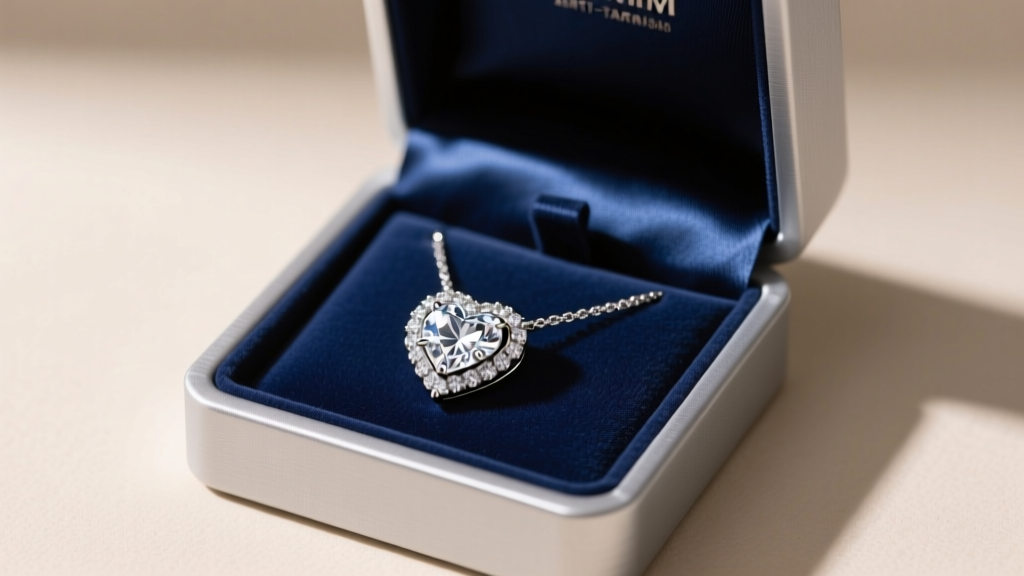
For gold and gemstone pieces, utilize a jewelry box with individual, silk-lined compartments. Never toss multiple necklaces into a single drawer; the diamond from one pendant can easily scratch the gold surface of another (diamond is a 10 on the Mohs scale, while 14k gold is roughly a 3.5). Hanging storage is highly recommended for fine chains to eliminate the risk of tangling and knotting, which often leads to chain stretch and breakage when attempting to untangle them.
When to Seek Professional Jewelry Services
While home maintenance is sufficient for routine cleaning, certain scenarios require the expertise of a professional bench jeweler. If your sterling silver heart necklace features a rhodium plating (common for white gold and some silver pieces to enhance brightness and prevent tarnish), home polishing will eventually wear this microscopic layer away. Professional replating typically costs between $35 and $60 and restores the piece to a factory-new mirror finish.
Furthermore, if you notice the bail rubbing thin against the chain, or if a prong on a gemstone-set heart pendant feels snagged on fabric, cease wearing the piece immediately. A jeweler can perform a laser weld to rebuild worn metal without applying the damaging heat of a traditional torch, ensuring your sentimental piece survives for generations. For authoritative guidelines on gemstone and metal care, always refer to resources like the Gemological Institute of America (GIA) and the Jewelers of America.


