How to Clean and Restore a Delicate Silver Filigree Necklace
Learn how to safely clean, restore, and store your delicate silver filigree necklace with our expert step-by-step guide to preserving intricate wirework.

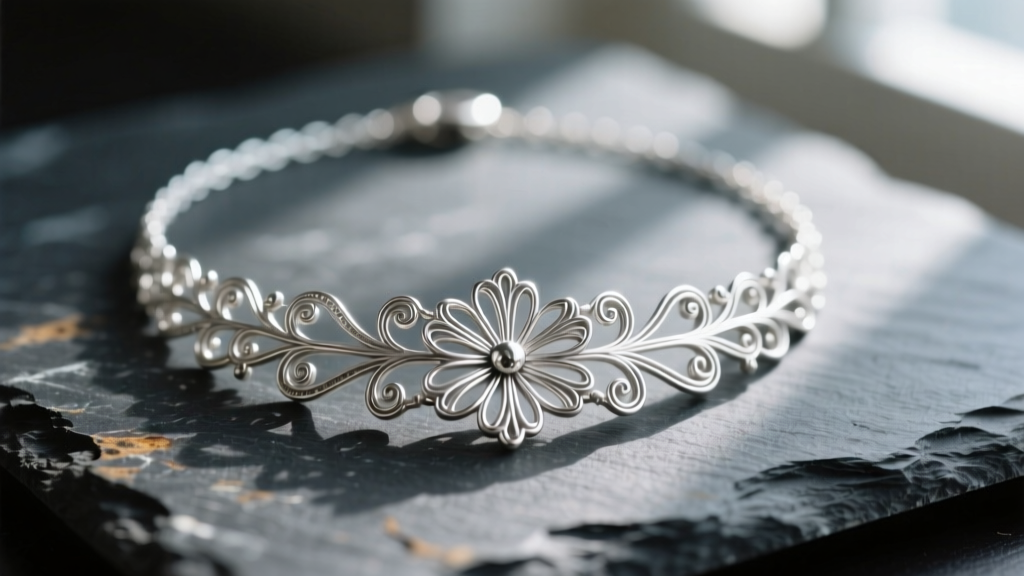
Filigree is one of the most demanding and beautiful techniques in jewelry making, involving the careful soldering of fine metal threads into intricate, lace-like patterns. When crafted in sterling silver, these pieces offer a breathtaking vintage aesthetic. However, the very nature of a silver filigree necklace—with its dense network of tiny crevices, delicate 24-to-28-gauge wires, and complex solder joints—makes it highly susceptible to trapped dirt, accelerated tarnishing, and structural damage during cleaning.
Standard silver cleaning methods, such as harsh chemical dips or aggressive polishing, can easily bend fragile wires, strip intentional oxidation, or shatter antique solder points. In this comprehensive guide, we break down the exact metallurgical science of silver tarnish and provide a professional, step-by-step framework for safely restoring your filigree jewelry to its original brilliance without compromising its structural integrity.
The Anatomy of Silver Filigree and Tarnish Science
Before applying any cleaning solution, it is critical to understand what you are working with. Authentic filigree necklaces are typically crafted from 925 sterling silver, an alloy consisting of 92.5% pure silver and 7.5% copper. Pure silver is highly resistant to tarnish, but the copper added for structural hardness is highly reactive.
When copper is exposed to sulfur compounds in the atmosphere (often found in wool, certain foods, and urban pollution), it forms silver sulfide (Ag2S), which manifests as the yellow, brown, or black film we call tarnish. In a filigree piece, the massive surface-area-to-volume ratio of the thin wires means tarnish accumulates much faster than on a solid silver pendant. Furthermore, many vintage and artisan filigree pieces feature intentional oxidation—where the jeweler applies liver of sulfur to darken the recessed areas, creating contrast that makes the raised wirework pop. Aggressive cleaning will strip this patina, leaving the piece looking flat and washed out.
Essential Tools and Materials
Do not use generic household cleaners. To safely restore a silver filigree necklace, assemble the following professional-grade tools:
| Tool / Material | Purpose | Recommended Specification |
|---|---|---|
| Mild Surfactant | Lifting oils and loose debris | pH-neutral dish soap (e.g., Dawn Free & Clear) |
| Agitation Brush | Reaching deep wire crevices | Extra-soft baby toothbrush (0.1mm bristles) |
| Polishing Agent | Removing surface silver sulfide | 0.05-micron jeweler's rouge or Goddard's Silver Foam |
| Detailing Swabs | Targeted polishing on flat wire edges | Wooden skewers with tightly wound cotton tips |
| Rinsing Agent | Preventing water spots | Distilled water (never tap water) |
| Drying Cloth | Moisture removal without snagging | Lint-free microfiber or uncompressed cotton |
Step-by-Step Restoration Guide
Step 1: The Structural Assessment
Before introducing moisture, inspect the necklace under a 10x jeweler's loupe. Look for micro-fractures in the solder joints, particularly around the clasp and the bail (the loop connecting the pendant to the chain). Filigree wires are often soldered using low-temperature easy solder. If you spot any loose wires or lifted joints, stop immediately and take the piece to a bench jeweler. Submerging a compromised piece can cause dirt to become permanently trapped inside hollow solder seams.
Step 2: The Gentle Wash
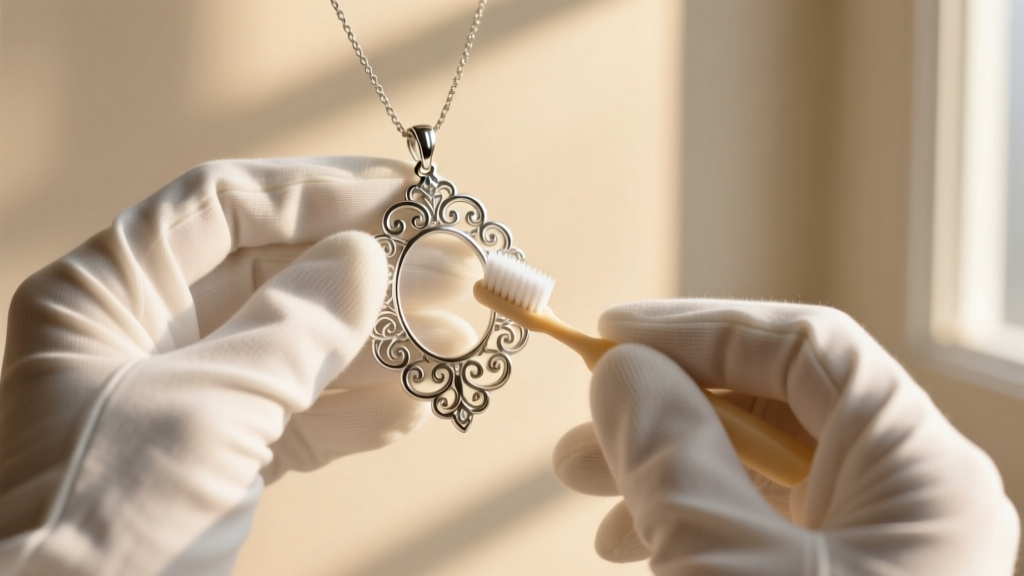
Fill a glass bowl with warm (not hot) distilled water and add three drops of pH-neutral surfactant. Submerge the silver filigree necklace for exactly three to five minutes. This softens sebum, cosmetic residue, and environmental dust. Using your extra-soft baby toothbrush, gently sweep along the grain of the wirework. Never scrub in circular motions, as this can catch and bend 26-gauge decorative curls. Rinse thoroughly under a gentle stream of distilled water.
Step 3: Targeted Tarnish Removal
If the piece still shows black silver sulfide after washing, mechanical removal is required. Apply a pea-sized amount of Goddard's Silver Polish Foam to a damp microfiber cloth. Gently dab the foam onto the raised, high-polish areas of the filigree. Crucial: Avoid pushing the polish deep into the recessed crevices. If you need to clean the edges of the wires, wrap a tiny piece of cotton around a wooden skewer, dip it in the polish, and carefully trace the wire outlines. Rinse again with distilled water to ensure no abrasive silica residue is left behind to trap moisture.
Step 4: Controlled Drying
Moisture trapped in filigree intersections will cause rapid flash-rusting of the copper alloy. Shake the necklace gently to dislodge water droplets, then lay it flat on a dry microfiber towel. Use a hair dryer on the cool, low-air setting held at least 12 inches away to evaporate remaining moisture from the tightest wire intersections.
Critical Mistakes to Avoid
When dealing with delicate wirework, what you don't do is just as important as your cleaning technique. Avoid these common pitfalls that routinely destroy antique and modern filigree:
- The Aluminum Foil and Baking Soda Boil: While this electrochemical reaction effectively strips tarnish from solid silver chains, it is disastrous for filigree. The boiling water can weaken antique solder joints, and the resulting chemical reaction often leaves a stubborn, chalky aluminum hydroxide residue that is nearly impossible to flush out of tiny wire loops.
- Ultrasonic Cleaners: Ultrasonic tanks use high-frequency sound waves (typically 40kHz) to create microscopic cavitation bubbles. In a filigree necklace, these shockwaves will easily shatter fragile solder points and cause metal fatigue in work-hardened wires.
- Commercial Silver Dips: Liquid dips contain harsh thiourea-based acids. They strip tarnish instantly but also strip intentional patinas, leave a porous micro-surface that tarnishes twice as fast the second time, and emit toxic fumes.
- Toothpaste: Toothpaste contains hydrated silica with a Mohs hardness that easily scratches sterling silver, leaving a dull, matte finish on what should be brilliant wire edges.
Long-Term Storage and Maintenance
Because of its high surface area, a clean silver filigree necklace will begin to re-tarnish within days if exposed to ambient air. Proper storage is your primary defense. According to conservation guidelines from the Victoria and Albert Museum (V&A), silver should be stored in a low-humidity environment, ideally between 35% and 45% relative humidity.
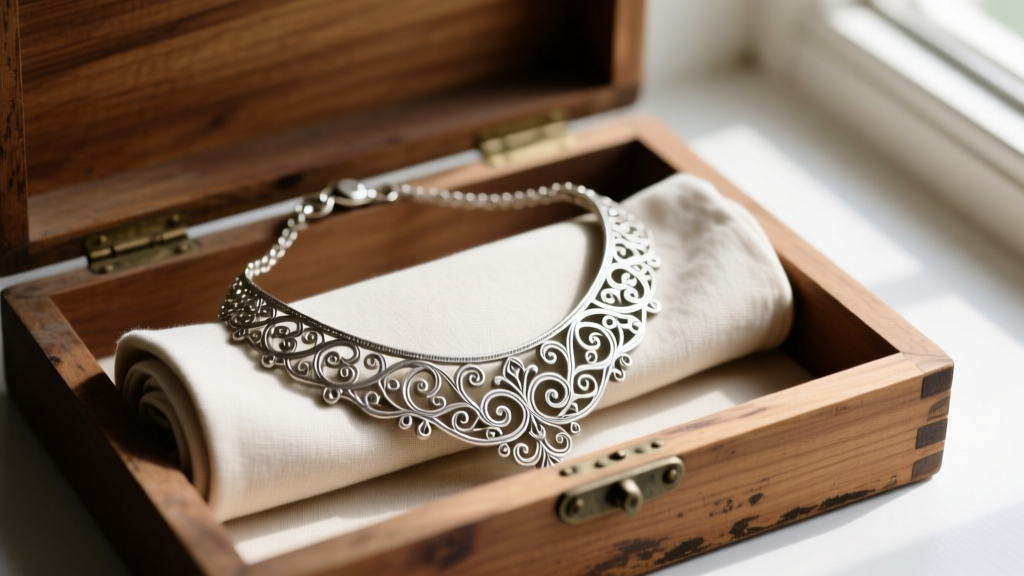
Wrap the necklace in an untreated, anti-tarnish impregnated cloth (such as Pacific Silvercloth) which actively absorbs sulfur gases. Place the wrapped piece inside an airtight polyethylene ziplock bag along with a fresh 3M anti-tarnish strip and a small silica gel desiccant packet. Never store silver in cardboard boxes or wrap it in rubber bands, as both materials off-gas sulfur compounds that will aggressively blacken your filigree.
Expert Insights on Filigree Sourcing
If you are looking to acquire a new piece, understanding the manufacturing method is key to assessing its durability. Modern filigree is often die-struck or cast via lost-wax casting, which yields a sturdier, albeit slightly less intricate, wire structure. True hand-soldered antique filigree, dating back to the Edwardian and Art Deco eras, features wires as thin as 28-gauge. The Gemological Institute of America (GIA) notes that while sterling silver is highly durable for daily wear, antique hand-soldered pieces require meticulous handling. Always inspect the clasp mechanism; a modern lobster clasp retrofitted onto an antique filigree pendant can create uneven stress distribution, eventually tearing the delicate bail wires. By understanding the metallurgy and mechanics of your jewelry, you can ensure your silver filigree necklace remains a pristine heirloom for generations.


