Light Blue Necklace Gemstones: Aquamarine vs Treated Topaz
Discover the technical differences between aquamarine and treated topaz in a light blue necklace. Learn gemstone grading, chain metallurgy, and care.

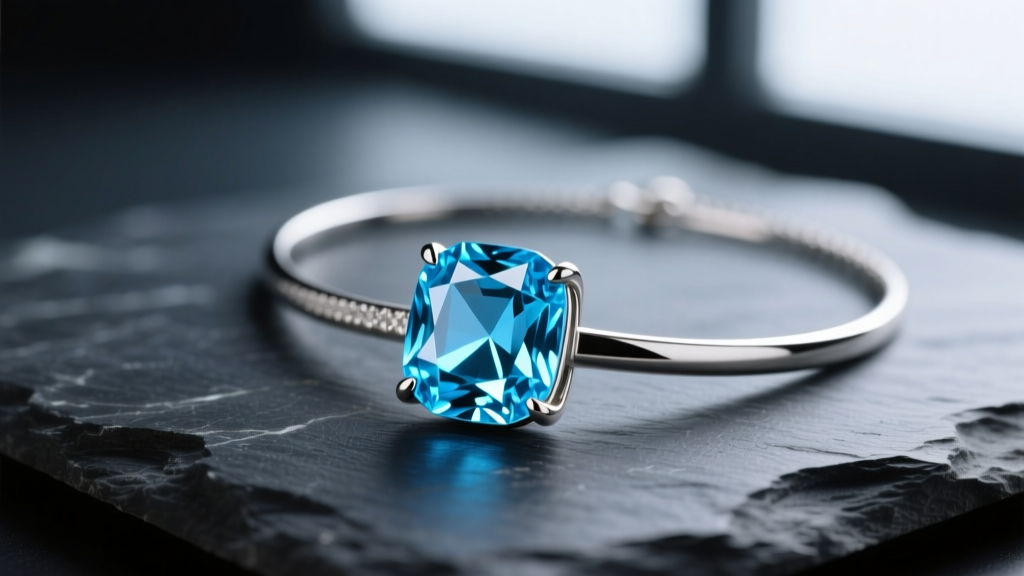
The Mineralogy of Light Blue Gemstones
When consumers and collectors search for a light blue necklace, the market is overwhelmingly dominated by two distinct silicate minerals: aquamarine and blue topaz. While they may appear identical to the untrained eye in a finished jewelry setting, their crystallographic structures, formation processes, and gemological properties are vastly different. Understanding these technical distinctions is critical for making an informed purchase, especially when evaluating pricing, durability, and long-term wearability.
Aquamarine: Beryl Family Dynamics
Aquamarine is the blue variety of beryl, a beryllium aluminum silicate with the chemical formula Be3Al2(SiO3)6. It crystallizes in the hexagonal system, typically forming elongated, six-sided prismatic crystals. The characteristic light blue to blue-green hue is caused by trace amounts of ferrous iron (Fe2+) substituting for aluminum in the crystal lattice. According to the Gemological Institute of America (GIA), natural aquamarine often exhibits a pleochroic effect, showing slightly different color intensities when viewed from different crystallographic axes. In high-end light blue necklace designs, cutters must orient the table facet parallel to the c-axis to maximize the depth of the blue color.
Blue Topaz: Irradiation and Lattice Defects
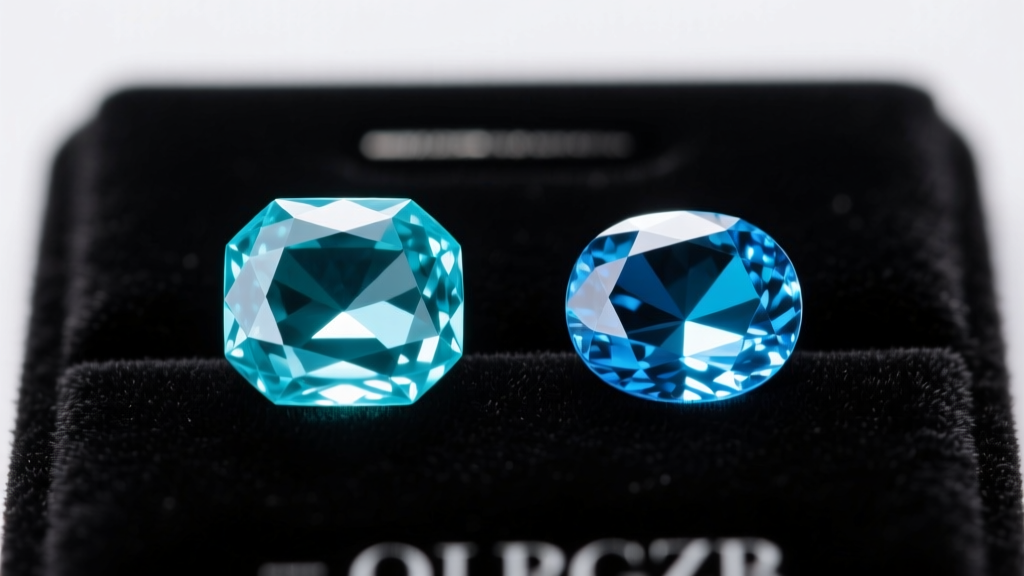
Topaz is an aluminum silicate fluoride hydroxide (Al2SiO4(F,OH)2) that crystallizes in the orthorhombic system. Naturally occurring blue topaz is exceedingly rare and typically very pale. The vibrant 'Sky Blue' or 'Swiss Blue' stones commonly seen in commercial jewelry are actually colorless topaz that have undergone artificial irradiation. By bombarding the colorless stones with high-energy electrons or gamma rays, structural defects known as 'color centers' are created in the crystal lattice. These defects alter how the stone absorbs light, resulting in a stable, permanent light blue color. The Mindat mineralogical database notes that this treatment fundamentally changes the optical properties of the stone without altering its chemical composition.
Chain Metallurgy and Clasp Mechanics
A light blue necklace is only as reliable as the chain that suspends the pendant. The metallurgy of the chain dictates its tensile strength, resistance to oxidation, and overall lifespan. In 2026, the industry standard for fine gemstone pendants remains 14k and 18k gold alloys, but their mechanical properties differ significantly.
18k white gold contains 75% pure gold, typically alloyed with palladium or nickel to achieve a white color. While it offers superior hypoallergenic properties and a richer luster, it is relatively soft. 14k white gold (58.5% pure gold) incorporates higher amounts of copper, silver, and zinc, resulting in a significantly higher tensile strength and yield point. For a pendant weighing over 5 grams, a 14k chain is technically superior for daily wear.
Chain Gauge and Tensile Capacity
Selecting the correct wire gauge is a matter of physics. The cross-sectional area of the wire determines its load-bearing capacity before plastic deformation occurs.
| Chain Gauge (mm) | Style | Max Pendant Weight | Best Use Case |
|---|---|---|---|
| 0.8mm - 1.0mm | Cable / Box | Up to 4 grams | Delicate, minimalist light blue necklaces |
| 1.2mm - 1.5mm | Wheat / Rope | Up to 12 grams | Standard gemstone pendants, daily wear |
| 1.8mm - 2.2mm | Curb / Figaro | Up to 25 grams | Heavy statement pieces, high-impact environments |
Furthermore, clasp mechanics play a vital role. Spring ring clasps rely on a tiny internal steel spring that is prone to fatigue failure and corrosion. Lobster clasps offer a larger engagement surface and a more robust internal mechanism, making them the mandatory choice for any aquamarine or topaz pendant exceeding 3 grams.
Durability, Cleavage, and Daily Wear
A common misconception in gemology is equating the Mohs scale of hardness with overall durability. Hardness measures resistance to scratching, while toughness measures resistance to breaking, chipping, or cleaving. This distinction is paramount when wearing a light blue necklace.
- Hardness: Topaz ranks at an 8 on the Mohs scale, while aquamarine ranks between 7.5 and 8. Both are highly resistant to scratching from everyday environmental dust (which contains quartz, ranking at 7).
- Cleavage: Topaz possesses perfect basal cleavage. This means that if a topaz pendant is struck at a specific angle against a hard surface, the atomic bonds along the cleavage plane will separate cleanly, potentially splitting the stone in half.
- Toughness: Aquamarine has poor to indistinct cleavage. While it is brittle and can chip upon impact, it lacks the perfect cleavage planes of topaz, making it structurally more forgiving for active lifestyles.
Because of topaz's perfect cleavage, jewelers must exercise extreme caution when setting the stone, avoiding excessive prong pressure. Owners of topaz necklaces should remove them before engaging in activities that involve repetitive vibration or impact.
Gemological Verification and Testing
Distinguishing between aquamarine and treated blue topaz without specialized equipment is nearly impossible due to their overlapping visual characteristics. However, gemologists utilize two primary non-destructive tests to verify the identity of the center stone in a light blue necklace.
Refractive Index (RI) and Birefringence
Using a standard refractometer, a gemologist can measure how much light bends as it enters the stone. Aquamarine has an RI of 1.577 to 1.583, with a birefringence (double refraction) of 0.005 to 0.007. Topaz, being denser and optically different, exhibits a higher RI of 1.609 to 1.627, with a birefringence of 0.008 to 0.010. This measurable gap in light behavior provides definitive identification.
Specific Gravity (SG)
Specific gravity measures the density of the gemstone relative to water. Topaz is significantly denser than beryl. Aquamarine has an SG of 2.68 to 2.74, whereas topaz ranges from 3.49 to 3.57. If you hold an aquamarine pendant and a topaz pendant of the exact same physical dimensions in your hands, the topaz will feel noticeably heavier—a phenomenon known as heft.
2026 Market Pricing and Supply Chain Realities
The pricing disparity between these two gemstones remains vast, driven by geological scarcity and extraction costs. In the current 2026 market, treated sky blue topaz is a high-volume commodity. Due to the abundance of colorless topaz rough from regions like Brazil and Nigeria, the irradiation process keeps wholesale prices exceptionally low, typically ranging from $8 to $25 per carat for calibrated, clean stones.
Conversely, natural aquamarine is a finite resource. High-clarity, well-saturated light blue aquamarine from premier deposits in Minas Gerais (Brazil) or the Shigar Valley (Pakistan) commands wholesale prices between $150 and $450 per carat, with exceptional specimens exceeding $800 per carat. When purchasing a light blue necklace, an unusually low price point is a strong indicator that the stone is irradiated topaz, synthetic spinel, or glass, rather than natural beryl. Always request a gemological report from a reputable laboratory, such as the GIA or AGL, to verify the species and confirm the absence of undisclosed synthetic origins.


