How to Clean and Care for Your Rose Gold Crown Necklace
Learn expert tips to clean, maintain, and store your rose gold crown necklace. Discover safe solutions to restore its copper-rich pink shine safely.

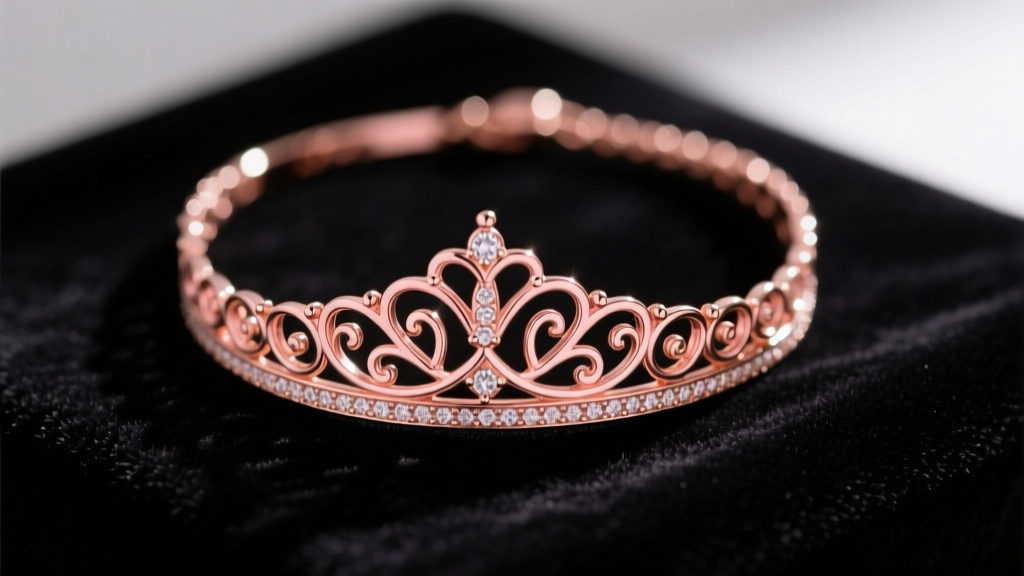
A rose gold crown necklace is more than just a piece of jewelry; it is a regal statement of personal style and sentimentality. Whether it features delicate micro-pave diamonds, a central morganite gemstone, or intricate filigree metalwork, the warm, blush-toned hue of rose gold makes it a standout staple in any 2026 jewelry collection. However, the very metallurgy that gives rose gold its signature romantic pink color also makes it uniquely susceptible to environmental damage, tarnish, and chemical reactions if not cared for properly.
Unlike yellow or white gold, rose gold relies heavily on copper alloys to achieve its distinct color. This means your cleaning and maintenance routine must be specifically tailored to protect that copper content. In this comprehensive guide, we will break down the exact science of rose gold care, provide a step-by-step cleaning protocol, and outline the storage techniques necessary to keep your crown pendant looking flawless for generations.
The Metallurgy of Rose Gold: Why Your Crown Tarnishes
To understand how to clean your necklace, you must first understand what it is made of. Pure 24k gold is entirely tarnish-resistant, but it is far too soft to hold the intricate shapes of a crown pendant or secure gemstones. Therefore, jewelers alloy it with other metals. According to the Gemological Institute of America (GIA), the pink hue in rose gold comes primarily from copper, sometimes with small additions of silver or zinc to adjust the color and durability.
- 18k Rose Gold: Contains 75% pure gold and 25% copper/silver. It has a softer, peach-pink hue and is highly resistant to tarnish, though it is slightly softer and more prone to scratching.
- 14k Rose Gold: Contains 58.3% pure gold and 41.7% copper/silver. It boasts a deeper, richer pink color and is much more durable for everyday wear, but the higher copper content makes it more vulnerable to oxidation and "copper bloom" (a dark or greenish tarnish).
When the copper in your rose gold crown necklace is exposed to oxygen, sulfur, sweat, and environmental pollutants over time, it undergoes a chemical reaction that creates a dark, dull film on the surface. This is not a defect; it is a natural characteristic of copper-rich alloys that requires gentle, regular maintenance.
The 5-Step Safe Cleaning Protocol
Forget harsh commercial jewelry dips. The safest and most effective way to restore the brilliance of your rose gold crown pendant is a gentle, pH-neutral bath. Follow this exact protocol recommended by the Jewelers of America for alloyed gold jewelry.
Step 1: Prepare the Solution
Fill a small glass or ceramic bowl with lukewarm distilled water. Avoid tap water, as the chlorine and heavy minerals can leave microscopic spots on the metal. Add three to four drops of a mild, phosphate-free, pH-neutral dish soap (such as original Dawn). Swirl gently to create suds.
Step 2: The Soak
Submerge your rose gold crown necklace in the solution. Let it soak for exactly 10 to 15 minutes. This allows the surfactants in the soap to break down body oils, lotions, and dead skin cells that accumulate in the crevices of the crown's arches and gemstone settings.
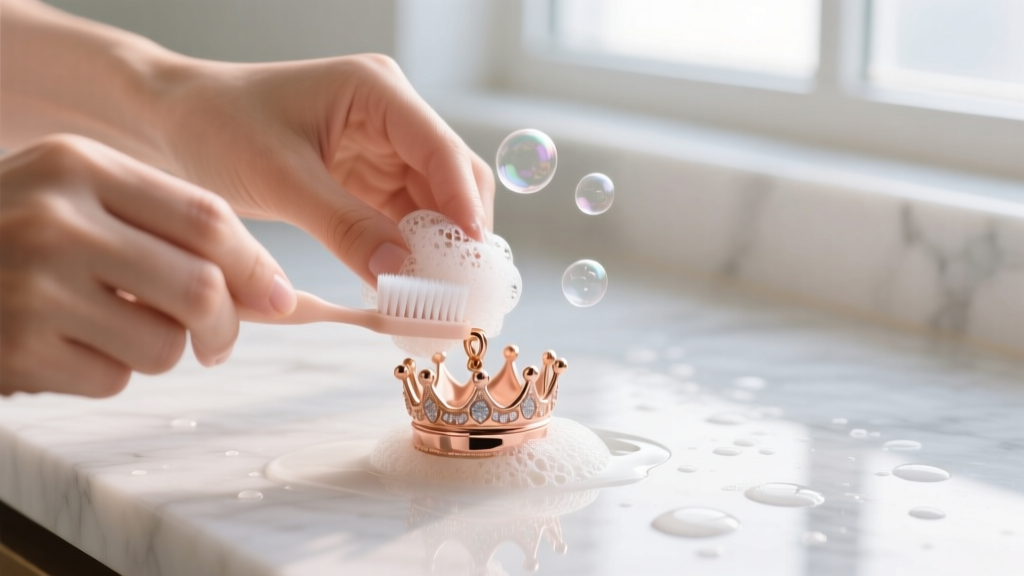
Step 3: Gentle Agitation
Remove the necklace and use an extra-soft baby toothbrush to gently sweep away loosened debris. Never use a standard adult toothbrush, as the medium or hard bristles will inflict micro-scratches on the high-polish finish of the rose gold. Pay special attention to the underside of the crown pendant and the jump ring where the chain connects, as these are prime traps for grime.
Step 4: The Rinse
Rinse the necklace thoroughly under a gentle stream of lukewarm distilled water. Ensure the drain is securely plugged or use a mesh strainer in the sink to prevent accidental loss.
Step 5: Proper Drying
Pat the necklace dry using a clean, lint-free microfiber cloth (ideally 300 GSM or higher). Do not rub aggressively. Allow the chain and pendant to air dry completely on a paper towel for an hour before storing it to ensure no moisture is trapped in the chain links.
Gemstone Considerations for Crown Pendants
Crown necklaces frequently feature accent gemstones. The cleaning method above is perfectly safe for diamonds, sapphires, and rubies. However, if your crown features porous or delicate stones, you must alter your approach:
Warning: Never submerge pearls, opals, emeralds, or turquoise in soapy water. These stones are porous or fracture-filled and can absorb liquids, leading to cracking or discoloration. Instead, use a slightly damp microfiber cloth to gently wipe the rose gold metal, avoiding direct contact with the delicate gems.
Furthermore, avoid ultrasonic cleaners for crown pendants with micro-pave settings. The high-frequency vibrations can gradually loosen the tiny prongs holding the micro-diamonds in place, leading to stone loss over time.
Chemical Hazards: What Destroys the Copper Alloy
The copper in rose gold is highly reactive to certain household and environmental chemicals. Exposure to these substances can cause irreversible stress corrosion cracking or strip the alloy of its pink hue, leaving it looking brassy or pale.
| Household Substance | Effect on Rose Gold Alloy | Risk Level |
|---|---|---|
| Chlorine (Pools/Bleach) | Causes irreversible stress corrosion cracking and weakens prongs | Severe |
| Ammonia (Glass Cleaners) | Strips the copper oxidation layer, causing a pale, brassy appearance | High |
| Sulfur (Hot Springs/Rubber) | React with copper to form black copper sulfide tarnish instantly | High |
| Hairspray & Perfume | Creates a sticky, dull film that traps dirt in crown crevices | Moderate |
| Sweat (High Acidity) | Accelerates copper oxidation, leading to dark buildup on the back | Moderate |
To protect your necklace, always adopt the "last on, first off" rule. Put your rose gold crown necklace on after your perfume, lotion, and hairspray have completely dried, and remove it immediately before showering, swimming, or exercising.
Troubleshooting Copper Bloom and Verdigris
If you have neglected your necklace and notice a dark, almost brownish or greenish tint developing in the deep grooves of the crown filigree, you are witnessing copper bloom. Do not panic, and do not reach for abrasive silver polishing cloths.
Silver polish contains harsh chemicals designed to strip silver sulfide, but when used on rose gold, it can aggressively strip the copper right out of the surface alloy, permanently altering the color of your pendant. If the standard soapy soak does not remove the dark oxidation, create a paste using equal parts baking soda and distilled water. Apply it only to the heavily tarnished crevices using a cotton swab, let it sit for two minutes, and gently wipe it away. The mild alkalinity of the baking soda neutralizes the acidic copper oxidation without scratching the surrounding gold.
Long-Term Storage and Maintenance
How you store your rose gold crown necklace when it is not being worn is just as critical as how you clean it. Leaving it exposed to the ambient air on a jewelry stand guarantees a steady supply of oxygen and humidity to the copper alloy, accelerating tarnish.
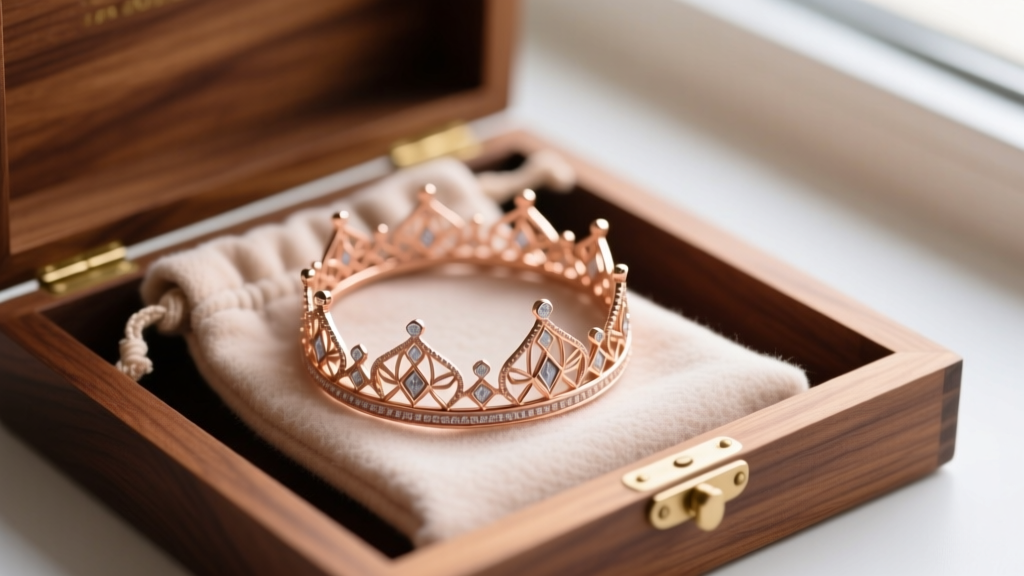
For optimal preservation, store the necklace in an individual, airtight polyethylene ziplock bag. Squeeze out as much air as possible before sealing. For an extra layer of protection, place a 3M Pacific Silvercloth anti-tarnish strip or a small packet of activated charcoal inside the bag. These materials actively absorb ambient sulfur and moisture, effectively pausing the oxidation process.
Finally, always store the chain separately from other jewelry pieces. While 14k rose gold is durable, it can still be scratched by harder gemstones like diamonds or sapphires in adjacent necklaces. By dedicating a specific, treated pouch to your crown pendant, you ensure that its regal pink luster remains as captivating as the day you first fastened it around your neck.


