Wilma Flintstone Necklace Materials: Bone, Pearl, and Resin
Discover the best materials for a Wilma Flintstone necklace. We compare bone, pearl, and resin for weight, drape, and durability in this guide.

The Anatomy of an Icon: Deconstructing the Wilma Flintstone Necklace
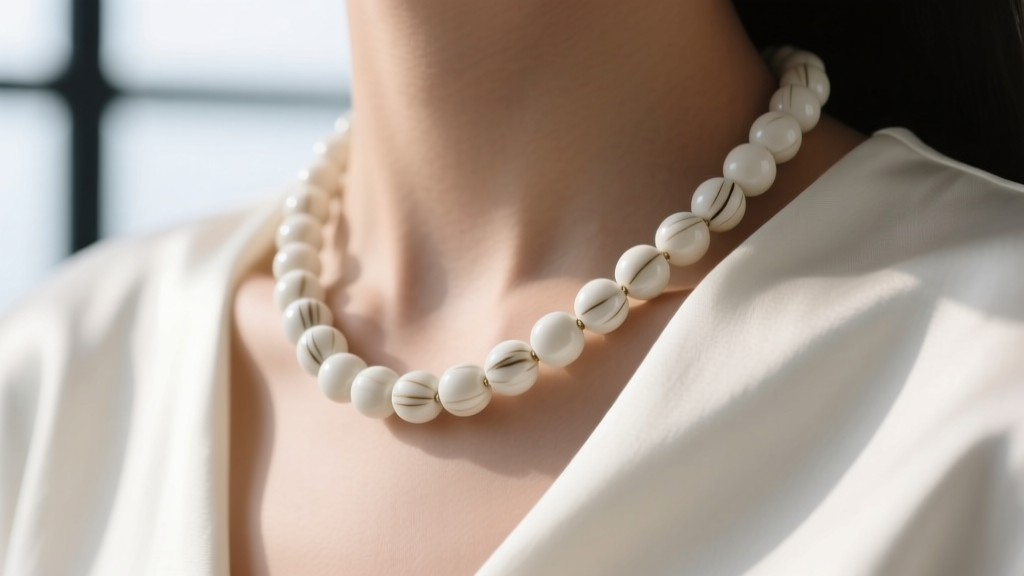
When discussing pop-culture jewelry that has transcended its animated origins to become a legitimate fashion silhouette, the Wilma Flintstone necklace stands entirely in a class of its own. Originally designed by Hanna-Barbera in the early 1960s, the iconic single strand of massive, spherical white beads was meant to evoke a prehistoric, Bedrock-era aesthetic. However, in the decades since, this striking geometric silhouette has been adopted by high-fashion runways, avant-garde streetwear enthusiasts, and dedicated cosplayers alike. But what happens when you translate a 2D cartoon prop into a 3D, wearable garment? The answer lies entirely in material science.
The standard anatomy of an authentic-feeling Wilma Flintstone necklace dictates a single strand of perfectly round beads ranging from 14mm to 20mm in diameter, typically knotted or spaced evenly, falling at a classic princess length (18 inches) or matinee length (24 inches). Because the beads are so exceptionally large, the choice of material dictates not just the visual luster, but the structural integrity, the drape against the clavicle, and the long-term wearability of the piece. In this comprehensive material comparison, we break down the gemological and synthetic properties of the three most common materials used to craft this statement piece: carved bone, cultured freshwater pearl, and cast resin.
Material Showdown: Gemological and Synthetic Properties
Genuine Bone and Horn: The Prehistoric Authentic Choice
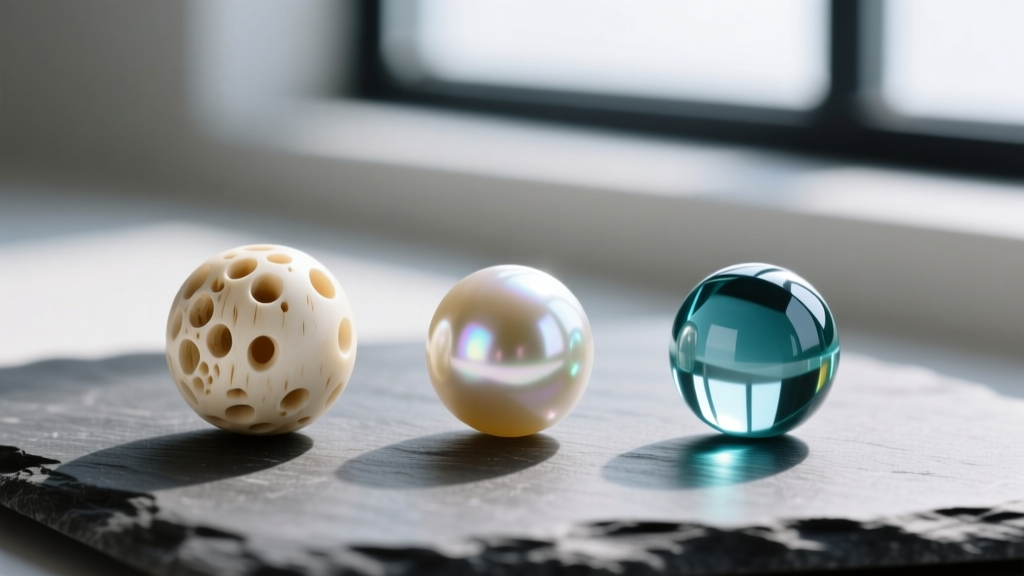
For purists seeking true Bedrock authenticity, carved animal bone (typically bovine or camel) is the most historically resonant material. Bone is a composite material consisting primarily of hydroxyapatite (a calcium phosphate mineral) and collagen fibers. This gives it a specific gravity of roughly 1.8 to 2.0, making it moderately heavy but exceptionally durable against shattering. The visual hallmark of a high-quality bone bead is its subtle, warm porosity. Unlike glass or plastic, bone absorbs light rather than purely reflecting it, giving it a soft, matte-to-satin luster that mimics the cartoon's original intent perfectly.
However, bone is highly reactive to its environment. According to the Gemological Institute of America (GIA), porous organic gems and materials require strict humidity control. A 20mm bone bead strand will weigh approximately 160 grams. Over time, the natural oils from the wearer's skin will seep into the microscopic pores of the bone, gradually shifting the color from stark white to a rich, antique ivory. To maintain a bright white Wilma Flintstone necklace made of bone, the beads must be periodically cleaned with a damp cloth and lightly buffed with food-grade mineral oil to seal the pores against environmental staining.
Cultured Freshwater Pearls: The High-End Homage
Translating the Wilma Flintstone necklace into the realm of fine jewelry requires cultured freshwater pearls. Achieving a perfectly spherical, 16mm-to-20mm freshwater pearl is an extraordinary feat of mollusk farming. Most standard freshwater pearls top out at 10mm to 12mm; anything larger requires advanced nucleation techniques, often utilizing Edison pearl cultivation methods where a single, large spherical bead nucleus is implanted into the mussel. The resulting nacre (composed of microscopic aragonite platelets) yields a breathtaking, deep-seated orient and luster that no synthetic material can replicate.
The primary drawback of a pearl Wilma Flintstone necklace is the extreme density and cost. Pearls have a specific gravity of 2.6 to 2.8. A full 18-inch strand of 18mm cultured pearls can weigh well over 250 grams, which can cause significant neck fatigue and places immense tensile stress on the stringing material. Furthermore, a strand of this caliber, featuring high-luster, blemish-free spherical pearls, commands a luxury market price often exceeding $3,000. It is an investment piece that requires meticulous care, as the aragonite structure is highly susceptible to degradation from perfumes, cosmetics, and acidic sweat.
Polyurethane Resin and Acrylic: The Modern Standard
For daily wear, editorial fashion shoots, and high-end cosplay, advanced polymers are the undisputed champions. While cheap, injection-molded acrylic beads suffer from visible seam lines and a hollow, clicking sound when they strike one another, high-grade cast polyurethane resin offers a phenomenal alternative. Resin can be formulated with microscopic titanium dioxide pigments and internal light-diffusing agents to perfectly mimic the soft, glowing translucency of polished bone or the deep luster of a pearl.
The greatest advantage of resin is its specific gravity, which hovers around 1.18 to 1.20. An 18-inch Wilma Flintstone necklace crafted from 20mm cast resin beads weighs a mere 90 grams. This featherlight profile allows the necklace to drape elegantly without pulling on the nape of the neck or warping the collar of a delicate garment. Furthermore, high-density resin is entirely impervious to moisture, sweat, and cosmetics, making it the most practical choice for frequent wear.
Comparative Data: Weight, Drape, and Durability
To truly understand how these materials behave when strung into a single, heavy strand, we must look at the hard data. The following table compares an 18-inch necklace featuring 20mm spherical beads across our three primary materials.
| Material | Specific Gravity | Avg. Strand Weight | Impact Resistance | Maintenance Level |
|---|---|---|---|---|
| Carved Bone | 1.85 | 165 grams | High (Won't shatter) | High (Requires oiling) |
| Freshwater Pearl | 2.70 | 260 grams | Low (Prone to chipping) | Extreme (Acid sensitive) |
| Cast Resin | 1.18 | 95 grams | Medium (May scratch) | Low (Wipe clean) |
The Engineering of the String: Tension and Failure Modes
The most common point of catastrophic failure in any large-bead necklace is the stringing material. A standard Wilma Flintstone necklace features beads with drill holes ranging from 1.5mm to 2.5mm. Traditional silk thread, while beautiful for small pearls, is entirely inadequate for the pendulum-like kinetic energy generated by 20mm beads swinging against the chest. The friction at the bead holes will rapidly fray and snap natural silk.
For bone and resin strands, the industry standard is a 49-strand micro-fused stainless steel beading wire with a nylon jacket, specifically in a 0.024-inch (0.60mm) diameter. According to the Fire Mountain Gems Encyclopedia, this gauge provides a tensile strength capable of supporting over 30 pounds of dead weight, easily accommodating the dynamic stress of heavy beads. For those who prefer the traditional drape of knotted thread, heavy-duty bonded nylon (Size F or G, measuring 0.40mm to 0.50mm) must be used, with overhand knots secured using a micro-dab of flexible cyanoacrylate jewelry adhesive.
Clasp Mechanics and Abrasion Protection
The clasp assembly on a Wilma Flintstone necklace requires specialized hardware. Because the beads are so large, a standard spring-ring clasp will look proportionally absurd and fail under the torque. The optimal closures are either a heavy-duty neodymium magnetic tube clasp or a solid brass toggle clasp with a minimum 15mm bar. Crucially, the transition from the stringing wire to the clasp must be protected by French wire (also known as gimp). This tiny, coiled metal spring prevents the sharp interior edge of the metal clasp from acting as a saw against the nylon or wire, effectively eliminating the most common cause of bead loss.
Styling the Bedrock Silhouette in 2026
Wearing a Wilma Flintstone necklace in a contemporary setting requires balancing its inherent theatricality with modern minimalist styling. The sheer volume of the 20mm beads acts as a powerful geometric frame for the face and collarbone. To avoid looking like you are wearing a literal costume, pair the necklace with stark, unembellished architectural clothing. A high-necked, ribbed black turtleneck provides maximum contrast, allowing the stark white spheres to pop visually. Alternatively, draping a resin or bone strand over a crisp, oversized white button-down shirt creates an avant-garde, monochromatic editorial look that honors the cartoon's mid-century modern roots while feeling entirely fresh.
Conclusion
The Wilma Flintstone necklace is far more than a nostalgic novelty; it is a masterclass in bold, geometric jewelry design. Whether you opt for the organic, porous warmth of carved bone, the breathtaking luxury of oversized cultured pearls, or the pragmatic, featherlight versatility of cast resin, understanding the material properties ensures your piece will drape beautifully and endure the test of time. By pairing the right material with heavy-duty stringing engineering and proper clasp protection, you can confidently wear this iconic prehistoric silhouette as a modern statement of avant-garde fashion.


