Frida Kahlo Self Portrait With Thorn Necklace And Hummingbird Trends
Explore how the Frida Kahlo self portrait with thorn necklace and hummingbird influences 2026 dark romantic jewelry trends, metalwork, and styling.

The Enduring Legacy of Surrealist Jewelry
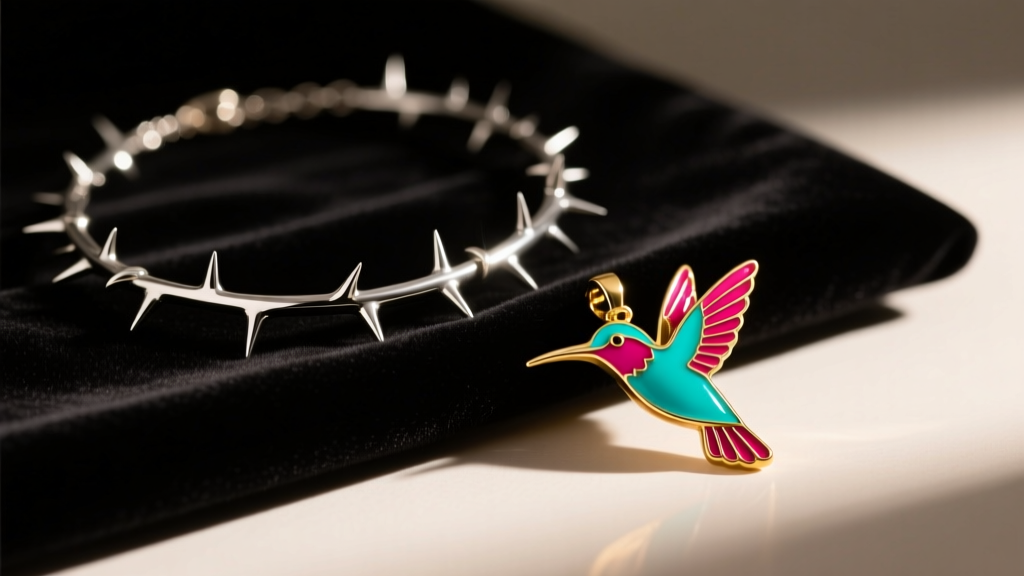
Few artworks have influenced the intersection of botanical motifs and dark romanticism quite like the iconic 1940 painting by Frida Kahlo. The Frida Kahlo self portrait with thorn necklace and hummingbird remains a masterclass in visual storytelling, using jewelry not merely as adornment, but as a profound psychological armor. Painted during the agonizing aftermath of her divorce from Diego Rivera, the piece features a tightly bound necklace of thorns that draws blood, juxtaposed with a lifeless hummingbird pendant. In 2026, the resurgence of 'Dark Academia' and 'Surrealist Botanical' fashion trends has brought this specific aesthetic back to the forefront of high jewelry and indie metalwork. Modern jewelry designers are no longer just replicating the painting; they are translating its emotional weight into wearable, structurally sound art. This analysis explores how contemporary jewelers are engineering thorn necklaces and hummingbird pendants, balancing historical reverence with modern wearability and safety.
Deconstructing the Thorn Necklace: Metalwork and Safety
Translating a painted thorn necklace into a physical garment requires a deep understanding of metallurgy and ergonomics. A literal interpretation—sharp, rigid thorns resting against the delicate skin of the jugular and clavicle—is a severe laceration hazard. Contemporary artisans solve this through precise gauge selection and specialized finishing techniques.
Structural Engineering and Gauge Specifications
The foundation of a high-quality thorn choker relies on a flexible yet resilient central wire. Jewelers typically utilize 12-gauge (2.05mm) or 10-gauge (2.59mm) wire for the main 'vine' structure. This thickness allows the necklace to be annealed and shaped to the wearer's exact neck circumference while retaining enough tensile strength to resist bending out of shape. The thorns themselves are usually cast separately or forged from 16-gauge (1.29mm) wire, then soldered onto the main vine using laser welding to prevent heat damage to the surrounding metal.
The most critical step in the manufacturing process is blunting. According to archival records at the Harry Ransom Center, which houses much of Kahlo's personal effects and art, her actual jewelry collection was eclectic but rarely hazardous. Modern thorn necklaces undergo extensive tumble polishing with ceramic cone media. This process rounds off the microscopic tips of the 16-gauge thorns, transforming them from skin-piercing hazards into smooth, tactile elements that catch the light without snagging on silk or cashmere.
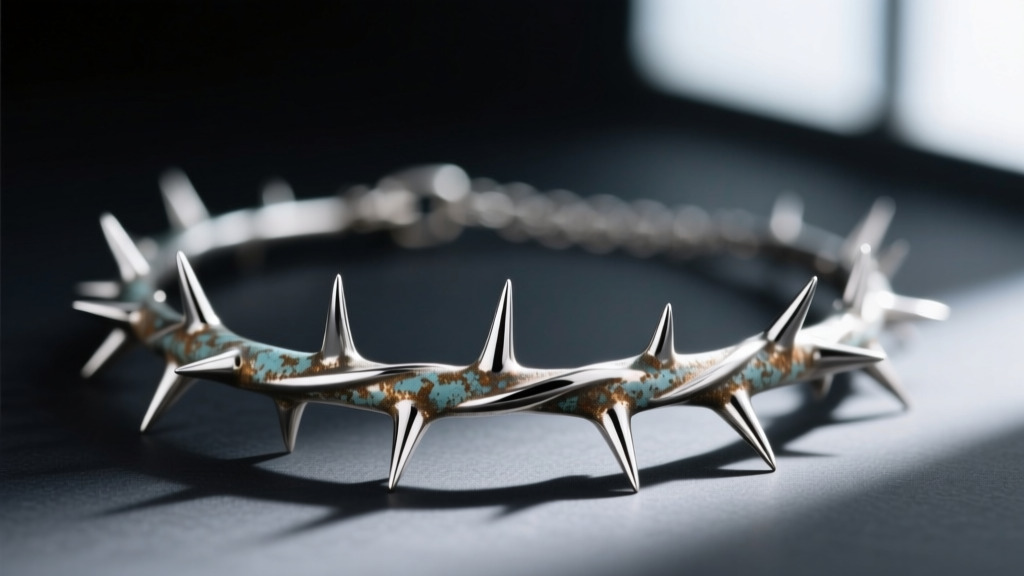
Because thorn necklaces are rigid and prone to catching on hair or environmental elements, a standard lobster clasp is a choking hazard. Artisans now integrate neodymium magnetic breakaway clasps disguised as part of the vine. These clasps are engineered to release at exactly 4 to 6 pounds of lateral tension, ensuring the necklace snaps open safely if pulled, while remaining secure during normal movement.
Material Grades and Wearability
Because a thorn necklace sits flush against the pulse points, the choice of metal is paramount for preventing contact dermatitis. Below is a comparative analysis of the most common metals used in 2026 for surrealist botanical necklaces:
| Metal Grade | Durability & Tarnish | Skin Safety | Price Range (Artisan) |
|---|---|---|---|
| Grade 5 Titanium (Ti-6Al-4V) | Extreme; zero tarnish | Hypoallergenic; ideal for sensitive skin | $250 - $450 |
| 925 Sterling Silver | Moderate; requires rhodium plating or oxidation | Generally safe; nickel-free alloys preferred | $180 - $350 |
| 14k Yellow Gold | High; resists corrosion beautifully | Excellent, though copper content can react with high acidity sweat | $800 - $1,500+ |
| Jeweler's Brass | Low; develops a heavy patina quickly | Poor; high risk of green skin reaction and zinc allergies | $60 - $120 |
The Hummingbird Pendant: Enamel and Kinetic Design
In the painting, the hummingbird hangs lifeless from the thorn vine, a stark contrast to the vibrant, chaotic energy of the surrounding foliage and the black cat arching its back in the background. In Mexican folklore, hummingbirds are often associated with luck in love and resilience. Modern jewelers have reclaimed this symbol, transforming the morbid pendant into a celebration of kinetic movement and vibrant color through advanced enameling techniques.
Plique-à-Jour and Articulated Wings
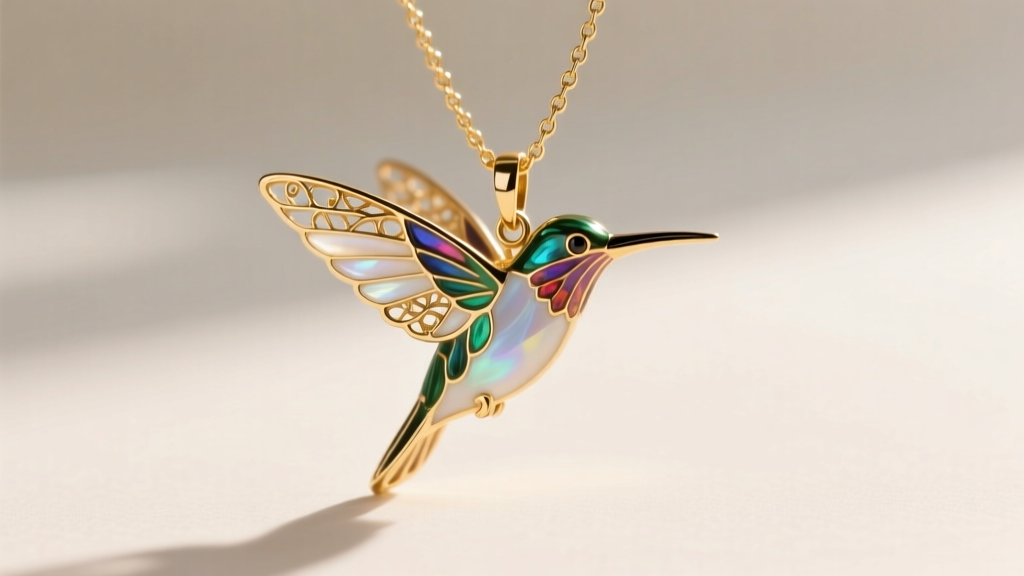
To capture the iridescent quality of a living hummingbird, master jewelers are turning to plique-à-jour enameling. As documented by The Metropolitan Museum of Art, this technique involves suspending transparent enamel in a metal framework without a backing, creating a stained-glass effect that allows light to pass through the wings. When paired with articulated hinges, the wings can flutter slightly with the wearer's movements, breathing life back into Kahlo's tragic motif.
Ethical sourcing is also a major pillar of the 2026 hummingbird pendant revival. Historically, Victorian and early 20th-century jewelry sometimes incorporated actual bird feathers or parts. Today, the Gemological Institute of America and various ethical councils strictly monitor the use of organic materials. Modern pendants utilize lab-grown sapphires and tsavorite garnets to mimic the bird's natural plumage, ensuring zero harm to wildlife while achieving superior optical brilliance.
To replicate the bird's iridescence without organic materials, jewelers utilize custom-cut sugarloaf cabochons of Ethiopian opal or Australian boulder opal. The high dome of the sugarloaf cut mimics the rounded, plump chest of the hummingbird, while the play-of-color captures the shifting greens and violets of actual feathers. The eyes are typically set with 1.5mm brilliant-cut black diamonds, secured in a flush gypsy setting to maintain a smooth, snag-free profile.
Modern Styling: Translating Canvas to Collarbone
Wearing a piece with such heavy historical and visual weight requires deliberate styling. The goal is to evoke the painting's surreal, romantic tension without appearing as though you are wearing a theatrical costume.
Neckline Pairings and Lengths
- The Square Neckline: A 15-inch thorn choker sitting just above the collarbone perfectly frames a square-neck bodice. The geometric harshness of the dress neckline contrasts beautifully with the organic, winding chaos of the silver thorns.
- Off-the-Shoulder & Bardot: These necklines expose the clavicle and shoulders, providing a wide canvas. Opt for an 18-inch collar-length thorn necklace that drapes loosely over the collarbone, allowing the hummingbird pendant to rest in the hollow of the throat.
- High Collars & Turtlenecks (Avoid): The physical structure of a thorn necklace will inevitably snag on knitwear or stiff cotton collars. Furthermore, the visual clutter of a high collar competes with the intricate metalwork of the vine.
Layering with Delicate Chains and Skin Undertones
To soften the aggressive nature of the thorn motif, contemporary stylists recommend asymmetric layering. Pair the heavy, oxidized silver thorn choker with a single, ultra-delicate 20-inch 14k gold cable chain featuring a microscopic diamond solitaire. This juxtaposition of heavy, dark romanticism with bright, minimalist luxury creates a deeply personalized, avant-garde silhouette that feels distinctly modern.
When selecting an oxidized silver thorn necklace, consider your skin's undertone. The deep, charcoal-grey patina of heavily oxidized sterling silver creates a striking, high-contrast look against fair or very deep skin tones, emphasizing the skeletal, gothic nature of the thorns. For medium or olive skin tones, a lighter 'satin' finish or a brushed white-rhodium plating prevents the metal from looking muddy, allowing the intricate wire-wrapping details to catch ambient light.
Conclusion: The Armor of the Modern Romantic
The Frida Kahlo self portrait with thorn necklace and hummingbird is far more than a historical artifact; it is a blueprint for emotional adornment. As the jewelry industry moves through 2026, the demand for pieces that tell a story of resilience, pain, and beauty continues to grow. By combining advanced metallurgical safety, ethical gemstone sourcing, and masterful enamel work, today's artisans are ensuring that Kahlo's surrealist vision remains a vital, wearable force in contemporary style. Whether you are drawn to the protective embrace of a blunted silver vine or the iridescent hope of an enameled hummingbird, these pieces offer a profound way to wear your heart—and your history—around your neck.


