How to Choose a Necklace With the Letter A: Metal Guide
Discover how to choose a necklace with the letter A based on metal properties. Compare gold, silver, and titanium for durability, allergies, and fonts.

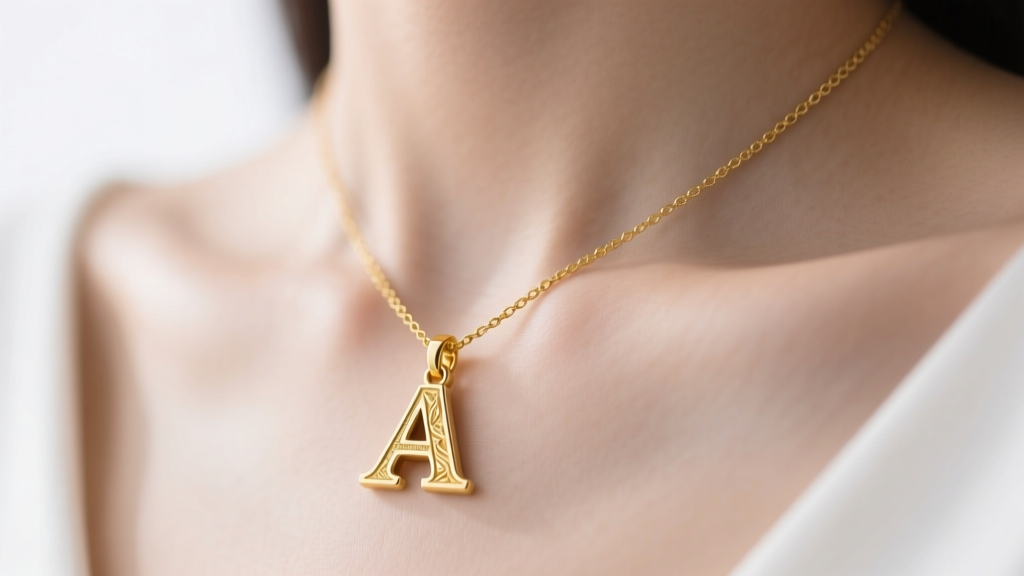
The Structural Challenge of the Letter A
Initial necklaces remain a cornerstone of personalized jewelry, and the letter 'A' is consistently a top-seller across global markets. Whether it represents a first name, a surname, or a milestone, finding the perfect piece requires more than just picking a pretty font. When you are shopping for a necklace with the letter A, you must consider the unique structural geometry of the character itself.
Unlike the letter 'O' or 'C', which feature continuous curves that distribute tension evenly, the capital 'A' features a horizontal crossbar. In delicate script fonts, the 'A' often includes tight, intricate loops at the apex and the baseline. These geometric intersections create inherent weak points. If the metal is too soft, the crossbar will bend or snap under the daily friction of clothing. If the metal is too brittle, the thin serifs at the base of the letter can chip or fracture. Understanding material properties is the only way to ensure your initial pendant survives daily wear.
Metal Showdown: Comparing Materials for Initial Pendants
The longevity of your pendant is dictated by the alloy composition and the manufacturing method (lost-wax casting vs. die-stamping). Here is how the most common jewelry metals perform when shaped into an initial.
Solid Gold (14k & 18k): The Heirloom Standard
According to the Gemological Institute of America (GIA), pure 24k gold is far too soft for daily-wear pendants, scoring low on the Vickers hardness scale. Therefore, alloying is essential. 14k gold (58.5% pure gold) is the undisputed champion for intricate letter 'A' pendants. Alloyed with copper, silver, and zinc, 14k gold achieves a Vickers hardness of approximately 125-140 HV. This tensile strength is crucial for supporting the thin crossbar of a serif 'A' without bending. 18k gold (75% pure gold) offers a richer, warmer hue but is softer (~90 HV) and more prone to scratching on high-polish edges.
Sterling Silver (925) & Rhodium Plating
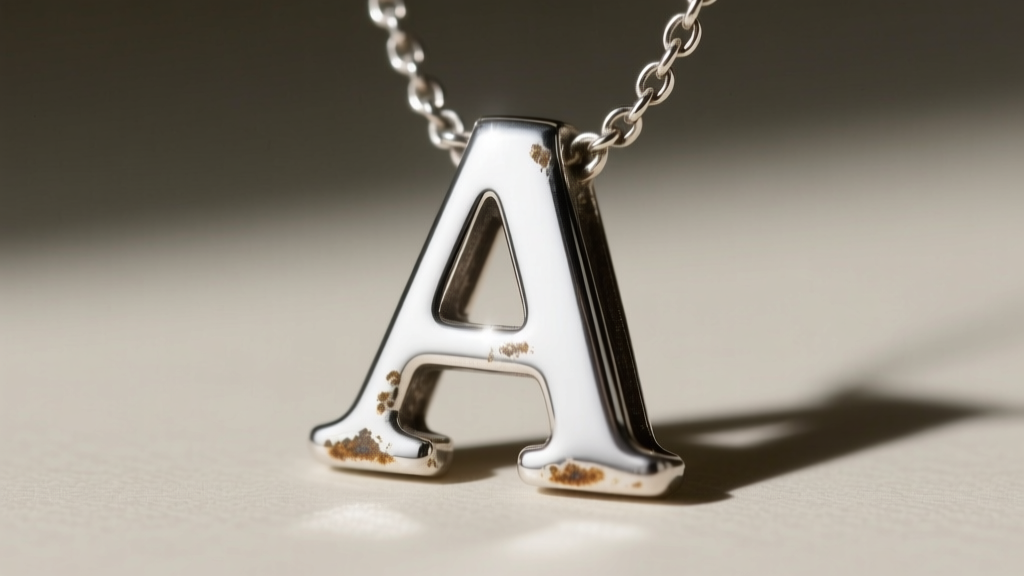
Sterling silver is composed of 92.5% pure silver and 7.5% copper. While it is an affordable and highly reflective metal, the copper content makes it highly susceptible to silver sulfide tarnish when exposed to atmospheric sulfur and skin acidity. For a necklace with the letter A, tarnish tends to accumulate in the recessed crevices of the font, which can actually enhance the legibility of the letter by providing natural contrast. However, if you prefer a perpetually bright finish, look for 925 silver that has been flash-plated with a 0.1 to 0.5-micron layer of rhodium.
Gold Vermeil vs. Standard Flash Plating
It is vital to distinguish between true vermeil and standard gold-plated brass. The Federal Trade Commission (FTC) strictly regulates jewelry marketing: for a piece to be legally sold as 'Gold Vermeil' in the United States, it must feature a sterling silver base coated with at least 2.5 microns of 10k, 14k, or 18k gold. Standard 'gold plated' jewelry often uses a brass or copper base with a microscopic 0.1-micron flash of gold. On a daily-wear initial pendant, the high-friction edges of a block 'A' will rub through flash plating within three to six months, exposing the reactive brass underneath.
Material Properties & Font Pairing Matrix
The font style of your initial dictates the minimum structural requirements of the metal. Use this decision matrix to pair your preferred aesthetic with the correct material grade.
| Font Style | Recommended Metal | Structural Rationale | Estimated Price Range |
|---|---|---|---|
| Delicate Script 'A' | 14k Solid Gold | High tensile strength prevents thin, cursive loops from snapping or warping. | $180 - $350 |
| Chunky Block 'A' | Sterling Silver or 316L Steel | Thicker metal gauge (1.5mm+) compensates for lower hardness; heavy weight feels substantial. | $45 - $120 |
| Minimalist Sans-Serif | Gold Vermeil (2.5μm) | Clean, flat lines hide wear better; easy to re-plate if the edges eventually fade. | $80 - $150 |
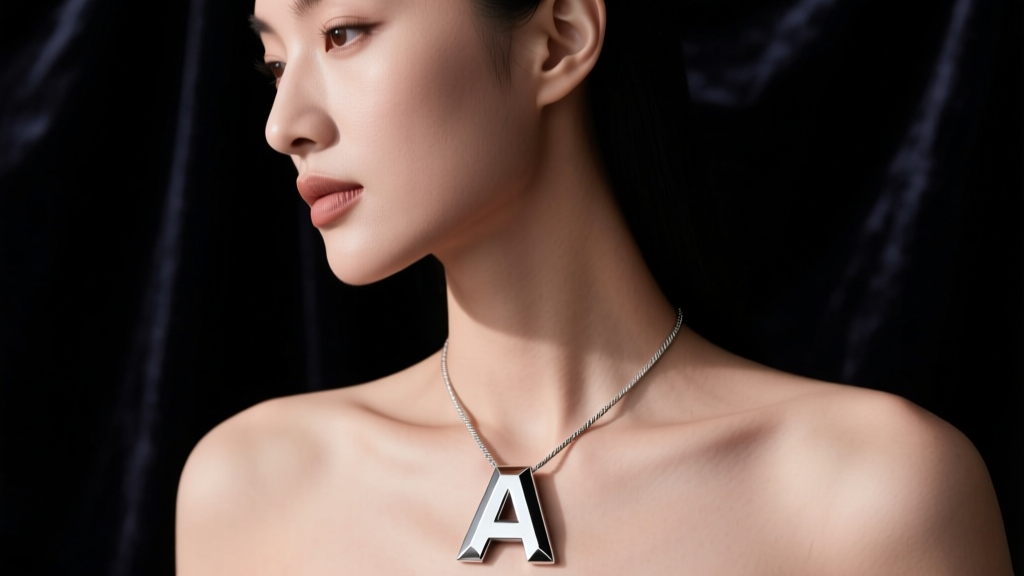
| Geometric / Modernist | Grade 23 Titanium | CNC-machined sharp angles require extreme hardness that only titanium can provide. | $60 - $110 |
Skin Sensitivity & The Nickel Trap
Because an initial pendant rests directly against the sternum—a high-sweat, high-friction zone—metal biocompatibility is a critical factor. Contact dermatitis from jewelry is overwhelmingly caused by nickel exposure.
The Nickel Factor in Stainless Steel
Surgical Stainless Steel (specifically the 316L alloy) is heavily marketed as 'hypoallergenic.' However, 316L steel contains between 8% and 10% nickel to achieve its corrosion resistance. While the chromium oxide layer on the surface usually traps the nickel, the constant friction of a heavy block 'A' pendant rubbing against the skin can degrade this passive layer over time, triggering reactions in highly sensitive individuals.
Implant-Grade Titanium (ASTM F136)
For those with severe metal allergies, Implant-Grade Titanium (ASTM F136 / Grade 23) is the ultimate solution. It contains exactly 0% nickel and is the same alloy used in medical bone screws. The trade-off? Titanium is notoriously difficult to cast using traditional lost-wax methods due to its extremely high melting point and reactivity with oxygen. Consequently, titanium letter 'A' pendants are almost exclusively laser-cut or CNC-machined from flat sheets. This means you will mostly find 2D, geometric, or block-letter designs in titanium, rather than ornate, 3D-cast script fonts.
Chain Gauge & Clasp Hardware: The Hidden Weak Points
A necklace with the letter A is only as strong as the chain that holds it. Initial pendants typically weigh between 1.5 and 4.0 grams. To support this weight without stretching, the chain gauge must be carefully selected.
- Cable Chains (0.9mm - 1.2mm): The gold standard for initial pendants. The uniform, interlocking oval links distribute the weight of the 'A' pendant evenly and resist kinking.
- Box Chains (1.0mm+): While visually striking, box chains are composed of square, hinged links. If the letter 'A' pendant is heavy and slides rapidly up and down the chain, it can cause the box links to hinge inward and permanently kink.
- Snake Chains: Avoid these for initial pendants. The tight, smooth metal rings easily trap hair and are prone to snapping if the pendant's bail (the loop connecting the 'A' to the chain) catches on a sweater.
Finally, pay attention to the clasp. A standard spring-ring clasp is sufficient for lightweight script 'A' pendants under 2 grams. However, for heavier block letters or solid 14k gold pieces, always upgrade to a lobster clasp, which features a stronger internal spring and a wider gate for secure attachment.
Final Verdict: Matching Your Budget to the Right Metal
Selecting the right material for your initial necklace is a balancing act between budget, skin sensitivity, and font complexity. If you desire a lifelong heirloom piece featuring a delicate, cursive 'A', investing in 14k solid gold is non-negotiable for structural integrity. If you prefer a bold, chunky streetwear aesthetic and need to manage costs, rhodium-plated sterling silver or high-quality gold vermeil will provide the necessary visual weight and durability. By understanding the metallurgical properties behind the jewelry, you ensure that your personalized piece remains as legible and beautiful on day one thousand as it was on day one.


