Expert Care and Cleaning Tips for a Seed Bead Necklace
Learn expert cleaning, storage, and maintenance tips to protect your seed bead necklace from thread degradation and moisture damage.

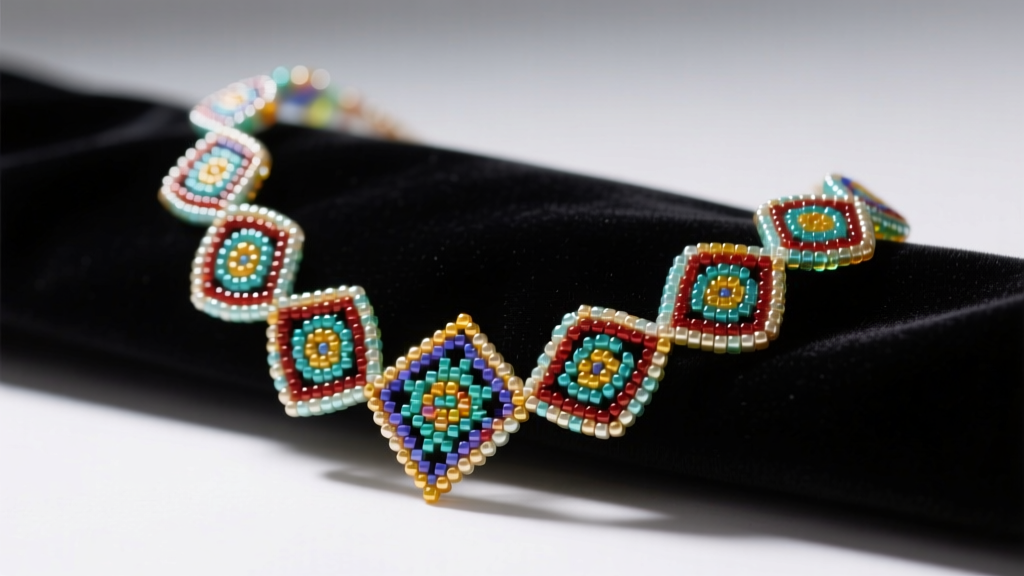
A beautifully crafted seed bead necklace is a triumph of patience and precision. Whether it features a complex peyote stitch pattern, a delicate right-angle weave, or a simple multi-strand design, the structural integrity of these pieces relies entirely on the hidden thread and the microscopic coatings on the glass. Unlike solid metal chains or carved gemstone pendants, a seed bead necklace requires a highly specialized approach to maintenance. Using the wrong cleaning agents or storage methods can lead to catastrophic failures, including thread rot, dye bleeding, and the irreversible peeling of galvanized finishes.
In this comprehensive 2026 maintenance guide, we break down the exact material science behind your beaded jewelry and provide actionable, professional-grade protocols to ensure your pieces survive for generations.
Understanding Seed Bead Materials and Thread Vulnerabilities
Before applying any moisture or cleaning solution to your seed bead necklace, you must identify the bead finish and the threading material. The Gemological Institute of America (GIA) emphasizes that understanding a material's porosity and chemical sensitivity is the first step in gem and jewelry care. While the glass beads themselves are generally non-porous, their surface treatments and the threads holding them together are highly reactive.
Bead Finish Sensitivities
- Galvanized & Metallic Finishes: These beads are coated with a thin layer of zinc or silver. They are highly susceptible to acidic skin pH, perfumes, and alcohol-based cleaners, which will cause the metallic layer to oxidize, tarnish, or peel off entirely.
- Dyed & Stained Beads: Often used for vibrant pinks, purples, and deep reds. The aniline dyes are not always colorfast and can bleed when exposed to water, lotions, or rubbing alcohol.
- Luster & Ceylon Finishes: These feature a clear, baked-on glaze over the base glass. They are the most durable and can withstand gentle aqueous cleaning without degrading.
The Real Weakness: Threading Materials
The lifespan of a seed bead necklace is dictated by its thread. Nymo (a flat nylon thread) is incredibly popular for its drape but is prone to stretching and absorbing skin oils, which eventually leads to dry rot. WildFire and FireLine are thermally fused, gel-spun polyethylene threads. They are virtually waterproof and resist stretching, but they have a low melting point and can be damaged by hot water or aggressive friction.
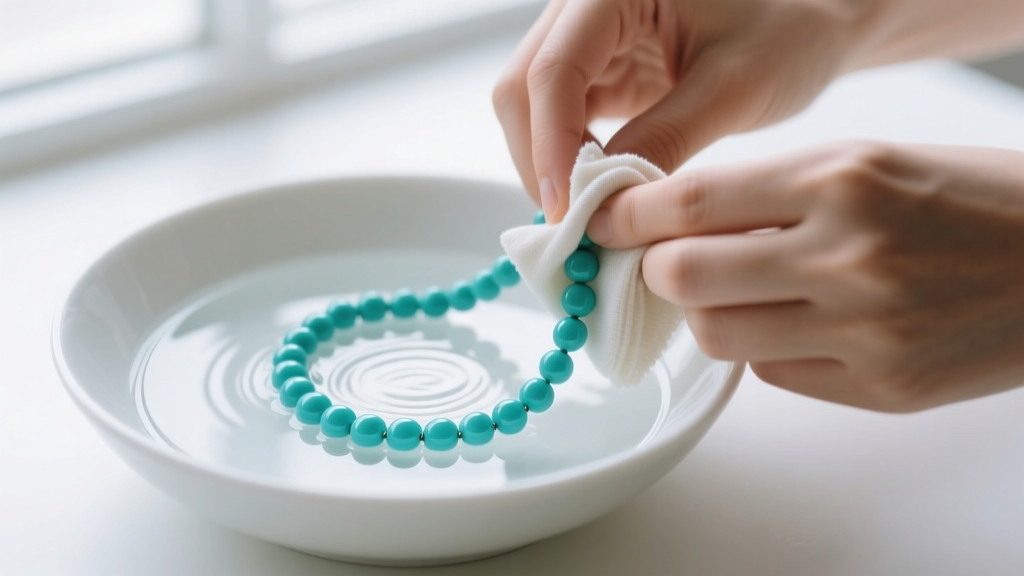
Step-by-Step Cleaning Protocol for Glass Seed Beads
Never use ultrasonic jewelry cleaners on a seed bead necklace. The high-frequency vibrations can shatter delicate glass beads, fray the threading at the crimp points, and strip metallic finishes. Instead, rely on this manual, low-impact cleaning methodology.
Phase 1: The Dry Microfiber Wipe-Down
For routine maintenance after wearing, use a clean, dry, lint-free microfiber cloth. Gently run the necklace through the cloth to remove surface sebum, dead skin cells, and cosmetic dust. This prevents the buildup of acidic oils that degrade metallic bead coatings over time. According to Beadaholique's expert beading tutorials, regular dry polishing significantly extends the life of galvanized finishes.
Phase 2: Deep Aqueous Cleaning (For Luster/Ceylon Beads Only)
If your necklace requires a deeper clean and you are certain the beads are not dyed or galvanized, follow this submersion protocol:
- Prepare the Solution: Mix 1 cup of distilled water (never tap water, as hard water minerals leave microscopic spots in the bead holes) with a single drop of pH-neutral, fragrance-free dish soap.
- Spot Test: Dip a cotton swab in the solution and rub it gently against an inconspicuous bead near the clasp. Wait 60 seconds. If any color transfers to the swab, abort the wet cleaning process immediately.
- Gentle Agitation: Submerge the necklace for no more than 3 minutes. Gently swish the water. Do not scrub or pull the beads.
- Rinse: Transfer the necklace to a bowl of pure distilled water to rinse away the surfactant.
Expert Warning: Never use rubbing alcohol, acetone, or commercial silver dips on seed bead jewelry. These solvents will instantly dissolve the adhesive inside bead tips and strip dyed finishes on contact.
Drying and Conditioning: Preventing Thread Rot and Memory
How you dry your seed bead necklace is just as critical as how you wash it. Hanging a wet beaded necklace on a hook or jewelry tree is a guaranteed way to ruin it. The weight of the water-logged beads will stretch the nylon or polyethylene thread, creating permanent "thread memory" (kinking) and weakening the structural integrity of the weave.
The Flat-Dry Method:
Lay a clean, dry, white cotton towel on a flat, level surface. Place the necklace on the towel, gently arranging it into its natural curve or shape. Use a second dry towel to lightly pat the beads, absorbing excess moisture. Allow it to air dry completely for 24 hours in a climate-controlled room, away from direct sunlight or heating vents. UV exposure and high heat can degrade synthetic threads and fade dyed glass.
Storage Solutions to Prevent Tarnish and Tangling
Proper storage is your primary defense against environmental degradation. PVC plastics and standard cardboard boxes off-gas chemicals that react with metallic bead coatings, causing them to turn black or green. Below is a comparison of storage environments and their impact on seed bead longevity.
| Storage Method | Humidity Control | Chemical Safety | Verdict for Seed Beads |
|---|---|---|---|
| Standard Cardboard Box | Poor (Absorbs moisture) | Low (Acidic off-gassing) | Avoid; causes thread rot and tarnish |
| PVC Plastic Ziploc | Traps ambient moisture | Low (Chlorine off-gassing) | Avoid; strips galvanized finishes |
| Acid-Free Tissue + Polyethylene Bag | Excellent (with silica) | High (Archival safe) | Best Practice for long-term storage |
| Anti-Tarnish Flannel Pouch | Moderate | High (Treated cloth) | Great for metallic/galvanized beads |
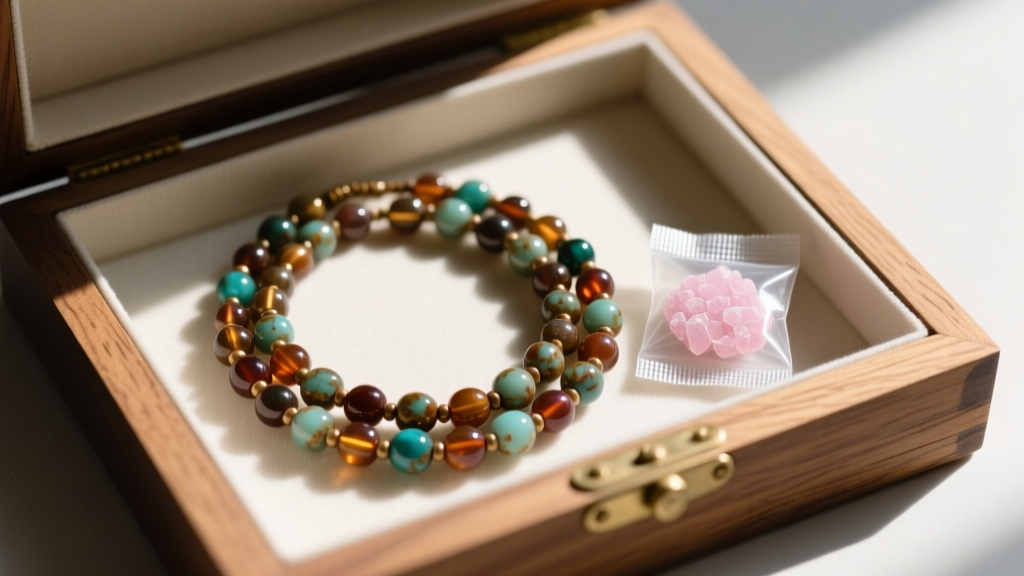
Always store your seed bead necklace coiled loosely in an acid-free tissue paper nest. Include a small, indicating silica gel desiccant packet in the storage container to maintain a relative humidity (RH) below 50%, which halts the oxidation of metallic bead coatings and prevents mold growth on organic threads like silk.
Troubleshooting Common Seed Bead Necklace Failures
Even with meticulous care, mechanical failures can occur. Recognizing the early warning signs can save you from losing your piece entirely.
- Clasp Pull-Through: If the thread is cutting through the hole of the bead nearest to the clasp, the necklace is at immediate risk of snapping. Fix: A jeweler can add a metallic crimp cover or a larger, thick-walled glass seed bead at the termination point to distribute the mechanical stress.
- Visible Thread Fuzzing: If you see tiny, hair-like fibers protruding from between the beads near the clasp, the polyethylene or nylon thread is fraying from friction against the metal jump ring. Fix: Stop wearing the piece immediately and have it restrung.
- Stiffening of the Drape: If a formerly fluid, draping necklace becomes stiff and holds its shape like a wire, the thread has absorbed oils and oxidized, or the bead holes are impacted with cosmetic dust. Fix: Professional ultrasonic cleaning of the bead holes (beads removed from thread) and complete restringing.
When to Seek Professional Restoration
Seed bead weaving is a highly specialized craft. If your necklace suffers a thread break or severe stretching, do not attempt to repair it with standard jewelry wire or craft glue. Super glue (cyanoacrylate) will shatter glass beads upon contact and permanently ruin the piece.
Seek out a professional beadweaver or a specialized jewelry restorer. Restringing a single-strand seed bead necklace typically costs between $45 and $85, while complex multi-strand or fully woven collars (like a peyote stitch tube) can range from $120 to $300, depending on the labor hours required to match the original tension and stitch pattern. Investing in professional restoration ensures the correct thread gauge (e.g., 6lb FireLine vs. Size D Nymo) is selected for the specific microscopic hole sizes of your Miyuki or Toho beads.


