Expert Care for Your Tarnished Silver Butterfly Necklace
Learn how to safely clean, polish, and store your silver butterfly necklace. Expert tips on removing tarnish without damaging delicate accents.

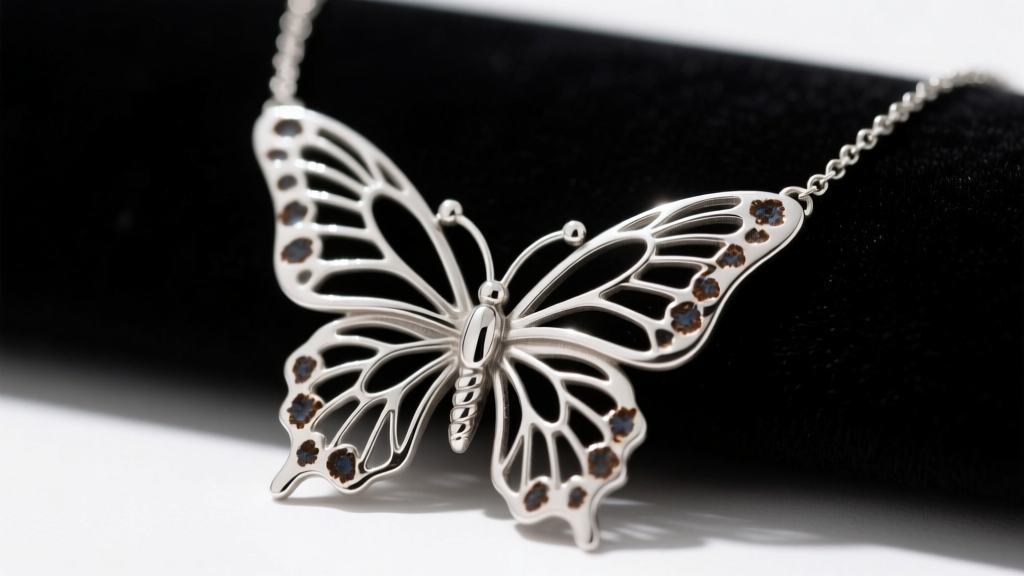
The Allure and Vulnerability of Silver Butterfly Jewelry
The butterfly motif has long been a staple in jewelry design, symbolizing transformation, grace, and delicate beauty. When curating a meaningful collection, the specific search for a necklace butterfly silver design often yields pieces that range from minimalist outlines to intricate, gem-encrusted wings. However, the very metal that gives these pieces their brilliant, moon-like luster—silver—is also notoriously prone to environmental degradation. Unlike gold or platinum, silver requires a proactive, scientifically informed approach to maintenance. As of 2026, with the rise of complex cold-enamel techniques and mixed-metal accents in butterfly pendants, using outdated or overly aggressive cleaning hacks can permanently ruin your jewelry. This comprehensive guide will walk you through the metallurgy of your necklace, the chemistry of tarnish, and the exact protocols required to restore and protect your silver butterfly pendant.
Understanding Your Silver: .925 Sterling vs. Plated vs. Fine
Before applying any cleaning solution, you must identify the exact composition of your necklace. The vast majority of high-quality butterfly pendants are crafted from .925 Sterling Silver. Pure silver (.999 fine silver) is too soft to hold the intricate structural details of butterfly wings or the tension of a delicate chain clasp. Therefore, jewelers alloy it with 7.5% copper to increase durability. According to the Assay Office, this copper content is precisely what makes sterling silver susceptible to tarnishing.
Conversely, some modern butterfly necklaces feature a rhodium plating over the sterling silver base. Rhodium is a platinum-group metal that provides a bright, white, tarnish-resistant shield. If your butterfly pendant has a mirror-like, slightly darkened finish that doesn't yellow over time, it is likely rhodium-plated. Cleaning plated silver requires vastly different, much gentler methods than cleaning raw, unplated sterling silver to avoid stripping the microscopic rhodium layer.
The Chemistry of Tarnish: Why Your Butterfly Turns Black
Tarnish is not dirt; it is a chemical reaction. Silver reacts with hydrogen sulfide (H2S) naturally present in the air to form silver sulfide (Ag2S), which manifests as a dull yellow, brown, or black film on the surface of your pendant. High humidity, exposure to sulfur-rich foods (like eggs or onions), chlorine in swimming pools, and even the natural pH and sulfur content of your own sweat can accelerate this process. The intricate crevices of a butterfly's wings often trap moisture and cosmetic residues, creating localized micro-environments where tarnish forms much faster than on the flat surfaces of the pendant.
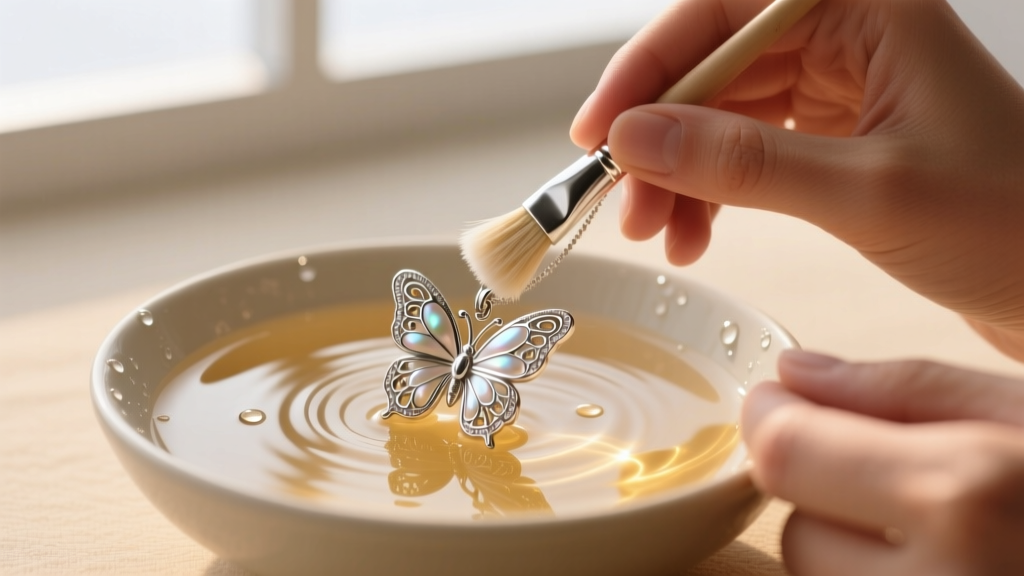
Step-by-Step Cleaning Protocols
Depending on the severity of the oxidation and the presence of secondary materials (like enamel or gemstones), you must select the appropriate cleaning protocol. Always unclasp your necklace and lay it flat on a microfiber towel before beginning.
Protocol 1: The Mild Surfactant Bath (For Routine Grime & Light Oxidation)
This method is safe for almost all silver butterfly necklaces, including those with rhodium plating, cubic zirconia, or cold enamel accents.
- Prepare the Solution: Mix three drops of a mild, phosphate-free dish soap (like Dawn) into a bowl of lukewarm distilled water. Avoid tap water, as trace minerals and chlorine can cause water spots.
- Soak: Submerge the necklace for exactly 3 to 5 minutes. Do not exceed this, as prolonged water exposure can weaken the adhesive used in gemstone-set butterfly wings.
- Agitate: Using an extra-soft baby toothbrush, gently brush the crevices of the butterfly wings and the links of the chain. Brush in the direction of the metal grain to avoid micro-scratches.
- Rinse and Dry: Rinse thoroughly under distilled water, then immediately pat dry with a lint-free microfiber cloth. Use a hairdryer on the 'cool' setting to blast water out of the clasp mechanism.
Protocol 2: Electrochemical Reduction (For Heavy Sulfide Tarnish)
If your unplated sterling silver butterfly is heavily blackened, you can reverse the chemical reaction using an electrolytic bath. Warning: Never use this method if your pendant features pearls, opals, turquoise, or enamel, as the heat and alkalinity will destroy them.
- Line a glass baking dish with aluminum foil, shiny side up.
- Place the silver necklace on the foil, ensuring the metal touches the aluminum.
- Sprinkle two tablespoons of baking soda and one tablespoon of sea salt over the jewelry.
- Pour boiling water into the dish. You will immediately see bubbling and smell a faint sulfur (rotten egg) odor. This is the sulfide transferring from the silver to the aluminum.
- After 3 minutes, remove the necklace with wooden tongs, rinse in cool distilled water, and buff with a polishing cloth.
Cleaning Agents: What to Use and What to Avoid
The market is flooded with chemical dips and polishing pastes. The Jewelers of America strongly advises against using abrasive pastes on intricate jewelry, as they can strip away intentional antiquing (the dark polish applied to the recesses of the butterfly wings to create depth). Below is a breakdown of common agents and their safety profiles.
| Cleaning Agent | Chemical Action | Safety for Intricate Silver Butterfly Pendants |
|---|---|---|
| Silver Dip (Thiourea-based) | Strips tarnish via acid dissolution | Avoid. Highly corrosive; strips intentional antiquing and damages porous gems. |
| Baking Soda Paste | Mild abrasive mechanical action | Use with Caution. Can cause micro-scratches on high-polish wing surfaces. |
| Sunshine Polishing Cloth | Embedded micro-abrasives & tarnish inhibitors | Highly Recommended. Safe for daily maintenance and reaching into wing filigree. |
| Ultrasonic Cleaners | High-frequency cavitation bubbles | Conditional. Safe for plain silver; will shatter fracture-filled gems or shake loose glued enamel. |
Chain Maintenance: Gauges, Clasps, and Tangles
The pendant is only half the equation; the chain requires equal attention. Most silver butterfly pendants are hung on delicate cable or box chains ranging from 0.8mm to 1.2mm in gauge. These thin links are highly susceptible to stretching and kinking. When cleaning the chain, never pull or stretch it through your fingers. Instead, coil it loosely in the palm of your hand while washing.
The clasp—typically a 5mm or 7mm spring ring or a small lobster claw—contains a tiny steel internal spring. Because steel and silver have different galvanic potentials, the clasp is often the first area to show corrosion or become sticky. To maintain the clasp mechanism, apply a microscopic drop of food-grade mineral oil to the hinge and lever using a toothpick. Work the lever back and forth to distribute the oil, then wipe away any excess. This prevents internal rust and ensures the spring ring snaps shut securely, protecting your valuable pendant from accidental drops.
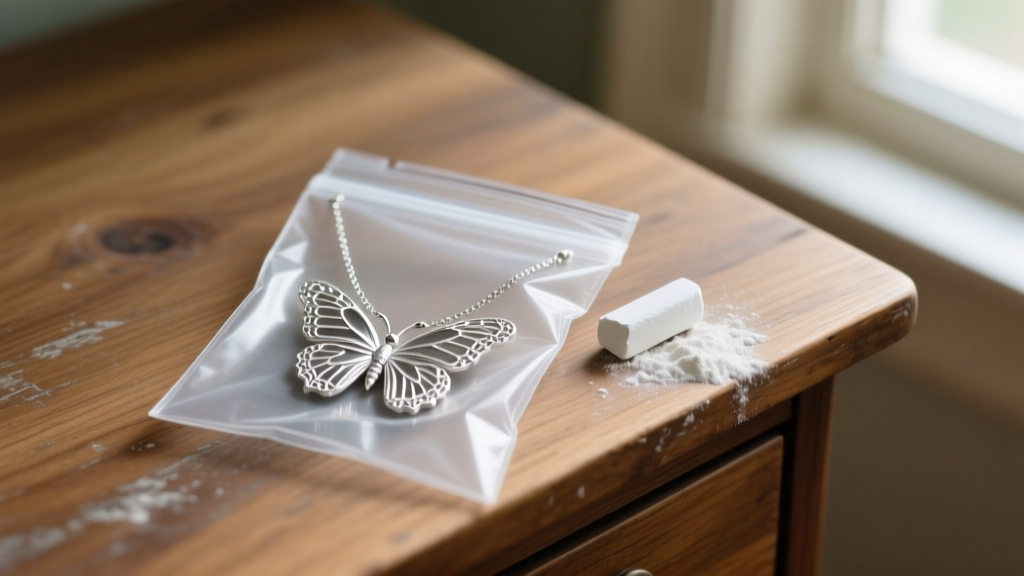
Long-Term Storage Strategies for 2026 and Beyond
Proper storage is the ultimate preventative maintenance. Leaving your silver butterfly necklace exposed on a bathroom vanity or dresser guarantees rapid oxidation due to fluctuating humidity and aerosolized cosmetics. According to the Gemological Institute of America (GIA), limiting exposure to air and moisture is the most effective way to preserve silver.
- Anti-Tarnish Strips: Invest in 3M anti-tarnish strips. These contain copper-based polymers that act as sacrificial metals, absorbing airborne sulfides before they can reach your silver. Place one strip in your jewelry box and replace it every six months.
- Pacific Silvercloth: For long-term storage, wrap the necklace in a Pacific Silvercloth pouch. This specialized cotton fabric is embedded with microscopic silver particles that capture tarnish-causing gases.
- Desiccants: If you live in a high-humidity climate, store your necklace in an airtight ziplock bag alongside a small silica gel packet or a piece of standard blackboard chalk. The chalk acts as a natural, highly porous desiccant, pulling ambient moisture away from the metal.
- The 'Last On, First Off' Rule: Always put your silver necklace on after applying perfume, hairspray, and lotions, and take it off before showering or swimming. The chemicals in modern fragrances and the chlorine in tap water are highly corrosive to sterling silver alloys.
By understanding the metallurgy of your jewelry and adopting these precise, scientifically backed cleaning and storage protocols, your silver butterfly necklace will retain its breathtaking luster and structural integrity for decades to come.


