How to Layer a Gold Triangle Necklace: Step-by-Step Guide
Learn how to style and layer a gold triangle necklace with our step-by-step guide. Master karat selection, chain lengths, and geometric pairing.

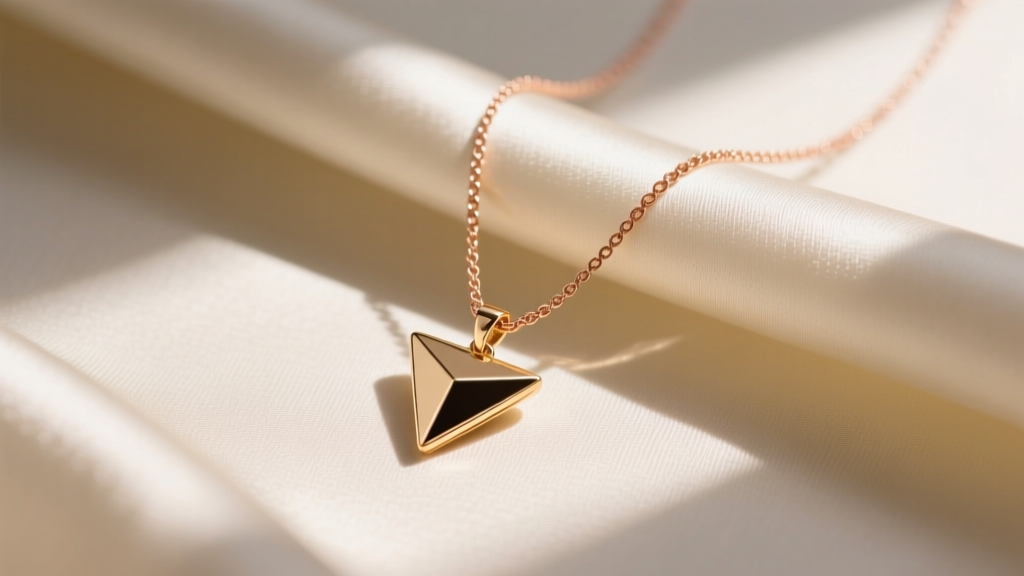
The geometric triangle is a cornerstone of modern jewelry design, representing balance, harmony, and sacred geometry. However, styling a gold triangle necklace requires more than just throwing it on. Because of its sharp vertices and distinct center of gravity, a triangle pendant behaves differently on the collarbone than a standard circle or bar. Whether you are aiming for a minimalist everyday look or a complex, layered evening aesthetic, mastering the physics and styling of this shape is essential.
This comprehensive, step-by-step guide will walk you through selecting the right metallurgy, choosing the correct chain to prevent flipping, and executing a flawless layered neckline.
Step 1: Selecting the Right Gold Karat for Sharp Geometry
When dealing with geometric shapes that feature sharp points, the purity of your gold directly impacts the pendant's structural integrity over time. Pure gold is incredibly soft, meaning the sharp vertices of a triangle pendant can easily bend, warp, or wear down if the karat is too high for daily wear.
- 10k Gold (41.7% pure): The most durable option. Ideal for sharp, micro-triangle pendants (under 10mm) that will be worn daily and subjected to friction.
- 14k Gold (58.3% pure): The industry standard for fine jewelry. It offers the perfect compromise between a rich yellow hue and the tensile strength needed to maintain crisp, sharp triangle corners.
- 18k Gold (75% pure): Best reserved for larger, statement triangles (20mm+) with slightly beveled or rounded edges, as the softer metal will dent more easily upon impact.
- 22k/24k Gold: Too soft for sharp geometric pendants. The points will quickly lose their factory-sharp precision.
| Gold Karat | Edge Sharpness Retention | Best Pendant Size | Recommended Finish |
|---|---|---|---|
| 10k | Excellent (High durability) | Micro (5mm - 12mm) | High Polish or Matte |
| 14k | Very Good (Optimal balance) | Standard (12mm - 18mm) | High Polish or Diamond-Cut |
| 18k | Fair (Prone to micro-dents) | Statement (20mm+) | Brushed or Hammered |
For an authoritative breakdown on gold alloys and their physical properties, the Gemological Institute of America (GIA) provides extensive metallurgical data confirming that 14k remains the superior choice for structural jewelry components.
Step 2: Choosing the Ideal Chain to Prevent the 'Flip'
The most common frustration with a gold triangle necklace is the 'flip'—when the pendant rotates upside down, hiding the design. This happens because a triangle's center of mass is located in the lower third of the shape, making it top-heavy when suspended from a flexible chain.
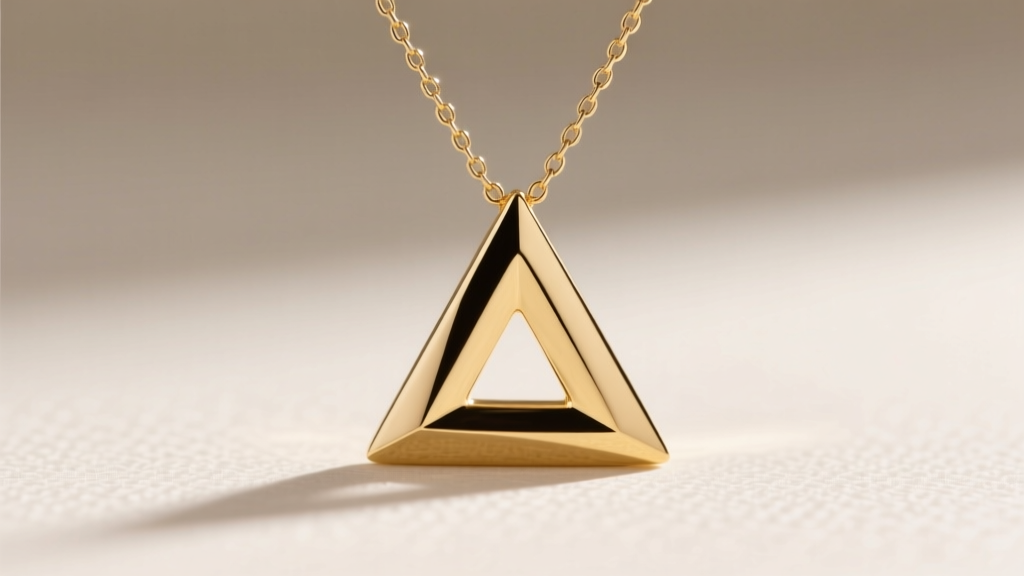
To counteract this, you must match the pendant's bail (the loop it hangs from) with a chain that offers lateral rigidity:
- The Box Chain (0.9mm - 1.2mm): The absolute best choice for triangles. The square, interlocking links lay completely flat against the skin, providing a stable track that keeps the triangle facing forward.
- The Wheat Chain (1.0mm): Offers excellent rigidity and a beautiful braided texture that complements the angularity of the triangle without competing with it.
- Chains to Avoid: Snake chains and herringbone chains. While beautiful, their fluid, snake-like movement will almost guarantee that a top-heavy triangle pendant will constantly flip upside down.
Step 3: The Mathematics of Layering Geometric Pendants
Layering a gold triangle necklace requires strict adherence to spacing mathematics. If chains are too close together, the sharp points of the triangle will scratch adjacent pendants or tangle in the chain links. The golden rule of geometric layering is the 2-inch drop and 5mm size escalation.
The Perfect 3-Piece Geometric Stack
- Layer 1 (The Anchor): 14-inch choker chain featuring a 5mm solid gold bead or tiny horizontal bar. This frames the collarbone.
- Layer 2 (The Focal Point): 16-inch box chain featuring your primary 14mm gold triangle necklace. The triangle should rest precisely in the hollow of the throat.
- Layer 3 (The Elongator): 18-inch or 20-inch rope chain featuring a 20mm geometric shape (like a circle or a larger, open-outline triangle). This draws the eye downward, elongating the neck.
By maintaining exactly two inches between the chain lengths and increasing the pendant size by at least 5mm per layer, you ensure that the sharp vertices of your triangle never intersect with the other chains.
Step 4: Matching Necklines and Occasions
The angular nature of a triangle pendant interacts uniquely with different clothing necklines. Here is how to style it based on your wardrobe:
- V-Necks and Wrap Dresses: A gold triangle necklace naturally mimics the V-shape of the neckline. Opt for a single, medium-sized triangle (15mm) on an 18-inch chain to parallel the fabric's plunge without overcrowding it.
- Crew Necks and T-Shirts: Use the triangle to break up the horizontal line of the collar. A shorter 16-inch chain with a bold, 20mm triangle resting just above the fabric line creates a striking, modern contrast.
- Turtlenecks and Sweaters: This is where layering shines. Wear a 20-inch chain with a larger, heavier triangle pendant over the dark fabric. Pro-Tip: Ensure the triangle's points are slightly rounded or beveled; razor-sharp points will catch and pull on knitwear fibers.

Step 5: Care, Maintenance, and Snag Prevention
Because of their sharp vertices, gold triangle necklaces require specific maintenance routines to keep their edges crisp and prevent damage to your clothing.
Safe Storage Protocols
Never toss a triangle pendant into a communal jewelry box. The sharp points will scratch softer gemstones (like pearls or opals) and can become bent if crushed under heavier items. Always store your triangle necklace hanging on a jewelry tree or laid perfectly flat in a velvet-lined slot.
Cleaning Sharp Edges
Dirt and skin oils accumulate rapidly in the sharp inner corners of the triangle's bail and the vertices of the shape. According to the Jewelers of America, the safest way to clean geometric gold jewelry at home is using a few drops of mild dish soap in warm water and an extra-soft baby toothbrush. Gently brush the sharp corners to dislodge debris, rinse thoroughly, and dry with a microfiber cloth. Avoid ultrasonic cleaners if your triangle pendant features any tension-set stones, as the vibrations can loosen the geometric settings.
Final Thoughts on Geometric Styling
A gold triangle necklace is far more than a simple accessory; it is an exercise in proportion, weight distribution, and geometric harmony. By selecting a 14k gold alloy for optimal edge retention, pairing it with a rigid box chain to prevent flipping, and applying strict mathematical spacing when layering, you elevate a simple shape into a masterclass of personal style. Whether worn solo against a crisp white tee or stacked elegantly over winter knitwear, the triangle remains a timeless testament to modern jewelry design.


