How to Clean and Care for a Statement Cross Necklace
Learn expert cleaning and maintenance tips for your statement cross necklace. Protect metals, gemstones, and heavy chains from tarnish and damage.


The Anatomy of a Statement Cross: Why It Needs Special Care
A statement cross necklace is more than just an accessory; it is a bold focal point that often features complex metalwork, heavy casting, and intricate detailing. Unlike delicate, minimalist chains, statement pieces present unique maintenance challenges. The deep crevices of gothic filigree, the recessed channels of oxidized silver, and the weight of the pendant itself all demand a specialized approach to cleaning and care. As we navigate jewelry trends in 2026, the revival of heavy, ornate religious and gothic crosses means that understanding proper conservation techniques is essential for preserving your investment.
The primary enemy of any ornate necklace is trapped debris. Daily wear exposes your jewelry to sebum (skin oils), lotions, perfumes, and environmental pollutants. In a flat, polished pendant, these wipe away easily. In a deeply textured statement cross, they accumulate in the microscopic grooves, accelerating tarnish and dulling the metal's luster. Furthermore, the sheer weight of a statement pendant—often ranging from 15 to 45 grams—places immense tensile stress on the chain and the connecting jump ring, requiring structural maintenance alongside cosmetic cleaning.
Material-Specific Cleaning Protocols
Statement crosses are crafted from a wide variety of materials, and using the wrong cleaning agent can cause irreversible damage. For example, treating gold vermeil (which must have a minimum of 2.5 microns of gold plating over sterling silver) with harsh chemical dips will strip the gold layer entirely. Below is a definitive guide to matching your cleaning method to your necklace's material composition.
| Material | Recommended Cleaning Agent | Ultrasonic Safe? | Polishing Cloth Safe? |
|---|---|---|---|
| 925 Sterling Silver (Oxidized) | Mild dish soap & soft brush | Yes (without stones) | No (removes oxidation) |
| Gold Vermeil / Plated | Lukewarm water & microfiber | No | No (use untreated cloth only) |
| Solid 14k/18k Gold | Ammonia-free jewelry dip | Yes | Yes |
| Brass / Bronze | Lemon juice & baking soda paste | No | Yes |
| Stainless Steel (316L) | Glass cleaner or soapy water | Yes | Yes |
According to the Jewelers of America, utilizing chemically treated polishing cloths on intentionally oxidized silver (a common technique in statement crosses to highlight relief details) will strip the dark patina, leaving the piece looking flat and overly shiny. Always use an untreated, lint-free microfiber cloth for oxidized pieces.
Step-by-Step Deep Cleaning Guide for Ornate Crosses
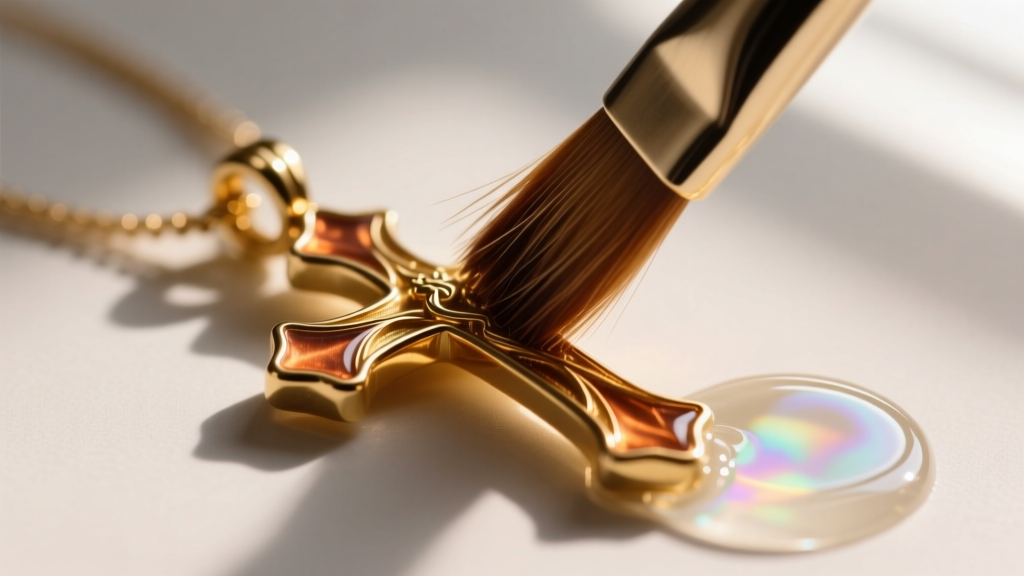
When your statement cross necklace loses its brilliance, a surface wipe will not suffice. You need to perform a deep extraction of trapped oils from the filigree. Follow this professional-grade protocol:
1. Preparation and Dry Brushing
Before introducing any moisture, use a clean, dry horsehair detailing brush (the type used for watchmaking or camera lenses) to gently sweep out dry particulate matter from the cross's crevices. Moistening dust creates a mud-like paste that is harder to remove from deep grooves.
2. The Soaking Phase (Solid Metals Only)
Fill a glass bowl with lukewarm water and add three drops of pH-neutral, lotion-free dish soap (such as original Dawn). Submerge the pendant for exactly 5 to 10 minutes. This allows the surfactants to break down the molecular bonds of skin oils trapped in the metalwork. Note: Never soak porous gemstones, pearls, or enamel inlays.
3. Targeted Agitation
Remove the cross from the solution. Using a soft-bristled baby toothbrush or a specialized jewelry brush, gently agitate the bristles into the recessed areas. Do not use medium or hard bristles, as they will leave microscopic scratch patterns on high-polish surfaces, particularly on softer metals like 24k gold accents or pure silver.
4. Rinsing and Drying
Rinse thoroughly under a gentle stream of lukewarm water. To dry, do not rub the piece with a towel, which can snag on prongs or filigree. Instead, pat it dry with a paper towel and use a hair dryer on the "cool" setting to blow moisture out of the deepest crevices. Trapped water leads to localized corrosion, especially in brass or copper alloys.
Handling Gemstone and Enamel Inlays
Many statement crosses feature inlays of turquoise, malachite, onyx, or vitreous enamel. The Gemological Institute of America (GIA) warns that porous stones like turquoise and malachite are highly sensitive to chemicals and even plain water, which can alter their color or cause fracturing. If your cross contains these materials, avoid soaking entirely. Instead, dampen a cotton swab in isopropyl alcohol and carefully trace around the stone settings to clean the metal bezels without touching the gemstone. Never place a gemstone-inlay cross in an ultrasonic cleaner; the 40kHz high-frequency vibrations can easily shatter stones with internal inclusions or cause enamel to crack and detach from the metal backing.
Chain Maintenance: Supporting Heavy Pendants

The pendant is only half the equation. A heavy statement cross necklace requires a robust chain, typically a 3mm to 5mm curb, Figaro, or rope chain. The weight of the pendant creates a constant downward pull, which leads to metal fatigue at specific stress points.
- The Jump Ring: This is the small ring connecting the cross's bail to the chain. Over time, the tension can pull the jump ring apart at the seam. Inspect this seam monthly. If you see daylight between the cut ends, take it to a jeweler to have it soldered shut or replaced with a thicker gauge ring (18-gauge or 16-gauge wire is recommended for heavy pendants).
- The Bail: The loop on the cross itself experiences friction as it slides back and forth along the chain. This friction can wear down the interior of the bail, eventually causing it to snap. Apply a microscopic drop of synthetic watch oil to the inside of the bail once a year to reduce friction wear.
- The Clasp: Heavy pendants require a secure clasp. Lobster clasps are standard, but ensure the internal spring mechanism is free of debris. If the clasp feels stiff, a quick blast of compressed air can clear out pocket lint that prevents it from closing flush.
Proper Storage to Prevent Oxidation and Scratching
How you store your statement cross necklace when it is not being worn is just as critical as how you clean it. Sterling silver reacts with hydrogen sulfide in the air to form silver sulfide (tarnish). Gold vermeil can be scratched by harder metals, and heavy pendants can crush delicate chains if stored improperly.
Never toss a statement necklace into a communal jewelry box where it can tangle and scratch. Store the piece in an individual, airtight polyethylene ziplock bag. Squeeze out as much air as possible before sealing. Inside the bag, include a 3M anti-tarnish strip or a silica gel desiccant packet to control moisture and absorb airborne sulfur compounds. For chains, lay them completely flat or hang them vertically; coiling a heavy chain tightly can cause permanent kinking in the links, weakening the structural integrity of the metal over time. By adhering to these meticulous care standards, your statement cross necklace will retain its bold visual impact and structural integrity for decades.


