The Jones New York Necklace: 2026 Style & Trend Guide
Discover how the classic Jones New York necklace is redefining 2026 quiet luxury. Explore layering frameworks, vintage sourcing, and material guides.

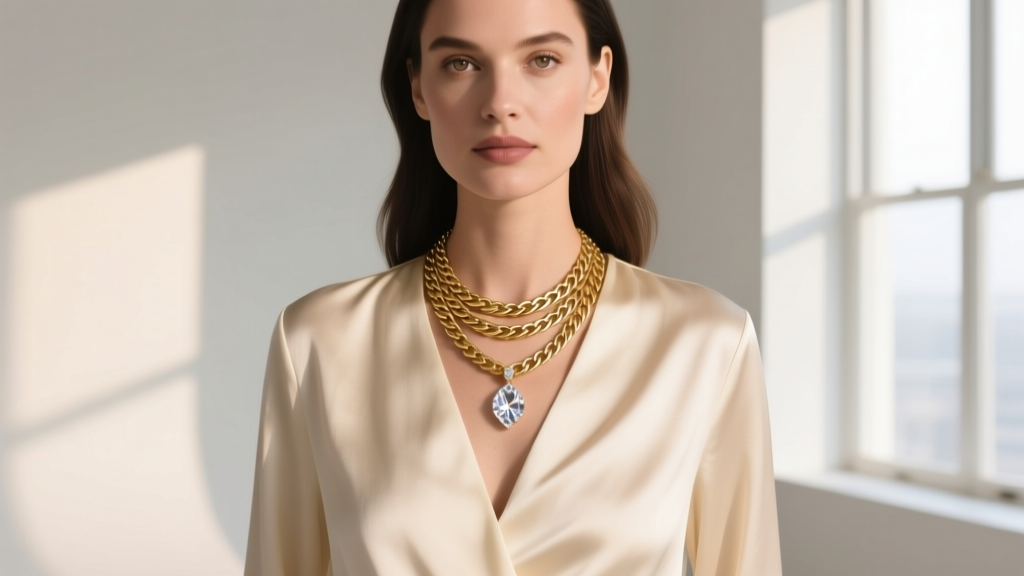
The 2026 Renaissance of Heritage Fashion Jewelry
In the evolving landscape of 2026 accessories, the Jones New York necklace has experienced a remarkable renaissance. Once synonymous with the structured, broad-shouldered power suits of the 1980s and 1990s boardroom, this heritage brand’s jewelry is now at the forefront of the "quiet luxury" and vintage revival movements. As contemporary consumers pivot away from hyper-visible logos and fast-fashion disposability, they are increasingly sourcing high-quality, vintage fashion jewelry that offers substantial weight, classic silhouettes, and timeless elegance.
According to trend analysts at The Business of Fashion, the modern luxury consumer values heritage and material integrity over sheer karat weight. This shift has positioned well-crafted, gold-tone and silver-tone fashion pieces from legacy American brands as highly coveted layering staples. A vintage Jones New York necklace offers a distinct advantage: the heavy brass base metals and thick electroplating used in the late 20th century often outlast the ultra-thin flash-plating found on many modern department store alternatives.
Material Breakdown & Durability Matrix
When hunting for a Jones New York necklace, understanding the material composition across different production eras is critical for assessing durability and value. Unlike solid 14k or 18k gold, fashion jewelry relies on a base metal core—typically brass, zinc alloy, or pewter—coated with a precious metal layer. The Gemological Institute of America (GIA) notes that the longevity of plated jewelry is directly tied to the micron thickness of the precious metal layer and the presence of protective clear-coats or PVD (Physical Vapor Deposition) treatments.
| Era / Edition | Base Metal | Plating Type | Avg. Thickness | Tarnish Profile | 2026 Market Value |
|---|---|---|---|---|---|
| 1980s Vintage | Solid Brass | Heavy 18k Gold Electroplate | 2.0 - 3.0 microns | Low (if unpolished) | $45 - $120 |
| 1990s Boardroom | Brass / Pewter | 14k Gold-Tone / Rhodium | 1.0 - 2.0 microns | Moderate | $30 - $85 |
| 2010s Dept. Store | Zinc Alloy | Flash Plating + Clear Coat | < 0.5 microns | High (prone to peeling) | $15 - $35 |
| 2026 Licensed Revival | Recycled Brass | PVD Gold / Lab-Grown Accents | N/A (Molecular bond) | Very Low | $60 - $150 |
Expert Tip: Always inspect the clasp and jump rings. Vintage 1980s pieces often feature robust fold-over clasps and thick, soldered jump rings, whereas 2010s iterations frequently use lightweight spring-ring clasps that are prone to snapping under the weight of layered styling.
Three Dominant Silhouettes for 2026 Styling
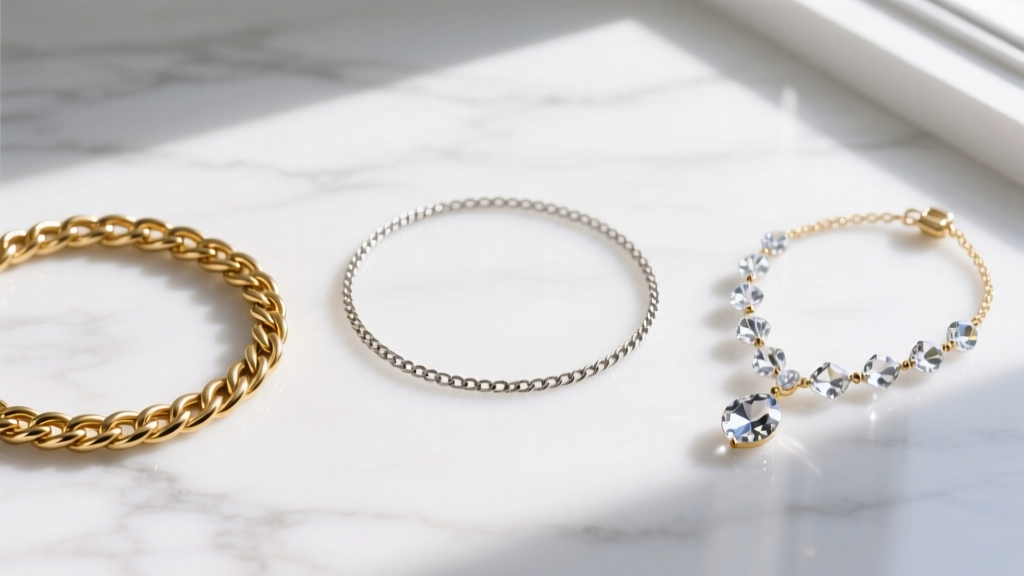
The Jones New York necklace archive is vast, but three specific silhouettes have emerged as the most relevant for contemporary 2026 styling. These pieces bridge the gap between vintage charm and modern minimalism.
1. The 3mm Herringbone Chain
The herringbone chain is a hallmark of 1980s and 1990s American fashion jewelry. Unlike modern, paper-thin herringbones that kink irreparably, vintage Jones New York herringbones were cast with a substantial 2mm to 4mm width and a heavy brass core. In 2026, the 3mm gold-tone herringbone is the ultimate "liquid gold" collarbone necklace. It lays perfectly flat against the skin, catching the light with a mirror-like finish that mimics high-karat solid gold, making it an ideal anchor piece for layering.
2. The Crystal Station Lariat
Before the widespread use of lab-grown diamonds, Jones New York utilized high-grade Austrian crystals and precision-cut cubic zirconia in their station lariats. These necklaces typically feature a 16-inch base chain with a 6-inch drop, punctuated by bezel-set crystals. The 2026 styling approach treats these lariats not as evening wear, but as daytime textural elements, worn over fine-gauge merino wool turtlenecks or unbuttoned silk blouses to introduce calculated sparkle without overwhelming the outfit.
3. The Signature Medallion Pendant
Moving away from loud branding, the subtle, engraved medallion pendants from the brand's heritage lines are highly sought after. Often featuring Art Deco-inspired geometric engravings or subtle monogram motifs, these pendants (typically 20mm to 25mm in diameter) hang from sturdy 24-inch opera-length chains. They serve as the perfect terminus for a multi-strand layering stack, drawing the eye downward and elongating the neckline.
The Layering Framework: Mixing Heritage with Contemporary
Layering a vintage fashion jewelry piece with modern solid gold requires an understanding of metal hardness and friction. The Mohs scale and galvanic reactions dictate how metals interact when they rub against one another throughout the day.
- The Gauge Rule: Never pair a heavy, 4mm vintage brass herringbone with a delicate, 1mm solid 14k gold cable chain. The heavier fashion piece will act as an abrasive, literally sanding away the softer solid gold over time. Keep chain widths within 1mm of each other.
- The Length Drop: For a balanced 2026 stack, utilize a strict 2-to-4 inch drop between layers. Start with a 14-inch vintage JNY choker, follow with an 18-inch solid gold pendant, and finish with a 22-inch Jones New York lariat.
- Tonal Consistency: Vintage 18k gold electroplating has a distinct, rich yellow hue that closely matches modern 18k solid gold. Avoid mixing vintage JNY pieces with 14k rose gold or white gold, as the contrasting undertones will immediately expose the fashion jewelry as plated.
Authentication, Sourcing, and Care Protocols
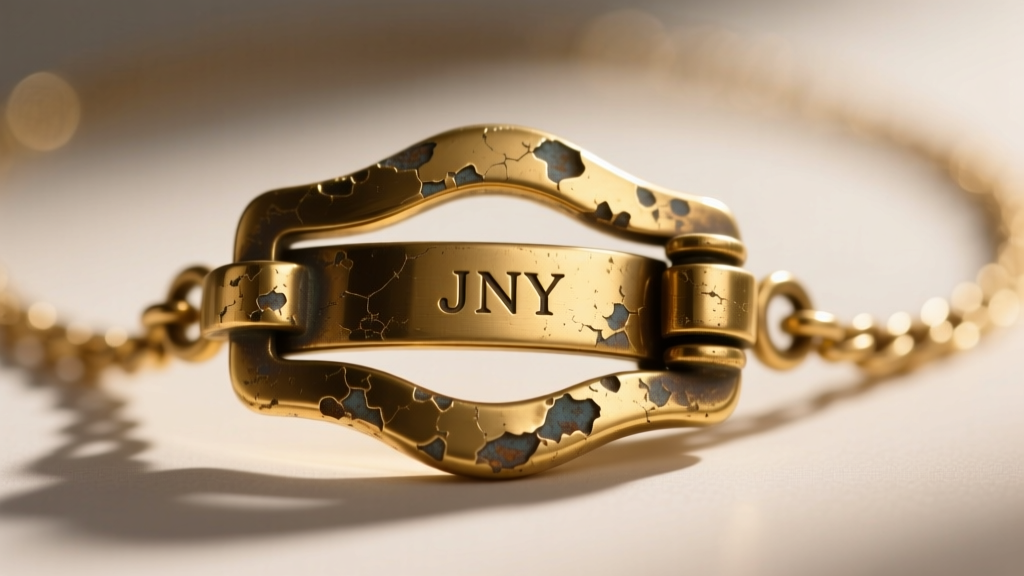
As the demand for the Jones New York necklace grows in vintage markets, knowing how to authenticate and care for these pieces is essential. Genuine vintage pieces will typically bear a hallmark stamped on a flat metal tag near the clasp. Look for "JNY", "Jones New York", or a copyright symbol (©) followed by the brand name.
When sourcing, platforms like Etsy, 1stDibs, and specialized Instagram vintage curators are your best bets. Avoid pieces where the base metal is visible at the clasp joints or where the chain links show deep, dark tarnish that cannot be wiped away, as this indicates the plating has completely worn through to the brass or zinc core.
Critical Care Instructions
Fashion jewelry requires a fundamentally different care regimen than solid gold or platinum. According to the Jewelers of America, chemical cleaners and ultrasonic machines are the enemies of plated jewelry.
- Never use ultrasonic cleaners: The high-frequency vibrations will cause the electroplated layer to flake and peel off the brass base.
- Avoid liquid silver/gold dips: These harsh chemical baths will strip the gold-tone plating instantly, leaving you with a dull, grey base metal.
- The Microfiber Method: After every wear, gently wipe the necklace with a dry, clean microfiber cloth to remove skin oils and acidic sweat, which are the primary catalysts for galvanic tarnishing.
- Storage: Store your Jones New York necklaces flat or hanging individually in anti-tarnish flannel pouches. Never ball up herringbone chains, as the interlocking links will kink and break under pressure.
Final Verdict: The Enduring Appeal of Accessible Elegance
The Jones New York necklace in 2026 is more than just a nostalgic throwback; it is a strategic styling tool. By understanding the material history, respecting the mechanics of metal layering, and committing to proper archival care, you can integrate these heritage pieces into a modern wardrobe that feels both luxurious and deeply personal. In an era where true style is defined by curation rather than mere consumption, mastering the art of vintage fashion jewelry is the ultimate sartorial flex.


