How to Clean and Care for a Sterling Silver Ball Necklace
Learn expert techniques to clean, polish, and store your sterling silver ball necklace. Prevent tarnish and restore brilliance safely.

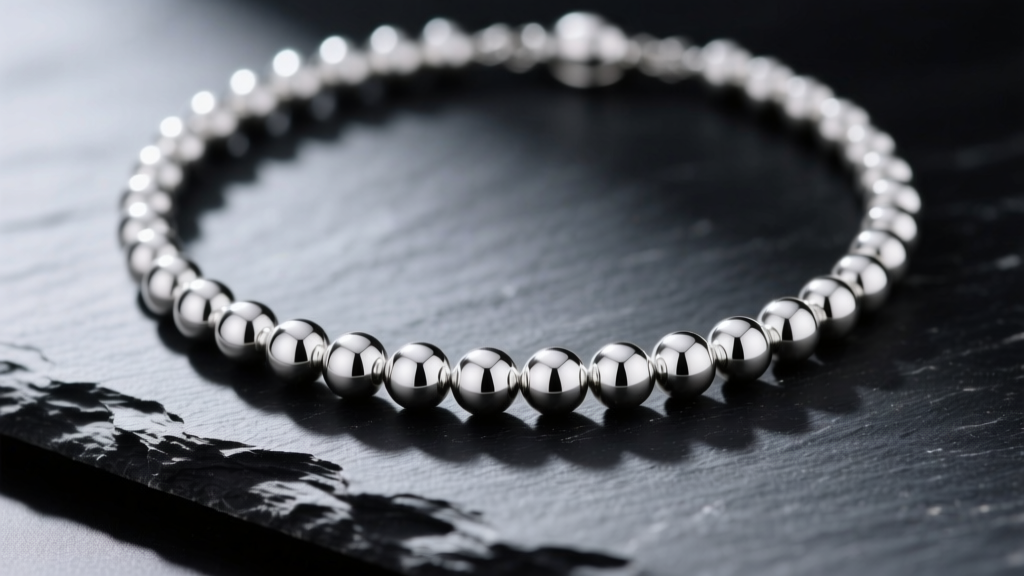
A sterling silver ball necklace is a masterclass in minimalist elegance, offering a fluid, liquid-metal drape that complements everything from casual tees to evening wear. However, the very anatomy that makes this necklace style so beautiful—the continuous sequence of spherical beads—also makes it uniquely susceptible to trapped debris and accelerated tarnishing. Unlike a flat box chain or a simple snake chain, the microscopic crevices between the beads and the internal drill holes harbor sebum, dead skin cells, and cosmetic residues. Over time, this buildup not only dulls the silver but can degrade the internal stringing wire.
To maintain the brilliant luster and structural integrity of your jewelry, you must move beyond generic wiping and adopt a targeted care regimen. Below is a comprehensive, jeweler-approved guide to cleaning, maintaining, and storing your sterling silver ball necklace.
The Metallurgy of Tarnish: Why 925 Silver Dulls
To properly care for your necklace, you must first understand what it is made of. Pure silver (99.9%) is too soft to be crafted into durable jewelry, particularly the delicate 1.5mm to 3.0mm beads used in ball necklaces. Therefore, jewelers use 925 sterling silver, an alloy consisting of 92.5% pure silver and 7.5% secondary metals, almost always copper. According to The London Assay Office, this copper addition provides the necessary tensile strength, but it is also the primary culprit behind tarnish.
Copper reacts readily with hydrogen sulfide and moisture in the atmosphere to form silver sulfide, a dark, dull layer on the surface of the metal. Because a ball necklace has a high surface-area-to-volume ratio and sits directly against the pulse points of your neck—where heat and humidity are concentrated—the electrochemical reaction that causes tarnishing happens significantly faster than it would on a pair of silver earrings.
The Unique Anatomy of a Ball Necklace
Before applying any cleaning solution, you must identify how your specific necklace is constructed. Most high-quality sterling silver ball necklaces are not solid chains; rather, they are individual hollow or semi-solid silver beads strung on a 0.015-inch or 0.018-inch nylon-coated stainless steel wire. The necklace is secured at the ends using 2x2mm sterling silver crimp tubes and a lobster claw clasp.
Jeweler's Insight: Never use harsh commercial silver dips on wire-strung ball necklaces. The acidic thiourea-based chemicals in liquid dips can strip the nylon coating off the internal wire, leading to micro-fraying and eventual snapping at the crimp bead.
Daily Preventative Maintenance
The most effective way to clean your sterling silver ball necklace is to prevent the tarnish and buildup from occurring in the first place. The pH level of your sweat, combined with environmental pollutants, creates a highly corrosive microclimate against your skin.
- The 'Last On, First Off' Rule: Always put your necklace on after applying perfume, hairspray, and lotion. The alcohols and emulsifiers in cosmetics will settle into the gaps between the silver balls, creating a sticky paste that attracts dust.
- Post-Wear Wipe Down: Keep a untreated, lint-free microfiber cloth near your jewelry box. Gently run the necklace through the cloth when you take it off at night to remove acidic sweat and skin oils.
- Avoid Chlorine Exposure: Never wear your sterling silver ball necklace in swimming pools or hot tubs. Chlorine reacts with the copper alloy to form copper chloride, which can cause permanent pitting and a greenish-black discoloration that cannot be polished out.
The Deep Cleaning Protocol
When your necklace has lost its shine or feels gritty between the beads, it is time for a deep clean. Choose your method based on the severity of the tarnish.
Method 1: The Mild Surfactant Soak (For Routine Grime)
This method is entirely safe for all stringing materials and is best for removing body oils and cosmetic buildup trapped in the bead crevices.
- Line a small glass bowl with a soft cloth to prevent scratching.
- Add 1 cup of lukewarm water and 3 drops of mild, phosphate-free dish soap (like Dawn).
- Submerge the necklace for 5 to 10 minutes.
- Using a soft-bristled baby toothbrush, gently brush the gaps between the beads and the areas immediately surrounding the crimp tubes and clasp.
- Rinse thoroughly under distilled water and pat dry with a microfiber cloth.
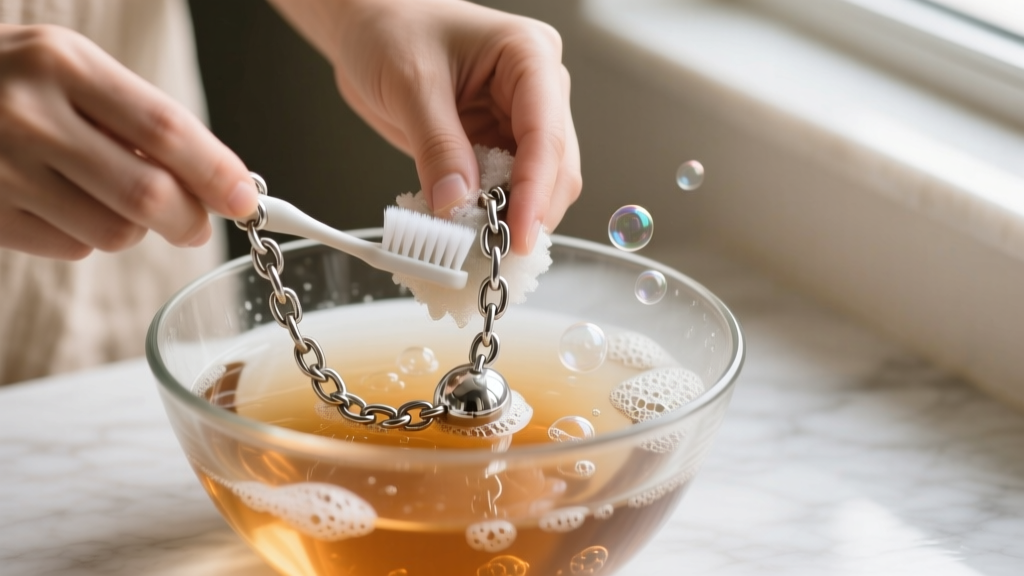
Method 2: Electrochemical Reduction (For Heavy Tarnish)
If your necklace has developed a yellow or black silver sulfide layer, polishing cloths will struggle to reach the tight spaces between the balls. Instead, use an ion-transfer bath. As noted by the Gemological Institute of America (GIA), this method reverses the chemical reaction without removing any base metal.
- Line a glass baking dish with heavy-duty aluminum foil, shiny side up.
- Place the necklace on the foil, ensuring the silver touches the aluminum.
- Sprinkle 2 tablespoons of baking soda and 1 tablespoon of sea salt over the necklace.
- Pour 2 cups of boiling water into the dish. You will immediately see bubbling and smell a faint sulfur (rotten egg) odor as the silver sulfide converts back to pure silver.
- Leave for 3 to 5 minutes, then remove with wooden tongs, rinse in cool water, and dry completely.
Warning: Do not use this method if your ball necklace features intentionally oxidized (blackened) details, as the bath will strip the dark patina.
Cleaning Methods Compared
| Cleaning Method | Best Used For | Effect on Stringing Wire | Frequency |
|---|---|---|---|
| Microfiber Wipe | Daily oil & sweat removal | None | Daily |
| Surfactant Soak | Cosmetic & sebum buildup | Safe for nylon coating | Monthly |
| Foil & Baking Soda | Heavy black silver sulfide | Safe (if rinsed well) | Bi-Annually |
| Commercial Silver Dip | Solid silver chains only | Degrades nylon coating | Never |
Drying, Polishing, and Long-Term Storage
Water spots are the enemy of a mirror finish. After any wet cleaning method, you must ensure the necklace is bone-dry before storing it. Use a hairdryer on the 'cool' setting to blow air through the microscopic drill holes of the beads, ensuring no moisture remains trapped against the internal steel wire.
For polishing, invest in a high-quality treated silver cloth, such as a Sunshine Cloth. These cloths are impregnated with micro-abrasives and anti-tarnish agents. Gently pull the necklace through the cloth, pinching the beads to polish the sides that face inward. Do not wash these cloths, as laundering removes the active polishing compounds.
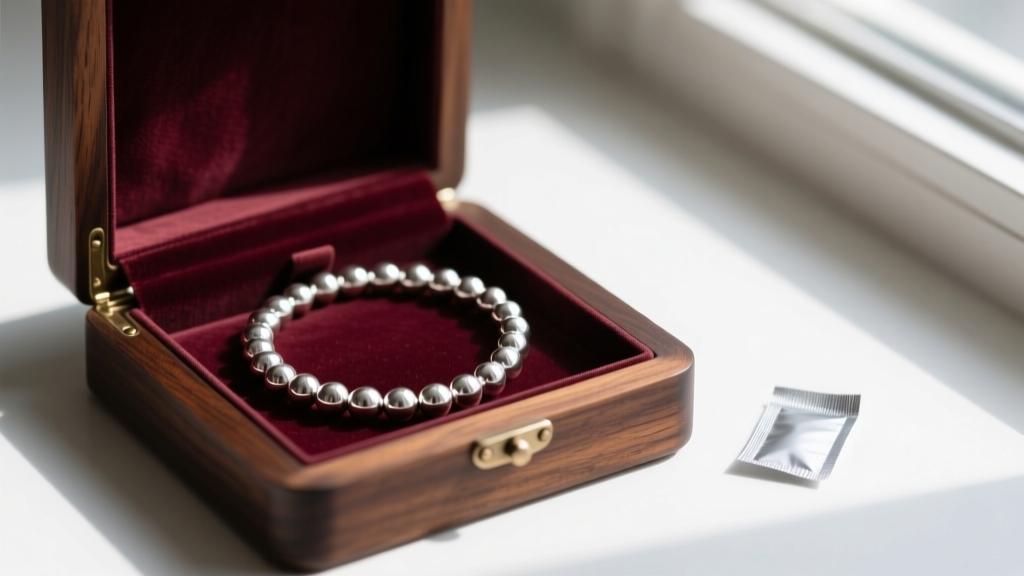
When storing your sterling silver ball necklace, never leave it exposed to the open air on a dresser or bathroom counter. The humidity from showers will accelerate tarnishing. Instead, coil the necklace loosely to prevent kinking the internal wire, and place it in an airtight ziplock bag or a sealed velvet pouch. For maximum protection, include a 3M anti-tarnish strip or a small packet of silica gel to absorb ambient moisture and neutralize sulfur gases.
Troubleshooting Common Ball Necklace Issues
Stiff Lobster Claw Clasp: If your clasp becomes difficult to open, it is likely due to a buildup of lotion or micro-corrosion on the internal spring mechanism. Apply a single drop of mineral oil to the clasp lever, work it back and forth, and wipe away the excess. Never use WD-40, as it leaves a gummy residue that attracts dust.
Wire Kinking: Ball necklaces are prone to kinking if stored improperly or slept in. If the nylon-coated wire develops a sharp bend between two beads, do not try to bend it sharply back into place. Instead, gently massage the wire between your thumb and forefinger, applying gradual pressure to encourage the metal core to relax back into a natural curve. If the wire shows signs of fraying near the crimp tube, take it to a professional jeweler for immediate restringing to prevent the loss of your silver beads.


