Wild Boar Tusk Necklace Care: Fixing Cracks & Odor
Learn how to troubleshoot common wild boar tusk necklace issues. Expert tips on fixing cracks, eliminating odor, and securing caps for lasting wear.

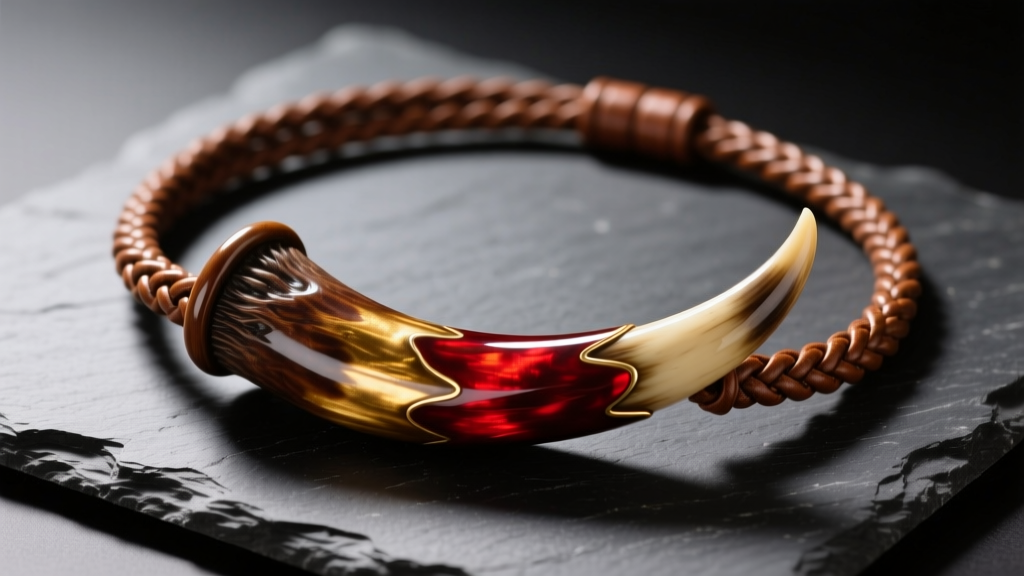
Wearing a wild boar tusk necklace is a bold statement that connects the wearer to the raw, untamed elements of nature. However, as an organic material, a tusk is highly reactive to its environment. Unlike forged metals or faceted gemstones, bone and ivory-like structures are hygroscopic, meaning they absorb and release moisture from the air. In 2026, the market for ethically sourced organic jewelry has surged, but many wearers find themselves troubleshooting structural cracks, lingering organic odors, and failing bail attachments. This comprehensive guide provides expert-level problem-solving techniques to restore, stabilize, and maintain your wild boar tusk pendant.
The Anatomy of a Tusk: Why They Crack and Degrade
To effectively troubleshoot a damaged tusk, you must first understand its tripartite anatomy. A wild boar tusk (Sus scrofa) consists of three distinct layers: the outer enamel cap, the dense dentin body, and the hollow pulp cavity at the base. The enamel is incredibly hard but brittle, while the dentin is porous and contains microscopic tubules that once housed living tissue.
Cracking almost always occurs due to rapid fluctuations in relative humidity (RH). When the ambient RH drops below 30%, the moisture trapped within the dentin evaporates too quickly, causing the material to shrink and split. Conversely, sudden spikes in humidity can cause the dentin to expand faster than the rigid enamel cap, leading to delamination or horizontal stress fractures. Maintaining a stable environment between 45% and 55% RH is the first line of defense, but when prevention fails, targeted repair is necessary.
Troubleshooting Structural Cracks and Splits
Not all cracks are created equal. The repair method depends entirely on the depth, location, and width of the fissure. Using the wrong adhesive can permanently stain the porous dentin or create an unsightly, cloudy residue.
Step-by-Step Epoxy and CA Glue Repair
- Micro-Fissures (Hairline Cracks): For cracks less than 0.5mm wide, use a low-viscosity cyanoacrylate (CA) glue, such as Starbond EM-02. Apply a single drop to the crack and allow capillary action to draw it deep into the fissure. Warning: CA glue can cause "white hazing" on raw dentin due to a chemical reaction with residual moisture. Always test on an inconspicuous area near the base first.
- Macro-Splits (Visible Gaps): For wider splits, CA glue will cure too brittle and fail under stress. Instead, use a high-quality, two-part clear epoxy like System Three Clear Coat or Loctite E-00CL. Mix the resin and hardener in a strict 1:1 ratio, degas it in a vacuum chamber if possible to remove air bubbles, and apply it using a fine-tipped syringe. Clamp the tusk gently using padded jewelry pliers and allow it to cure for a full 24 hours at room temperature (72°F/22°C).
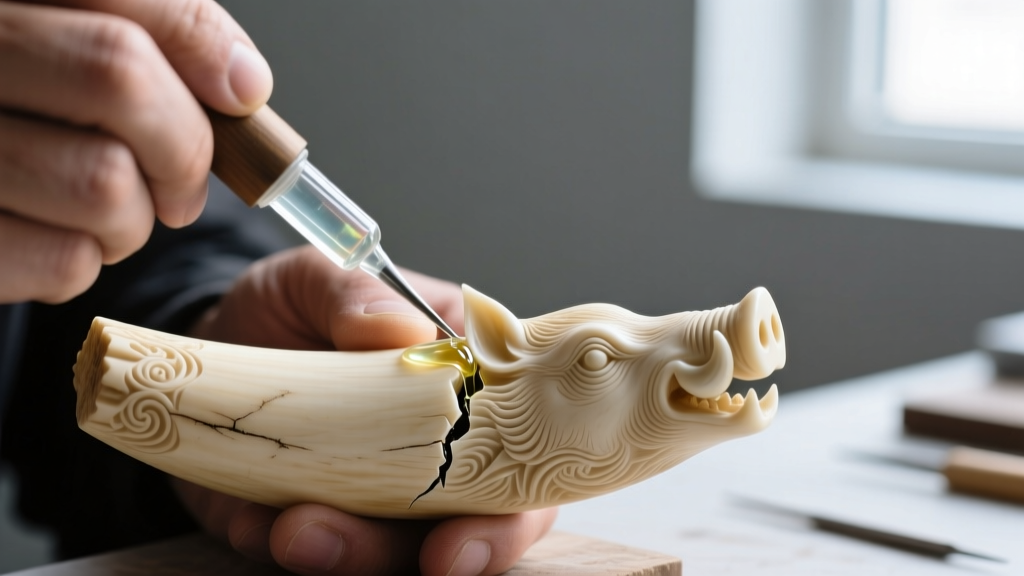
Once the epoxy has fully cross-linked, carefully scrape away the excess with a dull brass spatula to avoid scratching the surrounding enamel. Finish by wet-sanding the repaired area with 2000-grit to 5000-grit micro-mesh pads, followed by a final polish with a microcrystalline wax.
Eliminating Organic Odors Without Damaging Enamel
A persistent, earthy, or sour odor is one of the most common complaints with wild boar tusk necklaces. This smell originates from two sources: residual organic matter decaying inside the hollow pulp cavity, or the porous dentin absorbing the wearer's sweat and skin oils over time.
Many amateur jewelers mistakenly use baking soda pastes or harsh bleach solutions to neutralize odors. According to conservation guidelines outlined by the Gemological Institute of America (GIA) regarding organic gems and bone, alkaline and highly oxidative cleaners will permanently etch the enamel cap and degrade the collagen matrix within the dentin, leading to severe structural weakening.
| Cleaning Agent | Target Area | Safety for Enamel | Safety for Dentin |
|---|---|---|---|
| 3% Hydrogen Peroxide | Pulp Cavity | High Risk (Etching) | Moderate |
| Enzymatic Cleaner | Pulp Cavity | Safe | Safe |
| Mild Castile Soap | Enamel Surface | Safe | Safe |
| Baking Soda Paste | Stubborn Stains | High Risk (Scratching) | Moderate |
The Enzymatic Flush Method
To safely eliminate odors originating from the pulp cavity, use an unscented, pet-safe enzymatic cleaner (such as Nature's Miracle). These cleaners utilize targeted bacteria to consume the odor-causing organic proteins without altering the pH of the tusk. Using a pipette, flush the hollow base of the tusk with the enzymatic solution, let it sit for 15 minutes, and then rinse thoroughly with distilled water. Allow the tusk to air-dry in a well-ventilated area away from direct sunlight for 48 hours. Once dry, seal the pulp cavity by melting a small amount of Renaissance Wax into the hollow space to prevent future moisture and bacteria ingress.
Securing the Bail: Preventing Cap Slippage
The mechanical connection point where the tusk meets the chain is a notorious failure point. Traditional screw-in metal caps rely on the friction between the metal threads and the soft dentin of the pulp cavity. Over time, the dentin compresses, the threads strip, and the cap pulls out, often resulting in a lost pendant.
Upgrading to a Threaded Brass Insert
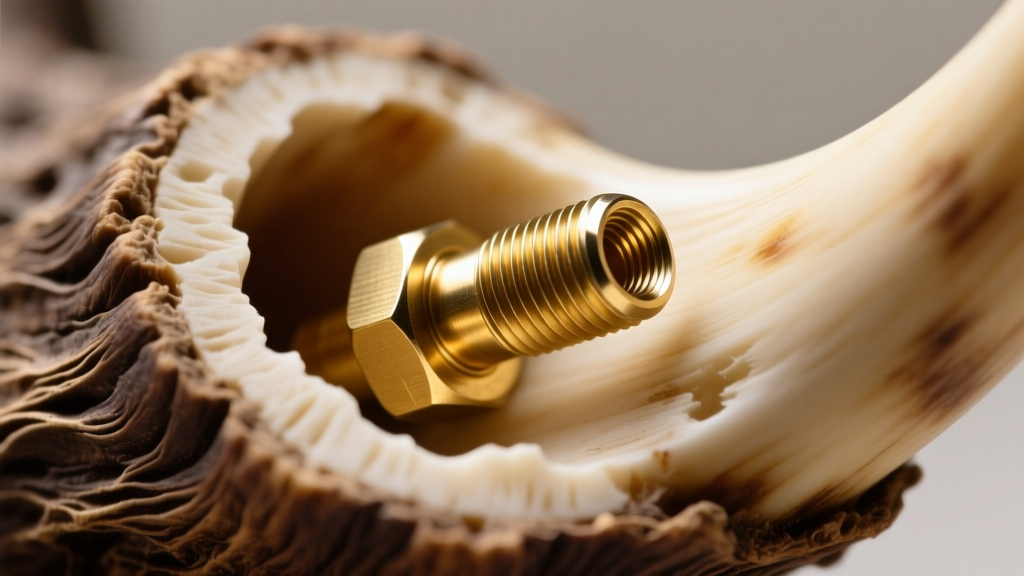
To permanently solve cap slippage, abandon direct-to-dentin threading. Instead, install a threaded brass insert. Select an M4 x 6mm knurled brass insert. Coat the exterior of the insert with a slow-curing steel-reinforced epoxy like J-B Weld. Carefully press the insert into the cleaned, dry pulp cavity, ensuring it sits perfectly flush with the base. Once the epoxy cures for 24 hours, you can securely screw a standard M4 metal bail cap into the brass threads. This creates a metal-on-metal connection that will never strip, regardless of the pendant's weight or the chain's tension.
The 16-Gauge Wire Wrap Alternative
If you prefer a capless, artisanal look, a custom friction-wrap bail is highly secure when executed correctly. Use 16-gauge dead-soft copper or sterling silver wire. The 16-gauge thickness provides enough tensile strength to support heavy tusks without bending, while the dead-soft temper allows the wire to grip the natural ridges of the tusk tightly. Create a three-wrap bundle just below the enamel line, twist the wire to form a secure bail loop, and carefully tuck the sharp tail ends into the grooves of the dentin using a nylon-jawed plier to prevent marring the surface.
Ethical and Legal Sourcing Troubleshooting
While wild boar (Sus scrofa) is not an endangered species and is generally exempt from the strict international trade bans outlined in the CITES Species Database, transporting organic wildlife parts across state or national borders can still trigger legal hurdles. In 2026, agricultural and wildlife transport laws remain stringent regarding the movement of unprocessed animal remains to prevent the spread of diseases like African Swine Fever.
Pro-Tip: Always travel with a notarized certificate of origin or a receipt from a licensed taxidermist or butcher. If your tusk necklace is fully polished, sealed with wax, and mounted with jewelry hardware, it is legally classified as a "finished handicraft" in most jurisdictions, vastly reducing the risk of confiscation at agricultural checkpoints.
Preventative Maintenance for Long-Term Wear
Troubleshooting is only necessary when preventative care fails. To keep your wild boar tusk necklace in pristine condition, establish a biannual maintenance routine. Every six months, gently wipe the enamel surface with a slightly damp microfiber cloth to remove acidic skin oils. Follow this by applying a microscopically thin layer of pure Jojoba oil or Renaissance Wax to the exposed dentin areas. Avoid mineral oils or neatsfoot oil, as these can oxidize and turn rancid over time, reintroducing the very odors you worked so hard to eliminate. By respecting the organic nature of the material and utilizing modern jewelry stabilization techniques, your tusk pendant will remain a durable and striking heirloom for decades.


