How Do I Clean Sterling Silver Necklace Styles? A Buyer's Guide
Learn how do I clean sterling silver necklace styles safely. This buyer's guide covers silver alloys, tarnish prevention, and expert maintenance tips.

The Metallurgy of Tarnish: What Buyers Must Know
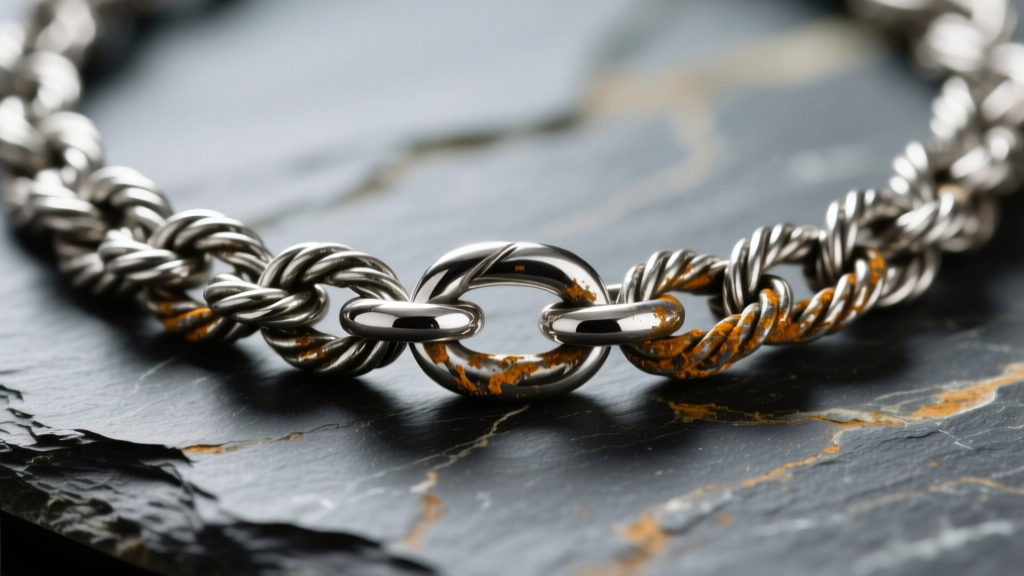
When shopping for fine jewelry, understanding the metallurgy of your purchase is just as critical as evaluating its aesthetic design. To answer the common question, how do I clean sterling silver necklace pieces effectively, we first must understand why they tarnish. Pure silver (99.9%) is highly resistant to tarnish, but it is far too soft for daily wear. To create sterling silver, metallurgists alloy 92.5% pure silver with 7.5% base metals—most commonly copper.
It is this 7.5% copper content that acts as the culprit for oxidation. When copper is exposed to airborne sulfur compounds, humidity, and the natural acids in human skin, it forms copper sulfide, manifesting as the dull, yellowish, or blackish film we recognize as tarnish. According to the Silver Institute, environmental factors like wool, felt, and certain foods (eggs, onions) accelerate this sulfur exchange. As a buyer, recognizing this chemical reality shifts your focus from merely reacting to tarnish to proactively selecting alloys and coatings that resist it.
Evaluating Silver Grades: Standard 925 vs. Argentium
Not all sterling silver is created equal. While the traditional 92.5% standard has dominated the market for centuries, modern metallurgical advancements have introduced superior alternatives for buyers prone to heavy tarnish or those living in high-humidity coastal regions.
Alloy Comparison Chart
| Alloy Type | Composition | Tarnish Resistance | Best Use Case |
|---|---|---|---|
| Standard 925 Sterling | 92.5% Silver, 7.5% Copper | Low to Moderate | Affordable everyday chains, oxidized artisan pendants |
| Argentium 935 | 93.5% Silver, Copper, Germanium | High | Low-maintenance wedding bands, delicate layering chains |
| Argentium 960 | 96% Silver, Copper, Germanium | Very High | Heirloom pendants, high-end gemstone settings |
| Britannia Silver | 95.8% Silver, 4.2% Copper | Moderate | Heavy cast pendants, vintage-style lockets |
As noted by the Gemological Institute of America (GIA), Argentium silver replaces a portion of the copper with germanium. This creates a transparent layer of germanium dioxide on the surface, which acts as an invisible barrier against sulfur, drastically reducing the need for aggressive chemical cleaning.
How Do I Clean Sterling Silver Necklace Pieces Safely?
The method you choose to clean your necklace must be dictated by its construction, finish, and any gemstones it holds. Using the wrong technique can permanently ruin an artisan finish or fracture a porous gem.
Method 1: The Electrochemical Bath (For Plain Chains Only)
This method uses a redox (reduction-oxidation) reaction to convert silver sulfide back into pure silver without removing any metal.
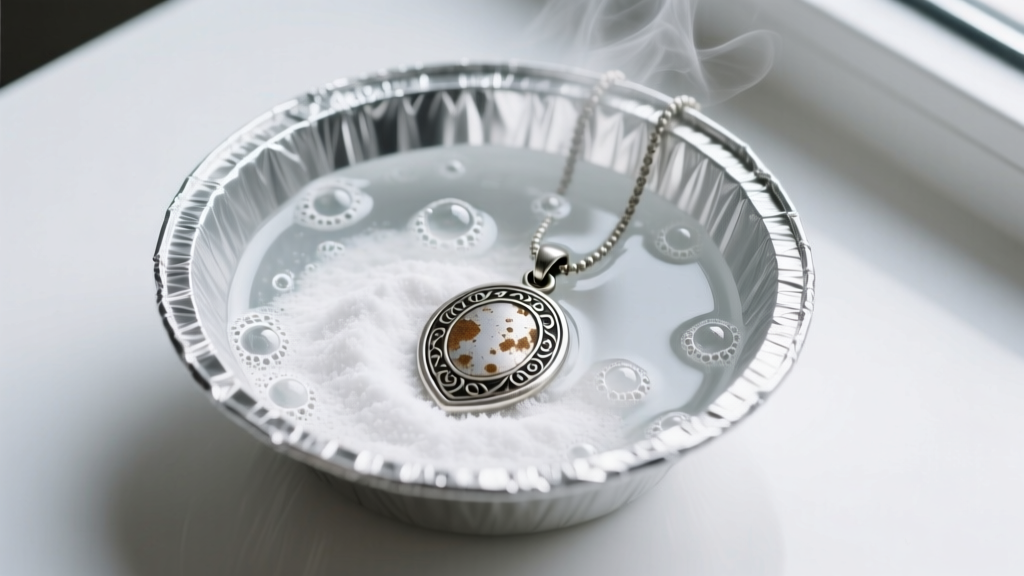
- Materials: Aluminum foil, boiling water, baking soda (sodium bicarbonate), and sea salt.
- Process: Line a glass bowl with aluminum foil (shiny side up). Place the plain silver chain on the foil. Sprinkle with 1 tablespoon of baking soda and 1 teaspoon of salt. Pour boiling water over the chain until submerged.
- The Science: The aluminum is more reactive than silver. In the hot electrolyte solution, the sulfur atoms detach from the silver and bond with the aluminum, leaving the silver bright.
- CRITICAL WARNING: Never use this on antiqued/oxidized silver (e.g., David Yurman or John Hardy styles), as it will strip the intentional dark patina from the crevices. Never use on necklaces with pearls, opals, turquoise, or emeralds, as the heat and alkalinity will destroy their organic or porous structures.
Method 2: Surfactant Wash (For Gemstone Pendants)
For necklaces featuring delicate gemstones, a gentle mechanical and chemical approach is required.
- Mix a few drops of phosphate-free, ammonia-free dish soap (like Dawn) into a bowl of lukewarm distilled water.
- Submerge the necklace for 3 to 5 minutes to loosen sebum and cosmetic buildup.
- Use an extra-soft baby toothbrush to gently agitate the bail (the loop connecting the pendant to the chain) and the back of the gemstone setting where lotions accumulate.
- Rinse under a gentle stream of distilled water and pat dry with a microfiber cloth. Air-drying tap water can leave hard water calcium spots on the silver.
Solder Points and Clasp Vulnerabilities
When inspecting a sterling silver necklace for purchase, pay close attention to the solder points—particularly around the springring or lobster clasp, and the jump rings connecting the pendant. Solder used in silver jewelry often contains lower karat silver, brass, or cadmium to lower the melting point during manufacturing. These base-metal solders tarnish at a much faster rate than the 925 chain itself and can appear as stubborn dark spots that standard polishing cloths cannot remove. Furthermore, repeated use of harsh commercial liquid silver dips (which contain thiourea) can cause micro-pitting at these solder joints, eventually leading to chain failure and loss of the pendant.
Protective Coatings to Look For When Buying
If you want to minimize the question of how do I clean sterling silver necklace tarnish from your daily life, seek out pieces with factory-applied protective barriers.
- Rhodium Plating: A precious metal from the platinum family. It provides a brilliant, cool-white, mirror-like finish that is completely impervious to tarnish. However, on high-friction areas, it will wear off in 1 to 3 years and require professional re-plating.
- E-Coating (Electrophoretic Deposition):strong> A clear, nano-ceramic or polymer coating applied via an electrical current. It is highly durable, flexible, and can protect the silver for up to a decade, though it can sometimes impart a slightly 'plasticky' luster if applied too thickly.
Storage and Prevention Frameworks
Prevention is vastly superior to restoration. The way you store your sterling silver between wears dictates how often you will need to clean it.
Expert Insight: Never store sterling silver in standard polyethylene ziplock bags or PVC plastic containers. These plastics emit sulfur-bearing gasses as they degrade, creating a micro-climate that accelerates tarnishing. Furthermore, trapping ambient humidity inside a sealed plastic bag guarantees oxidation.
Instead, utilize the following storage protocol:
- Pacific Silvercloth: Invest in storage bags made from Pacific Silvercloth, a specialized cotton flannel embedded with microscopic silver particles. These embedded particles act as a sacrificial anode, absorbing sulfur from the air before it can reach your necklace.
- Activated Charcoal & Silica: Place a small sachet of activated charcoal or silica gel desiccant inside your jewelry box to control ambient moisture and trap volatile organic compounds (VOCs).
- Anti-Tarnish Strips: 3M anti-tarnish strips utilize a copper-based polymer that chemically binds to airborne sulfides. Replace these strips every 6 months for maximum efficacy.
Final Verdict for Buyers
Ultimately, buying a sterling silver necklace is an investment in a living metal that interacts with its environment. By prioritizing advanced alloys like Argentium, verifying the quality of solder joints, and utilizing electrochemical cleaning methods safely, you can maintain the structural integrity and brilliant luster of your jewelry for generations. Always match your cleaning methodology to the specific finish and gemstone profile of your piece to avoid irreversible damage.


