Ultimate Care Guide for Your Sterling Silver Zipper Necklace
Learn expert tips to clean, polish, and maintain your sterling silver zipper necklace. Prevent tarnish and keep the zipper mechanism gliding smoothly.

Why Your Silver Zipper Necklace Demands Specialized Care
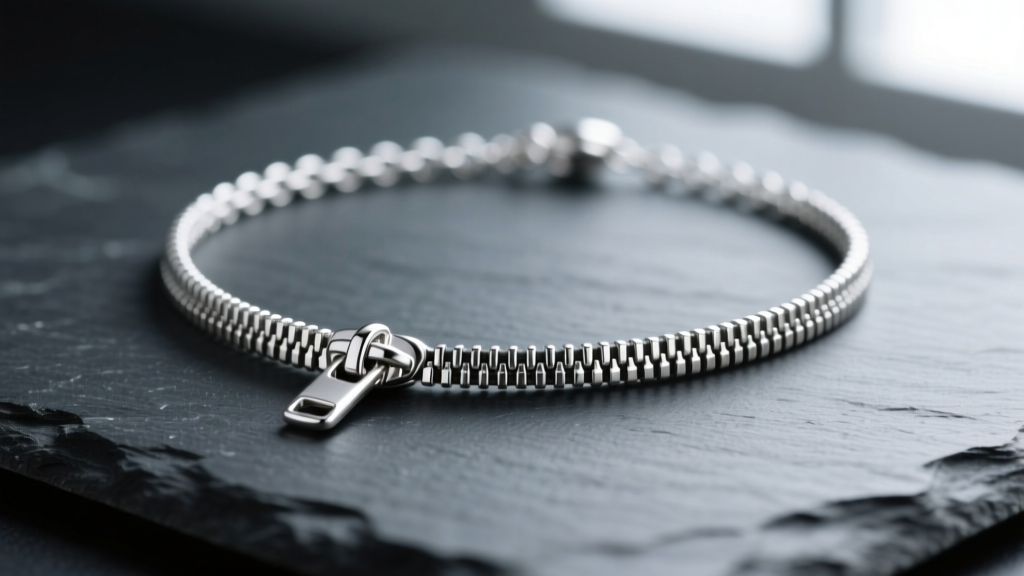
As we navigate the jewelry trends of 2026, industrial-chic and hardware-inspired accessories remain at the forefront of contemporary style. Among these, the silver zipper necklace stands out as a bold, interactive statement piece. However, owning a functional micro-zipper crafted from precious metal introduces a unique duality in maintenance: you are not just caring for a piece of fine jewelry, but also for a精密 mechanical device. Standard silver cleaning methods can easily ruin the delicate slider mechanism, while ignoring the metal's metallurgical needs will result in severe oxidation. This comprehensive guide will teach you how to clean, lubricate, and store your sterling silver zipper necklace to ensure it remains both brilliant and fully functional.
The Metallurgy of 925 Sterling Silver and Tarnish
To properly care for your necklace, you must first understand what it is made of. Pure silver (999) is too soft to hold the intricate shape of zipper teeth or withstand the friction of a sliding mechanism. Therefore, jewelers use 925 sterling silver, an alloy consisting of 92.5% pure silver and 7.5% copper. According to the Gemological Institute of America (GIA), it is this copper content that reacts with sulfur and moisture in the environment to create silver sulfide—the blackish film we recognize as tarnish. The crevices between the zipper teeth and the hollow cavity of the slider are prime traps for sulfur-rich skin oils, lotions, and environmental pollutants, accelerating localized tarnishing.
Step-by-Step Cleaning Protocol
Never use harsh chemical silver dips on a zipper necklace. These liquids can seep into the slider's internal cavity, leaving behind a crusty, white chemical residue that will permanently jam the mechanism. Instead, follow this gentle, mechanical cleaning process.
Materials Required
- Phosphate-free mild dish soap (e.g., original blue Dawn)
- Lukewarm distilled water (tap water contains minerals that cause spotting)
- A soft-bristled baby toothbrush or specialized jewelry cleaning brush
- Microfiber drying cloth
- Can of compressed air or a hairdryer with a "cool" setting
The Washing Process
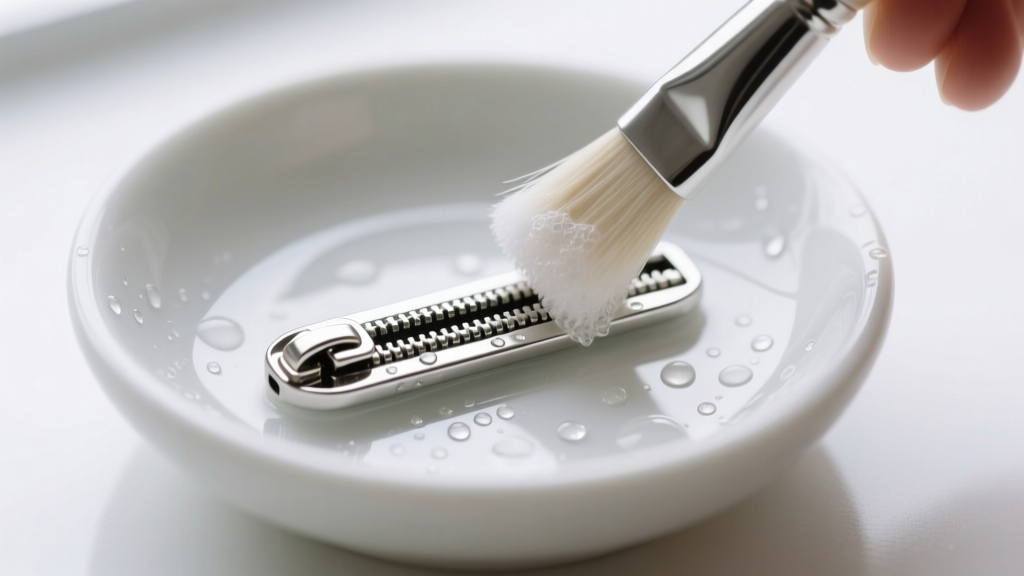
Mix a few drops of the mild dish soap into a bowl of lukewarm distilled water. Submerge the silver zipper necklace for no more than three minutes. Using the soft-bristled brush, gently agitate the bristles along the zipper teeth in a linear motion—never scrub in circles, as this can bend the micro-teeth. Pay special attention to the pull tab and the hinge of the slider. Rinse the piece thoroughly under a gentle stream of distilled water to remove all soap residue.
Crucial Drying Techniques
Moisture is the enemy of the zipper mechanism. If water is left inside the slider, it will promote rapid copper oxidation and cause the slider to stick. After patting the chain dry with a microfiber cloth, use a can of compressed air to blow out any hidden moisture from inside the slider cavity and between the teeth. Alternatively, use a hairdryer on the coolest setting, keeping it at least six inches away from the silver to prevent thermal shock.
Maintaining the Zipper Mechanism: Lubrication and Alignment
A common mistake jewelry owners make is applying household oils, WD-40, or mineral oil to a sticky zipper. These wet lubricants will attract microscopic dust, lint, and dead skin cells, eventually creating a thick sludge that locks the slider in place. Furthermore, oils can degrade any protective rhodium plating that might be present on the silver.
The Graphite Trick
The safest and most effective lubricant for a silver jewelry zipper is dry graphite. Take a standard 2B graphite pencil and gently rub the lead back and forth across the interlocking teeth of the zipper. The graphite powder will coat the metal, providing a dry, frictionless surface that allows the slider to glide smoothly without attracting debris. Work the slider up and down the chain a few times to distribute the graphite evenly into the internal cavity.
Wax Coating for Long-Term Protection
For long-term maintenance, museum-grade microcrystalline waxes, such as Renaissance Wax, are highly recommended by conservationists. Applying a microscopic layer of wax to the chain and teeth not only provides a dry lubricant but also creates a barrier against atmospheric sulfur. As noted by experts at Town Talk Polish, creating a physical barrier is one of the most effective ways to slow down the oxidation process on intricate silver items.
Chemical and Mechanical Hazards to Avoid
To preserve the structural integrity of your silver zipper necklace, you must avoid specific environmental and mechanical hazards:
- Ultrasonic Cleaners: While excellent for solid gemstone rings, the high-frequency cavitation bubbles in an ultrasonic cleaner can violently rattle the tiny internal spring and pin inside the zipper slider, causing it to dislodge or deform the soft silver teeth.
- Chlorine and Bleach: Swimming pools and household cleaners contain chlorine, which reacts with sterling silver to form silver chloride, a permanent white, corrosive crust that cannot be polished away.
- Polishing Pastes: Avoid thick jeweler's rouge pastes. They are difficult to remove from the deep grooves between the zipper teeth and will dry into a hard, chalky mess.
Proper Polishing Techniques
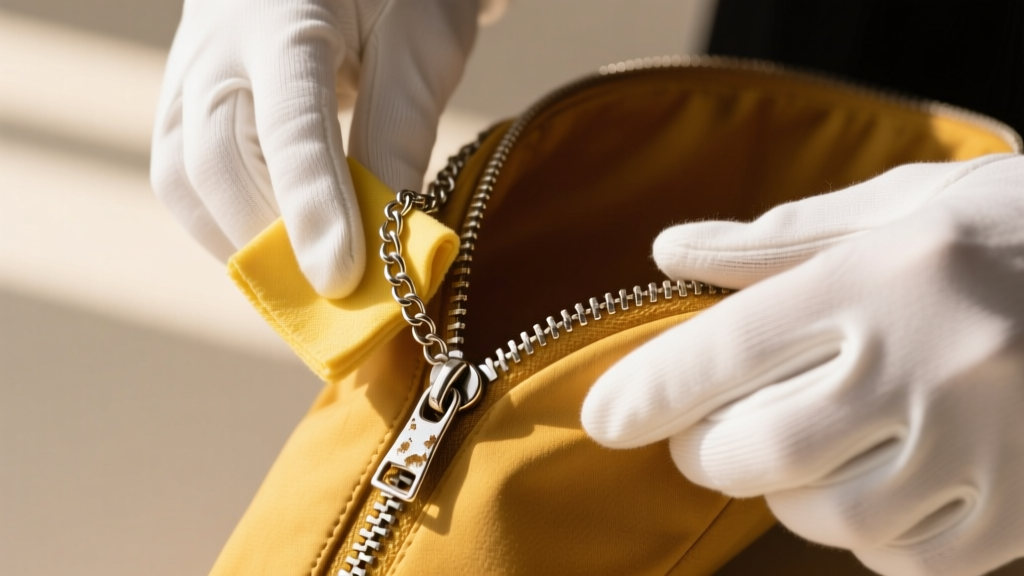
When your necklace loses its luster, use a treated polishing cloth (like a Sunshine cloth) rather than liquid polishes. The key to polishing a zipper necklace is directional rubbing. Always wipe the chain and the flat surfaces of the slider in straight lines. When you encounter the zipper teeth, fold the cloth so that only the very edge of the fabric glides over the tops of the teeth, preventing the cloth from snagging on the metal ridges and leaving behind yellow fibers.
Strategic Storage Solutions
How you store your silver zipper necklace is just as important as how you clean it. Leaving it exposed to the air on a jewelry stand guarantees rapid tarnishing. Store the necklace in an airtight, zip-lock plastic bag. Inside the bag, include a 3M anti-tarnish strip, which actively absorbs sulfur gases from the enclosed air. Crucially, never store the necklace fully zipped. Keeping the slider at the top of the chain places constant tension on the internal spring and the metal teeth. Store the necklace half-zipped or fully unzipped, laid flat in a soft pouch to prevent the chain from kinking.
Troubleshooting Common Zipper Necklace Failures
Even with meticulous care, mechanical issues can arise. Use this diagnostic table to address common problems without damaging the silver.
| Issue | Probable Cause | Expert Solution |
|---|---|---|
| Slider is stuck or difficult to move | Debris buildup or microscopic tarnish inside the slider cavity. | Apply 2B graphite to the teeth. Gently wiggle the slider side-to-side while pulling. Never force it, or the teeth will strip. |
| Teeth separate behind the slider | The slider cavity has widened over time due to metal fatigue or pulling. | Take the piece to a professional jeweler. They will use nylon-jaw pliers to gently pinch the top and bottom plates of the slider back into alignment. |
| Black, powdery residue on the chain | Severe copper oxidation (heavy tarnish) due to high humidity exposure. | Use a specialized silver polishing cloth with embedded micro-abrasives. Avoid liquid dips, which can weaken the solder joints on the zipper stops. |
| Yellow fibers caught in the teeth | Using a low-quality or overly fuzzy polishing cloth. | Use a pair of precision tweezers to carefully extract the fibers. Do not pull the zipper through the cloth to dislodge them. |
Final Thoughts on Hardware Jewelry Maintenance
A silver zipper necklace is a marvel of miniature engineering and metallurgical art. By respecting the dual nature of the piece—treating it as both a precious metal accessory and a functional mechanical device—you can ensure it remains a staple in your wardrobe for decades. Consistent, gentle cleaning, proper dry lubrication, and airtight storage are the pillars of preserving this unique edge-luxe aesthetic.


