How to Clean and Maintain a Teardrop Pendant Necklace
Learn how to safely clean, store, and maintain your teardrop pendant necklace. Expert tips for gold, silver, and gemstone teardrop pendants.

The Unique Anatomy of a Teardrop Pendant
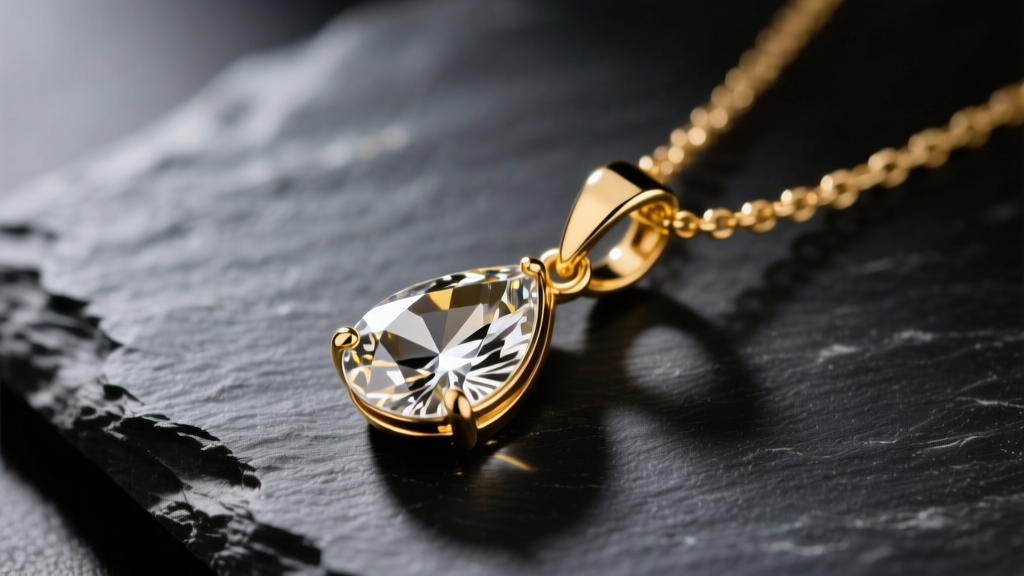
A teardrop pendant necklace is a timeless silhouette, but its distinct shape introduces specific vulnerabilities that standard round or square pendants do not face. The teardrop (or pear) shape concentrates the majority of the pendant's mass at the bottom, tapering to a fine point known as the culet. This tapered tip is highly susceptible to chipping upon impact with hard surfaces. Furthermore, the bail—the loop that connects the pendant to the chain—often sits at an asymmetrical angle relative to the center of gravity, causing uneven friction and accelerated wear on both the bail and the chain.
Proper care, maintenance, and cleaning of a teardrop pendant necklace require an understanding of these structural quirks, as well as the specific metallurgical and gemological properties of the piece. According to the Gemological Institute of America (GIA), improper cleaning techniques are the leading cause of preventable damage to delicate gemstone settings. This guide provides a comprehensive, expert-level framework for preserving the brilliance and structural integrity of your teardrop jewelry.
Material-Specific Cleaning Protocols
Before applying any liquid or mechanical cleaning method, you must identify the exact materials of your teardrop pendant. What works for a solid 14k gold diamond teardrop will instantly ruin a gold vermeil opal teardrop.
Solid Gold (14k and 18k) & Platinum
Solid gold and platinum are highly durable and resistant to tarnish. For solid gold teardrop pendants featuring diamonds, sapphires, or rubies, an ultrasonic cleaner operating at 40kHz to 42kHz is generally safe. The high-frequency acoustic cavitation dislodges sebum and lotion buildup from the intricate prongs often used to secure pear-cut stones. However, if your gold teardrop features fracture-filled diamonds or emeralds (which are typically oil-treated), ultrasonic waves will shatter the stone or strip the oil, leaving it cloudy and fractured.
Sterling Silver & Gold Vermeil
Sterling silver (925) is prone to oxidation, forming a black silver sulfide layer when exposed to sulfur in the air. While chemical dips (like Tarn-X) remove tarnish instantly, they also strip the silver's natural patina and can pit the metal over time. For gold vermeil—which the FTC defines as a sterling silver base plated with at least 2.5 microns of gold—never use ultrasonic cleaners or harsh chemical dips. The acoustic waves will cause the thin gold layer to delaminate and peel. Instead, rely on manual, gentle polishing.
Porous and Organic Gemstones (Opal, Pearl, Turquoise)
Teardrop opals and pearls are frequently bezel-set to protect their fragile edges. According to the American Gem Society (AGS), porous stones act like sponges. Submerging a bezel-set opal teardrop in water can trap moisture between the metal backing and the stone, leading to 'crazing' (internal cracking) or discoloration. These stones must only be surface-cleaned with a barely damp microfiber cloth.
The 5-Step Teardrop Cleaning Method
For the vast majority of teardrop pendant necklaces (excluding porous organics), this manual cleaning method is the safest and most effective way to restore brilliance without risking mechanical damage.
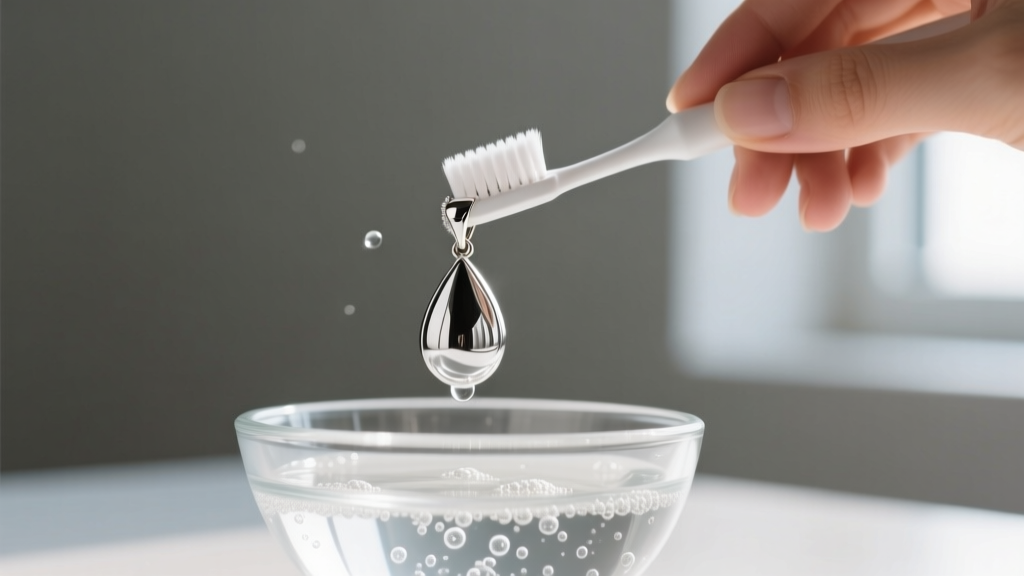
- Step 1: The Solution Prep. Mix a few drops of pH-neutral, phosphate-free dish soap (such as Dawn) into a bowl of lukewarm distilled water. Avoid tap water, as dissolved minerals can leave microscopic water spots on high-polish metals.
- Step 2: The Brief Soak. Submerge the pendant for 3 to 5 minutes. This softens hardened cosmetics and skin oils. Do not exceed 10 minutes, especially if the stone is held in place by adhesive rather than prongs.
- Step 3: Targeted Agitation. Using an extra-soft baby toothbrush, gently sweep the bristles across the surface. Pay special attention to the underside of the pear-cut stone (the pavilion) and the interior of the bail, where skin oils accumulate and block light return.
- Step 4: The Distilled Rinse. Rinse the pendant under a gentle stream of lukewarm distilled water to wash away suspended dirt and soap residue.
- Step 5: Advanced Drying. Pat the piece dry with a lint-free microfiber cloth. Crucially, use a can of compressed air or a specialized jewelry blower to force trapped moisture out of the bail and the tiny gaps between the prongs and the gemstone girdle. Air-drying leaves water spots; towel-drying leaves lint.
Common Teardrop Failure Points & Troubleshooting
Because of their elongated shape, teardrop pendants experience unique physical stresses. Understanding these failure modes allows you to perform preventative maintenance before a catastrophic loss occurs.
| Vulnerability | Cause of Failure | Preventative Maintenance Action |
|---|---|---|
| Bail Thinning | Asymmetrical swinging causes the chain to act like a saw against the inner curve of the bail. | Inspect the bail interior every 6 months with a jeweler's loupe. Re-tube or replace the bail if wear exceeds 20%. |
| Culet Chipping | The tapered bottom tip strikes desks, countertops, or sinks during daily wear. | Ensure the bottom prong (V-prong) fully caps the culet. Remove the necklace during manual tasks or desk work. |
| Bezel Moisture Trapping | Water enters the microscopic gap between a metal bezel and a cabochon teardrop stone. | Never swim or shower with bezel-set teardrops. Use compressed air immediately after cleaning to dry the seam. |
| Chain Tangling in Bail | The elongated shape allows the chain to slip through the bail and knot around the tapered tip. | Store using the thread-through method (see below) and ensure the bail diameter matches the chain gauge properly. |
Proper Storage to Protect the Tapered Tip
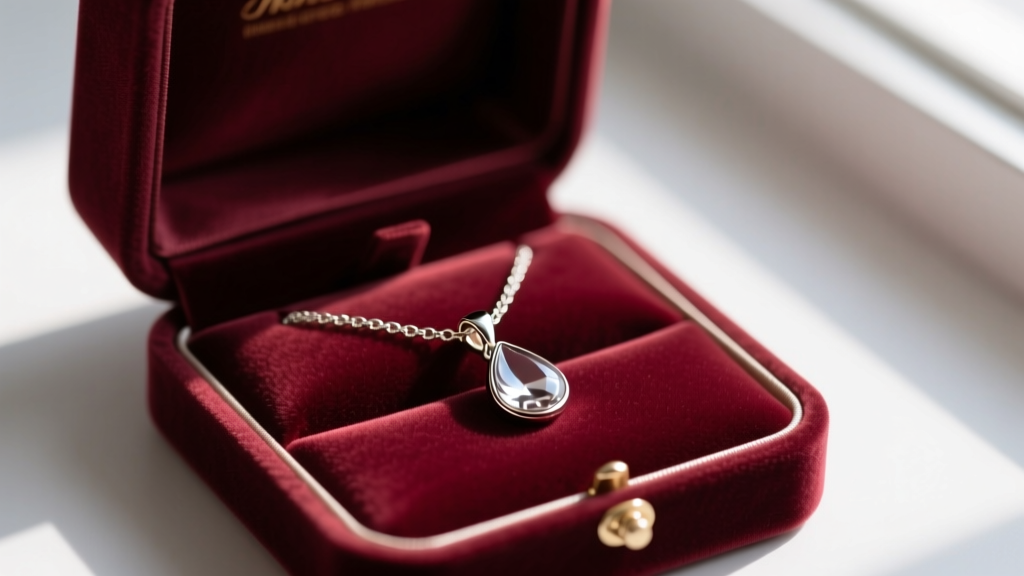
How you store your teardrop pendant necklace is just as critical as how you clean it. Tossing a teardrop pendant into a communal jewelry box guarantees that the tapered tip will eventually scratch softer pieces, or worse, the tip itself will snap if crushed under heavier items.
The Thread-Through Method: To prevent the chain from tangling and putting lateral stress on the bail, lay the necklace flat on a soft surface. Thread one end of the chain entirely through the bail so the pendant is secured in the middle of the chain, then fasten the clasp. This creates a closed loop that cannot knot.
Individual Pouching: Store the fastened necklace in a soft, anti-tarnish flannel pouch. The flannel is treated with silver sulfide inhibitors that actively absorb corrosive gases from the ambient air, drastically reducing the frequency of required polishings for sterling silver teardrops.
What to Avoid: The 'Never Do This' List
To ensure your teardrop pendant necklace survives for generations, strictly avoid the following common jewelry care mistakes:
- Never use toothpaste or baking soda pastes. These are highly abrasive. Toothpaste contains silica particles that will leave permanent micro-scratches on high-polish gold and silver, turning a mirror finish into a dull matte.
- Never clean over an open drain. The tapered shape of a teardrop makes it notoriously slippery when wet. Always plug the sink or clean over a rubber mat.
- Never use ammonia-based glass cleaners. While ammonia can make diamonds sparkle temporarily, it will aggressively degrade the alloy metals in lower-karat gold and cause irreversible clouding in treated gemstones.
- Never pull the chain to remove the necklace. Always unfasten the clasp. Pulling a chain over your head stretches the links and bends the bail of the teardrop pendant out of its factory-aligned position.
Conclusion
Maintaining a teardrop pendant necklace requires a shift from generic jewelry care to a targeted, shape-aware maintenance routine. By respecting the vulnerability of the tapered culet, avoiding harsh ultrasonic waves on delicate settings, and implementing the thread-through storage method, you preserve both the structural integrity and the optical brilliance of the piece. Regular, gentle cleaning using pH-neutral solutions and meticulous drying will ensure your teardrop pendant remains a flawless focal point in your collection for decades to come.


